
Veterinary & Affiliate Disclaimer: Bunnyowners.com shares educational rabbit care resources, not professional veterinary advice. Always consult a qualified veterinarian regarding your rabbit’s medical, dietary, or behavioral needs. This post may also contain affiliate links; as an Amazon Associate and affiliate partner, we earn from qualifying purchases at zero extra cost to you.
Calcium gets a pretty bad reputation in rabbit care. Spend enough time reading about pellets, alfalfa, kale, or parsley, and you will eventually run into warnings about bladder sludge and stones. That can make it seem like the safest approach is simply to keep as much calcium as possible out of your rabbit’s bowl—but rabbits actually need calcium every day.
Healthy adult rabbits need calcium to maintain strong bones and teeth, but they generally don’t need extra calcium from supplements or large amounts of calcium-rich foods. Rabbits absorb calcium readily and pass much of what they don’t need through their urine. For most healthy adults, unlimited grass hay, measured plain pellets, varied leafy greens, and plenty of fresh water provide a sensible balance.
The tricky part is that calcium cannot really be judged by looking at one vegetable or one number on a pellet bag. You have to look at the whole diet. In this guide, we will explore this essential element of rabbit diet and nutrition, explain how calcium needs change across life stages, break down the unique mechanics of rabbit calcium metabolism, compare common dietary sources, and show how to maintain a practical mineral balance.
1. How Much Calcium Does a Rabbit Need?
Healthy adult rabbits need enough calcium to support normal body functions without regularly taking in unnecessary excess.
Studies looking at growing rabbits found that about 0.44% calcium in their dry food was plenty to build strong, healthy bones. Before you start checking that number against your pellet bag, though, it helps to know where it comes from. That research, highlighted in veterinary nutritional studies, tracked young rabbits on strict lab diets—not adult pets grazing on hay, measured pellets, and fresh greens. Because of that, 0.44% isn’t a magic target every house rabbit needs to hit.
For a healthy adult, the goal isn’t to hit an exact calcium percentage at every meal. It’s to provide enough through a hay-based diet without piling on extra calcium from oversized pellet portions, alfalfa, or supplements.
Important: A dietary calcium recommendation describes the mineral concentration of the overall dry diet. It should not be interpreted as a rule that every individual food item your rabbit eats must fall within that exact percentage range.
Why Calcium Percentages Can Be Confusing
Seeing “0.6% Calcium” on a feed bag does not mean a rabbit consumes 0.6% of its body weight in mineral dust. Instead, it means that out of all the dry nutrients present in that specific food, 0.6% of the mass consists of elemental calcium. What matters is both how much calcium the food contains and how much of that food your rabbit actually eats.
Calcium Needs Change with Life Stage
Instead of trying to follow a precise calcium number for every age, it is more useful to understand how a rabbit’s needs change throughout life:
- Growing Rabbits: Demand higher mineral intake to support rapid skeletal development and continuously erupting teeth.
- Pregnant & Lactating Does: Need more calcium to support developing kits and milk production.
- Healthy Adults: Generally need less calcium once they have finished growing.
- Rabbits with Diagnosed Urinary Disease: May benefit from lower dietary calcium intake evaluated in the context of their complete diet under direct veterinary supervision.
2. Why Rabbits Need Calcium
Calcium is an essential mineral that supports much more than the skeleton. It provides the mineral structure needed for strong bones and continuously growing teeth, while also helping skeletal muscles contract and the heart maintain a normal rhythm.
Calcium also helps nerves communicate with muscles and plays an important role in normal blood clotting. Because the body relies on calcium for so many basic functions, restricting it too aggressively can cause problems far beyond the urinary tract.
Calcium and Continuously Growing Rabbit Teeth
A rabbit’s teeth never stop growing. While chewing through plenty of coarse, fibrous hay is what physically grinds those teeth down to a healthy length, the teeth and the jawbone holding them in place still rely on calcium to stay strong. If a rabbit’s diet runs low on calcium for too long, that supporting bone can lose its strength, which makes it much easier for dental problems to take hold right alongside poor chewing habits and uneven tooth wear.
3. How Rabbits Process Calcium Differently
Rabbits handle calcium a little differently from many other animals. Instead of tightly controlling how much calcium enters the body at the intestine, they absorb a large share of what they eat. As dietary calcium goes up, the amount absorbed generally goes up too.
- Intake: Calcium enters the digestive tract from hay, pellets, greens, and water.
- Absorption: The intestines absorb a large proportion of that calcium directly into the bloodstream—a process known as passive absorption.
- Filtration: The kidneys filter out excess calcium that the body doesn’t need.
- Precipitation: In the rabbit’s naturally alkaline urine, extra minerals settle out as chalky calcium carbonate.
Calcium Absorption from the Digestive Tract
Because calcium absorption is closely tied to how much is present in the diet, rabbits naturally have higher and more variable blood calcium levels than dogs, cats, or humans.
The Kidneys Remove Excess Calcium
With rabbits absorbing calcium so readily, their kidneys take on an unusually important job: filtering out whatever the body can’t use. As calcium levels rise in their food, the kidneys simply send more of that extra mineral out through the urine.
Why Rabbit Urine Can Look Cloudy or Chalky
Those extra minerals end up in the rabbit’s urine, which is naturally alkaline. In that environment, calcium easily turns into tiny chalky crystals known as calcium carbonate. Spotting a little cloudy urine or a light chalky ring in the litter box is completely normal for healthy rabbits—it isn’t an automatic sign of bladder trouble.
4. Where Does a Rabbit Get Calcium?
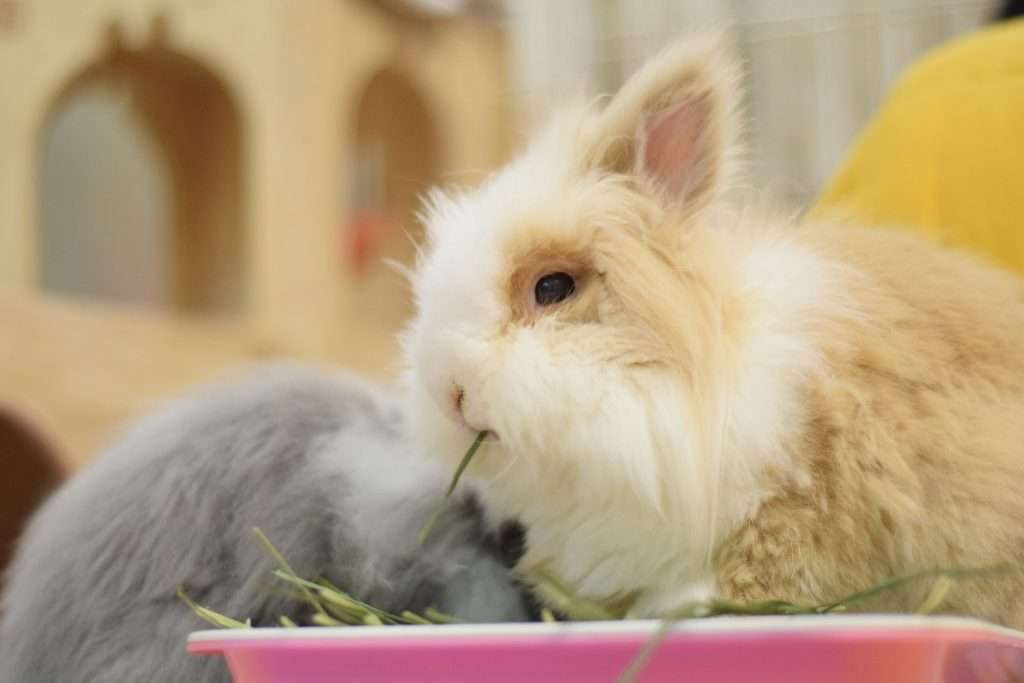
A rabbit gets calcium from everything they eat, so no single food tells you the whole story. Different parts of the daily diet contribute minerals in very different concentrations and portion sizes:
Common Rabbit Calcium Sources Compared
| Food Source | Typical Dietary Role | General Calcium Tendency | Key Considerations |
|---|---|---|---|
| Grass Hay (Timothy, Orchard, Meadow) | Main dietary foundation | Generally lower to moderate | Ideal forage foundation for healthy adult maintenance. |
| Legume Hay (Alfalfa, Clover) | Growth & breeding forage | Generally higher | Rich in calcium, protein, and calories; best for specific life stages. |
| Fortified Pellets | Controlled daily supplement | Formulated; check label | Nutrient-dense; requires deliberate portion control. |
| Fresh Leafy Greens | Daily fresh variety | Highly variable | High moisture content contributes substantially to overall dietary hydration. |
| Herbs & Forage | Enrichment / supplemental | Highly variable | Feed in rotation as part of a varied fresh diet. |
| Mineral / Salt Blocks | Not recommended | Extremely high | Unnecessary when feeding balanced hay and pellets. |
5. How Much Calcium Is in Rabbit Hay?
Because rabbits eat so much hay, it makes up the biggest part of their daily calcium intake.
Grass Hays
Grass hays—such as Timothy, Orchard, Meadow, and Oat hay—provide essential long-strand fiber while maintaining moderate calcium and energy density. Because grass hay fits the everyday nutritional needs of adult rabbits so well, it serves as the unrestricted foundation of a healthy diet.
Alfalfa Hay
Alfalfa is richer in calcium, protein, and calories than grass hay. That makes it useful for growing rabbits, pregnant or nursing does, and some underweight rabbits under veterinary guidance, but usually too rich to serve as the unlimited everyday hay for a healthy adult.
6. Calcium in Rabbit Pellets
Rabbit pellets pack a lot of nutrition into a small serving. Even timothy-based pellets provide minerals in a much more concentrated form than fresh greens or loose hay.
How to Find Calcium on the Pellet Label
Rather than selecting pellets by calcium percentage alone, compare the manufacturer’s listed minimum and maximum values in conjunction with the serving size and the rabbit’s complete diet. Pellets made for adult rabbits are usually lower in calcium and calories than alfalfa-based formulas designed for growing rabbits. Plain timothy-based pellets are widely preferred over muesli mixes containing seeds and grains.
Why Pellet Portion Matters as Much as Percentage
Picture two rabbits getting different pellets. One gets just 1/8 cup of a pellet with 0.8% calcium, while the other gets a heaping 1/2-cup bowl of a brand with only 0.5%. Even though that second bag shows a lower percentage, the much larger serving dumps a lot more calcium into the diet overall. That is why keeping an eye on the total daily volume matters just as much as reading the numbers on the bag.
7. Which Rabbit Foods Are High or Low in Calcium?
Fresh leafy greens provide extra moisture, vitamins, minerals, and variety. Rather than eliminating nutrient-dense greens, owners should offer a varied rotation.
Fresh Greens and Vegetables by Calcium Level
| Category | Examples | Practical Feeding Guidance |
|---|---|---|
| Relatively Higher Calcium | Kale, Parsley, Collard greens, Dandelion greens, Turnip greens | Rotate regularly with lower-calcium options rather than feeding exclusively. |
| Relatively Lower Calcium | Romaine lettuce, Green/Red leaf lettuce, Endive, Escarole, Bok choy | Useful lower-calcium choices within a varied daily serving of leafy greens. |
| Other Fresh Foods | Bell pepper, Cucumber, Celery | Useful for supplemental moisture, enrichment, and variety. |
Does Kale Have Too Much Calcium for Rabbits?
Kale provides fiber, carotenoids, and several micronutrients. For most healthy adult rabbits, kale can be included as one component of a varied fresh-food rotation rather than being treated as a forbidden food solely because of its calcium content.
Should Healthy Rabbits Avoid High-Calcium Greens?
Healthy rabbits generally do not need to avoid nutritious greens just because they contain more calcium. Including a mix of different greens ensures a broad spectrum of micronutrients without making any single high-calcium plant the dominant daily fresh food.
8. Fresh Weight vs. Dry Matter: Why Calcium Charts Disagree
This is where calcium charts can become misleading. A pile of romaine is mostly water, while a handful of hay is mostly dry plant material. Comparing their calcium percentages without accounting for all that water is a little like comparing concentrated juice with a glass that’s already been diluted.
Most fresh greens are 85% to 95% water, whereas dry hay is almost entirely plant matter. That explains why calcium charts can make leafy greens look packed with minerals on paper, even though a real-world handful delivers very little calcium overall. All that natural moisture also keeps your rabbit well-hydrated, leading to healthier, more dilute urine that helps rinse out everyday mineral sediment before it can build up.
9. Can Rabbits Get Too Much Calcium?
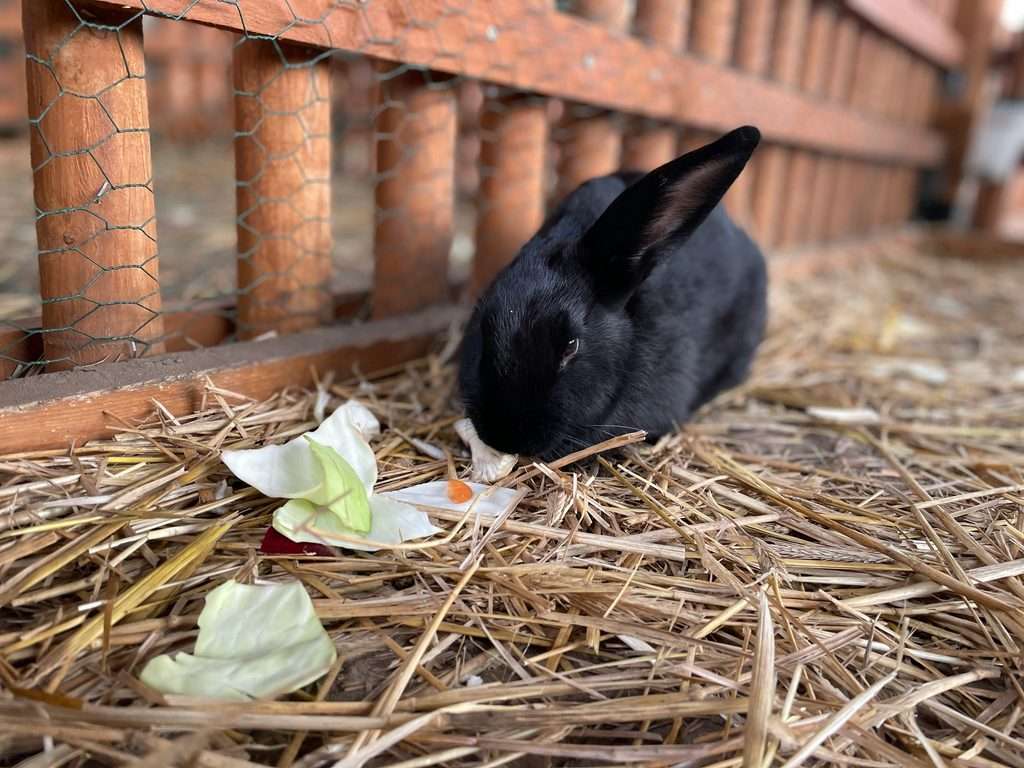
When rabbits take in excess minerals, extra calcium is flushed out through the urine, but whether sediment progresses to problematic sludge or stones depends on multiple factors, including hydration, bladder emptying, mobility, and individual susceptibility.
Calcium and Bladder Sludge
Some calcium in rabbit urine naturally settles out as calcium carbonate. Normally, that material leaves the bladder when the rabbit urinates. When too much thick sediment builds up instead, it can accumulate into the gritty, toothpaste-like material known as bladder sludge. This dense material can irritate the bladder lining and make normal urination uncomfortable.
Calcium and Bladder Stones
In some rabbits, mineral buildup can clump together into solid bladder stones. These stones can form anywhere along the urinary tract, from the kidneys down to the bladder, creating painful blockages that require immediate veterinary care.
Calcium Isn’t the Whole Story
Whether a rabbit develops sludge or stones depends on a mix of daily factors beyond just calcium intake:
- Hydration Status: Drinking less water leads to concentrated urine, making it easier for minerals to settle out.
- Activity and Exercise: Movement encourages regular, full bladder emptying so sediment doesn’t sit.
- Litter Habits & Posture: Rabbits that hold their urine or have trouble posturing can let minerals settle on the bladder floor.
- Kidney Health: Underlying kidney issues alter how the body handles minerals.
10. Can Rabbits Get Too Little Calcium?
Because literature frequently highlights the hazards of excess minerals, owners sometimes attempt to eliminate calcium entirely. This can create its own health risks.
Too Little Calcium Can Weaken Bones
When a rabbit consistently gets too little calcium, the body pulls minerals from the skeleton to keep blood levels steady. Over time, this can weaken the bones and increase the risk of fractures.
Low Calcium May Also Affect Dental Health
When rabbits go without enough calcium for too long, their bodies can start drawing minerals away from the jaw and tooth sockets to keep blood levels steady. As veterinarians specializing in dental health point out, that weakened bone allows teeth to slowly shift out of alignment. Once teeth lose their proper spacing, they stop grinding down evenly against each other, making painful molar spurs and bite problems much more likely.
11. What Is the Calcium-to-Phosphorus (Ca:P) Ratio?
In pet nutrition guides and feed charts, you will often see the abbreviation Ca:P. This shorthand simply refers to the balance between Calcium (Ca) and Phosphorus (P) in what your rabbit eats. Calcium and phosphorus work together in the body to support healthy bones and teeth, so the balance between these minerals still matters. However, rabbits can tolerate a fairly wide range of calcium-to-phosphorus ratios when the overall diet provides adequate amounts of both minerals.
The greater concern is a diet containing excessive phosphorus, particularly cereal-heavy seed and grain mixtures. For a rabbit eating unlimited grass hay and an appropriate amount of complete pellets, there is generally no reason to calculate the Ca:P ratio of individual greens each day.
Do Owners Need to Calculate the Ca:P Ratio Daily?
No. You do not need a calculator or a daily tracking sheet to keep your rabbit healthy. An adult diet based on unlimited grass hay together with a measured portion of quality commercial timothy pellets generally provides an appropriate mineral balance without any extra math on your part.
12. Does Vitamin D Affect Calcium in Rabbits?
In many animals, vitamin D plays a major role in helping the intestines absorb calcium. Rabbits are different because much of their calcium is absorbed passively, making the process less dependent on vitamin D. Even so, vitamin D still plays an important role in maintaining healthy bones and normal body function.
Should Rabbits Get Calcium or Vitamin D Supplements?
Not routinely. Never provide over-the-counter calcium supplements, vitamin drops, or salt licks unless directed by a veterinarian. Mineral blocks are unnecessary for most rabbits eating a balanced diet and can provide additional minerals that are not needed.
13. What Does a Balanced-Calcium Rabbit Diet Look Like?
When it comes to daily feeding, keeping calcium balanced is a lot easier when you focus on the whole routine rather than stressing over individual ingredients. Keep fresh grass hay available around the clock as the primary dietary foundation, dish out a measured scoop of plain timothy pellets each day, rotate a handful of fresh leafy greens for moisture and vitamins, and make sure their water bowls stay clean and full.
With my bonded pair, Mocha and Chino, that routine is simple to stick to. I refresh their ceramic water bowls twice a day to encourage good drinking, and their evening greens rotate through crisp lettuces, cilantro, and the occasional sprig of parsley. Keeping an eye on their litter box gives me an easy, everyday way to spot any changes in hydration, droppings, or urine while keeping their meals consistent and balanced.
Together, hay, measured pellets, fresh greens, and plenty of water usually provide the calcium balance a healthy adult rabbit needs.
14. When Should You Actually Reduce a Rabbit’s Calcium?

Healthy adult rabbits should not be put on an extremely low-calcium diet just as a precaution. Significant calcium restriction is generally best reserved for rabbits with a diagnosed urinary problem or another medical reason to modify the diet under veterinary guidance.
Do Not Self-Diagnose Based on Cloudy Urine
Some cloudiness can occur as part of normal calcium excretion and, by itself, does not establish a diagnosis of bladder sludge or stones. With Mocha and Chino, I occasionally notice a light chalky spot in the litter area even when they are active, eating normally, and urinating comfortably. Small amounts of chalky residue can occur as part of normal rabbit calcium excretion, but persistent thick sediment or signs of discomfort deserve veterinary attention.
Signs That Warrant Immediate Veterinary Attention
Consult an exotic animal veterinarian if you observe symptoms of urinary distress:
- Straining, hunching, or vocalizing in the litter box
- Urinating frequent, tiny amounts rather than normal streams
- Thick, paste-like sediment voided in the litter pan
- Visible blood in the urine
- Wet, urine-scalded fur around the hindquarters
- Sudden lethargy or loss of appetite
15. Common Myths About Calcium and Rabbits
“Rabbits should eat as little calcium as possible.”
Calcium is an essential nutrient, and chronic deficiency can impair bone density and dental mineralization.
“Kale inevitably causes bladder stones.”
Kale can safely be included as part of a varied fresh-food rotation and does not need to be treated as forbidden solely because of its calcium content.
“Any cloudy urine indicates dangerous bladder sludge.”
Occasional urinary cloudiness can result from normal calcium carbonate excretion in healthy rabbits.
“Alfalfa hay is dangerous for every rabbit.”
Alfalfa is a valuable forage for growing kits and nursing does; it is simply unnecessary as the unrestricted hay foundation for healthy adult maintenance.
“Rabbits need a salt or mineral wheel in their enclosure.”
Balanced hay and quality commercial pellets supply all necessary trace minerals, making supplemental mineral blocks unneeded.
16. Frequently Asked Questions
How much calcium does an adult rabbit need daily?
There is no single well-established milligram-per-day requirement for adult pet rabbits because intake depends on dry-matter consumption and the composition of the complete diet. Rather than chasing an exact daily number, healthy adult rabbits do best on a grass-hay-based diet that provides adequate baseline calcium without unnecessary mineral concentrates.
What vegetables are relatively higher in calcium for rabbits?
Collard greens, turnip greens, dandelion greens, parsley, and kale have higher mineral concentrations. They are nutrient-dense foods that work best when rotated with lower-calcium greens rather than served as the exclusive daily vegetable.
What vegetables are relatively lower in calcium for rabbits?
Romaine lettuce, green leaf lettuce, red leaf lettuce, butterhead lettuce, endive, and escarole have lower calcium concentrations. They make useful lower-calcium choices within a varied daily serving of leafy greens.
Is parsley too high in calcium to feed every day?
Parsley has a relatively high mineral concentration on a dry-matter basis, so it should not be the sole green fed. However, rotating a few sprigs with lettuces is safe for healthy adults.
Is timothy hay low in calcium?
Timothy hay has a moderate, balanced calcium profile (typically 0.3% to 0.5% dry matter). Its high fiber content and digestibility make it an ideal unrestricted foundation for adult rabbits.
Why is alfalfa hay unsuitable as the main hay for adult rabbits?
Alfalfa is a legume containing substantially more calcium, protein, and energy than grass hays. While useful for growing young rabbits, feeding it freely can provide more calcium, protein, and calories than healthy adults generally need for maintenance.
Can excess dietary calcium contribute to bladder sludge?
Yes. Higher urinary calcium can contribute, but it is only one part of the picture. Concentrated urine, incomplete bladder emptying, and an individual rabbit’s susceptibility can also influence whether sediment accumulates.
What can calcium deficiency do to rabbits?
Chronic calcium deficiency may contribute to weakened bone mineralization and dental disease, but owners cannot reliably diagnose calcium deficiency from appearance alone. Dental abnormalities, skeletal weakness, pain, or fractures require veterinary assessment because many other disorders can cause similar signs.
Does chalky urine mean my rabbit is sick?
Not by itself. Occasional chalky residue can result from normal urinary calcium excretion. It becomes a clinical concern if urine turns into a thick, gritty paste or urination becomes painful.
Do pet rabbits need calcium or mineral blocks?
No. Quality grass hay and formulated commercial pellets provide all required macro- and micro-minerals. Mineral blocks are unnecessary and can introduce an excessive mineral load.
What calcium percentage should I look for on pellet labels?
Compare the manufacturer’s guaranteed analysis minimum and maximum with portion size. Look for plain, uniform timothy-based pellets designed for adult maintenance, and avoid seed- or corn-filled mixes.
17. Finding the Right Mineral Balance
Managing calcium in a rabbit’s diet comes down to understanding context rather than fearing an essential nutrient. Rabbits need enough calcium to support healthy bones and teeth without routinely taking in unnecessary excess. Trying to eliminate calcium entirely can be harmful, while overfeeding mineral-dense legume hays, free-feeding pellets, or offering unnecessary supplements can push intake too far in the other direction.
For most healthy adults, the practical solution is simple: unlimited grass hay, measured timothy pellets, varied fresh greens, and constant access to water provide a sensible foundation for maintaining calcium balance.
Medical & Veterinary Disclaimer: Bunnyowners.com is an informational resource for rabbit owners and enthusiasts. We are not veterinarians. The content on this website is for educational purposes only and is not a substitute for professional veterinary advice, diagnosis, or treatment. Always consult a qualified veterinarian with any questions or concerns regarding your pet’s health, medical conditions, diet, or overall care. If you have concerns about your rabbit’s health, it’s always best to reach out to a veterinarian rather than relying solely on information found online.