
Disclaimer: The information provided on bunnyowners.com is for educational purposes only and does not constitute veterinary medical advice; always consult your vet before changing your rabbit’s diet. Additionally, this post contains affiliate links. As an Amazon Associate, and other affiliate advertising programs, I earn from qualifying purchases at no extra cost to you
Determining the right daily vegetable portion for a rabbit often feels surprisingly confusing when different sources recommend a loose handful, one cup per two pounds, two cups per four pounds, or a flat percentage of the overall diet. Because a head of romaine lettuce and a whole carrot are vastly different foods nutritionally, measuring “vegetables” without context can quickly lead to an unbalanced bowl or digestive upset.
A healthy adult rabbit can generally eat 1 packed cup of fresh leafy greens per 2 to 3 pounds of body weight each day, which equals roughly 1.5 to 2 cups for an average 4-pound rabbit. The vast majority of this fresh serving should consist of safe leafy salad greens and culinary herbs, while sugary or starchy vegetables like carrots should be limited to tiny occasional treats. Unlimited grass hay must always remain the core foundation of a rabbit’s daily nutrition.
To help you dial in the right balance for your rabbit’s diet and food, this guide covers daily portions by weight, what a practical cup actually looks like, and how to build a simple, rotating salad that keeps digestion running smoothly.
1. How Much Vegetables Should a Rabbit Eat Per Day?
A healthy adult rabbit eating an unlimited grass hay diet should generally receive approximately 1 packed cup of fresh leafy greens per 2 to 3 pounds of body weight daily.
However, feeding recommendations vary quite a bit depending on where you look:
- Some feeding standards recommend 1 to 2 packed cups of leafy greens per 4 pounds of body weight daily.
- Other established veterinary guidelines suggest roughly 1 cup of fresh vegetables per 2 pounds of body weight.
These guidelines vary because measuring leafy greens by the cup is an imperfect science. A loose handful of red leaf lettuce takes up plenty of volume while offering very little substance, whereas a compressed cup of chopped parsley packs in far more plant matter.
2. Daily Vegetable Portion Chart by Rabbit Weight
For a healthy adult rabbit, the chart below provides a practical baseline to help you measure the right starting amount of leafy greens based on body size.
Daily Leafy Greens Portion by Weight
| Rabbit Weight (lbs) | Starting Portion (Packed Leafy Greens) |
|---|---|
| 2 lb | ~¾ to 1 cup |
| 3 lb | ~1 to 1.5 cups |
| 4 lb | ~1.5 to 2 cups |
| 5 lb | ~2 cups |
| 6 lb | ~2 to 2.5 cups |
| 8 lb | ~3 to 3.5 cups |
| 10 lb | ~4 to 4.5 cups |
| 12 lb+ | ~5 to 6 cups |
Feeding Note: These amounts are starting points rather than strict limits. Your rabbit’s hay appetite, overall build, normal droppings, and individual tolerance of fresh greens should always guide any day-to-day adjustments. If your rabbit is significantly overweight or underweight, use a healthy target weight discussed with your vet rather than simply scaling the salad to their current weight.
3. Leafy Greens vs. Other Vegetables: What Counts as a Serving?
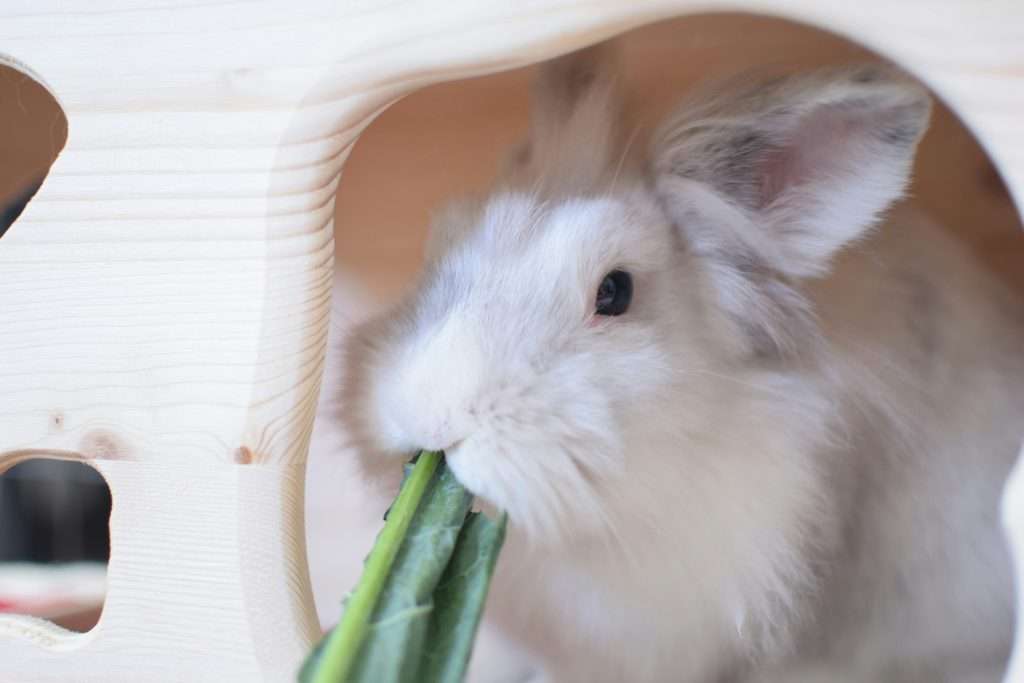
One major reason rabbit owners run into trouble is treating all produce identically. Feeding two cups of leafy endive is very different from feeding two cups of carrots or other sugary, dense vegetables that should be fed in far smaller quantities.
A good rule of thumb is to ensure that leafy greens make up roughly 75% or more of the daily fresh food portion, with non-leafy vegetables kept to much smaller additions. Use the breakdown below to see how different fresh foods fit into your rabbit’s daily routine:
Fresh Food Categories and Portion Strategy
| Fresh Food Category | Role in Diet | Daily Portion Strategy |
|---|---|---|
| Leafy Salad Greens | Main fresh-food base | About 75%+ of the fresh portion |
| Fresh Herbs | Flavor & nutrient variety | Include as part of the daily leafy-green mix |
| Non-Leafy Vegetables | Optional fresh-food addition | Maximum 1 tablespoon per 2 lbs body weight |
| Sweet Root Veggies (Carrots) | High-sugar treat | Small thumbnail-sized slice occasionally |
| Fresh Fruit | High-sugar treat | Keep separate from daily salad allowance |
Leafy Greens
The bulk of the daily bowl should come from safe, fibrous, leafy greens such as romaine, green leaf, and red leaf lettuce rather than nutrient-poor iceberg, plus healthy varieties like escarole, endive, radicchio, arugula, watercress, fresh carrot tops, and dandelion greens.
Non-Leafy and Starchy Vegetables
Not all non-leafy vegetables are equally rich, but they generally belong in much smaller portions than leafy greens. Bell peppers, zucchini, celery, and cucumber work well as little extras, while sweeter root vegetables like carrots are better saved for treat time.
4. What Does One “Cup” of Rabbit Vegetables Actually Look Like?
Because leaf size and packing density distort volume, measuring produce requires a consistent routine. A loosely dropped pile of whole romaine leaves fills a measuring cup instantly while providing very little substance, whereas a compressed cup of flat-leaf parsley can hold far more actual plant material.
Measure the prepared, clean leaves after discarding rubbery base stems or wilted outer layers. Aim for a moderately packed cup—leaves pressed down lightly so they fill the space without being crushed into a solid block. There is no need to dice greens into tiny confetti; lightly tearing leaves makes them easy to portion while letting your rabbit enjoy chewing on natural leaves.
When prepping breakfast for my rabbits Mocha and Chino, sticking with the same small salad bowl every morning gives me an immediate visual standard, making it obvious at a glance if a portion was packed too tight or if someone left food behind.
5. How Many Different Leafy Greens Should Rabbits Eat Daily?
Offering a variety of safe leafy greens helps broaden the range of nutrients in the fresh portion and keeps your rabbit from relying on just one plant. A practical daily goal is mixing two to three different greens together each day. When adding a green your rabbit has never eaten before, introduce that food separately rather than changing several ingredients in the salad at once.
A Balanced Daily Salad Composition (~4–5 lb Adult)
- Base: About 1 to 1.5 cups of romaine, green leaf, endive, or a simple leafy mix.
- Variety: A small handful of fresh cilantro, dill, basil, or mint.
- Rotating Accent: A few leaves of arugula, dandelion greens, or bok choy.
- Optional Addition: A small slice of bell pepper or a bit of crunchy celery.
6. Should Rabbits Eat Vegetables Every Day?
Once accustomed to them, healthy adult rabbits can generally enjoy appropriate leafy greens every single day. Fresh greens contribute natural hydration, variety, and great mealtime enrichment, while grass hay remains the essential anchor of their diet.
Rather than obsessing over rigid math, think of your rabbit’s daily nutrition as a simple hierarchy:
- Unlimited Grass Hay: The primary foundation that must be available around the clock.
- Measured Leafy Greens: The daily fresh food component.
- Measured Pellets: A measured part of the diet based on age and weight.
- Treats & Fruit: Strictly limited occasional extras.
Splitting Portions into Twice-Daily Feedings
Dividing the daily vegetable allowance between morning and evening meals is completely fine and keeps each serving crisp. Many owners divide the daily portion between breakfast and dinner to check in on appetite twice a day and prevent delicate leaves from wilting if your rabbit likes to take their time grazing.
7. Can Rabbits Eat Too Many Vegetables?
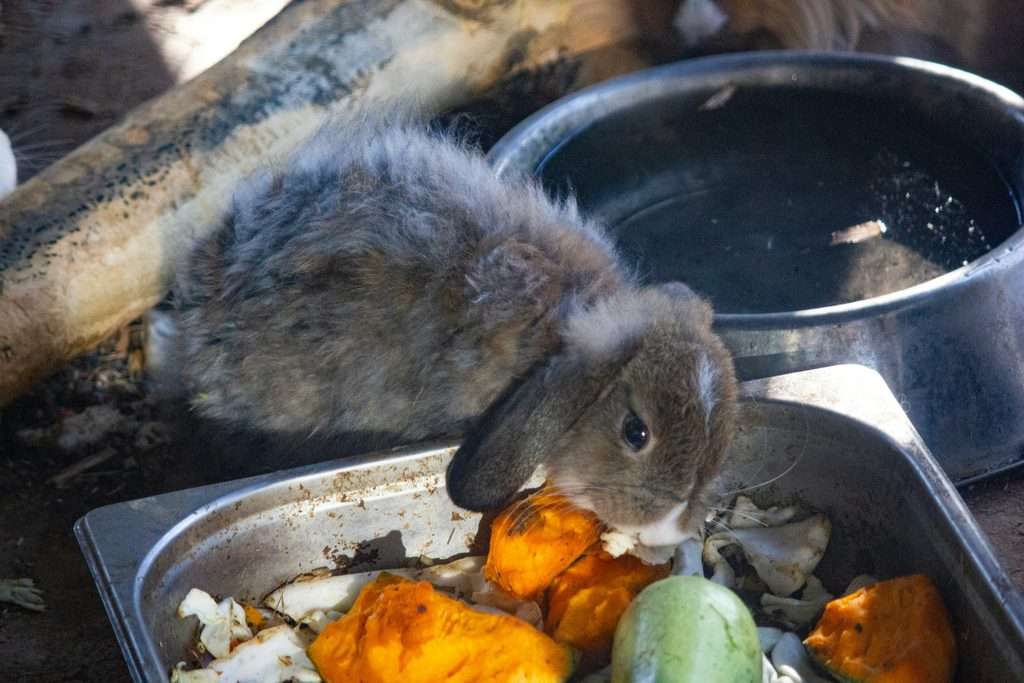
While fresh greens are great, it is definitely possible to overdo it. If large salads consistently crowd out dry grass hay, your rabbit gets less of the long-strand forage needed to keep their teeth worn down and their gut moving smoothly. Feeding excessive quantities of rich or sugary produce can also upset normal digestion.
Keep an eye out for three clear warning signs:
- Ignoring the Hay Rack: The rabbit holds out exclusively for salad time and barely touches their grass hay.
- Sticky or Uneaten Cecotropes: Soft, strong-smelling droppings left around the enclosure or caught on fur.
- Low Energy or Tummy Rumbles: Sluggish behavior, a drop in overall appetite, or loud stomach gurgling.
If you notice uneaten or soft cecotropes while your rabbit’s energy, appetite, and round droppings remain totally normal, take a quick look at what recently changed in the salad bowl—such as a new vegetable or a heavier portion than usual. If your rabbit shows watery diarrhea, stops eating hay, produces very few droppings, or acts lethargic and painful, check in with an exotic animal veterinarian right away.
8. Do Vegetables Replace Hay or Pellets?
Vegetables make a wonderful daily addition to a rabbit’s routine, but they do not replace the important role of hay or the balanced nutrition of quality pellets.
Grass hay provides the tough, long-strand fiber and constant chewing action rabbits rely on to keep their digestive systems moving and their constantly growing teeth in check. Fresh greens crush easily and do not require that same prolonged, grinding chewing action.
Similarly, while some adult rabbits can do well on pellet-free diets with careful planning, simply adding a bigger pile of greens does not automatically make the diet nutritionally complete.
9. How Much Vegetables Should Baby Rabbits Eat?
Young rabbits should not jump straight into the adult portions in the chart above. Recommendations for introducing fresh greens vary depending on the kit’s age, weaning history, and what they were already nibbling alongside their mother.
When the time is right, new greens should be introduced one by one in tiny sample sizes, like a single sprig of cilantro or a torn piece of romaine, while keeping a close eye on their appetite and litter box for a few days before adding anything else.
10. How to Adjust Vegetable Portions for Your Rabbit
The weight chart gives you a dependable starting point, but every rabbit handles fresh food a little differently. What your rabbit actually eats, and what you find in the litter box, matters more than hitting an exact number every day.
Hay intake should always stay vigorous. If a bigger salad causes your rabbit to noticeably slack off at the hay rack, scale the fresh greens back until their hay appetite picks back up. Their usual round droppings should also stay pretty consistent from day to day. Finally, if your rabbit is managing specific health problems, partner with an exotic animal vet to dial in their ideal fresh food portions.
11. What About Calcium and Oxalates in Leafy Greens?
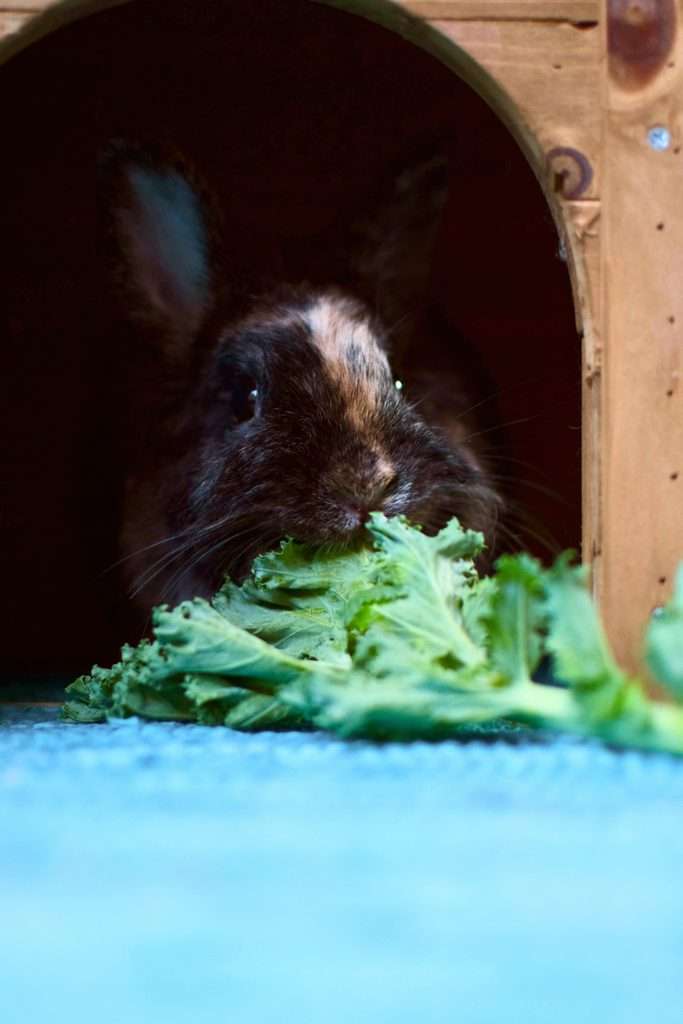
Calcium and oxalate content can matter—especially for rabbits prone to bladder sludge or urinary stones—but individual greens do not need to be feared in isolation. Your rabbit’s total diet, daily water intake, and overall health history all play a role.
For healthy rabbits, the goal is simple variety rather than trying to ban every green that happens to be higher in calcium or oxalates. As a sensible habit, rotate higher-oxalate plants like spinach, Swiss chard, and beet greens alongside dependable everyday staples like romaine, green leaf lettuce, or escarole rather than serving the exact same leaf day after day.
12. How to Build the Right Daily Vegetable Portion: A 5-Step Formula
Putting together a safe daily salad takes just a minute when following five simple steps:
- Start with Body Weight: Use your rabbit’s weight (or healthy target weight) to establish their starting amount (e.g., ~1.5 to 2 cups for an average 4-lb rabbit).
- Make Leafy Greens the Foundation: Fill the bowl mostly with washed, everyday staples like romaine, red leaf lettuce, and endive.
- Add Herbs for Variety: Toss in a small handful of fresh cilantro, dill, mint, or basil.
- Keep Non-Leafy Vegetables Small: Add no more than a small slice of bell pepper or crunchy celery.
- Watch Hay Intake and Droppings: Make sure your rabbit continues munching plenty of hay and leaves clean, round droppings in the box.
13. Frequently Asked Questions
How many cups of vegetables should a rabbit eat a day?
An adult rabbit can generally start with approximately 1 packed cup of fresh leafy greens per 2 to 3 pounds of body weight daily. Most of this volume should come from everyday leafy lettuces and culinary herbs rather than dense root vegetables.
How much vegetables should a 5-pound rabbit eat?
A healthy 5-pound adult rabbit can eat approximately 2 packed cups of fresh leafy greens per day, paired with unlimited grass hay and a measured portion of pellets.
Can rabbits eat vegetables every day?
Yes. Once accustomed to fresh greens, healthy adult rabbits can enjoy them daily as long as the salad does not crowd out their normal hay intake or cause soft droppings.
Can rabbits eat only hay and vegetables?
Some adult rabbits can do well on a carefully planned hay-and-greens diet without commercial pellets, but removing pellets makes it especially important to ensure the overall diet remains nutritionally balanced. Talk with an exotic animal vet before pulling pellets from their bowl.
Can rabbits eat too many leafy greens?
Yes. Overfeeding greens can fill a rabbit up so they eat less essential hay, and rich or poorly tolerated greens can lead to soft cecotropes or messy bottoms.
Should rabbits eat vegetables once or twice a day?
Either schedule works great. Many owners divide the daily portion between breakfast and dinner to check appetite regularly and keep fresh leaves crisp.
Do rabbits need three different leafy greens every day?
Offering a mix of two to three different leafy greens gives great dietary variety and keeps you from relying too heavily on any single plant.
Are carrots part of a rabbit’s daily vegetable allowance?
Not as a main ingredient. Carrots are high in natural sugars and starches, making them an occasional thumbnail-sized treat rather than a salad foundation.
14. Conclusion — Portion the Salad, but Keep Hay First
A fresh salad brings great hydration, flavor, and variety to your rabbit’s day, but it should never compete with the real foundation of their diet: plenty of grass hay. Use your rabbit’s weight to set a sensible starting portion, build most of the bowl around fibrous leafy greens and culinary herbs, and rotate ingredients to keep nutrients balanced.
Above all, let their hay appetite set the pace—if you notice your rabbit filling up on greens and ignoring the hay rack, simply scale the salad back until their grazing picks back up.
Medical & Veterinary Disclaimer: bunnyowners.com is an informational resource for rabbit owners and enthusiasts. We are not veterinarians. The content on this website is not a substitute for professional veterinary care, diagnosis, or treatment. Always seek the advice of your veterinarian with any questions you may have regarding your pet’s medical condition, diet, or overall health.