
Veterinary & Affiliate Disclaimer: Bunnyowners.com shares educational rabbit care resources, not professional veterinary advice. Always consult a qualified veterinarian regarding your rabbit’s medical, dietary, or behavioral needs. This post may also contain affiliate links; as an Amazon Associate and affiliate partner, we earn from qualifying purchases at zero extra cost to you.
I’ve spent more time than I’d like to admit scrutinizing calcium-to-phosphorus ratios and cecal fermentation rates, and the “spinach question” remains one of the most contentious topics in lagomorph nutrition. While humans are told to eat their greens for strength, the rabbit’s unique metabolic blueprint views spinach through a much more complicated lens. Can they actually eat spinach safely?
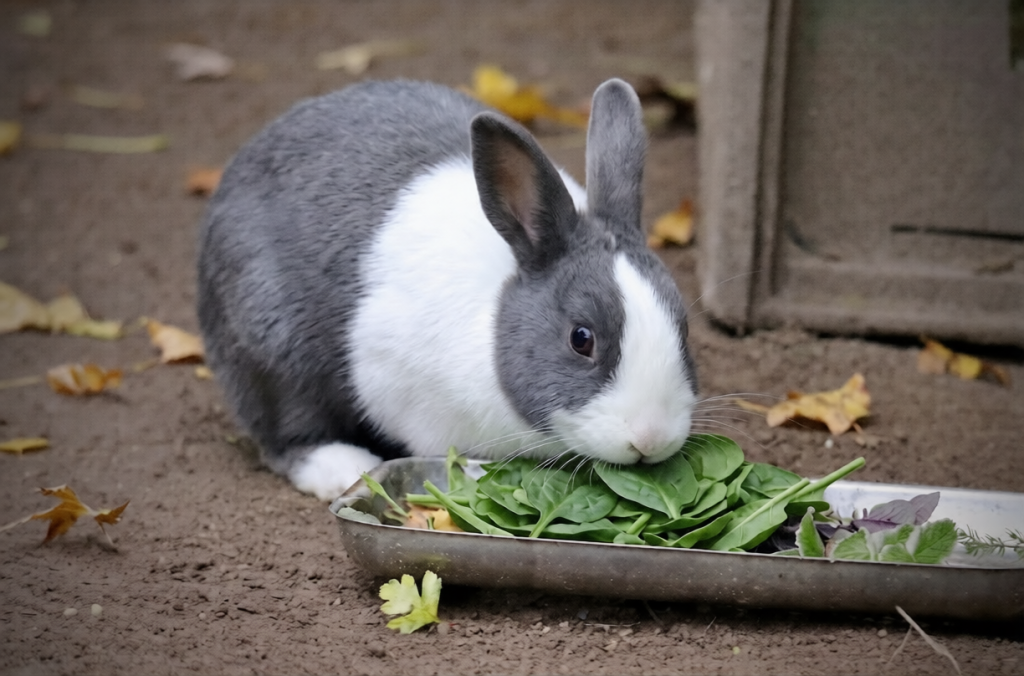
Yes, rabbits can safely eat spinach, but only in moderation (1–2 leaves, once or twice a week). While spinach is rich in vitamins A and K, it is exceptionally high in oxalates and calcium. If fed daily, these compounds can cause life-threatening bladder sludge or kidney stones. Always rotate spinach with low-oxalate greens like Romaine lettuce, cilantro, or parsley.
While my own rabbits, Mocha and Chino, would happily argue that spinach should be a daily staple based on taste alone, my role as a researcher is to look past their enthusiasm and toward the clinical data. This guide moves past the “yes/no” fluff to examine the actual science of calcium metabolism and how to safely navigate the produce section—as part of a comprehensive best rabbit food strategy—without a trip to the emergency vet.
2. Positioning Spinach in a Balanced Diet
Rabbit physiology doesn’t mirror human nutrition; their digestive tract is a precision-tuned system, and spinach is a high-mineral variable. It should never be the “main event” of a meal.
- The 80% Rule (The Foundation): Your rabbit’s diet must remain dominated by high-quality grass hay, such as Timothy, Orchard, or Meadow hay. This is non-negotiable for dental wear—rabbit teeth grow 3-5 inches a year—and gut motility.
- The 15% Rule (Leafy Greens): Fresh greens should make up roughly 10–15% of the total daily intake. However, this 15% needs to be split between “staple” greens and “rotation” greens.
- Spinach as a “Level 2” Green: In a researcher’s hierarchy, spinach is a rotation green. It is safe only when used to provide variety. According to the House Rabbit Society, providing a variety of at least three different greens daily is the best way to ensure a broad nutrient profile while diluting the intake of any single anti-nutrient like oxalic acid.
3. Nutritional Value of Spinach for Rabbits
Spinach is a concentrated dose of micronutrients. However, in the rabbit world, more isn’t always better.
Spinach Nutrition (Per 100g)
| Nutrient | Benefit for Rabbits | Researcher’s Notes |
| Fiber | Digestive motility | At ~2.2g, it is negligible compared to the 30%+ fiber in hay. |
| Vitamin A | Eye & immune health | Exceptionally high (9377 IU); vital for skin and coat health. |
| Vitamin K | Bone health/Blood clotting | Essential for preventing hemorrhage and supporting bone density. |
| Calcium | Bone/teeth health | At 99mg, it is significantly higher than staple greens like Romaine. |
| Oxalates | None | The primary “anti-nutrient” that binds to calcium. |
| Folate | Cell repair | High levels support healthy DNA synthesis and cell division. |
4. The Science of Oxalates and Calcium Metabolism
This is the “engine room” of rabbit biology. Rabbits process calcium with an efficiency that would make a human nutritionist’s head spin. Unlike humans, who only absorb the amount of calcium our bodies currently need, rabbits absorb nearly all the calcium they ingest.
They rely almost entirely on their kidneys to filter out the excess and excrete it through their urine. This is why rabbit urine is naturally cloudy—you are literally seeing the excreted calcium.
The Oxalate Trap
When oxalates (oxalic acid) from spinach enter the digestive tract, they seek out calcium. They bind together to form calcium oxalate crystals. In small amounts, these crystals are excreted harmlessly. However, if you feed spinach daily, the volume of crystals becomes too high for the kidneys to flush out efficiently.
This leads to two major clinical issues:
- Bladder Sludge (Hypercalciuria): The urine becomes thick, gritty, and the consistency of toothpaste. This is painful and can lead to secondary infections.
- Urolithiasis (Bladder Stones): The crystals aggregate into solid stones that often require surgery.
Research from the NC State Veterinary Hospital confirms that managing this mineral intake through diet is the single most effective way to prevent these debilitating conditions.
5. How Much Spinach Can Rabbits Eat? (The Safe Zone)
To keep the kidneys functioning without a “mineral clog,” we follow a strict dosing schedule. If you are ever in doubt, err on the side of “less.”
Safe Feeding Chart
| Rabbit Size | Portion | Frequency |
| Small (2–4 lbs) | 1 small leaf | Once per week |
| Medium (5–8 lbs) | 1–2 leaves | 1–2x per week |
| Large (9+ lbs) | 2–3 leaves | 2x per week max |
6. Best Way to Feed Spinach to Rabbits
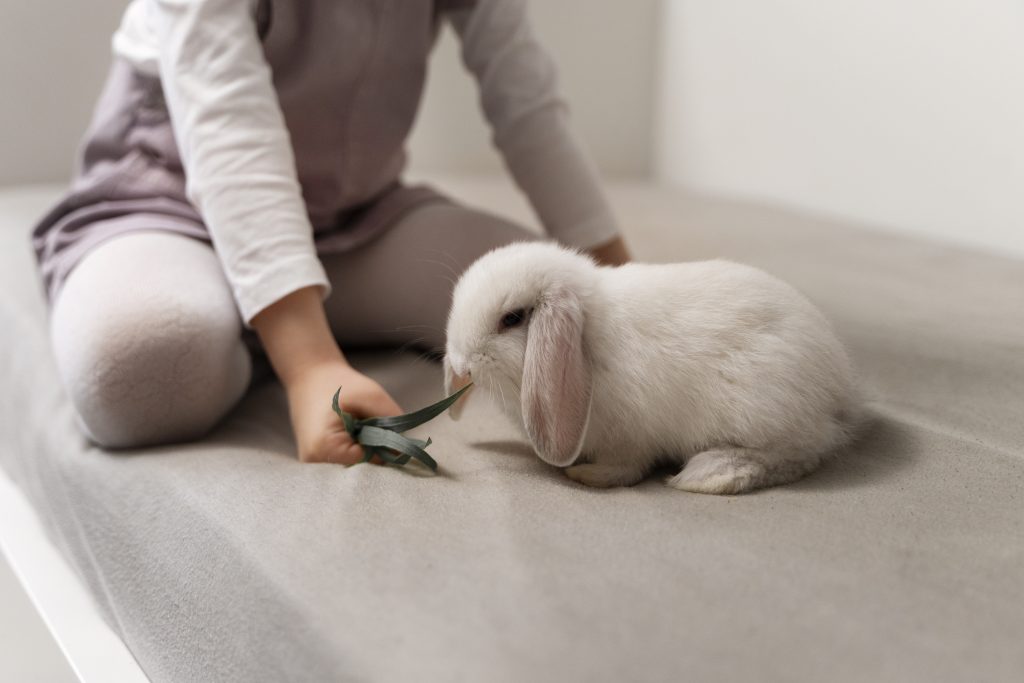
Feeding is more than just dropping a leaf on the floor. To maximize safety, follow these researcher-approved steps:
- Wash Thoroughly: Pesticide residue can be devastating to small mammal systems. Wash every leaf under cold running water.
- Serve Raw Only: Never feed cooked, canned, or frozen spinach. Cooking alters the molecular structure and destroys essential enzymes.
- The “Bouquet” Method: Never feed spinach in isolation. I recommend the “Rule of Three”: always serve spinach alongside at least two low-oxalate greens (like cilantro and romaine). This dilutes the mineral load.
- Monitor the 24-Hour Window: When introducing spinach for the first time, feed only half a leaf and wait a full day. Check for “poop disruption” (diarrhea or small, dry pellets).
7. Signs of a Problem: The Litter Box Detective
Rabbits are prey animals; they are experts at hiding pain until they are in a state of crisis. Your primary diagnostic tool is their waste. In my own routine with Mocha and Chino, the “sand test”—regularly checking the litter box for any grit or unusual urine texture—is the primary safeguard against the mineral buildup that high-oxalate greens can cause. Pull spinach from the menu immediately and contact an exotic vet if you notice these symptoms:
- Chalky Urine: While some white powder residue is normal for a drying puddle, a thick, gritty texture is a red flag.
- Tenesmus: This is the clinical term for straining. If your rabbit is spending long periods in a hunched position in the litter box but producing very little, they are in pain.
- Appetite Loss: In the rabbit world, “I’m not hungry” is a medical emergency.
- Lethargy: A sudden drop in activity often signals internal discomfort or “sludge” build-up.
- Researcher Note: If you suspect sludge, rub a bit of the urine between gloved fingers. If it feels like wet sand, your rabbit has a calcium overload.
Bishop Ranch Veterinary Center notes that while oxalates are harmless in tiny, rotated amounts, the “toxicity” is often a slow, invisible build-up.
8. Rabbits That Should Avoid Spinach Entirely
For some rabbits, spinach is a banned substance.
- Rabbits with “Sludge” History: If your vet has ever diagnosed your rabbit with bladder sludge or stones, spinach (and kale) should be permanently removed from the diet.
- Senior Rabbits (6+ years): Aging kidneys are less efficient at filtering calcium.
- Dehydrated Rabbits: If your rabbit isn’t a big water drinker, they cannot flush their kidneys effectively.
- Rabbits on Alfalfa Hay: Since alfalfa is already high in calcium, adding spinach creates a “mineral storm” the body cannot process.
9. Better Alternatives (Low-Oxalate Greens)
If you want the health benefits of leafy greens without the renal anxiety, focus your “staple” salad on low-oxalate options. These should make up the bulk of the 15% vegetable intake. If you’re looking to build a more stable salad base, check out my comprehensive breakdown of the 25 best vegetables for rabbits for a list of safer, low-oxalate staples.
Safe Substitute Comparison
| Green | Oxalate Level | Calcium Level | Safe Frequency |
| Romaine Lettuce | Very Low | Low | Daily Staple |
| Cilantro | Low | Low | Daily Staple |
| Basil | Low | Moderate | 3-4x per week |
| Bok Choy | Low | Low | Daily Staple |
| Dandelion Greens | Moderate | High | 2-3x per week |
For a deeper dive into safe foliage varieties, I recommend the San Diego House Rabbit Society’s nutrition guide.
10. Spinach vs. Other Leafy Greens
It is a common mistake to lump all greens together. Kale is often criticized for being high in calcium, but it is actually lower in oxalates than spinach. This makes kale a slightly safer “occasional” green, though both require moderation. Always prioritize fiber-rich, dark leafy greens like Green Leaf or Red Leaf lettuce as your baseline.
11. Can Baby Rabbits Eat Spinach? (The Lifecycle Gap)
The metabolic data for rabbits under 12 weeks dictates a zero-tolerance policy for spinach.
Baby rabbits have gastrointestinal tracts that are still “tuning” their bacterial balance. Introducing a high-mineral, high-oxalate green too early can trigger enterotoxemia—a condition where “bad” bacteria take over the gut, leading to fatal diarrhea in a matter of hours. Wait until your rabbit is at least 6 months old before introducing spinach.
12. Common Feeding Mistakes Rabbit Owners Make
The data from owner reports shows a recurring pattern of dietary failure.
- The “Costco” Error: Buying a massive tub of spinach and feeding it daily to avoid waste. Your bunny’s kidneys aren’t a disposal unit.
- The Treat Trap: Thinking that “natural” means “safe in any amount.”
- Ignoring Water Intake: Water is the lubricant for the kidneys. As noted in the PDSA Rabbit Diet guide, hydration is the backbone of renal health.
13. What a Balanced Rabbit Diet Really Looks Like
Mastering the produce aisle is only one piece of the digestive puzzle. For those of us obsessed with the full spectrum of rabbit nutrition—from hay quality to pellet ratios—explore the full archive of research-backed strategies in my comprehensive rabbit diet and food guides.
- Unlimited Grass Hay: (80%) The engine of the rabbit.
- Daily Greens: (10-15%) A rotated “bouquet” of 3 low-oxalate greens.
- Measured Pellets: (5%) About 1/4 cup per 6 lbs of body weight. VCA Animal Hospitals warns that over-pelleting is a primary cause of obesity.
- Clean Water: Always available, refreshed daily.
14. Frequently Asked Questions: Rabbit Spinach Safety
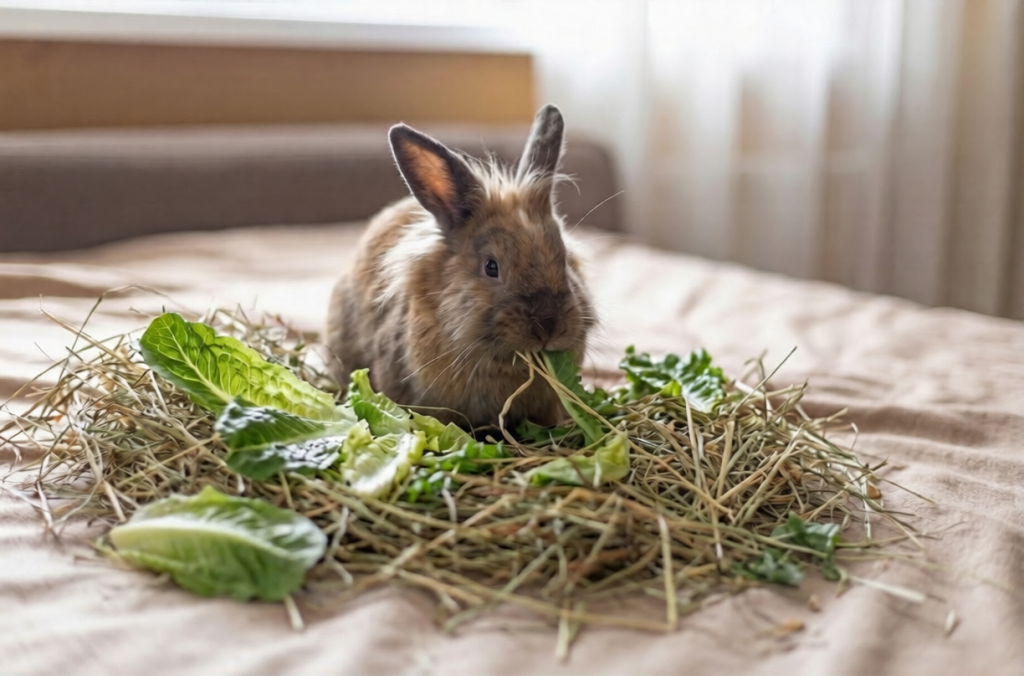
Can rabbits eat spinach every day? Absolutely not. Think of spinach as a high-performance supplement rather than a dietary staple. Daily feeding leads to a cumulative “renal traffic jam” where calcium oxalate crystals build up faster than the kidneys can filter them. To keep your rabbit’s urinary tract clear, stick to a maximum of one or two leaves, no more than twice per week, ensuring you rotate in low-oxalate greens on the other days.
Is spinach toxic to rabbits? Not in the acute sense—your rabbit won’t keel over from a single leaf like they might with hemlock or nightshade. However, it is “metabolically stressful.” Overfeeding creates a chronic mineral imbalance that can eventually lead to permanent kidney damage or the formation of stones. It’s less of a sudden poison and more of a long-term metabolic tax on their filtration system.
Can rabbits eat spinach stems? Yes, the stems are perfectly safe and actually offer a slightly better fiber-to-water ratio than the leaves, providing a bit of extra “crunch” for dental wear. However, the mineral concentration remains the same throughout the plant, so you must include the stems in your total portion count. Don’t treat the stems as a “freebie” snack outside of the weekly limit.
Can rabbits eat baby spinach? Yes, baby spinach is actually preferable. It is nutritionally identical to mature leaves but significantly easier to portion out. Since precision is key when dealing with high-oxalate foods, the smaller leaf size helps you avoid the “Costco Error” of accidentally overfeeding. Just ensure it is raw, organic, and thoroughly washed.
What happens if a rabbit eats too much spinach? The most frequent clinical outcome is bladder sludge (hypercalciuria), where the urine becomes thick, beige, and gritty. According to VetLexicon, these chronic mineral imbalances are the primary catalyst for urolithiasis, or painful bladder stones. If left unchecked, this grit can cause urine scald, severe pain, and secondary GI stasis.
Can rabbits eat frozen spinach? No. Most frozen spinach has been blanched (briefly boiled) before freezing. This process breaks down the cellular structure and alters the nutrient profile in a way that is poorly suited for a rabbit’s hindgut fermentation. Additionally, the high water content in thawed spinach can trigger diarrhea. Stick to fresh, raw, fibrous leaves to support both dental health and gut motility.
15. Conclusion: Balancing the Bowl
Spinach is a potent mineral additive that offers high nutritional rewards but carries significant renal risks. It is a brilliant source of Vitamin A and folate, but its metabolic cost is high. By treating spinach as a rare supplement rather than a daily staple, you are respecting the complex biology of your rabbit. Keep the hay unlimited, the water fresh, and the spinach restricted.
Medical & Veterinary Disclaimer: Bunnyowners.com is an informational resource for rabbit owners and enthusiasts. We are not veterinarians. The content on this website is for educational purposes only and is not a substitute for professional veterinary advice, diagnosis, or treatment. Always consult a qualified veterinarian with any questions or concerns regarding your pet’s health, medical conditions, diet, or overall care. If you have concerns about your rabbit’s health, it’s always best to reach out to a veterinarian rather than relying solely on information found online.