
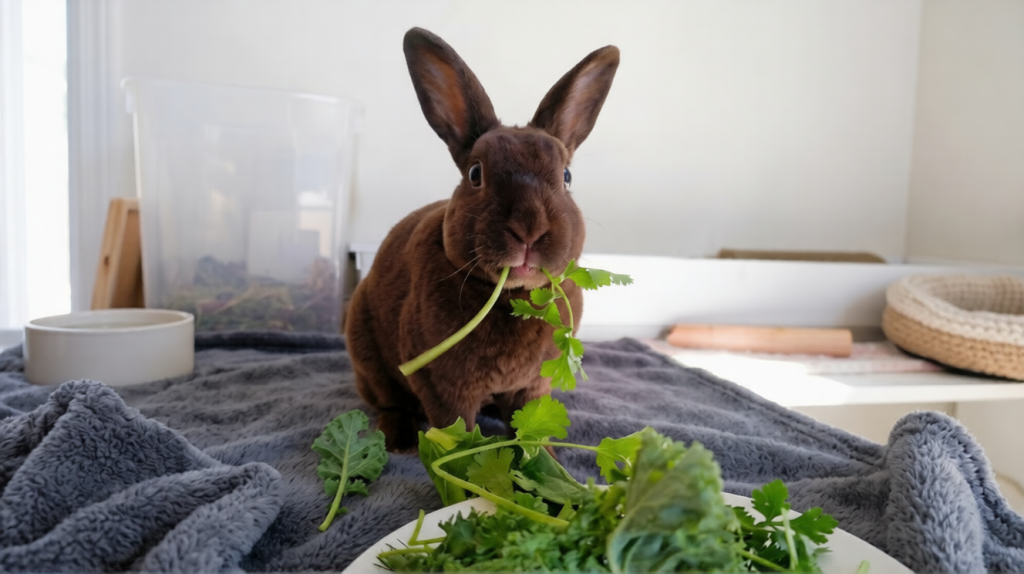
Veterinary & Affiliate Disclaimer: Bunnyowners.com shares educational rabbit care resources, not professional veterinary advice. Always consult a qualified veterinarian regarding your rabbit’s medical, dietary, or behavioral needs. This post may also contain affiliate links; as an Amazon Associate and affiliate partner, we earn from qualifying purchases at zero extra cost to you.
You’re in the produce aisle staring down a bunch of cilantro, caught in the classic internal debate: guacamole for the table or a snack for the hutch? It’s a fair question, especially since adding fresh variety shouldn’t feel like playing digestive roulette with your rabbit at 2:00 AM.
Yes, rabbits can safely eat cilantro in small, measured portions as part of a varied leafy green rotation. This non-toxic herb is a fantastic source of hydration and essential vitamins like A, K, and C, making it a lower-calcium alternative to heavier greens. To avoid a sensitive stomach flare-up, always introduce it gradually and treat it as a dietary supplement rather than a staple.
But before you toss a handful into the cage, let’s look at the actual biology. While leafy greens are a staple of the best rabbit food protocol, their chemical profiles vary wildly. From the fascinating “soap gene” aversion to the safest way to strip away pesticides, here is the full researcher’s breakdown on feeding cilantro.
2. Is Cilantro Safe for Rabbits?
Cilantro is safe for rabbits when fed in moderation. Most healthy adults tolerate it well, though overfeeding any wet green can lead to soft stools.
If you brought a bunch home, relax. Cilantro is a fantastic, non-toxic leafy green for your bunny and a staple on most lists of the best vegetables for rabbits. Digging into lagomorph biology shows that the leaves, roots, and stems are very easy for a healthy adult rabbit to process.
The Calcium Factor
Rabbits are biological outliers when it comes to calcium. While humans only absorb what we need, rabbits absorb almost everything they ingest and flush the excess through their kidneys. This is why high-calcium greens like kale or spinach can eventually lead to bladder sludge or stones. Cilantro is a winner here because it’s relatively low-calcium, making it a much safer daily option than many other leafy greens.
3. How Much Cilantro Can Rabbits Eat?
Rabbits can eat about 1–2 tablespoons of cilantro per day, mixed into a salad of other leafy greens. It should only ever be a small percentage of their total vegetable intake.
When you hand over the herbs, mind the quantity. A rabbit’s gut flora is a delicate, high-maintenance machine. Overloading it with rich greens can tip the scales toward an upset stomach.
Understanding the “Mixed Salad” Rule
The standard rule is one packed cup of greens per two pounds of body weight, but don’t make the whole bowl cilantro. Think of it as the garnish on the salad, providing a burst of flavor and hydration without overwhelming the gut’s fermentation balance. You want a diverse mix to ensure they aren’t getting too much of any single nutrient.
| Rabbit Size | Safe Amount of Cilantro |
| Small (2–4 lbs) | 1 tablespoon |
| Medium (5–8 lbs) | 1–2 tablespoons |
| Large (9+ lbs) | 2 tablespoons |
4. How Often Can Rabbits Eat Cilantro?
Cilantro is safe for daily feeding as part of a varied leafy green rotation. Think of it as a side dish, not the main course.
Wild rabbits are natural foragers. They spend their days nibbling on dozens of different plant species to stay healthy and get a wide array of minerals. Recreating that at home prevents dietary boredom and prevents them from getting a stubborn fixation on just one flavor.
- Rotate with other herbs like parsley, basil, or mint.
- Use a “three-green” rule for every salad.
- Avoid a “cilantro-only” diet to prevent long-term nutritional gaps.
5. Health Benefits of Cilantro for Rabbits
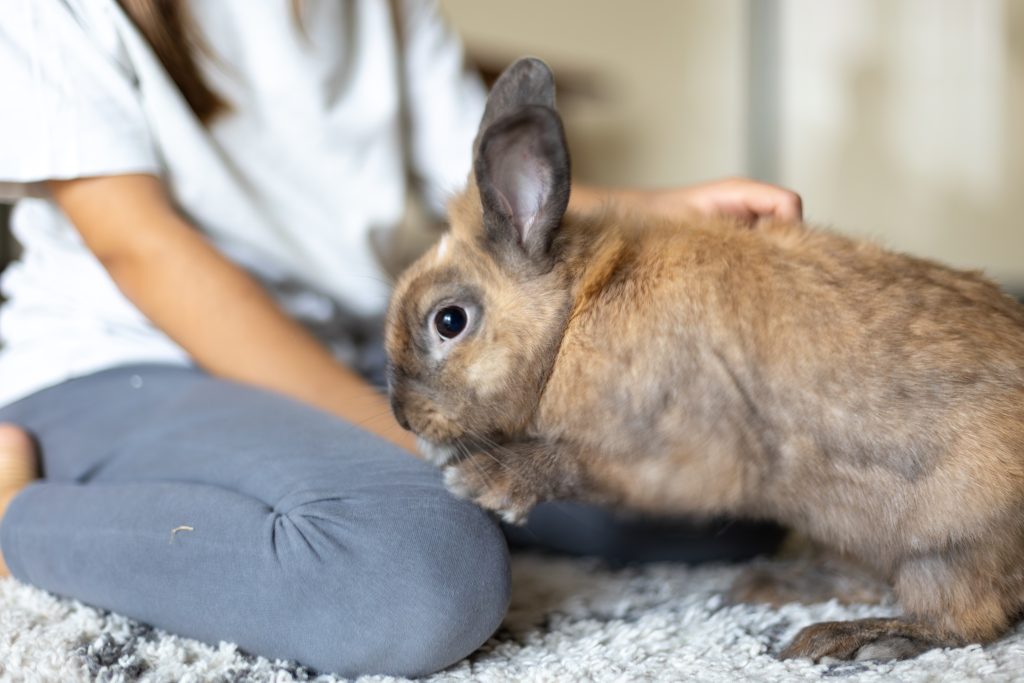
Cilantro provides a massive hydration boost along with Vitamin C and antioxidants that support a rabbit’s immune system. Because it’s mostly water, it’s a powerhouse for urinary health, helping to flush out the kidneys and prevent calcium buildup.
Kidney Health & Hydration
Many rabbits don’t drink enough water from their bowls, especially if they are on a pellet-heavy diet. Herbs like cilantro are a “stealth” way to get moisture into their system. This constant flushing is the best defense against bladder sludge, which is a painful and common issue for domestic buns.
Vitamins A, K, and Antioxidants
Cilantro brings real value to the bowl. It packs Vitamin A for eyesight and Vitamin K for bone health. While rabbits naturally synthesize their own Vitamin C in their livers, the extra boost from fresh greens helps tremendously during stressful periods like a move, a vet visit, or a heavy shedding season when their energy demands are high.
| Key Nutrient | Primary Benefit for Rabbits |
| High Water Content | Kidney flushing; prevents bladder sludge |
| Vitamin A | Maintains healthy eyesight and skin |
| Vitamin K | Crucial for bone health and blood clotting |
| Antioxidants | Supports immune system during heavy shedding |
Phytochemicals and Functional Feeding
Beyond basic vitamins, cilantro contains specific phytochemicals that support long-term cellular health. Most notably, it contains geraniol, a compound studied in small mammals for its natural anti-inflammatory and potential anti-tumor properties. Integrating cilantro isn’t just about filling a bowl; it’s a form of “functional feeding” that supports a rabbit’s immune system at a molecular level, particularly during the physical stress of a move or a heavy seasonal molt.
6. Are There Any Risks of Feeding Cilantro?
Cilantro is generally safe, but too much can cause digestive upset, soft stools, or a reduced appetite. Honestly, the biggest risk isn’t the herb itself—it’s us overfeeding it.
The Threat of Cecal Dysbiosis
A rabbit’s cecum is essentially a massive fermentation vat. Overloading that vat with wet or overly lush greens disrupts the specific bacterial balance required for digestion. This leads to cecal dysbiosis, which results in messy, unformed droppings (mushy cecotropes) stuck to their fur. If you see this in the litterbox, the cilantro or the overall green mix is likely too rich.
7. Can Baby Rabbits Eat Cilantro?
Baby rabbits under 12 weeks old should not eat cilantro. Their digestive systems are too sensitive and should stick strictly to mother’s milk and hay.
Bunnies under three months lack the specific gut bacteria needed to break down complex fresh greens. Full stop. Introducing cilantro early usually triggers severe diarrhea, which is often fatal in young rabbits due to rapid dehydration. Stick to alfalfa hay and high-quality pellets until that 12-week birthday. Even then, you should only introduce one tiny leaf at a time.
8. How to Safely Feed Cilantro to Rabbits
Wash cilantro thoroughly, serve it fresh, and introduce it slowly in tiny amounts to monitor the reaction.
Washing and Preparation
Prep is a daily ritual around here. You have to rinse the greens to strip away pesticides before tearing them up. My own rabbits, Mocha and Chino, usually start begging the second they hear the faucet. Even with their excitement, I’m careful to measure out the portions. Letting them graze from a whole bunch is a recipe for a stomach ache.
Organic vs. Conventional
If you can, go organic to minimize chemical exposure. If not, a deep cold-water soak is the best way to loosen trapped dirt and agricultural residues. Small animals are much more sensitive to pesticide trace amounts than we are, so the extra minute at the sink matters.
Buying for Biological Vitality
When shopping for your rabbit, look for “vitality” rather than just a bargain. I always perform a quick Sniff Test: if the bunch doesn’t have a sharp, punchy aroma, the essential oils and nutrients have already begun to degrade. Look for a clean stem snap; a rubbery stem indicates dehydration, meaning the plant has lost the very moisture your rabbit needs for kidney health. Avoid the “bargain bin” or bruised bunches, as localized fermentation can introduce mold that triggers painful gas in sensitive buns.
Owner’s Prep Checklist
- Cold Water Only: Warm water wilts the leaves and destroys the “crunch” factor that encourages chewing.
- Pat Dry: Excess surface water can lead to bloating in some rabbits.
- Keep the Stems: They provide the essential long-strand fiber required for dental wear.
- Room Temp: Never serve herbs straight from a near-freezing crisper drawer; let them sit out for a few minutes to prevent shocking the rabbit’s digestive system.
9. Do Rabbits Like Cilantro?
Most rabbits love cilantro because of the strong aroma, but every rabbit is an individual. Not every lagomorph is a vegetable vacuum.
The Lagomorph “Soap Gene”
I’ve seen this firsthand: Chino will practically snatch a cilantro stem out of my hand. Mocha? She treats it like a biohazard, giving the leaves a wide berth like the smell personally offends her. Other owners have seen their pets fleeing from the scent as well. It’s likely the same “soap gene” that affects humans. With 100 million olfactory receptors, that “aroma acts as a sensory trigger” for a “faded” palate, making it one of my primary recommendations for maintaining weight and interest in food for elderly lagomorphs.
10. Cilantro vs Other Herbs: What’s Best for Rabbits?
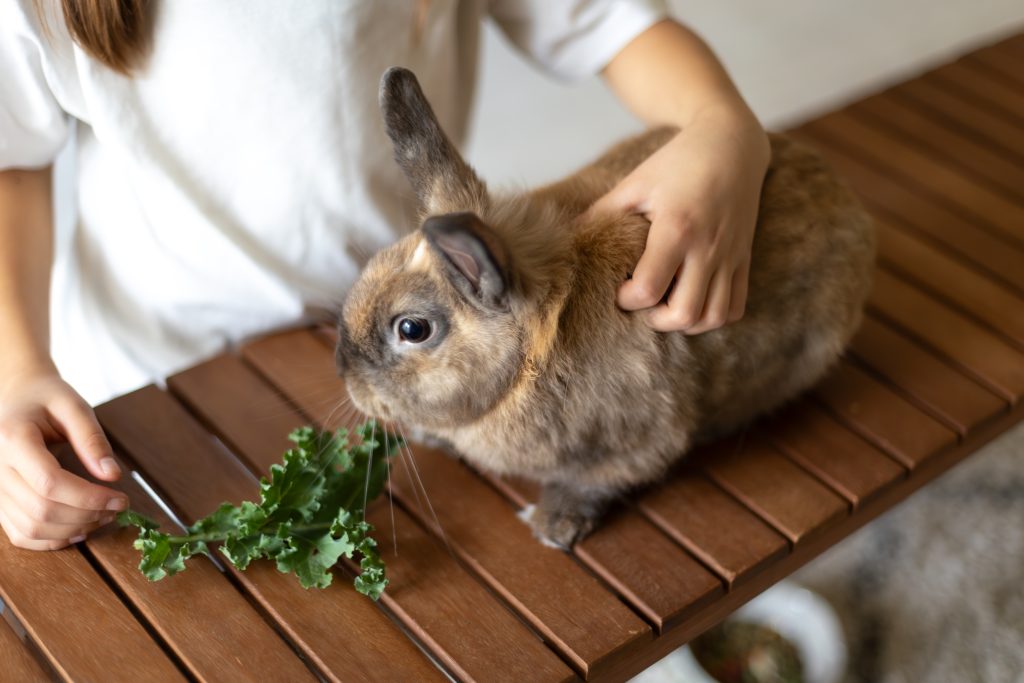
Cilantro is a great safe herb, but it’s best when rotated with others like parsley, basil, and mint. While a mostly-herb diet can supplement their hay, you have to keep the menu dynamic.
Unlike cilantro, parsley is much higher in oxalates and calcium, so it should be used more sparingly. Basil is excellent for encouraging picky eaters to chew, while mint is often cited by researchers as a helpful herb for settling minor digestive gurgles.
| Herb | Safe for Rabbits | Notes |
| Cilantro | Yes | Low calcium, high water |
| Parsley | Yes (limit) | High calcium; feed sparingly |
| Basil | Yes | Great for encouraging picky eaters |
| Mint | Yes | Often used to help with mild gas |
The Numerical Edge: Oxalates and Ratios
For owners managing rabbits prone to bladder sludge or kidney stones, the chemistry of the leaf is what matters most. Cilantro is a standout because of its remarkably low oxalate concentration (~50 mg/kg) and low calcium concentration (roughly 0.07%). This allows it to maintain a healthy Calcium-to-Phosphorus (Ca:Ph) ratio of approximately 1.4:1. Compared to high-oxalate greens like spinach or high-calcium dandelion leaves, cilantro is one of the safest herbs for high-frequency feeding.
11. What Should Rabbits Eat Daily? (Diet Context)
A rabbit’s diet must be 80–90% hay. Fresh greens like cilantro should only ever be a small garnish, alongside a limited amount of pellets.
The Lagomorph Food Pyramid
Unless rabbits suddenly evolve to live on sunlight, hay is king. It provides the long-strand fiber needed to keep the GI tract moving and keeps their ever-growing teeth filed down. Think of it as a pyramid: hay is the foundation, water covers everything, and greens are the measured middle tier. You can refer to my rabbit diet food guides for the full breakdown of these ratios.
12. What Happens If a Rabbit Eats Too Much Cilantro?
Too much cilantro usually results in soft stools or gas. If you find mushy, unformed droppings in the litterbox, the diet is too rich and the gut fermentation is off-balance.
Spotting the Signs of Overfeeding
A rabbit that has overindulged might ignore their hay or sit in a hunched, “painful” position. If that happens, the fix is simple: pull all fresh greens and go back to a strict diet of just hay and water for 48 hours. Wait until the droppings firm back up into healthy, round “cocoa puffs” before you even consider trying greens again. This “reset” is vital to preventing a slide into true GI stasis.
13. When to Avoid Feeding Cilantro
Avoid cilantro if your rabbit has a history of gas, is currently ill, or is under 12 weeks old. If they have a history of GI stasis, don’t gamble with wet greens until you’ve consulted a vet. Let their gut stabilize completely before treating them to aromatic herbs. Rabbits in recovery need the most predictable, bland diet possible to ensure constant motility.
14. Frequently Asked Questions
Can rabbits eat cilantro stems? Yes. Stems are actually the best part for dental health. They provide extra crunchy fiber that helps with dental wear and keeps the rabbit occupied longer than just the leaves.
Is dried cilantro safe? It’s safe, but fresh cilantro is much better. Dried herbs lose the hydration and vitamin content that makes the plant valuable. It’s basically just fiber at that point.
Will cilantro fix GI stasis? No. While hydration helps healthy guts, GI stasis is a medical emergency. If your rabbit stops eating or pooping, call a vet. Don’t reach for the cilantro.
15. Final Verdict: Should You Feed Cilantro to Rabbits?
Yes, cilantro is a safe, healthy treat when fed in moderation alongside plenty of hay. It’s low-calcium, high-hydration, and most bunnies think it’s a five-star meal. Just wash it well, start slow, and don’t be surprised if your rabbit is one of the few who thinks it tastes like soap.
Medical & Veterinary Disclaimer: Bunnyowners.com is an informational resource for rabbit owners and enthusiasts. We are not veterinarians. The content on this website is for educational purposes only and is not a substitute for professional veterinary advice, diagnosis, or treatment. Always consult a qualified veterinarian with any questions or concerns regarding your pet’s health, medical conditions, diet, or overall care. If you have concerns about your rabbit’s health, it’s always best to reach out to a veterinarian rather than relying solely on information found online.