
Veterinary & Affiliate Disclaimer: Bunnyowners.com shares educational rabbit care resources, not professional veterinary advice. Always consult a qualified veterinarian regarding your rabbit’s medical, dietary, or behavioral needs. This post may also contain affiliate links; as an Amazon Associate and affiliate partner, we earn from qualifying purchases at zero extra cost to you.
If you have ever walked into the room and found your rabbit stretched completely flat against the floor with their back legs extended behind them, you may have wondered whether they are relaxing or if something is wrong. This unusual-looking posture can seem alarming at first, especially because rabbits are prey animals that often hide signs of discomfort.
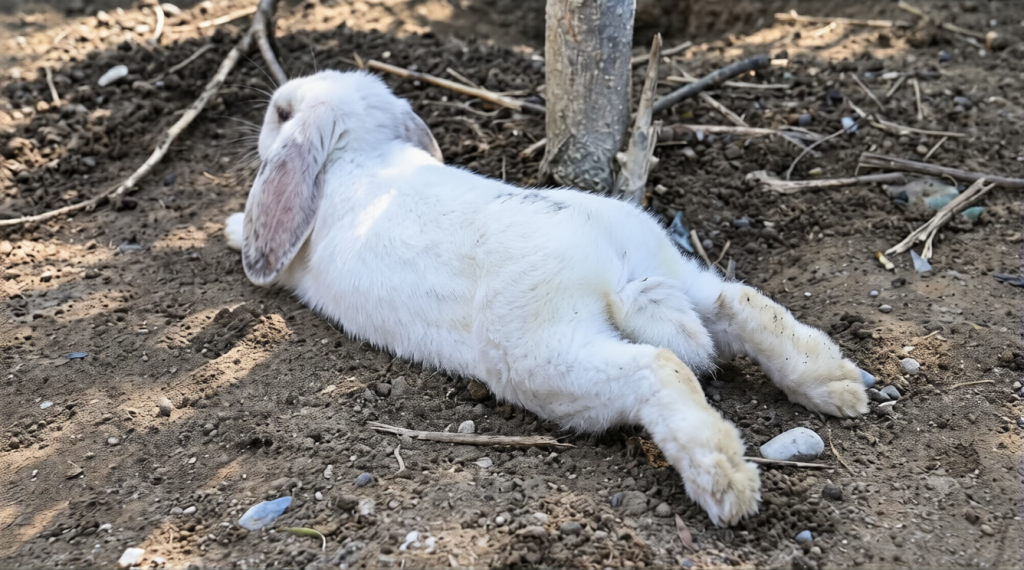
When a rabbit lies flat on the floor with their belly down and legs stretched behind or beside them, it is usually called splooting and is a normal sign of comfort, relaxation, or cooling off. Rabbits often sploot because they feel safe in their environment, are resting after activity, or want to press their belly against a cool surface. However, lying flat can be concerning if it is accompanied by heavy breathing, loss of appetite, weakness, or difficulty standing.
Understanding why rabbits sploot helps owners recognize the difference between a happy, relaxed bunny and a rabbit that may need attention. In this guide—part of my ongoing coverage on decoding unique bunny actions and habits—I will explain what rabbit splooting looks like, why rabbits lie flat, how it differs from flopping, and the warning signs that mean your rabbit may not simply be resting.
1. What Is Rabbit Splooting?
While you won’t find the word “splooting” in any veterinary textbook, it has become a staple term across pet owner communities on the internet. In simple terms, splooting describes an animal lying flat on its stomach with one or both hind legs extended backward or sprawled out to the side. Many owners describe this posture as their rabbit laying flat, stretching out, or looking like a little pancake on the floor.
Because this position makes quick movement more difficult, rabbits usually choose it when they feel completely relaxed and comfortable in their surroundings. I see this play out at home all the time with my Lionheads, Mocha and Chino. Chino loves finding the cool wood floor near the patio door and stretching both back feet straight behind him like a tiny swimmer. Mocha prefers a side sploot on the living room rug, extending one back leg while settling into a quiet nap.
Common Rabbit Sploot Positions
A rabbit sploot can take a few different forms depending on your bunny’s personal preference and flexibility:
- Full Sploot: The belly rests flush against the floor while both hind legs are extended straight out behind the body.
- Side Sploot: Front paws point forward while one or both rear legs extend sideways out to the side.
- Front Stretch: Front paws extend far ahead with the chin resting flat against the ground while the back legs stay tucked or partially extended.
Some owners also describe this posture as a rabbit “frog legging” or “frog pose” because the extended back legs resemble a frog’s swimming position. Regardless of what you call it, these stretches are simply variations of a rabbit relaxing comfortably.
2. Why Do Rabbits Lie Flat?
Understanding why your rabbit chooses to sprawl out helps you distinguish normal, happy behavior from environmental discomfort.
They’re Comfortable and Feel Safe
The primary reason rabbits lie flat is simple: they are comfortable. Extending their limbs allows them to relax their muscles and settle into a comfortable resting position. Taking this position in your presence demonstrates that they are relaxed enough to lower their guard.
They’re Cooling Off or Seeking Cool Surfaces
Rabbits do not sweat like humans and regulate body temperature primarily through their ears and by seeking cooler environments. On warmer days or after exercise, a rabbit will seek out uncarpeted surfaces—such as ceramic tile, linoleum, or hardwood floors—and press their belly against a cooler surface to help dissipate heat and feel more comfortable, a behavior linked to rabbit heat management guidelines published by the University of California.
They’re Resting While Staying Alert
Rabbits are crepuscular, meaning they are most active during dawn and dusk. During the middle of the day, you will often see them resting in a light sploot. Their eyes may remain partially or fully open, and their ears will occasionally swivel to track household sounds even while their body remains limp.
They’re Relaxing After Exercise
Just like an athlete sprawling out after a workout, rabbits often hit the floor after an intense session of zoomies or binkies. If your rabbit just spent ten minutes tearing around the living room and suddenly collapses into a long stretch, they are simply catching their breath and letting their muscles recover.
3. Does Splooting Mean My Rabbit Is Happy?
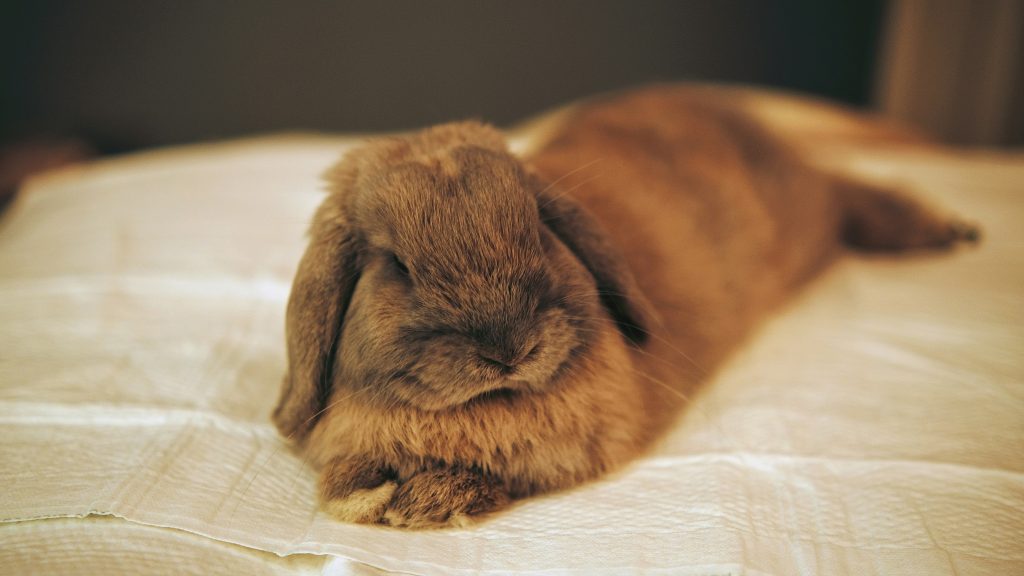
Usually, yes. A relaxed, sprawled posture is one of the clearest signs that a rabbit feels comfortable and secure in their environment. While rabbits cannot express emotion through facial expressions, learning to read rabbit body language gives you a much better picture of how secure they feel, a concept supported by the House Rabbit Society.
When your rabbit sploots out of pure contentment, you will often notice other subtle signs of comfort:
- Gentle Tooth Purring: A soft, rhythmic clicking or grinding of the teeth that signals deep relaxation (distinct from the harsh, loud crunching typical of severe pain described in my guide to rabbit tooth purring).
- Slow Blinking: Eyes heavy and closing slowly as they drift off into a comfortable nap.
- Self-Grooming: Pausing their stretch to groom their face, paws, or ears before sinking right back into the floor.
- Transitioning from Loafing or Flopping: Shifting smoothly between a compact “loaf” position, a dramatic side flop, and a long flat sploot throughout their rest cycle—a fluid progression commonly seen when evaluating a rabbit’s happiness.
4. Splooting vs. Flopping: What’s the Difference?
New rabbit owners often confuse splooting with flopping, as both postures involve a sudden drop to the floor. To help you quickly spot the difference between these two relaxed body language signals, the table below compares their physical traits and behaviors:
Comparison Between Rabbit Splooting and Flopping
| Feature | Rabbit Splooting | Rabbit Flopping |
|---|---|---|
| Body Alignment | Belly rests flat on the ground; legs stretch behind or to the side. | Entire body drops dramatically onto its side. |
| Awareness Level | Usually awake or light resting; ears may track sound. | Often leads into deep sleep; eyes may close fully. |
| Primary Purpose | Relaxing, stretching muscles, or cooling off on floors. | Maximum relaxation and surrender of tension. |
| Reaction Time | Can pull back legs and stand up relatively quickly. | Takes longer to roll up from their side to stand up. |
5. Should I Be Worried If My Rabbit Is Lying Flat?
For the vast majority of healthy house rabbits, seeing your pet lying flat is cause for celebration, not panic. However, because rabbits hide illness until conditions become severe, knowing how to differentiate a healthy sploot from a distress signal is vital.
Normal Signs
A normal, healthy sploot will feature:
- A soft, relaxed abdomen against the floor.
- Normal eating, drinking, and regular droppings.
- Clear, bright eyes and responsive ears.
- The ability to get up quickly when offered a favorite treat.
Why Is My Rabbit Lying Flat But Breathing Fast?
If your rabbit is lying flat and breathing fast, evaluate what happened right before they stretched out. If they just finished a vigorous round of running around, rapid breathing is typically a normal cool-down response as their heart rate settles.
However, if your rabbit has been resting in a cool room without recent exercise and is breathing rapidly, flaring their nostrils, or panting, this is not normal. Rapid breathing while flat can point to severe heat distress, pain, or respiratory issues. Pay close attention to subtle behavioral shifts that point to hidden rabbit pain signs.
If temperatures are high, immediately check for acute indicators of rabbit heat stroke. It is also essential to rule out systemic complications if your rabbit is consistently breathing fast while attempting to rest.
Comparing these subtle changes against typical rabbit breathing patterns and physical traits outlined by the MSD Veterinary Manual makes it much easier to decide when quick emergency intervention is necessary. If you ever observe open-mouth breathing or wide, panicked eyes, contact a vet right away.
Warning Signs That Need a Vet
A normal sploot should look intentional and relaxed. A rabbit that appears collapsed, weak, or unable to change position is very different. Seek immediate veterinary attention if you observe any of the following symptoms alongside a flat posture:
Crucial Warning: If your rabbit is lying flat on their side or stomach and is unresponsive to your voice or touch, treat it as a critical veterinary emergency.
- Inability to Stand: The rabbit tries to rise but cannot support their weight or drags their hind leg.
- Abdominal Pressing: Pressing their belly against the ground while repeatedly changing positions, appearing restless, or showing subtle signs of abdominal discomfort—a common indicator of severe gas pain or gastrointestinal stasis.
- Refusing High-Value Food: Turning away from favorite treats, fresh greens, or pellets. Sudden loss of appetite combined with gut stasis requires immediate action to treat suspected GI stasis in rabbits.
- Extreme Lethargy: Showing no interest in their environment or failing to react when approached, which is especially alarming if your rabbit is lethargic or completely unmotivated by treats.
6. Why Doesn’t Every Rabbit Sploot?
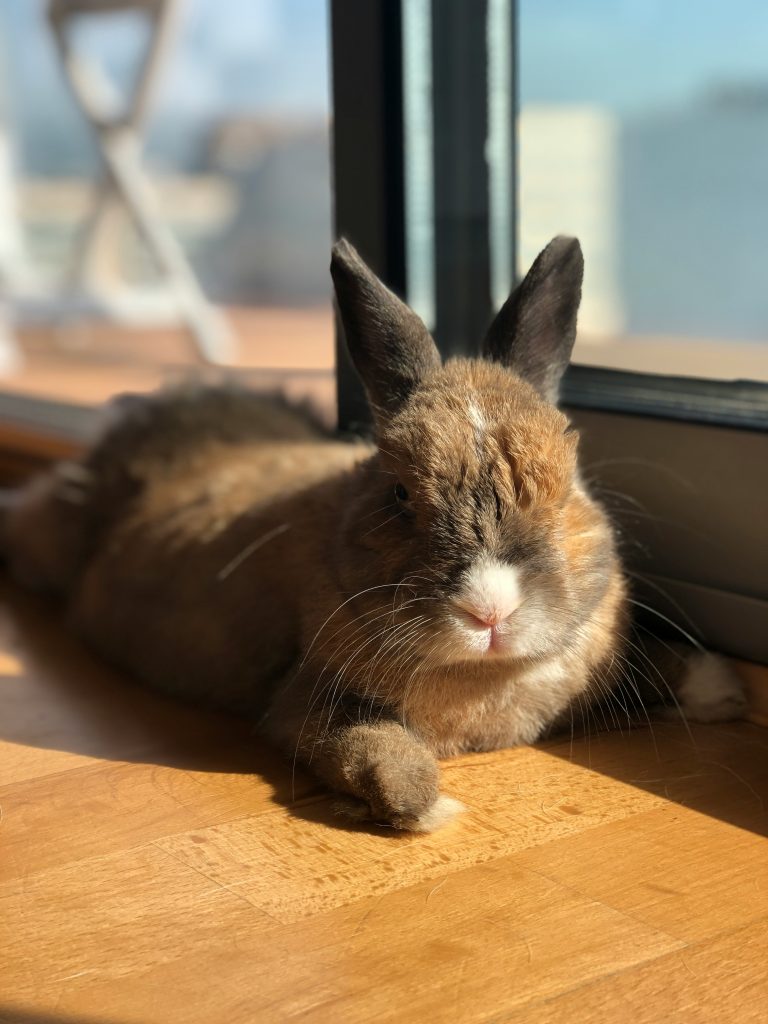
If your rabbit rarely or never sprawls out flat on the floor, don’t panic! It doesn’t mean your pet dislikes you or feels unsafe. Splooting frequency varies based on several individual factors.
Personality
Just like us, every bunny has their own favorite way to unwind. Some love tucking themselves into a neat little “loaf,” while others go full dramatic and roll right onto their sides in a flop. It usually just comes down to personal preference and how they like to settle in for a nap.
Flooring
Rabbits lack padded paw pads on their feet and rely on thick fur for traction. Some rabbits prefer certain surfaces because of temperature, traction, or overall comfort. A rabbit may choose tile because it feels cool against their belly, while another may prefer plush carpet because it provides softer footing, which also helps prevent uncomfortable conditions like sore hocks.
Age and Mobility
Younger, highly flexible rabbits tend to sploot far more often. As rabbits age, joint stiffness and degenerative conditions can make extending the hind legs uncomfortable, often manifesting as sudden reluctance to hop or visible limping in older bunnies.
If an older rabbit suddenly stops lying flat or struggles to adjust their position, explore gentle options for arthritis treatment to keep their habitat accessible.
7. How to Keep Your Rabbit Comfortable
Providing a safe environment encourages your rabbit to stretch out and relax with confidence without overcomplicating their care:
- Provide Safe Flooring: Offer soft fleece blankets or rug runners alongside uncarpeted areas so your rabbit can choose between traction and cool surfaces.
- Control Room Temperature: Keep your rabbit’s environment comfortably cool, especially during warm weather, and watch closely for signs of overheating using simple summer care strategies.
- Ensure Adequate Room: Make sure your rabbit’s setup gives them plenty of space to stretch out full-length without bumping into any walls—sprawling out requires a little extra elbow (or leg) room!
8. Frequently Asked Questions
Why is my rabbit lying flat with its back legs stretched out?
Your rabbit is lying flat with its back legs stretched out because it feels comfortable, safe, and relaxed. Many owners ask why their rabbit lies flat like a pancake—sprawling out simply allows them to relax their muscles or cool down their belly on a cool floor surface.
Is rabbit splooting normal?
Yes, splooting is a normal and healthy posture for domestic rabbits. It is one of the clearest body language indicators that your rabbit feels secure in their living environment.
Why does my rabbit lay flat but still have their eyes open?
Rabbits often rest with their eyes partially or fully open because they are prey animals that remain instinctually aware of their surroundings. A relaxed rabbit may appear awake while comfortably splooting and resting their body.
Can rabbits sploot when they’re sleeping?
Rabbits can and do sploot while sleeping. While they often sleep in a loaf position, a deeply relaxed rabbit will stretch out flat with heavy, slow eyelids as they drift off.
Does splooting mean my rabbit is hot?
Not always, but it can be a cooling mechanism. If your rabbit is pressing their belly flat against a cool tile or hardwood floor during warm weather, they are likely using the floor surface to help themselves feel cooler.
Why does my rabbit sploot on tile floors?
Tile floors stay cooler than rugs or carpet. Rabbits sploot on tile to maximize belly contact with the cold surface, helping them manage their body temperature on warm days.
Is splooting different from flopping?
Yes. Splooting involves lying flat on the stomach with legs extended straight back or out to the side. Flopping occurs when a rabbit throws itself onto its side.
Why does my rabbit only sploot sometimes?
A rabbit’s choice of resting posture shifts constantly based on room temperature, recent activity levels, mood, and age. They may sploot on a warm afternoon to cool off on tile, but shift to a compact loaf on carpet when the room cools down.
9. Conclusion
Seeing your rabbit lie flat across the floor—whether they are stretching out after a bout of zoomies, cooling off on a cold tile surface, or simply taking an afternoon nap—is almost always a reassuring sign of a comfortable, secure bunny. Splooting is a clear body language signal that your pet trusts their surroundings and feels safe letting their guard down in your home. While sprawling flat is normal, everyday behavior, context is key. Pay attention to your rabbit’s overall demeanor, making sure they remain responsive, active, and eager to eat.
As long as your rabbit is moving freely, eating normally, and enjoying their environment, you can rest easy knowing that their dramatic flat posture is just another sign of a content and comfortable companion. To learn how splooting fits into your pet’s full repertoire of vocalizations, postures, and social signals, read my definitive guide to rabbit behavior.
Medical & Veterinary Disclaimer: Bunnyowners.com is an informational resource for rabbit owners and enthusiasts. We are not veterinarians. The content on this website is for educational purposes only and is not a substitute for professional veterinary advice, diagnosis, or treatment. Always consult a qualified veterinarian with any questions or concerns regarding your pet’s health, medical conditions, diet, or overall care. If you have concerns about your rabbit’s health, it’s always best to reach out to a veterinarian rather than relying solely on information found online.