
Veterinary & Affiliate Disclaimer: Bunnyowners.com shares educational rabbit care resources, not professional veterinary advice. Always consult a qualified veterinarian regarding your rabbit’s medical, dietary, or behavioral needs. This post may also contain affiliate links; as an Amazon Associate and affiliate partner, we earn from qualifying purchases at zero extra cost to you.
When a rabbit suddenly stiffens, starts paddling its legs, or collapses, every second feels critical. Witnessing a seizure is an overwhelming emergency for any owner, as the sudden loss of bodily control creates immediate worry about physical trauma, brain damage, or survival. Knowing what is happening in those initial moments, and how to respond quickly, is essential for keeping your rabbit safe.
A rabbit seizure is a serious medical warning sign typically caused by underlying issues like parasitic brain infections (E. cuniculi), deep ear infections, heat stroke, toxins, or metabolic problems. If your rabbit is actively seizing, do not restrain them; instead, clear away hard objects, dim the lights, and keep your hands away from their mouth to prevent injury. Once the active fitting stops, gently transport your rabbit to an emergency exotic veterinarian immediately for diagnostic evaluation and stabilization.
Because a seizure is a physical symptom rather than a standalone illness, uncovering what triggered it is the most vital step toward recovery. As part of my comprehensive rabbit health hub, this article covers how to recognize different types of seizures, essential first-aid steps during an episode, common underlying causes, and what to expect at the vet.
EMERGENCY WARNING
Seek emergency veterinary care immediately if your rabbit:
- Is actively seizing or having repeated seizures back-to-back
- Remains unconscious or unresponsive after the episode ends
- Cannot stand, walk, or maintain balance following a fit
- Experiences labored, shallow, or open-mouth breathing
- Was recently exposed to extreme heat, household toxins, or physical trauma
1. What Does a Rabbit Seizure Look Like?
Brain seizures take several visual forms depending on how much neural tissue is involved. Veterinarians broadly divide these episodes into generalized and focal seizures.
Why Generalized Seizures Look So Dramatic
Generalized episodes involve both sides of the brain simultaneously. During a generalized seizure, a rabbit may lose awareness, collapse onto its side, and experience involuntary muscle contractions. Their body typically stiffens as muscles contract involuntarily, making their legs kick in a rapid, continuous running motion.
Spinal spasms may pull the rabbit’s head backward over their shoulders, a posture known as opisthotonos. As bodily controls loosen, involuntary urination, defecation, or quiet vocalizations can occur.
Why Some Seizures Affect Only One Part of the Body
Focal (or partial) seizures happen when abnormal activity stays confined to a specific area of the brain. The rabbit often stays conscious, though they might look dazed or temporarily disconnected from their surroundings.
Instead of a full-body collapse, you might observe subtle, repetitive movements like ear fluttering, facial twitches, lip-smacking, or rhythmically paddling a single paw. While less dramatic than a grand mal episode, focal seizures still point to a significant neurological disorder that can easily be mistaken for signs of pain, especially during early stages of illness.
Distinguishing Seizures from Normal Sleep Twitching
It is easy to confuse deep sleep with neurological distress. Rabbits in REM sleep regularly twitch their whiskers, flick their ears, and kick their feet in short bursts.
I’ve noticed this with my own rabbits, Mocha and Chino. During deep afternoon naps they’ll sometimes twitch their whiskers, flick their ears, or paddle their feet briefly. The crucial difference is that a sleeping rabbit wakes immediately when gently spoken to or offered a favorite treat, while a rabbit having a seizure remains entirely unaware of its surroundings and cannot be snapped out of it.
Exotic veterinarians often rely on video footage to distinguish true seizures from pain-induced thrashing because many neurological signs disappear before the examination begins. If your rabbit is safe and you have a phone nearby, capture a short 5- to 10-second recording for your vet.
2. How Long Do Rabbit Seizures Last?
Time moves strangely during a medical crisis. What feels like hours to a worried owner is usually a matter of seconds or minutes.
Most Seizures End Within Two Minutes
Many seizures last less than two minutes, although duration can vary depending on the underlying cause and severity of the episode. As the sudden burst of abnormal brain activity dies down, the violent muscle contractions stop, and the rabbit’s body goes limper as breathing stabilizes.
When a Seizure Becomes Status Epilepticus
If a seizure continues for several minutes without stopping, or if multiple seizures occur without your rabbit regaining awareness between episodes, this is a critical emergency. Extended fitting causes body temperature to spike dangerously high and deprives brain tissue of essential oxygen.
What to Expect During Recovery
Following a seizure, most rabbits enter a recovery period known as the post-ictal phase. For anywhere from 15 minutes to a couple of hours, your rabbit may seem exhausted, unsteady on their feet, or temporarily blind. Giving them a quiet, dimly lit space to rest helps their brain recover smoothly.
3. What Should You Do If Your Rabbit Has a Seizure?
Your primary goal during an episode is keeping your rabbit safe from secondary injury. Most fits run their course quickly, but your actions during those brief moments matter.
Protect Them From Injury (Immediate)
Move hard toys, litter boxes, water bowls, or wire grids away from your rabbit. Placing a soft towel nearby gives them a cushioned surface if they are thrashing on hardwood or tile.
Reduce Sensory Stimuli (Within 10 Seconds)
Turn off bright lights, close room doors, and shut off loud appliances or TVs. Reducing noise and light helps calm an overstimulated nervous system.
Never Restrain Your Rabbit (Critical Safety Rule)
Avoid holding your rabbit down or holding their legs still. Fighting against involuntary muscle spasms can cause them to break their back legs or spine.
Keep Hands Clear of the Mouth (Injury Prevention)
Rabbits do not swallow their tongues during seizures. Putting your fingers near their mouth increases the risk of accidental, severe bite wounds from jaw clamping.
Time and Document the Episode
Check the clock as soon as you notice the episode. If you can do so safely without delaying care, record a quick 5-second video for the vet.
Transport Safely to an Emergency Vet
Once active thrashing stops, gently scoop your rabbit into a towel-lined carrier. Keep the car cool, quiet, and well-ventilated on the way to the clinic.
4. What NOT to Do During a Seizure
Well-meaning attempts to help can inadvertently cause harm during a neurological event. Keeping these precautions in mind helps prevent additional complications:
- Never Hold or Pin Down the Body: Resisting a rabbit’s involuntary muscular movements can break their delicate bones.
- Never Syringe-Feed Liquids or Food: Giving food or water to a dazed or unresponsive rabbit risks sending fluid straight into their lungs.
- Never Douse the Body in Ice Water: Using ice or freezing water to cool a rabbit induces shock and dangerous temperature drops.
- Never Administer Unprescribed Medications: Human or dog anti-seizure drugs can be fatal to rabbits without exact veterinary dosing.
- Never Delay Emergency Care: Even if your rabbit seems fully recovered after a short episode, underlying problems like toxins or low blood sugar can worsen rapidly.
5. Common Causes of Rabbit Seizures
A seizure is a symptom rather than a standalone illness, so identifying what disrupted your rabbit’s brain function helps your vet pinpoint the targeted treatment they need. The breakdown below highlights common underlying triggers, key warning signs, and their urgency level.
Common Causes of Rabbit Seizures & Warning Signs
| Primary Cause | How It Causes Seizures | Other Signs to Look For | Priority Level |
|---|---|---|---|
| Heat Stroke | Extreme heat causes brain swelling and tissue damage. | Red ears, drooling, open-mouth breathing, limpness. | Emergency |
| Poisoning / Toxins | Plant or chemical toxins disrupt nerve signaling. | Drooling, diarrhea, sudden collapse, muscle tremors. | Emergency |
| E. cuniculi Infection | Brain parasites cause localized tissue inflammation. | Head tilt, rolling, eye flickering (nystagmus), weak legs. | Urgent |
| Head Trauma | Falls or collisions cause internal cranial bleeding. | Unequal pupil size, wobbling, altered awareness. | Emergency |
| Inner Ear Infection | Deep bacterial infections spread toward the skull base. | Ear scratching, head tilt, thick ear discharge, rolling. | Urgent |
| Hypocalcemia | Drop in calcium causes nerve instability. | Dental issues, muscle twitches, weak bones. | Urgent |
| Hypoglycemia | Low blood sugar starves the brain of energy. | Weakness, cold ears, low body temp, collapse. | Emergency |
| Organ Failure | Liver or kidney failure releases toxins into the blood. | Lack of appetite, weight loss, pale or yellow gums. | Emergency |
Infectious diseases and metabolic problems are among the important conditions veterinarians investigate when rabbits present with tremors or seizure-like activity.
Environmental emergencies escalate quickly. Heat stroke and poisoning can cause permanent neurological damage within hours, making immediate veterinary care critical if your rabbit is overheated or has eaten something toxic.
Advanced dental disease and deep ear infections can affect structures near the skull and may contribute to neurological symptoms. Catching signs of an ear infection or advanced dental disease early prevents bacteria from breaching delicate inner ear structures.
6. Can Stress Trigger Seizures in Rabbits?
It’s easy to assume a loud noise or frightening experience caused the seizure. In reality, stress is rarely the primary driver in a healthy rabbit.
Sudden fear can lower the brain’s threshold for fitting if an underlying medical problem already exists. When a rabbit panics, its body floods with adrenaline and cortisol, raising heart rate and blood pressure within seconds. If brain tissue is already inflamed by E. cuniculi parasites, a deep ear infection, or damaged blood vessels, that sudden surge overstimulates the nervous system.
Stress may lower the seizure threshold in rabbits that already have an underlying neurological problem, but it is rarely the sole cause of seizures.
I’ve tracked this dynamic closely with Mocha and Chino. While Chino reacts to sudden loud noises by thumping his hind foot and seeking cover, his nervous system stabilizes quickly once the noise stops because he is structurally healthy. If a rabbit responds to everyday household stressors by collapsing or seizing, it points toward a health issue that needs professional evaluation.
7. Can GI Stasis Cause Seizures?
Gastrointestinal (GI) stasis does not directly cause brain seizures, but severe gut slowdown can set off a chain of metabolic issues that eventually affect the nervous system.
When digestive movement grinds to a halt, beneficial bacteria die off, gas builds up, and severe dehydration sets in. As energy reserves drain, blood sugar drops to dangerously low levels. Severe metabolic changes, including dangerously low blood sugar, can interfere with normal brain function and may contribute to seizures in advanced cases.
If your rabbit has stopped eating or appears dehydrated, it’s important to learn how to restore normal eating habits safely and recognize the early warning signs of dehydration before metabolic shock develops.
8. Can Rabbits Have Epilepsy?
Unlike dogs, rabbits rarely suffer from primary epilepsy. Most bunny seizures stem from a specific, underlying medical issue, which is why exotic vets investigate other health conditions thoroughly before considering an epilepsy diagnosis.
Primary (Idiopathic) Epilepsy
Primary epilepsy means the brain experiences spontaneous electrical surges without any detectable injury, infection, or blood abnormality. Vets reach this diagnosis strictly by ruling out everything else through blood panels, disease screens, and scans.
Secondary Seizures
The vast majority of rabbit seizures are secondary symptoms. Parasitic infections, deep ear canal bacteria, lead ingestion, brain mass lesions, or severe calcium drops all fall into this group. Research guidelines from the Rabbit.org Foundation E. cuniculi Guide emphasize that ruling out parasitic microsporidian infections is essential because E. cuniculi is one of the most important infectious causes veterinarians consider when evaluating neurological problems in rabbits.
Tracking subtle changes through a general rabbit health guide framework and performing regular at-home health checks makes it much easier to spot early physical or neurological warning signs before they escalate into emergencies.
9. What Your Vet Is Looking For
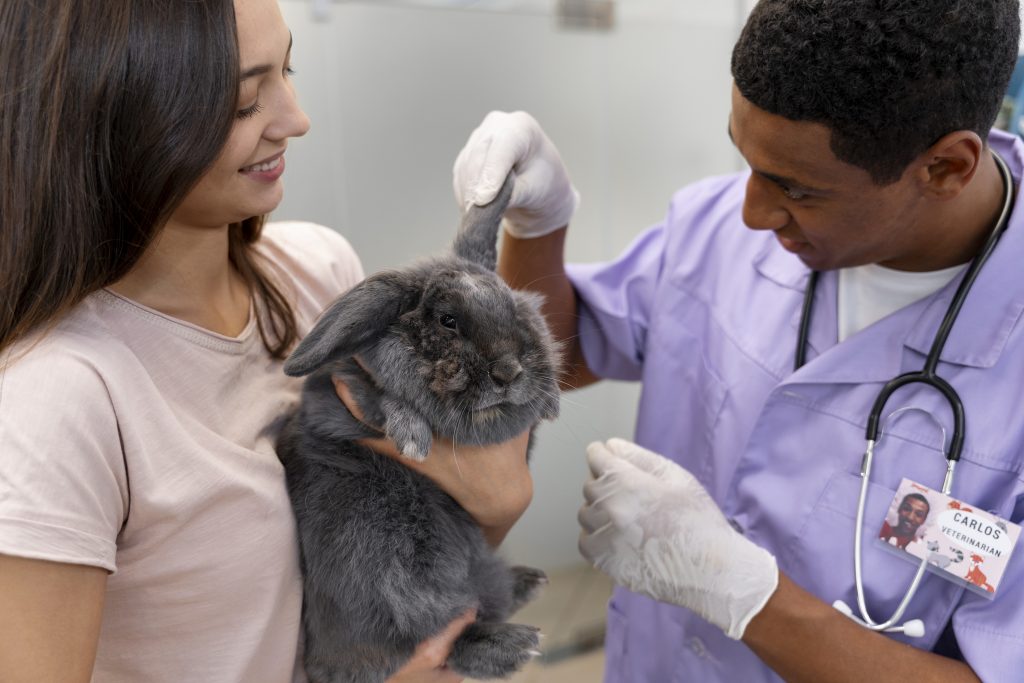
Your veterinarian’s main goal isn’t just stopping the active fit, it’s figuring out why it happened so they can target the root cause.
During an emergency evaluation, the veterinary team typically focuses on several diagnostic steps:
- Neurological Examination: Testing eye reflexes, cranial nerves, and limb responses shows whether specific brain paths or spinal nerves are affected.
- Blood Chemistry & Glucose Testing: A small blood sample checks for low blood sugar, calcium drops, or organ stress in the liver and kidneys.
- Ear Canal Examination: Deep ear infections (otitis interna) can break through thin skull bones near the brain, requiring close otoscopic inspection.
- Serology Screening: Titer tests check for active antibody levels against Encephalitozoon cuniculi.
- X-Rays and CT Scans: Advanced imaging such as CT scans may be recommended when veterinarians suspect deeper problems involving the skull, inner ear, or jaw.
Advanced diagnostic reviews from the Rabbit.org Foundation further highlight that inner ear disease frequently presents with severe rolling and seizure-like fits while the outer ear canal remains entirely clean.
10. How Rabbit Seizures Are Treated
Treating a seizing rabbit begins with emergency stabilization before transitioning directly into targeted therapy.
If your rabbit arrives at the clinic while actively fitting, fast-acting injectable anticonvulsants like midazolam or diazepam are administered to calm brain activity. Oxygen therapy is initiated to prevent hypoxia, while intravenous fluids support blood pressure and kidney function.
Once the seizure is controlled, treatment shifts toward correcting whatever caused it. A rabbit with E. cuniculi may begin a multi-week course of fenbendazole, while deep ear infections often require prolonged courses of appropriate antibiotics selected by the veterinarian.
Correcting blood sugar and electrolyte abnormalities is essential because metabolic problems can continue contributing to neurological symptoms until they are stabilized.
If the primary trigger cannot be fully resolved, or if your rabbit is diagnosed with primary epilepsy, long-term daily anticonvulsants like phenobarbital or levetiracetam (Keppra) help keep brain activity stable.
11. Can Rabbits Recover After a Seizure?
Recovery depends heavily on what caused the seizure, how long the episode lasted, and how quickly medical care began. While witnessing a seizure is scary, many rabbits recover surprisingly well once the underlying issue is caught and treated.
Expected Recovery Outlook Based on the Cause
| Primary Trigger | Typical Recovery Outlook | Key Factor Determining Survival |
|---|---|---|
| Low Blood Sugar / Heat Exposure | Good to Excellent | Rapid cooling or glucose support before organs suffer damage |
| Early Ear Infection / E. cuniculi | Fair to Good | Starting appropriate antibiotics or antiparasitics early |
| Head Trauma / Toxic Ingestion | Guarded | The physical extent of tissue damage before treatment |
| Status Epilepticus (>5 mins) | Guarded to Poor | Level of oxygen loss and high core body temperature |
Clinical trials archived on NCBI PubMed Central show that rabbits receiving rapid stabilization of oxygen levels and body temperature have significantly higher survival rates and lower risks of permanent brain damage.
12. Possible Long-Term Effects
While many rabbits return to normal behavior within a few days, others may show lingering signs after a major neurological event:
- Persistent Head Tilt (Torticollis): Inner ear or brainstem inflammation can leave the head leaning to one side. Learn how to care for head tilt to help your rabbit eat, drink, and move comfortably.
- Balance Changes (Ataxia): Mild wobbling or back-leg weakness during early recovery weeks.
- Temporary Vision Shifts: Spatial clumsiness while brain swelling cools down.
- Behavioral Changes: Slight adjustments in sleep routines, food preferences, or interactions with bonded cage mates.
13. How to Prevent Future Seizures
Not every neurological issue can be avoided, but good everyday husbandry removes many common environmental triggers:
- Keep Enclosures Cool: Maintain ambient room temperatures below 75°F (24°C) to reduce the risk of overheating, one of the most preventable causes of emergency seizures.
- Rabbit-Proof the House: Secure electrical cords, remove toxic plants, and block access to high areas where falls could cause head injuries.
- Catch Ear Issues Early: Check for head shaking or ear scratching during grooming. Catching outer ear irritation prevents bacteria from traveling inward.
- Feed a Stable Diet: Unlimited grass hay, fresh water, and leafy greens support digestion while reducing the risk of GI stasis and dehydration.
14. Frequently Asked Questions
Can rabbits survive seizures?
Yes. Rabbits can survive seizures if the underlying condition—such as an ear infection, low blood sugar, or early E. cuniculi—is diagnosed and treated promptly by an exotic vet.
How long do rabbit seizures last?
Most fits last between 30 seconds and two minutes. Any seizure lasting over five minutes, or multiple fits without a break, is a life-threatening emergency requiring immediate care.
Should I hold my rabbit during a seizure?
No. Never hold down a seizing rabbit. Restraining their body can fracture their back or legs during muscle spasms. Clear nearby objects and pad the floor with towels instead. After the seizure stops, contact an exotic veterinarian as soon as possible.
What causes sudden seizures in rabbits?
Common triggers include heat stroke, eating toxic plants or chemicals, head injuries, parasitic brain infections (E. cuniculi), inner ear infections, low blood sugar, and calcium drops.
Can rabbits have epilepsy?
Yes, though primary epilepsy is uncommon in rabbits. Most seizures are secondary signs of an underlying health issue affecting the brain, ear canals, or blood chemistry.
15. Conclusion
A seizure is an urgent symptom, not an isolated diagnosis. Even if your rabbit seems to bounce back quickly after an episode, underlying issues like parasitic inflammation, metabolic shifts, or ear infections need professional attention. Staying calm, taking safety steps during the fit, and getting prompt exotic vet care gives your companion the best opportunity for a full recovery.
Medical & Veterinary Disclaimer: Bunnyowners.com is an informational resource for rabbit owners and enthusiasts. We are not veterinarians. The content on this website is for educational purposes only and is not a substitute for professional veterinary advice, diagnosis, or treatment. Always consult a qualified veterinarian with any questions or concerns regarding your pet’s health, medical conditions, diet, or overall care. If you have concerns about your rabbit’s health, it’s always best to reach out to a veterinarian rather than relying solely on information found online.