
Veterinary & Affiliate Disclaimer: Bunnyowners.com shares educational rabbit care resources, not professional veterinary advice. Always consult a qualified veterinarian regarding your rabbit’s medical, dietary, or behavioral needs. This post may also contain affiliate links; as an Amazon Associate and affiliate partner, we earn from qualifying purchases at zero extra cost to you.
If your rabbit’s claws are clicking loudly across the floor, catching on carpet fibers, or curving noticeably past their toe fur, it is time for a trim. Tackling rabbit grooming at home can feel intimidating—especially if you are nervous about cutting the quick, dealing with very dark nails, or trying to keep a wriggly rabbit still long enough to make the cut.
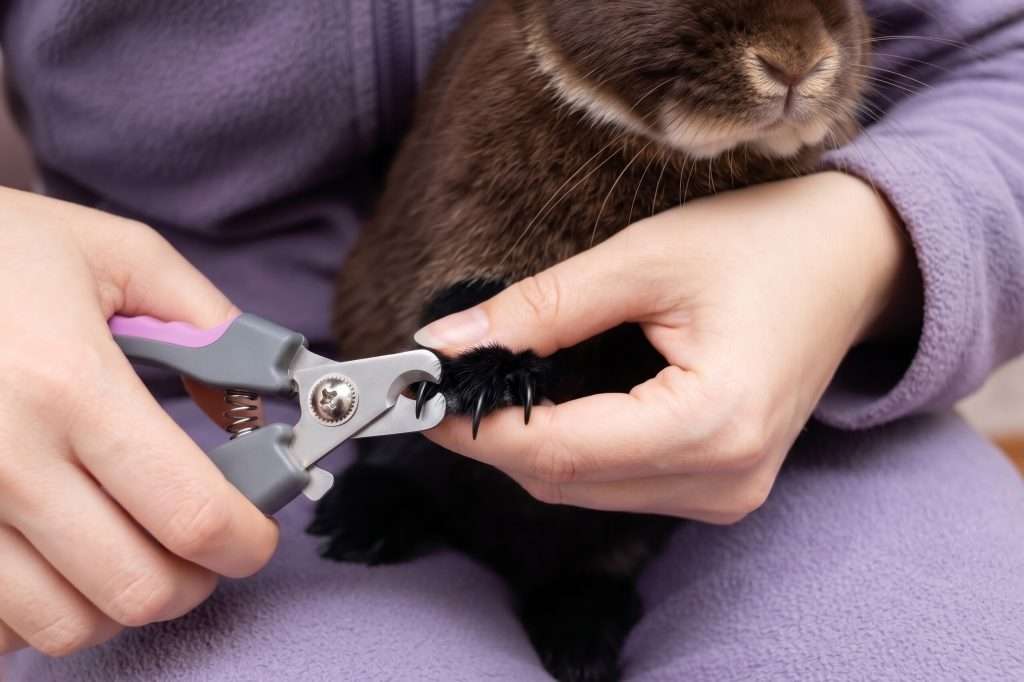
To trim a rabbit’s nails safely, place your rabbit in an upright, supported position on a non-slip towel and isolate one toe at a time. Locate the pink, blood-filled quick inside the nail, then position small-animal scissor clippers 2 to 3 millimeters past that living tissue to remove only the pointed tip. If your rabbit has dark nails, backlight the claw from behind using a small LED penlight and take conservative, millimeter-sized cuts to avoid nicking the quick.
Once you know where the quick ends and how to hold your rabbit comfortably, this essential part of rabbit care becomes far less intimidating. In this guide, I’ll walk you through light and dark nails, squirmy rabbits, accidental bleeding, and what to do with claws that have grown way too long.
1. Rabbit Nail Care: Quick Reference Guide
If this is your first time clipping your rabbit’s claws, the table below outlines the core rules, benchmarks, and safety precautions you need to know before getting started:
Essential Rabbit Nail Trimming Benchmarks
| Topic | Standard Benchmark | Key Care Rule |
| Trimming Frequency | Every 4 to 8 weeks | Inspect claws every 2 to 3 weeks rather than strictly following the calendar. |
| Total Claws | 18 nails total | Don’t forget the inner front dewclaws tucked higher up on the wrists. |
| Cutting Distance | 2 to 3 mm past the quick | Leave a safe margin beyond the pink tissue; remove only the excess tip. |
| Dark or Black Claws | Silhouette with backlighting | Shine an LED penlight from behind; if the quick stays hidden, trim tiny amounts. |
| Overgrown Claws | Progressive shortening | Clip just the hooked tip; trim small amounts over weeks to let the quick recede. |
| Capillary Bleeding | Clots within 1 to 2 minutes | Apply direct pressure with clean gauze or cotton, then pack the tip with cornstarch. |
| Restraint & Stance | Upright and fully supported | Keep feet grounded on a non-slip towel; never place your rabbit on its back. |
2. How Often Should You Trim a Rabbit’s Nails?
Most pet rabbits need a nail trim every 4 to 8 weeks, but there is no set-in-stone schedule. Because growth rates vary and household flooring plays a big role, checking your rabbit’s claws regularly is far more reliable than watching the calendar.
How to Tell When Rabbit Nails Are Too Long
When a rabbit’s nails get too long, they can change how the toes sit against the floor and make hopping uncomfortable. Common signs that nails need a trim include:
- Visible tips: Claw tips extend clearly beyond the fur surrounding the toe pads (though short-coated Rex rabbits naturally show more nail).
- Hooking or curling: Sharp tips curve downward or start turning sideways.
- Clicking noises: Claws click audibly when your rabbit hops across hard floors.
- Snagging: Nails catch on rugs, fleece blankets, or cardboard boxes.
Very long nails change the way the toes meet the ground, making snagging or tearing much more likely during normal hopping and playing.
3. What You Need to Trim Rabbit Nails
Having your gear laid out in advance makes handling much calmer. The following table outlines the essential supplies to have within arm’s reach:
Essential Rabbit Nail Trimming Supplies
| Tool | Purpose | Key Consideration |
|---|---|---|
| Small-animal nail clippers | Makes a clean, controlled cut | Scissor-style clippers with curved, notched blades offer the best control. |
| Thick bath towel or rubber mat | Gives secure footing | Prevents your rabbit from slipping and panicking on slick tables or smooth floors. |
| Small LED penlight | Backlights dark or black nails | Shows the outline of the quick from behind the claw. |
| Cornstarch or styptic powder | Stops minor bleeding | Keep an open container nearby; cornstarch works well without stinging. |
| Gauze pads or clean cotton | Holds firm pressure | Useful for steadying the claw or holding pressure if a nail bleeds. |
| Favorite healthy treat | Post-trim reward | Fresh herbs like cilantro or dill work wonders to rebuild trust. |
Small-animal or cat clippers are much easier to work with because the curved blades fit around the nail. Human nail clippers tend to squash the nail from the sides as they cut, which can leave it cracked or splintered.
4. Understand the Quick Before You Start
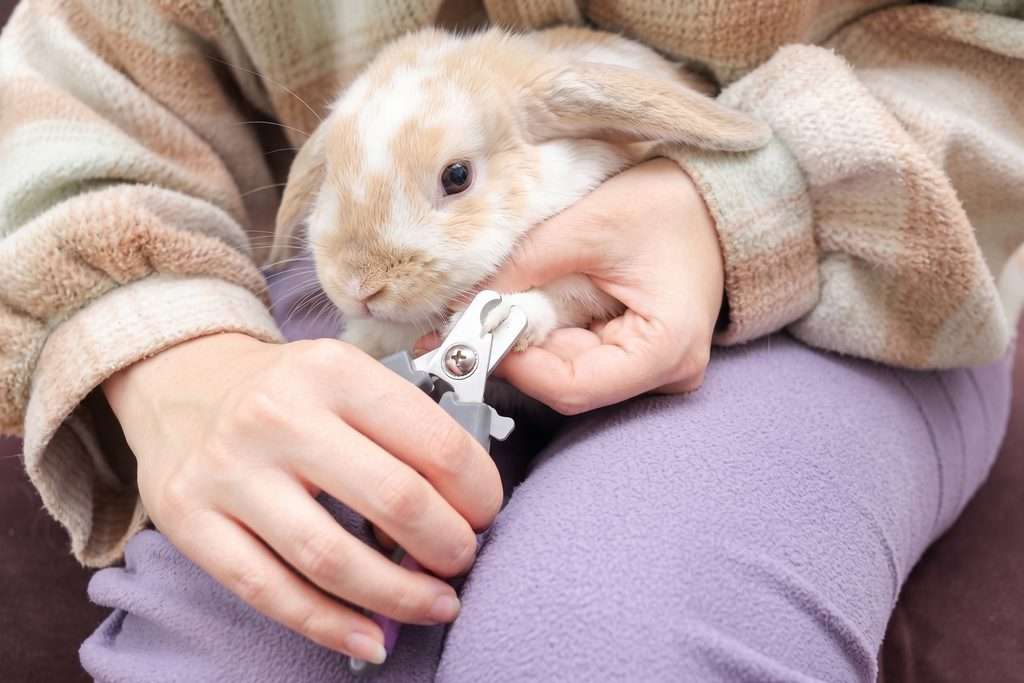
Before you make the first cut, you need to know where the quick is. This is the pink area inside the nail that contains tiny blood vessels and nerves, which is why cutting into it hurts and causes bleeding.
Find where the quick ends, leave a little extra room, and clip only the nail beyond it.
How to Find the Quick on Light-Colored Nails
On a light nail, you’ll usually see the quick as a pink or reddish area running through the center. The clear, pale nail tip beyond that pink section is where you’ll make the cut.
How to Cut Dark or Black Rabbit Nails
The quick is much harder to see through dark nails, so you’ll need to take a little more care. In my home, my rabbits Mocha and Chino make this difference immediately obvious: Mocha has pale nails where the pink line stands out clearly, while Chino has dark claws that require patience and deliberate backlighting.
If you can’t see it clearly, don’t guess. Try this instead:
- Place a small, bright LED penlight directly behind or beneath the dark nail.
- Shine the light through the nail from behind. This can make the darker outline of the quick much easier to see.
- If backlighting still doesn’t reveal the quick clearly, remove only a tiny amount from the pointed tip. It is safer to leave a dark nail slightly long than to keep cutting toward a quick you cannot see.
5. How to Hold a Rabbit for Nail Trimming
Most rabbits are easier to handle when their feet feel secure, so give them a non-slip surface and keep their body well supported.
The Two-Person Method (Recommended)
This is the easiest setup for beginners. One person holds the rabbit securely against a non-slip surface, keeping the chest and hindquarters supported. The other person can then concentrate on one paw at a time without also trying to keep a squirming rabbit in place.
Trimming Rabbit Nails by Yourself
When working alone, set up on the floor so there is zero danger of a fall. Sit cross-legged or with your legs stretched out, tucking your rabbit gently against your side or between your thighs facing outward.
A loose towel wrap can help some rabbits by keeping the other limbs contained while one foot remains exposed. If wrapping makes your rabbit struggle harder, stop and try another supported position.
Why You Should Never Place a Rabbit on Its Back
A rabbit that goes completely still on its back isn’t relaxed. This is known as tonic immobility, a fear-related freeze response, so it’s much better to keep your rabbit upright and supported.
6. How to Trim Rabbit Nails: 7 Steps
Follow these steps to keep the trim as simple and calm as possible.
Step 1: Set Up Your Supplies
Place your clippers, penlight, opened cornstarch, and treats within arm’s reach on a stable surface fitted with a non-slip towel or mat.
Step 2: Position and Secure Your Rabbit
Place your rabbit on the towel in a comfortable upright position. Give your rabbit a moment to settle before handling the first paw.
Step 3: Find the First Nail
Cup a front paw and part the fur around the toes with your fingers.
Keep in mind that domestic rabbits have 18 nails: 5 on each front paw and 4 on each back paw. The inner front nail (the dewclaw) sits higher up on the inside of the wrist and is easily hidden by dense leg fur.
Step 4: Locate the Quick
Inspect the exposed claw in bright light. Look for the pink line on clear nails, or shine your penlight behind darker claws to expose the outline of the quick.
Step 5: Position the Clippers
Align the clipper blades a couple of millimeters beyond the end of the quick. Angle the cut slightly downward to match the natural curve of the nail. Make sure surrounding hair is pulled well clear of the blade.
Step 6: Make One Clean Cut
Hold the toe gently so it does not move while you make one smooth cut. Squeeze the handles cleanly without twisting or pulling. If you cannot clearly see the margin on a dark nail, clip off just the pointed tip; leaving a nail slightly long is always safer than nicking the quick.
Step 7: Check All 18 Nails and Reward Your Rabbit
Work through the remaining toes, remembering to trim the inner front dewclaws. Once finished, release your rabbit and hand over a favorite treat right away to leave a positive final impression.
For a hands-on look at low-stress handling and the “press-check” technique demonstrated on a rabbit, watch this tutorial from Howcast:
7. How Short Should Rabbit Nails Be?
There isn’t one perfect nail length for every rabbit. Coat length varies, and the quick can sit farther down the nail in some rabbits than others. What matters is that the nails aren’t curling, twisting sideways, constantly snagging, or changing the way your rabbit stands and hops.
While visible length relative to the surrounding toe fur can serve as a helpful clue, it is far more important to make sure the claws do not alter the way your rabbit normally stands or hops.
8. What If Your Rabbit’s Nails Are Very Overgrown?
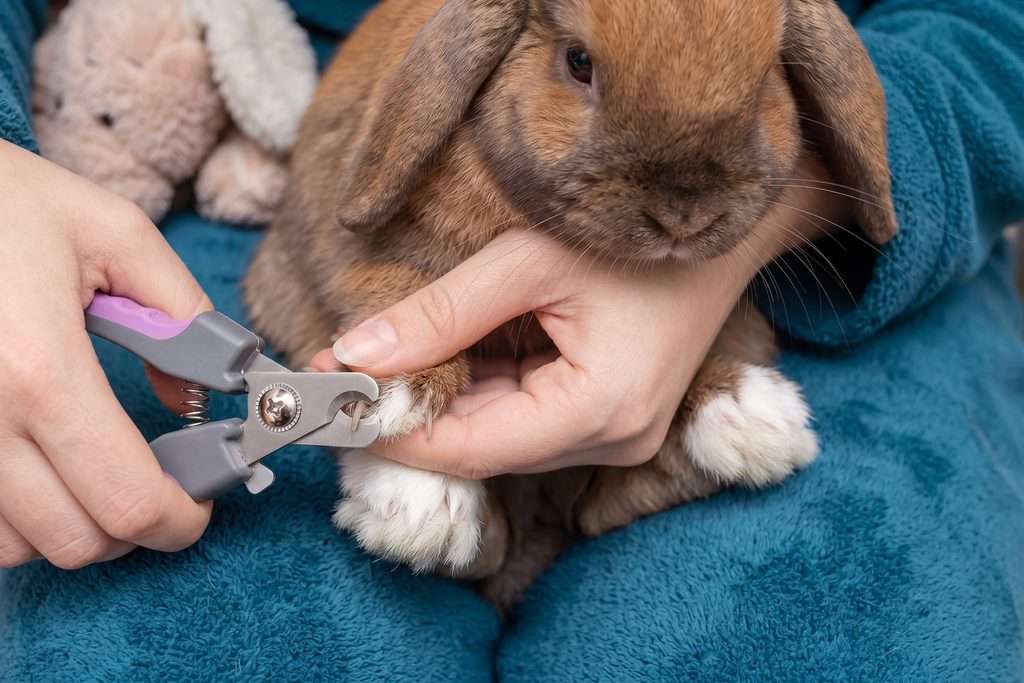
If a rabbit’s nails have been overgrown for a long time, the quick can extend farther down the nail too. Trying to cut a badly overgrown nail short all at once can take you straight into the quick.
Don’t Cut Long Nails Short All at Once
Take only the curved tip at first. By trimming just a little at a time, you may be able to gradually work the nails shorter as the quick recedes. Never try to fix months of overgrowth in a single sitting.
When Overgrown Nails Need Professional Help
If a nail has curled into a full circle, pressed into the foot pad, grown at an awkward angle, or split down toward the base, have a rabbit-experienced vet or vet nurse address it. They can trim the abnormal growth safely and check for sore joints or paw pad scrapes.
9. What Do You Do If You Cut the Quick?
Even careful owners and experienced vet staff occasionally nick a quick. If a drop of blood appears, stay calm—minor bleeding looks worse on white fur or towels than it actually is.
Apply firm, steady pressure directly over the nail tip using a clean cotton ball or gauze pad for about a minute. To speed clotting, press a pinch of cornstarch directly onto the bleeding tip. Keep your rabbit resting quietly on clean bedding or towels for a short time so active running or digging doesn’t dislodge the clot.
If bleeding does not stop with firm pressure, appears heavy, or the nail has torn rather than simply been clipped too short, contact your vet for advice.
10. What If Your Rabbit Hates Having Its Nails Cut?
Rabbits naturally dislike having their feet held. You can build tolerance over time with patient practice rather than forced restraint.
Desensitize With Paw Handling
Practice touching and briefly holding your rabbit’s paws between trims. Stroke your rabbit’s head, work down toward a front leg, and touch the paw for a few seconds before offering a favorite herb. Once your rabbit is comfortable with that, try gently separating the toes and touching the clippers to a nail without actually cutting it.
Split Trims Into Shorter Sessions
You do not have to finish all 18 nails in one go. If your rabbit becomes noticeably restless, trim one or two paws and stop. When Mocha gets fidgety during grooming, I often trim her front paws in the morning and save her back feet for later in the day. Short, positive sessions prevent unnecessary stress for both of you.
Know When to Stop
If your rabbit panics, shows rapid breathing, or struggles hard with repeated twisting, let them go. Never fight a struggling rabbit; intense kicking against heavy restraint can risk spinal injuries. Pause, let your rabbit relax, and try again later.
11. Common Rabbit Nail-Trimming Mistakes
A few mistakes are especially easy to make:
- Cutting too close to the quick: Clipping without a safe buffer increases the risk of nicking the blood vessel if the rabbit flinches.
- Taking too much off overgrown nails: Forgetting that the quick has grown longer inside neglected nails and needs time to pull back.
- Missing the front dewclaws: Overlooking the inner wrist claws, allowing them to grow unchecked.
- Trimming in poor lighting: Working in dim rooms without direct illumination or a penlight for darker nails.
- Putting the rabbit on its back: A motionless rabbit isn’t necessarily relaxed, so keep them upright and supported instead.
- Continuing through high stress: Refusing to take breaks when a rabbit shows obvious signs of distress.
12. When Should a Vet Trim Your Rabbit’s Nails?
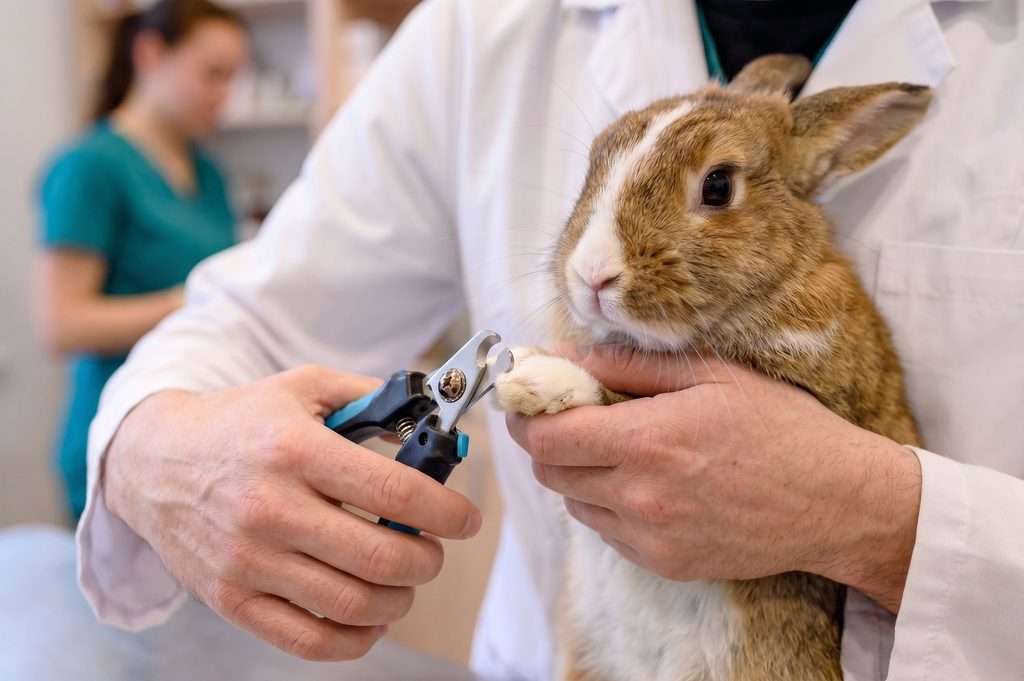
There are also times when it’s better to let a vet or vet nurse handle the trim:
- You want an in-person demonstration before trying your first home trim.
- All of your rabbit’s nails are very dark and you cannot locate the quick.
- Nails are curled, split, or causing awkward foot posture.
- Your rabbit has arthritis or another condition that makes paw handling painful.
- Your rabbit panics so severely that safe handling at home is not possible.
A quick vet clinic appointment can keep your rabbit comfortable while you gain confidence handling their feet.
13. Frequently Asked Questions
Do rabbits naturally wear their nails down?
Wild rabbits wear down their claws through constant digging and running over abrasive soil, but domestic rabbits rarely encounter enough rough surfaces indoors to manage claw growth naturally.
Can I trim only a few rabbit nails at a time?
Yes. Trimming a single paw—or even one nail a day—is an excellent strategy for nervous rabbits that become stressed from being held for too long.
How many nails does a rabbit have?
Rabbits have 18 nails in total: five on each front paw (including the inner dewclaw) and four on each rear paw.
Can a vet trim rabbit nails?
Yes. Most veterinary clinics and vet nurses offer quick nail trims and can demonstrate proper restraint and cutting techniques for home care.
14. Keeping Foot Care Stress-Free
Rabbit nail trimming becomes much easier once you know how to locate the quick and keep your rabbit securely supported. Work in good lighting, trim a little at a time, and don’t worry about finishing every nail in one session if your rabbit becomes restless. If you cannot confidently see the quick or your rabbit’s nails are severely overgrown, a rabbit-experienced vet or vet nurse can safely handle the trim.
Medical & Veterinary Disclaimer: Bunnyowners.com is an informational resource for rabbit owners and enthusiasts. We are not veterinarians. The content on this website is for educational purposes only and is not a substitute for professional veterinary advice, diagnosis, or treatment. Always consult a qualified veterinarian with any questions or concerns regarding your pet’s health, medical conditions, diet, or overall care. If you have concerns about your rabbit’s health, it’s always best to reach out to a veterinarian rather than relying solely on information found online.