

Veterinary & Affiliate Disclaimer: Bunnyowners.com shares educational rabbit care resources, not professional veterinary advice. Always consult a qualified veterinarian regarding your rabbit’s medical, dietary, or behavioral needs. This post may also contain affiliate links; as an Amazon Associate and affiliate partner, we earn from qualifying purchases at zero extra cost to you.
When rabbits interact, they are not acting randomly. Their behaviors are shaped by natural social instincts developed over thousands of years. Many owners mistake everyday behaviors like mounting, chasing, or chin nudging for sudden aggression, but these interactions are actually structured communication. Knowing how social structures operate helps you recognize whether your pets are simply finding their groove or heading into a real territorial dispute.
Rabbits establish a social hierarchy through non-violent signals like chin marking, mounting, and requesting grooming to reduce group stress and prevent territorial conflict. Identifying the dominant rabbit comes down to observing who receives grooming first, claims top resting spots, and leads exploration. Understanding these subtle communication cues helps owners distinguish normal rank negotiations from dangerous aggression to support a stable, bonded pair.
Rabbits don’t form strict alpha packs, but bonded pairs still establish clear routines around grooming, territory, and daily life. Watching them negotiate rank can be intimidating, but navigating these normal rabbit behaviors is a completely natural part of their lives. To help you navigate this process, this guide breaks down why rabbits establish dominance, how to spot the top-ranking bunny, and where to draw the line between healthy hierarchy work and real aggression—giving you the tools to support a stable, lifelong bond.
Signs of Normal Hierarchy Behaviors
Healthy dominance negotiations are usually brief, predictable, and end without fear or injury. These behaviors show your rabbits are communicating rather than fighting:
- Brief chasing that stops on its own within seconds
- Mounting without biting or injuries
- One rabbit bowing low to request grooming
- Sharing hay side-by-side shortly after interactions
- Both rabbits eating and relaxing comfortably in the same space
1. What Is a Rabbit Social Hierarchy?
A rabbit social hierarchy is the way rabbits naturally organize their relationships within a group. Rather than relying on ongoing physical force, this system uses clear social signals to determine priority during daily activities.
In wild European rabbit colonies, life in the warren revolves around an established pecking order. Wild rabbits live in close-knit groups where burrows, feeding grounds, and territory are all shared. In fact, research on how wild rabbits live together in warrens shows that having a clear pecking order is actually a safety mechanism—it keeps the peace, helps them share space smoothly, and prevents dangerous fights.
Domesticated rabbits retain many of these evolutionary social instincts. Whether you have a free-roaming bonded pair or a small house warren, most bonded rabbit pairs develop a social structure, although some relationships are highly fluid.
Rather than creating tension, a clear social order actually reduces repeated conflict. Once both rabbits agree on their respective roles, daily interactions become smooth, predictable, and remarkably tranquil.
2. Why Rabbits Establish Dominance
Social hierarchy is not an optional personality trait; it is a fundamental survival mechanism embedded in rabbit biology. Understanding the purpose behind this drive helps contextualize why house rabbits exhibit specific dominance behaviors.
Reducing Conflict
The primary evolutionary benefit of a social hierarchy is conflict minimization. Constant physical fighting drains vital physical energy and carries a high risk of injury. By establishing a recognized social order early on, both rabbits avoid the need for repeated physical disputes.
Organizing Daily Interactions
Once hierarchy is established, it quietly influences everyday interactions like grooming, resting locations, and access to favorite resources without requiring daily negotiation.
Maintaining Group Stability
Far from creating an environment of fear, a stable dominance hierarchy provides emotional security. Rabbits are prey animals that thrive on routine and predictability. Behavioral resources on multi-rabbit group dynamics emphasize that establishing a clear social structure helps rabbits settle into their territory, reduce daily tension, and feel secure within their group.
3. Dominance Is Not the Same as Leadership
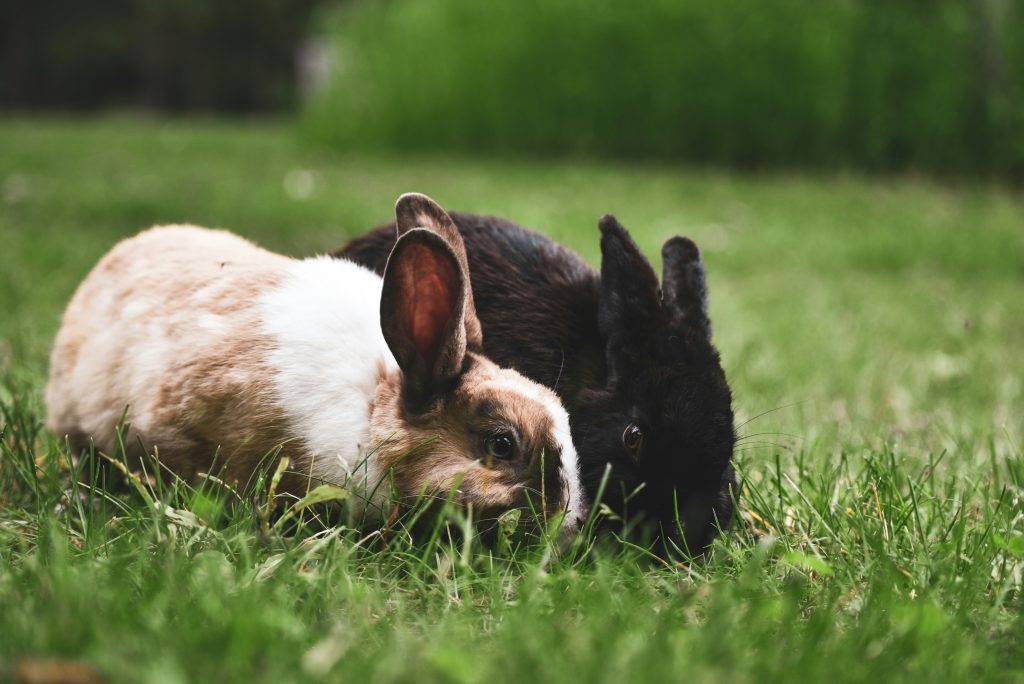
A common misunderstanding among pet owners is confusing rabbit dominance with traditional pack leadership. In dog packs or human social groups, a leader often directs group movement, protects territory, or controls lower-ranking members. Rabbit dynamics operate quite differently.
In domestic pairs, dominance is mostly about small daily preferences: who asks for grooming, who gets first choice of resting spots, and who tends to lead interactions. A dominant rabbit does not “boss around” their partner or direct their daily schedule. Instead, dominance represents a comfortable, mutual understanding where one rabbit asserts their social presence more strongly, while the other comfortably yields space and offers grooming.
Dominance in rabbits is rooted in social reassurance rather than authoritarian control. Healthy pairs share deep affection, sleep side-by-side, and cooperate constantly, regardless of which rabbit holds the top status.
4. How Rabbits Establish Their Hierarchy
Building a hierarchy isn’t something that happens overnight—it’s a gradual conversation between two bunnies. While bonding two rabbits establishes essential trust, working out their hierarchy is what actually shapes their day-to-day dynamic once that foundation is set. It’s rarely an instant brawl or an immediate best-friends scenario; instead, it’s a series of quiet, everyday check-ins until both bunnies feel completely relaxed in their roles.
Rabbits often move through five common stages to settle their relationship:
- 1. Meet & Initial Assessment: Rabbits approach carefully in neutral territory, sniffing noses, observing posture, and circling slowly to assess confidence levels without direct conflict.
- 2. Testing Boundaries: One or both rabbits test submission through chin nudging behavior, brief chasing, or short mounting interactions.
- 3. One Rabbit Yields: For many pairs, a preferred social dynamic develops where one rabbit more often takes the dominant role, although some pairs maintain a subtle or shifting hierarchy. The partner that yields typically responds by lowering their head for grooming, yielding space, or allowing the other priority access.
- 4. Hierarchy Established: Negotiations end. Chasing and mounting cease, replaced by subtle everyday gestures like head-lowering and shared resting.
- 5. Peaceful Bond: The pair shares food, grooms each other mutually, and sleeps side-by-side, benefiting from a secure and predictable social structure as outlined in my comprehensive rabbit behavior guide.
5. Signs Your Rabbit Is the Dominant One
Identifying the top-ranking rabbit in a pair is usually straightforward once you know what subtle cues to look for. Dominance in rabbits is rarely about raw size or loud behavior—it is expressed through social privilege and subtle body language. No single behavior proves dominance on its own; look for repeated patterns across grooming, movement, and resource sharing.
Receives Grooming First
One of the clearest clues comes from their grooming habits. The top bunny is usually the one ducking its head under its partner’s chin and demanding affection. They expect to be pampered first, and mutual grooming explains why dominant partners get showered with far more licks than they ever bother giving back.
In fact, asking for grooming is actually a clever power move—social behavior in paired rabbits shows that the bunny sitting back and receiving all those licks is almost always the one running the show.
Dominant rabbits often investigate and scent-mark new objects first using scent glands located under their chins. When a new toy, cardboard hideout, or litter box is introduced, the dominant rabbit is usually the first to perform this chin marking behavior, releasing gland secretions that carry individual chemical signatures used for territorial demarcation and status confirmation.
When a bunny rubs their chin on furniture or cardboard boxes, they aren’t just playing—they’re leaving behind subtle scent markers that quietly claim territory and confirm their status.
Claims Favorite Resting Spots
When new hideouts or cool lounging spots are introduced, the dominant rabbit takes priority. If they walk toward a coveted spot currently occupied by their partner, the rabbit that yields will usually stand up and move away without a fight.
Shows Greater Confidence During Exploration
The dominant rabbit often appears more confident when exploring new territory or initiating interactions. They are usually the first to step into an unfamiliar room or inspect a new object, while the lower-ranking partner watches carefully before following.
Access to High-Value Resources
The top-ranking rabbit may approach preferred resources first or comfortably claim the prime spot at the food bowl. However, healthy bonded rabbits should still be able to eat, rest, and access enrichment without competition or bullying; always ensure greens and hay are spread out so both rabbits eat comfortably.
6. Signs Your Rabbit Is the Subordinate One
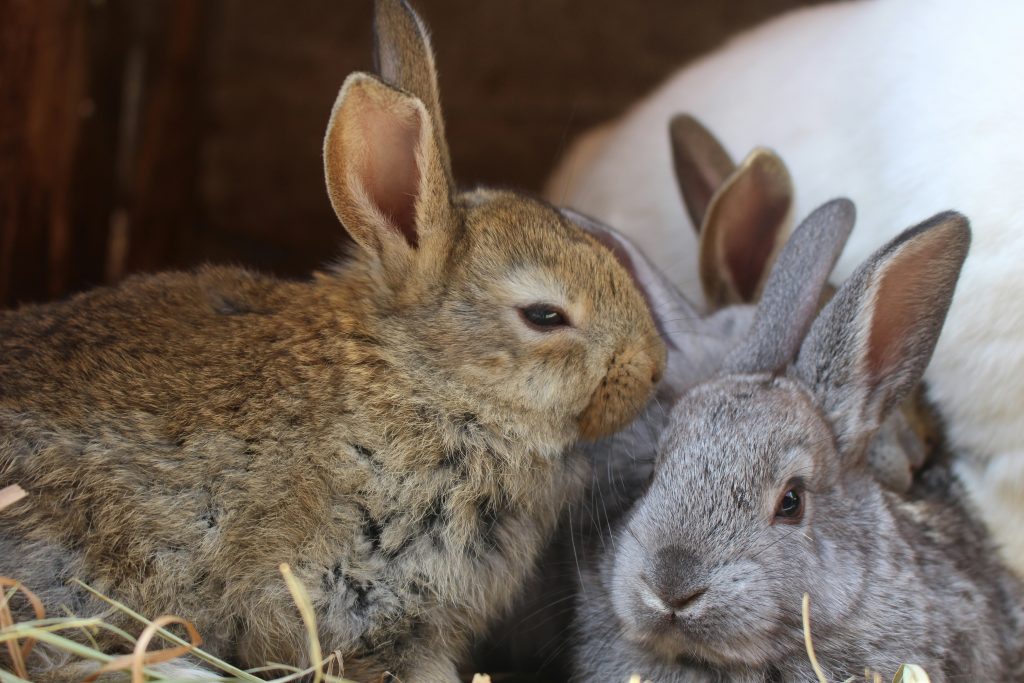
It is easy for owners to misinterpret subordinate behavior as a sign of depression or mistreatment. However, in a healthy, established rabbit hierarchy, the lower-ranking rabbit’s role is peaceful, natural, and entirely comfortable for the rabbit occupying it.
Grooms Their Partner More Often
The more submissive rabbit often grooms their partner more frequently, although many bonded pairs share grooming in both directions to reinforce their social bond and signal compliance during everyday interactions.
Moves Aside Without Conflict
When the dominant rabbit approaches a specific spot or item, the rabbit that yields moves space calmly without showing panic, running away in fear, or displaying defensive postures.
Sleeps Comfortably Beside the Dominant Rabbit
Subordinate rabbits actively seek physical closeness and flop or sleep soundly right next to their partner. This demonstrates that they feel completely safe and secure in the partner’s presence rather than intimidated.
Yields Preferred Food First
The rabbit that yields space will often allow the dominant partner to grab the primary treat piece or take the first choice sprigs of herbs before digging in themselves.
Follows Rather Than Leads
Lower-ranking rabbits often prefer letting their partner explore new rooms or investigate unfamiliar objects first, taking comfort in following a confident partner’s lead.
7. How Rabbit Hierarchy Appears in Daily Life
Most rabbit relationships aren’t defined by constant dominance displays or dramatic assertions of power. Watching my own rabbits, Mocha and Chino, I’ve seen how hierarchy usually reveals itself in small, quiet moments: who demands grooming first, who investigates new objects, who claims the best resting spot, or who follows the other’s lead.
What has surprised me most is just how quickly overt rank testing fades away. Their daily dynamic becomes so subtle that you might assume neither rabbit is in charge—until a new hideout or fresh sprig of herbs enters the room.
For instance, when I scatter fresh cilantro, Chino will often hop right up to claim the prime cluster, while Mocha calmly moves to the second pile without a second thought. It’s not a dispute or a display of fear; it’s just a smooth, mutual understanding of priority in action.
Because individual gestures happen quickly, mapping these behaviors side-by-side helps clarify which partner holds top standing across typical household routines.
Dominant vs. Subordinate Behaviors
| Trait / Behavior | Dominant Rabbit | Subordinate Rabbit |
|---|---|---|
| Grooming Dynamic | Demands and receives grooming first | Grooms partner more frequently |
| Movement & Exploration | Leads exploration into new spaces | Follows partner’s lead |
| Resting Spots | Claims primary hideouts and spots | Yields space gracefully without conflict |
| Scent Marking | Chin-marks new objects first | Less territorial with shared items |
| Treat Priority | Gets first access to high-value food | Waits or takes secondary access |
| Sleeping Behavior | Lounges comfortably anywhere | Sleeps soundly alongside the dominant partner |
No single behavior proves dominance on its own. Rabbits communicate through ongoing patterns, and the overall quality of the relationship matters far more than any individual action. A rabbit that receives grooming first but still shares food, rests comfortably, and interacts peacefully with their partner is experiencing a healthy, stable hierarchy.
8. Normal Hierarchy vs. Harmful Aggression
Knowing when to step in and when to let your rabbits work things out naturally is essential for successful bonding and care. Distinguishing between normal rank negotiation and genuine fight responses ensures your pets stay safe without unnecessary human interruption.
When tension kicks up, deciding whether to step back or step in comes down to reading their body language. It’s safe to let minor mounting and quick chases play out during rank disputes, but you’ll want to jump in immediately if they lock together or start causing actual harm during bonding.
How to Tell Normal Hierarchy from Fighting:
- Normal Hierarchy: Brief mounting, short chases (5–15 seconds), grooming requests, brief fur displacement without biting, both rabbits relax nearby afterward.
- Dangerous Fighting: Locked “tornado” fighting, deep biting/lunging, bleeding or open wounds, high-pitched screaming, relentless chasing where one rabbit cannot escape.
Hierarchy Negotiation vs. Dangerous Fights
Understanding the subtle differences between normal rank negotiations and genuine aggression is essential for keeping your rabbits safe during introductions or territory shifts. The table below outlines what normal hierarchy building looks like versus the clear signs that mean you need to step in immediately:
| Action Required | Behavior Observed | What to Look For |
|---|---|---|
| Let Them Work It Out | • Brief mounting • Short, soft chases • Grooming requests • Brief fur displacement without biting • Rabbits relax nearby afterward | Short bursts (5–15 seconds) followed by calm breaks. No injuries, skin breaks, or panic. |
| Separate Immediately | • Locked “tornado” fighting • Deep biting / lunging • Bleeding or open wounds • High-pitched screaming • Relentless chasing where partner cannot escape | Nonstop aggression where one rabbit is trapped, terrified, or taking actual damage is a clear sign to step in. If you’re dealing with aggressive rabbit behavior, it helps to know when a dispute has crossed the line from normal squabbling into a dangerous situation. |
Healthy dominance displays end cleanly. A brief chase or a quick mount that lasts a few seconds and results in both rabbits relaxing nearby is entirely normal. Conversely, if chasing is nonstop, or if the rabbits lock together in a tumbling ball of fur, this is not hierarchy establishment—it is a dangerous fight.
9. Common Misunderstandings About Rabbit Hierarchy
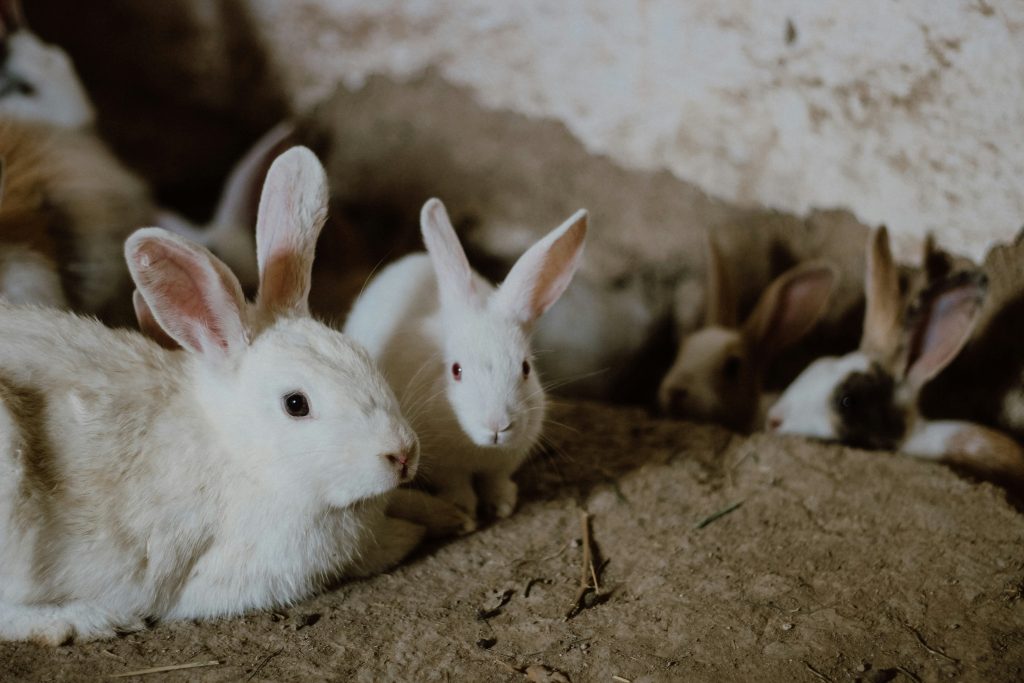
Because rabbit behavior is subtle, human observers often apply dog or cat logic to rabbit social structures, leading to common misconceptions. Dispelling these urban legends helps owners respond calmly to normal social behaviors rather than treating them like training problems.
It is easy to misinterpret healthy rabbit communication through a human lens, especially when normal boundary testing looks aggressive at first glance. For instance, social mounting is rarely about reproduction—it is almost always a simple way for bunnies to establish rank and reassure each other that their space is secure.
Rabbit Hierarchy Myths vs. Facts
Because rabbit communication is so subtle, it’s easy to misinterpret normal social behaviors through a human lens. The table below breaks down common rabbit hierarchy myths versus the actual reality of how bunnies establish rank and trust:
| Myth | Reality |
|---|---|
| Dominant rabbits are bullies | True dominance is calm and quiet. A confident partner creates stability and security for the pair. |
| Subordinates are unhappy | Lower-ranking rabbits willingly accept their role in exchange for companionship, shared grooming, and safety. |
| Mounting always means mating | Fixed rabbits mount each other regularly as a way to assert rank and demand submission, using mounting as a social tool rather than a mating instinct. |
| Grooming is only affection | Demanding to be groomed is a status move. The rabbit receiving grooming is exercising rank. |
| Humans are alpha rabbits | The idea of an “alpha rabbit” is misleading. Rabbits do not view humans as pack leaders and do not form wolf-like packs; their hierarchy is a flexible intra-species social agreement. |
10. When Hierarchy Can Change
A rabbit hierarchy is stable, but it is not permanently set in stone. Ranks can shift over time depending on life stage, health, and environmental changes:
- Immediately (Initial Interactions & Environment Shifts): Ranks fluctuate during new rabbit introductions, neutral territory bonding sessions, or when moving to a new home environment. Ranks may flip back and forth multiple times before settling.
- Temporarily (After Veterinary Visits): When one rabbit comes home from the vet, they bring back weird clinic smells like antiseptic cleaners or other animals. Those strange scents mess with how bonded pairs recognize each other, so you might see a bit of temporary tension and re-negotiation until their familiar home smell comes back.
- Within Weeks (Post-Spay / Neuter): Hormones drive intense territorial behavior. Getting rabbits fixed dramatically cuts down on hormone-fueled aggression, but it usually takes several weeks after spaying or neutering for those levels to drop enough for them to settle into a calm, stable hierarchy.
- Months or Years Later (Aging, Illness, & Group Expansions): If a dominant rabbit grows elderly, develops arthritis, or suffers a health setback, their status may naturally diminish. The healthier, younger rabbit may step into the primary role. Adding new rabbits into an existing group also resets social structures across the warren.
11. Does Every Rabbit Pair Have a Dominant Leader?
Every bonded pair develops a social structure, although some hierarchies are much more subtle than others.
In some pairs, the hierarchy is starkly obvious: one rabbit clearly takes all top perks, demands all the grooming, and leads every activity.
In other pairs, the relationship is extremely subtle or fluid:
- Equal Partners: Some pairs share dominance almost 50/50. Rabbit A might demand grooming in the morning, while Rabbit B takes priority over the favorite sleeping spot in the evening.
- Quiet Passive Hierarchy: The dominant rabbit may be so secure in their position that they never mount or chase, expressing rank through body language alone.
Whether obvious or subtle, as long as both rabbits are eating, lounging comfortably, and showing no signs of chronic stress, the social hierarchy is functioning properly.
12. How Hierarchy Changes in Multiple Rabbit Groups
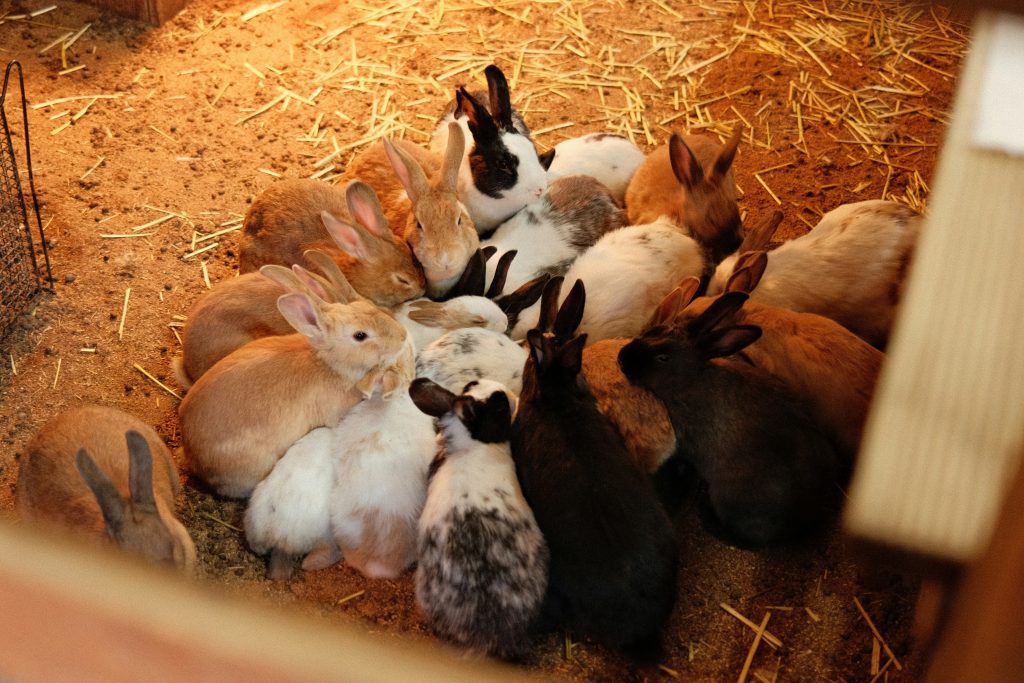
Managing social structures becomes exponentially more complex as you add animals. Bonded pairs represent the simplest, most stable model with only a single relationship line to navigate (Rabbit A ↔ Rabbit B). Once settled, pair hierarchies rarely break down unless triggered by illness or prolonged separation.
In trios or larger groups, relationships become more intricate. Rather than a rigid top-to-bottom ranking system, larger groups develop multiple overlapping relationships:
- Trios: Trios often develop an “odd man out” dynamic where two rabbits form a tighter sub-bond, requiring owners to ensure the third rabbit isn’t subtly excluded from hay feeders or hideouts.
- Large Groups (4+ Rabbits): Warren-style groups feature sub-cliques and localized partnerships where lower-ranking members negotiate standing among themselves without challenging more confident individuals. Multiple litter boxes and feeding stations are required to prevent resource guarding.
13. Frequently Asked Questions
Do rabbits have a pecking order?
Yes. Rabbits naturally organize themselves into a pecking order to determine priority access to food, resting spots, and grooming. This social structure prevents constant fighting within a group.
How do rabbits decide who is dominant?
Rabbits determine rank through confidence displays, scent marking, and non-injurious behavioral tests like mounting, chasing, and demanding grooming. The rabbit that yields and grooms the other typically accepts the subordinate role.
Is dominance normal in bonded rabbits?
Yes, dominance behaviors are completely normal and healthy. Even long-term bonded pairs display subtle daily dominance cues to maintain their social bond and keep their dynamic clear.
Can two rabbits both be dominant?
Two rabbits with very similar confidence levels may have a harder time establishing a stable relationship, especially if neither consistently yields during interactions. However, some well-balanced pairs share duties and have a very fluid hierarchy without fighting.
Can rabbits have no dominant rabbit?
Yes. Some bonded pairs have a very subtle or fluid hierarchy where neither rabbit consistently controls resources or demands grooming. Instead, dominance may shift depending on the situation—one rabbit may lead exploration while the other chooses preferred resting areas.
Does a dominant rabbit love the subordinate rabbit?
Yes. Dominance in rabbits is not the same as hostility or bullying. A dominant rabbit usually forms a deep social bond with their partner, showing strong affection through mutual grooming, resting side-by-side, and seeking each other’s companionship.
Can a female rabbit be dominant over a male rabbit?
Yes, female rabbits (does) are frequently the dominant partner in male-female bonded pairs. Female rabbits are naturally very territorial and often assert their lead status strongly through grooming demands and territorial chin-marking.
Can rabbits change dominance over time?
Yes, bonded rabbits can swap dominant and subordinate roles over time. Ranks often flip due to health issues, aging, hormone adjustments after spaying/neutering, temporary vet clinic scents, or shifts in the home environment.
Should I stop dominance behaviors?
No, as long as the behaviors are non-violent (no biting, deep fur-ripping, or locked fighting). Interrupting minor dominance negotiations prevents rabbits from establishing their rank, which prolongs bonding tension.
Does neutering eliminate dominance?
Neutering does not eliminate dominance, but it removes aggressive hormone-driven competition. Fixed rabbits still establish a hierarchy, but they do so through peaceful, calm communication rather than aggressive chasing or spraying.
14. Conclusion
Once you understand rabbit hierarchy, behaviors like mounting, chasing, and grooming requests stop looking like conflict and start looking like communication. A healthy rabbit relationship is not about one rabbit controlling the other—it is about two animals reaching an agreement that allows them to live together peacefully.
Once rabbits settle into their relationship, life usually becomes much calmer. They know what to expect from each other, which allows them to relax, feel secure, and enjoy a lifetime of quiet companionship. By observing these subtle interactions without over-intervening, you give your rabbits the space they need to build a strong, lasting relationship on their own terms.
Medical & Veterinary Disclaimer: Bunnyowners.com is an informational resource for rabbit owners and enthusiasts. We are not veterinarians. The content on this website is for educational purposes only and is not a substitute for professional veterinary advice, diagnosis, or treatment. Always consult a qualified veterinarian with any questions or concerns regarding your pet’s health, medical conditions, diet, or overall care. If you have concerns about your rabbit’s health, it’s always best to reach out to a veterinarian rather than relying solely on information found online.