
Veterinary & Affiliate Disclaimer: Bunnyowners.com shares educational rabbit care resources, not professional veterinary advice. Always consult a qualified veterinarian regarding your rabbit’s medical, dietary, or behavioral needs. This post may also contain affiliate links; as an Amazon Associate and affiliate partner, we earn from qualifying purchases at zero extra cost to you.
If you have ever wondered whether rabbits feel emotions like love, sadness, or loneliness, you are not alone. Many pet parents want to know if these quiet animals experience true emotional states or simply operate on survival instincts. Because their subtle behaviors differ so drastically from more vocal species, interpreting their world requires looking closely at how they communicate their internal feelings.
Can rabbits feel emotions? Yes, rabbits can experience genuine emotions such as happiness, fear, affection, loneliness, grief, stress, and excitement. They express these complex feelings through their distinct body language, social behavior, vocalizations, postural shifts, and changes in daily routine. Understanding rabbit feelings is essential for building trust and ensuring their psychological well-being.
Because rabbits are prey animals, their emotional expressions are often incredibly subtle and easily missed. This comprehensive guide serves as the definitive resource alongside our general rabbit behavior guides to help you decode their quiet signals, explore how they form deep emotional bonds, and discover what their behavioral patterns reveal about their overall welfare.
1. Do Rabbits Have Feelings?
Rabbits are highly intelligent social mammals, even if their stoic expressions suggest they are permanently computing mathematical formulas in their heads. In the wild, they rely on complex social structures to survive. They form long-term relationships, recognize familiar individuals, and display memory-based emotional reactions. Emotional behaviors aren’t just quirks; they are deeply tied to survival and group bonding.
In a wild colony, emotional awareness keeps the group stable. Fear alerts the warren to a predator, while affection and grooming reinforce the social bonds that keep them cooperative. While animal behavior researchers note that rabbits do not experience emotions exactly like humans, they do feel emotional states such as affection, fear, loneliness, stress, excitement, and grief.
Genetic mapping published in Genome Biology and Evolution highlights that domestication fundamentally altered dopamine signaling pathways within the brain, a change heavily linked to the evolution of tameness and modified emotional processing. For a full breakdown of their instinctual responses, checking my definitive guide to rabbit behavior can give you an exhaustive foundational baseline.
Survival Instincts and Subtle Expressions
If your dog is happy, their tail wags. If they are scared, their whine communicates their stress immediately. In stark contrast, rabbits are driven by prey animal survival instincts and actively hide weakness because advertising your vulnerability in the wild is essentially issuing a dinner invitation to local predators. This results in subtle body language and a very quiet communication style.
This stoicism creates massive misunderstandings. For instance, fear can easily look like calmness. A rabbit freezing in sheer terror or displaying tonic immobility is often misread by well-meaning owners as being “relaxed,” a behavioral misinterpretation highlighted in the Merck Veterinary Manual’s guide on rabbit care. It’s crucial to remember: a quiet rabbit is not automatically a content rabbit.
Rabbit Instinct vs. Emotion
It is easy to confuse instinct with emotion, but the two often overlap beautifully. While some behaviors are purely instinctive, emotional states heavily influence how those instincts are expressed.
Consider the following structural examples of how basic natural rabbit programming directly pairs with their complex underlying psychological responses:
- The Instinct to Hide: This immediate survival flight mechanism is directly triggered by the emotion of acute fear.
- The Instinct to Guard Space: This protective territorial behavior is heavily fueled by the emotion of jealousy or deep structural insecurity, often manifesting as territorial aggression.
- The Instinct to Groom Companions: This repetitive physical socialization ritual is entirely driven by the emotion of social affection.
2. Rabbit Happiness and Fear Explained
When a rabbit feels safe and happy, they don’t hold back, though their celebrations tend to look less like a steady state of joy and more like a series of dramatic physical outbursts. Happy rabbits often binky, zoom around, flop onto their sides, explore confidently, and gently grind their teeth when relaxed and content. A binky is a twisting, joyful leap into the air that looks like a sudden glitch in their physics engine, while zoomies involve sprinting enthusiastically around the room.
You’ll also see them “flopping” dramatically onto their sides as if they suddenly lost all skeletal structure, stretching out fully relaxed, and exploring their environment with bright-eyed curiosity. When petted, they may softly grind their teeth, creating a gentle “tooth purr” that signals immense comfort, a key indicator when assessing how to tell if your rabbit is happy.
Identifying Signs of Fear and Anxiety
There is a massive difference between a rabbit who is temporarily excited (like when they hear the treat bag open and suddenly remember you exist) and a rabbit who is emotionally secure. Temporary excitement is fleeting. A truly content, emotionally secure rabbit displays a consistent appetite, relaxed posture throughout the day, comfortable social behavior, and predictable routines. They don’t just act happy for food; they feel safe in their environment.
Fear is arguably the strongest and most accessible emotion a rabbit has, hardwired into their nervous system through thousands of years of evolution. Because rabbits are a prey species, their nervous systems are exquisitely sensitive to potential threats. They are constantly monitoring the room for sudden noises, quick movements, unfamiliar smells, and environmental changes—essentially living like tiny, furry secret agents in a world where everything might be a trap.
Common Warnings of Acute Distress
Rabbits often show fear through freezing, hiding, flattened posture, thumping, avoiding interaction, wide eyes, or sudden defensive aggression. These specific warning signs are categorized by distinct defensive strategies:
- Defensive Lunging: Snapping forward, biting, or growling when cornered to force a perceived threat to retreat.
- Freezing Perfectly Still: A protective crouching posture designed to blend into surroundings and escape a predator’s visual tracking.
- Bunched/Flattened Stance: Pressing the chest low against the floor to reduce physical visibility while keeping muscles coiled to sprint.
- Wide “Moon Eyes”: Open eyelids that show the clear whites of their eyes, exposing intense nervous system shock.
- Leg Thumping: Forceful impacts with the hind feet against the floor to physically broadcast incoming danger threats to the room.
The Neurobiology of Chronic Household Stress
When fear becomes a constant state, it morphs into chronic stress. Small cages, loud households, a lack of routine, isolation, overhandling, or constant exposure to predator pets can leave a rabbit in a permanent state of anxiety. According to clinical protocols referenced in the House Rabbit Society’s GI Stasis breakdown, this chronic emotional stress heavily impacts their physical health, disrupting their delicate digestion, destroying sleep patterns, and weakening their immune system.
Table 1: Distinguishing Key Differences in Rabbit Emotional States
| Emotional Metric | Temporary Excitement | Long-Term Emotional Security | Chronic Stress and Anxiety |
|---|---|---|---|
| Primary Behaviors | Running to food bowl, alert ears, tracking sounds | Flopping on side, deep binkies, gentle tooth purring | Hiding constantly, leg thumping, moon-eye |
| Physical Stance | Tense but active, sniffing, upright posture | Loose muscles, fully stretched limbs, soft eyes | Bunched muscles, flattened posture, wide eyes |
| Routine Patterns | Sharp, momentary spike in environmental focus | Consistent eating, predictable play, deep rest | Disrupted sleep, nervous grooming, flight mode |
3. Rabbit Affection, Sadness, and Grief
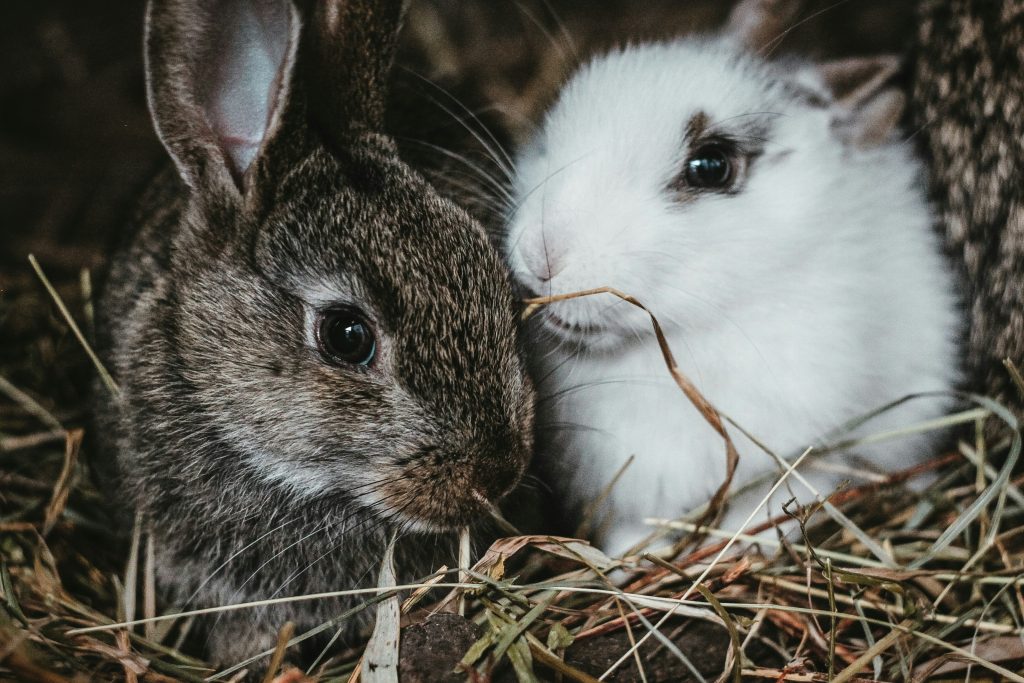
When a rabbit undergoes emotional distress, they typically show sadness through withdrawal, hiding, lower activity levels, and a distinct lack of curiosity. But once you clear those hurdles of fear and isolation, you discover that rabbits absolutely form deep emotional attachments—their affection is just entirely rooted in trust and safety.
A rabbit does not love you with the loud, uncritical devotion of a canine; they love you like a cautious intellectual who has thoroughly vetted your character. They show closeness not through dramatic displays, but through quiet social behaviors that prove they finally feel safe letting their guard down around you.
Common signs of rabbit affection include grooming or licking your hands, following you from room to room, nudging your leg for attention, or sitting right beside you. They may also rest or sleep near your feet, circle your ankles excitedly, or melt completely flat into the floor when you pet their forehead.
The Social Currency of Mutual Grooming
In the rabbit world, grooming is the ultimate social currency and a major bonding behavior. Rabbits only groom individuals they deeply trust and view as part of their family structure. Mutual grooming strengthens emotional bonds and maintains peace in rabbit groups, as documented in behavioral tracking studies published via the National Institutes of Health PMC database.
Deciphering Behavioral Withdrawal and Sadness
While rabbits may not conceptualize sadness through a human psychological lens, they clearly experience deep emotional distress and withdrawal states that look a lot like a clinical sulk. Rabbits can show sadness through withdrawal, hiding, lower activity levels, appetite changes, reduced curiosity, and decreased social interaction.
These signs of emotional withdrawal include hiding significantly more often than usual, reduced exploration, a lack of enthusiasm, sleeping excessively, decreased social interaction, sudden appetite changes, or reduced self-grooming that leaves them looking unkempt. A rabbit can become sad or withdrawn due to the loss of a companion, physical isolation, chronic stress, an un-diagnosed illness, a major disruption to their environment, or simply a severe lack of mental stimulation.
How Rabbits Grieve a Loss
This capacity for deep feeling is most profound during times of loss. Because bonded pairs form incredibly strong, co-dependent attachments, the loss of a companion is devastating. Rabbits can grieve the loss of bonded companions and may show sadness, withdrawal, appetite loss, or behavior changes afterward.
If you are experiencing a loss of young kits in your warren, understand the nuances of how rabbits react when babies die, which highlights the survival-driven versus emotional aspects of their grieving process.
Additionally, many owners notice their rabbits becoming attuned to their own moods, as explored in our deep dive on whether rabbits feel your sadness.
Supporting a Grieving Companion
Grief is highly individual and depends on the rabbit’s personality, the strength of the bond, and their environment. Some rabbits recover their baseline mood in a few weeks, while others may struggle for months. You can support a grieving rabbit by strictly maintaining their daily routine, offering highly palatable greens to encourage eating, and providing extra social interaction.
The psychological welfare guidelines published by the Royal Society for the Prevention of Cruelty to Animals (RSPCA) note that letting a surviving rabbit spend time with their deceased companion’s body can help them physically process the loss and begin recovering, rather than leaving them wandering the house looking for a missing partner.
Table 2: Identifying Behavioral Shifts Across Negative Emotional States
| Signs of Emotional Distress | Temporary Sadness | Deep Grief and Mourning | Chronic Loneliness |
|---|---|---|---|
| Social Engagement | Ignores toys, brief hiding spells | Refuses interaction, checks old rest spots | Attention-seeking or total apathy |
| Grooming Habits | Normal or slightly decreased self-care | Stops grooming, fur appears dull and matted | Compulsive over-grooming or bald patches |
| Nutritional Interest | Eats favorite treats but picks at normal hay | Rejects food entirely, ignores elite treats | Shifts between overeating and food rejection |
4. Rabbit Loneliness and Jealousy
Rabbits are social animals and many become lonely without companionship, interaction, enrichment, or regular emotional stimulation.
The Reality of Social Isolation
In the wild, rabbits live in large colonies. They rely on social grooming to stay clean, sleep huddled together for warmth, and gain immense emotional security through numbers. This deep-seated need for companionship does not disappear just because they live in a living room. Expert data compiled in the Rabbit Welfare Delphi Consensus Study lists social isolation as a top driver for stereotypical stress responses and behavioral decay in domestic rabbits.
Understanding True Loneliness
A lonely rabbit may exhibit desperate attention-seeking behaviors, destructive chewing, or digging at the carpets. Conversely, they may swing the other way into depression-like behavior, overeating out of boredom, or sleeping all day long. Long-term shelter data published by the Universities Federation for Animal Welfare (UFAW) verify that single rabbits display severe stress markers such as abnormal home-pen bar-biting, which drops to zero once paired with a companion.
Solo vs. Bonded Keeping Dynamics
While rabbits naturally thrive with a companion, single keeping requires intensive intervention to avoid emotional distress. The behavioral differences between keeping configurations manifest in very specific ways:
- Human Companion Caveats: A solo rabbit can survive successfully only if their human owner commits to hours of interactive floor-level socialization every evening to replace the missing herd.
- Solitary Housing Consequences: Single rabbits left isolated for long hours frequently descend into lethargy, develop destructive carpet-chewing habits, or show severe bars-biting anxiety.
- Bonded Pair Protections: Rabbits living with an attached companion pass through daily environmental stressors easily, utilizing mutual grooming to balance heart rates and distribute comfort.
Possessive Behaviors and Attention Guarding
Rabbits can display jealousy-like behaviors when competing for attention, territory, social bonding, or resources with humans or other rabbits. This form of jealousy is more about social hierarchy and resource guarding than human spite. It is an emotionally driven response to feeling insecure about their territory or their bonded human.
For instance, my own bonded pair perfectly illustrates this dynamic. If I am sitting on the floor petting Chino, it usually takes about thirty seconds for Mocha to aggressively nudge her way between my hand and Chino’s head. Mocha isn’t acting out of malice; she is expressing jealousy to reinforce her status as the dominant rabbit in our home and ensure she gets the premium resources (in this case, my undivided attention). Common jealous behaviors include nudging forcefully between an owner and another pet, chasing another rabbit away, interrupting petting sessions, marking territory with their chin, or leg thumping.
5. How Rabbits Form Bonds
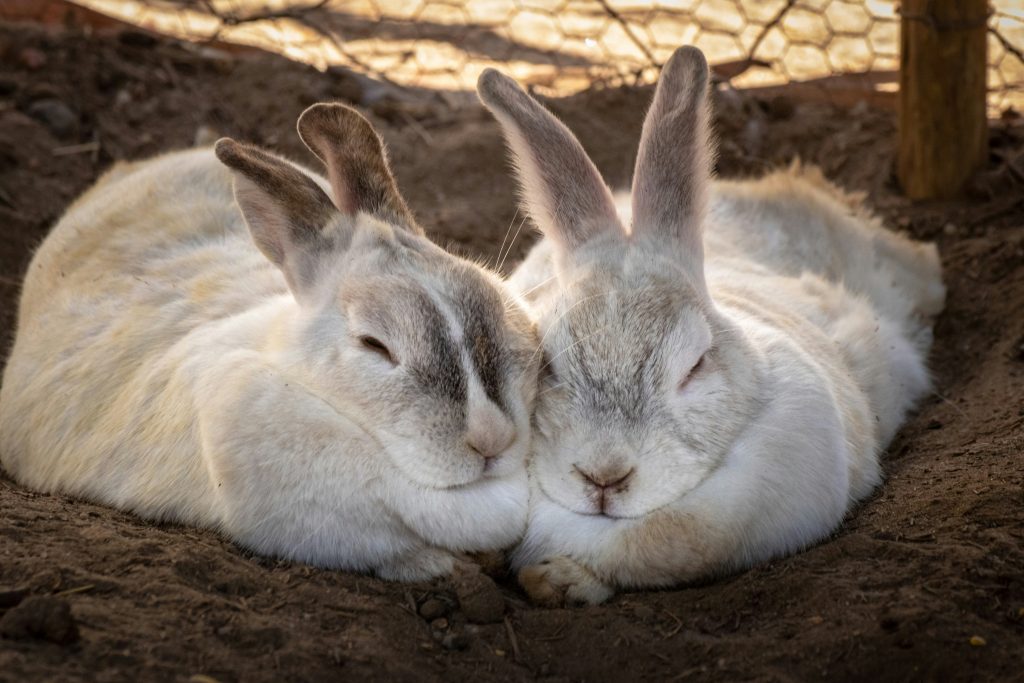
When two rabbits bond, their emotional dependency is total. They engage in mutual grooming, which lowers their heart rates and relieves stress. They sleep pressed firmly against one another and will actively protect each other. To a rabbit, a bonded partner is their ultimate source of emotional safety, transforming them from twitchy individuals into a coordinated team.
Earning Trust to Create Human Bonds
Rabbits form bonds with humans through predictability. They possess excellent memories and learn voice recognition, routine familiarity, and scent recognition. By repeatedly associating you with safety, food, and gentle affection, they transition from viewing you as a gigantic, potential predator to a trusted family member. It is completely natural for rabbits to get attached to people; they can become emotionally attached to trusted people and often seek their presence, attention, comfort, and companionship.
Timeline Factors for Social Attachments
Bonding timelines vary wildly based on personality differences. While every animal operates on an independent schedule, most successful bonding tracks hit specific milestones based on the following general behavioral timelines:
- The Confident Group: Often forms an initial foundation of basic environmental comfort and localized human trust within a single week.
- The Cautious Group: Usually requires two to four weeks of slow, floor-level interaction before consistently seeking out voluntary head pets.
- The Traumatized Rescue Group: Can take several months of strict routine, gentle handling, and soft communication to fully let their defensive guard down.
6. How Rabbits Express Their Emotions
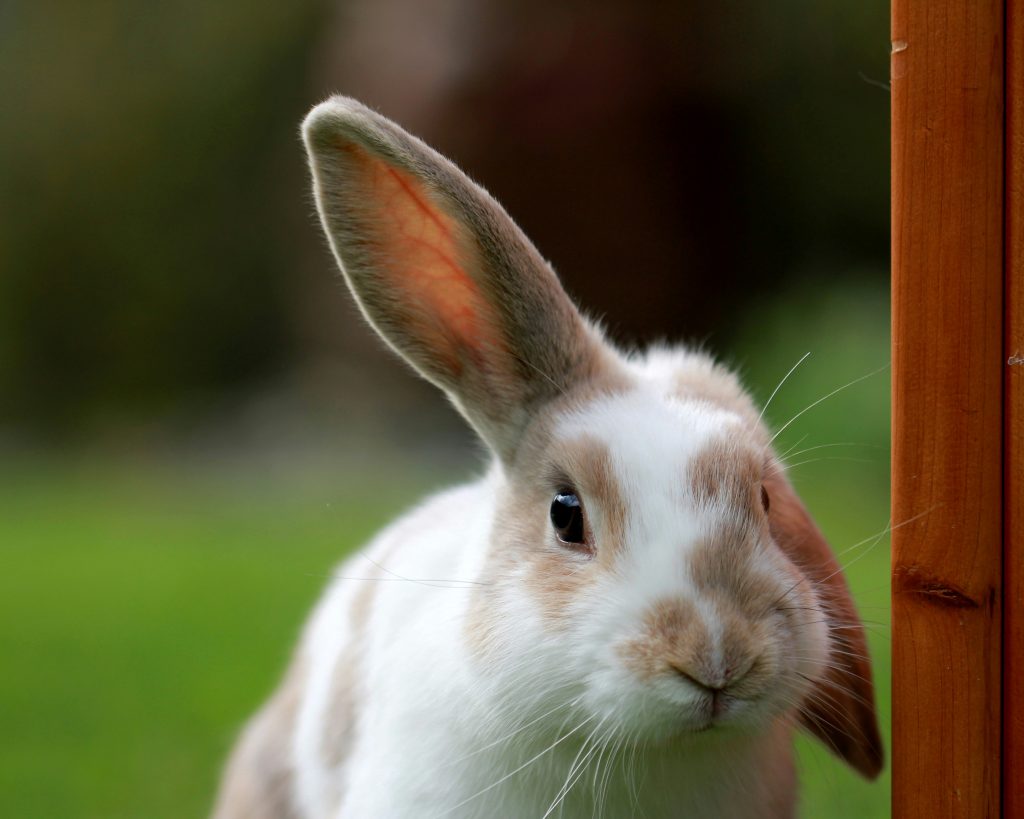
Because they lack the vocal range of other domestic pets, rabbits speak volumes through their bodies. You can understand rabbit emotions by observing body language, posture, vocalizations, energy levels, social behavior, and changes in routine. Ear alignment is crucial: ears facing forward show deep curiosity, while ears pinned flat tightly against the back indicate immediate anger, submission, or fear.
Their posture matches their mood; a relaxed rabbit sprawls out completely, whereas a tense, fearful rabbit bunches up tightly into a low ball, ready to bolt. If you can see the whites of a rabbit’s eyes (moon eye), they are experiencing acute terror, and a tail sticking stiffly out or up indicates excitement or territorial aggression.
Real-World Observational Variances
To give a real-world example of how distinct these personalities can be: when Mocha is frustrated that her dinner is late, her ears aggressively pin back, her tail lifts, and her muscles tense like a coiled spring. Chino, on the other hand, expresses his impatience by simply sitting completely still and staring at me with a look of profound, judgmental disappointment. Knowing their baseline body language helps me instantly gauge their emotional weather.
Table 3: Mapping Rabbit Body Language to Emotional Meaning
| Physical Indicator | Target Posture | Primary Emotion Expressed | Intended Message / Context |
|---|---|---|---|
| Ear Alignment | Rotated forward, alert | Deep Curiosity / Investigation | “What is happening over there?” |
| Ear Alignment | Flat against spine, tense | Immediate Anger / Fear | “Back away from my space right now.” |
| Body Muscle | Extended, flat on belly | Total Security / Comfort | “I feel entirely safe in this room.” |
| Body Muscle | Cropped tight, low ball | Defensive / Terrified | “I am hiding; please do not spot me.” |
| Eye Exposure | Sclera showing (moon eye) | Acute Terror / Panic | Extreme environmental crisis or danger. |
Interpreting Sounds and Vocal Cues
While usually quiet, rabbits do use sound to punctuate strong emotions. You might hear honking or soft grunting when they are excited about food or courtship, or territorial growling when they feel threatened. A sharp squealing sound indicates extreme pain or terror. On a positive note, soft, gentle tooth grinding is a “tooth purr” that signals deep contentment, which must be clearly distinguished from loud, harsh tooth clicking—a glaring red flag for severe internal physical pain.
How Routine Shifts Reveal Internal Feelings
A rabbit’s daily routine is their emotional anchor. Sudden personality shifts—like a fiercely independent rabbit becoming clingy, a gentle rabbit showing sudden aggression, or a food-motivated rabbit refusing treats—are major emotional signals that something in their world is wrong.
7. Can Rabbits Read Human Emotions?
Rabbits are absolute masters of environmental observation. While they don’t understand the intricacies of human psychology, they respond perfectly to calm voices, physical tension, and routine predictability. If you are having a chaotic, emotionally volatile day, your rabbit will notice and likely adjust their plans to stay well out of your path to maintain their own sense of security. Rabbits may not fully understand human emotions, but they can react strongly to tone of voice, stress levels, body language, and environmental tension.
Domestic Emotional Contagion Dynamics
Veterinary behaviorists recognize a phenomenon in pets called “emotional contagion.” Rabbits are highly sensitive to the emotional energy of their environment. A stressful, loud household creates a stressed, anxious rabbit. Conversely, emotional consistency from the humans in the house fosters long-term emotional stability in the rabbit.
Beyond tone and immediate vocal shifts, rabbits read the physical pacing of a room. Rapid stomping or slammed doors translate directly as incoming predatory threats to their nervous systems. Safe, quiet, low-to-the-ground human alignment provides an energetic invitation that allows a rabbit to safely transition from vigilant sentry duty into restful exploration.
8. Common Myths About Rabbit Emotions
Unmasking the “Emotionless” Pet Misconception
Misunderstanding a rabbit’s emotional capacity leads to poor care. Let’s clear up the most damaging myths:
- “Rabbits Don’t Bond With Humans” – False. They bond deeply; you just have to earn their trust on their terms, not a dog’s terms.
- “Rabbits Are Emotionless Pets” – False. Their emotions are incredibly rich, just expressed quietly to avoid predators.
Clarifying Defensive Aggression Labels
- “Aggressive Rabbits Are Mean” – False. A “mean” rabbit is almost always a terrified, hormonal, or territorially insecure rabbit acting out of defensiveness.
Debunking Calmness vs. Silent Suffering Myths
- “Quiet Rabbits Are Always Calm” – False. Fear often causes a rabbit to freeze in total silence to escape predator detection.
- “Rabbits Don’t Miss Other Rabbits” – False. Bonded rabbits suffer severe grief and mourning when separated.
9. How to Care for Your Rabbit’s Emotional Health
Because unpredictability equals danger to a prey animal, building a highly predictable daily feeding and playtime schedule provides immense emotional relief. Alongside routine, mental stimulation is vital because a bored rabbit is a depressed rabbit. The structural wellness resource featured in the PDSA Guide to Preventing Boredom in Rabbits offers targeted options like puzzle toys, foraging mats, and new cardboard boxes to keep their active minds sharp.
Practicing Consent-Based Interaction Guidelines
To support their well-being further, always encourage natural behaviors by providing dedicated digging boxes, safe apple wood for chewing, and plenty of open space to run and jump. Respecting boundaries and consent is the most modern, effective approach to care. Avoid forced handling, let the rabbit approach you voluntarily, and if they hop away, respect their choice. This consent-based interaction builds profound emotional trust.
Structuring Hiding Spots and Safe Spaces
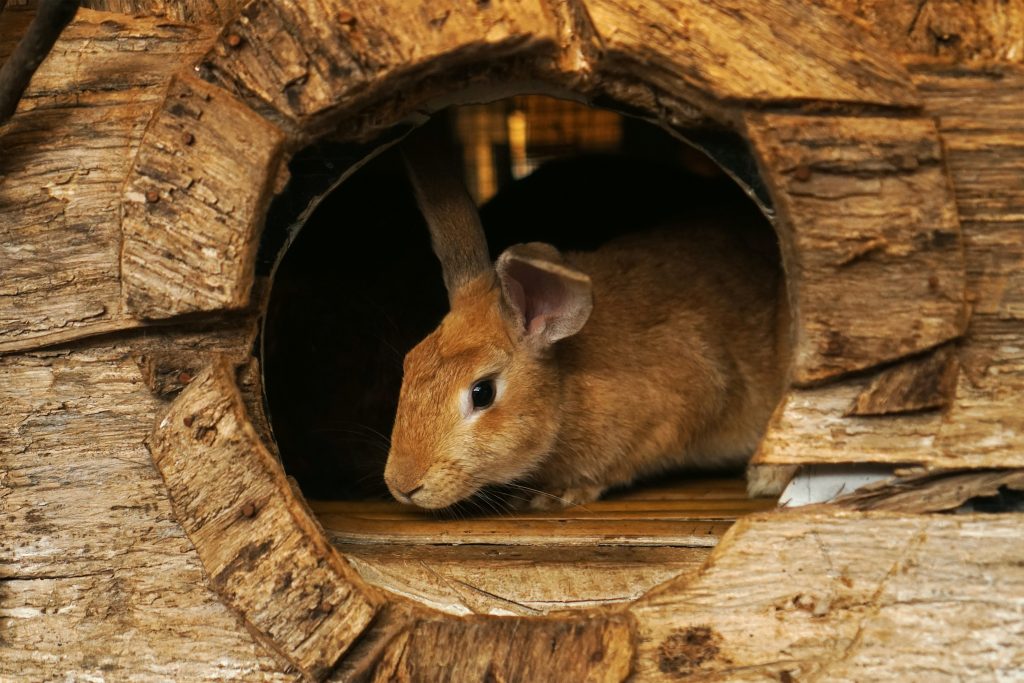
Rabbits feel emotionally secure when they have consistent routines, safe hiding spaces, enrichment, gentle handling, and trusted social bonds. Ensure your rabbit has social opportunities. Whether it is a bonded rabbit companion or hours of dedicated human interaction on the floor every evening, your rabbit needs a flock to feel emotionally whole.
Pheromone Support Systems for Environmental Transition
Veterinary researchers have even developed specialized environmental stress supports, such as introducing synthetic analogues of soothing maternal secretions, commonly known as a rabbit appeasing pheromone, to help them cope with extreme environmental changes.
Table 4: Action Plan for Enhancing Environmental Enrichment and Well-Being
| Target Pillar | Core Care Technique | Primary Emotional Benefit | Actionable Daily Implementation |
|---|---|---|---|
| Environmental Routine | Set meal and play times | Eliminates systemic baseline fear | Give salad at the exact same hour daily. |
| Physical Choice | Open-door hiding boxes | Provides total escape security | Place cardboard boxes with dual exits. |
| Mental Enrichment | Forage mats and chew toys | Curbs deep isolation boredom | Hide fresh pellets inside a folded towel. |
| Interactive Consent | Ground-level socialization | Accelerates human trust bonds | Sit quietly on floor and let them approach. |
10. When Behavior Changes Mean Illness
This is a critical distinction every rabbit owner must make: Physical pain frequently mimics emotional withdrawal. Because rabbits hide illness to avoid looking weak, the first sign of a deadly condition like GI Stasis is often a quiet change in behavior. If your rabbit exhibits sudden appetite loss, excessive hiding, lethargy, or loud tooth grinding, do not assume they are just “sad” or “lonely.”
Research hosted on PubMed regarding small mammal behavior establishes that defensive aggression or a transition into a calm, crouched ‘conservation-withdrawal’ state are key evolutionary markers of physical pain or distress rather than a simple temperamental shift.
Implementing Clinical Grimace Metric Systems
The veterinary experts at Cornell University College of Veterinary Medicine advise that any sudden, unexplained behavioral change, especially accompanied by a refusal to eat for more than 12 hours, warrants immediate veterinary evaluation. Modern clinical diagnostics decode facial micro-expressions using the Rabbit Grimace Scale to isolate physical pain from emotional distress. Always rule out illness before treating a symptom as purely emotional.
Recognizing Acute Versus Chronic Wellness Flags
Differentiating a simple bad mood from a life-threatening GI slowdown comes down to observing choices. To quickly evaluate your rabbit’s true physical condition during a sudden behavioral shift, focus closely on these three diagnostic baseline observations:
- The Treat Test: An emotionally brooding rabbit will reject standard grass hay but greedily grab fresh cilantro, whereas a sick rabbit will refuse everything.
- The Posture Check: A healthy but sulking rabbit maintains relaxed, supple muscles, while a compromised rabbit hunches tightly with their belly pressed flat.
- The Social Boundary: A grumpy rabbit will actively flick their feet at you when walking away, while an ill rabbit simply lacks the physical energy to respond.
Table 5: Differentiating Medical Issues from Pure Emotional Behavior
| Observational Sign | Purely Emotional Behavior | Immediate Medical Warning Indicator | Action Required |
|---|---|---|---|
| Appetite Shifts | Skips standard hay but sprints for fresh treats | Rejects all food, including supreme greens | Emergency veterinary intervention |
| Hiding Location | Rests in a known, comfortable dark hide box | Slumps in unusual corners, won’t exit | Inspect fecal output and stomach tension |
| Teeth Activity | Soft, rhythmic vibration while being petted | Harsh, loud clicking sounds while fully isolated | Screen immediately for severe internal pain |
| Posture Traits | Flopped flat or curled up in comfortable ball | Hunched tightly with belly pressed hard to floor | Check for immediate signs of GI Stasis |
11. Frequently Asked Questions (FAQ)
Can rabbits feel emotions? Yes. Rabbits experience a wide variety of emotional states including joy, fear, stress, affection, jealousy, and deep grief. They just express these feelings quietly through body language.
Do rabbits have feelings like humans? While they don’t possess the psychological complexity of a human, rabbits absolutely feel genuine emotional states that dictate their mood, health, and behavior.
Can rabbits love their owners? Yes. A rabbit shows love and affection through trust. If a rabbit chooses to sleep near you, grooms your hand, or follows you around, they are expressing deep emotional attachment.
Can rabbits get lonely? Absolutely. As colony animals, rabbits require significant social interaction. Without a bonded rabbit partner or extensive daily human interaction, they can become depressed and destructive.
Do rabbits grieve when another rabbit dies? Yes, profoundly. Bonded rabbits depend on each other for emotional security. The loss of a partner often results in severe grief, withdrawal, and potentially life-threatening appetite loss.
How do you make a rabbit feel emotionally safe? Provide a highly predictable daily routine, avoid loud noises, never force them to be held if they are scared, provide ample hiding spots, and ensure their social needs are met daily.
12. Conclusion
Rabbits are beautifully complex, emotionally sensitive social animals. Their emotions directly dictate their behavior, their ability to bond, and their physical health. Every nudge, binky, and thump is a form of communication.
By taking the time to learn their subtle language, you stop treating them like house decorations and start treating them like family members. The better you understand your rabbit’s emotions, the easier it becomes to build deep trust, provide excellent care, and recognize exactly what your long-eared companion needs.
Medical & Veterinary Disclaimer: Bunnyowners.com is an informational resource for rabbit owners and enthusiasts. We are not veterinarians. The content on this website is for educational purposes only and is not a substitute for professional veterinary advice, diagnosis, or treatment. Always consult a qualified veterinarian with any questions or concerns regarding your pet’s health, medical conditions, diet, or overall care. If you have concerns about your rabbit’s health, it’s always best to reach out to a veterinarian rather than relying solely on information found online.