

Veterinary & Affiliate Disclaimer: Bunnyowners.com shares educational rabbit care resources, not professional veterinary advice. Always consult a qualified veterinarian regarding your rabbit’s medical, dietary, or behavioral needs. This post may also contain affiliate links; as an Amazon Associate and affiliate partner, we earn from qualifying purchases at zero extra cost to you.
Walking into a room and finding a rabbit that was binkying three hours ago now sitting motionless and cold is a profound, specific kind of heartbreak. It leaves most owners in a state of “how did I miss this?” because, on the surface, the tragedy feels instantaneous. However, in the world of lagomorph health, these deaths are rarely as sudden as they appear; they are usually the final, visible chapter of a story the rabbit has been trying to hide from you for days.
Do rabbits show signs before sudden death?
Yes, rabbits almost always exhibit subtle warning signs before collapsing, such as severe lethargy, total food refusal, and refrigerator-cold ears. Because their prey-animal instinct is to hide vulnerability, these physical glitches are easily missed and may only become obvious hours before a terminal system failure. Training yourself to look past this stoic mask is critical, as a prompt veterinary intervention during this narrow clinical window is often a failing rabbit’s only chance at survival.
As a researcher-owner, I’ve learned that a rabbit’s “stoic bluff” is a masterpiece of evolutionary biology, but for us, it is a dangerous obstacle. Their warning signs aren’t dramatic sirens; they are tiny, almost invisible glitches in their daily routine that indicate a total system failure is imminent. When monitoring baseline rabbit health, this guide is designed to help you peel back that stoic mask and recognize the “code red” symptoms before they lead to an irreversible collapse. Our goal isn’t just to observe, but to intervene in that tiny, high-stakes window where survival is still an option.
1. Why Rabbits Often Seem Fine Before Suddenly Dying
The “sudden” label we give to rabbit mortality is often a symptom of our own human observation limits, not a lack of rabbit signals. To catch the decline, you have to understand the hardwired hardware your rabbit is running on.
The Evolutionary Mechanics of the “Stoic Bluff”
Rabbits are the ultimate prey animals, and in their world, vulnerability is a death sentence. To survive on the open plains, their ancestors developed an autonomic biological response to pain: the suppression of visible symptoms. When a rabbit feels a massive shift in their internal health, their body floods with catecholamines—primarily adrenaline—which acts as a temporary “cloaking device.”
This allows them to maintain a look of perfect health to avoid attracting the attention of predators. For the indoor owner, this means your rabbit might look “fine” even as their kidneys are failing or their gut has stopped moving. By the time they finally drop the act, they have usually exhausted every ounce of their physical “functional reserve.” They aren’t just starting to feel sick; they are at the finish line of a battle they’ve been losing for hours.
The Metabolic High-Wire Act
Think of a rabbit’s metabolism as a high-speed engine that simply cannot idle. Their digestive system is a 24/7 fermentation plant located in the cecum. Unlike a dog or a human, a rabbit cannot go a day without food; if the movement of the gut (peristalsis) pauses, the pH balance shifts almost immediately. This shift allows pathogenic bacteria like Clostridium to bloom and release toxins.
This transition from “slower digestion” to “toxic shock” can happen in the time it takes you to go to work and come home. According to the House Rabbit Society, this rapid deterioration makes rabbits uniquely fragile compared to other mammals. Their heart rates, which sit at a staggering 200 to 300 beats per minute, leave zero room for cardiovascular error. When they crash, they crash at a speed that feels impossible.
Learning to Spot the “Micro-Symptoms”
In my personal research with my resident rabbits Mocha and Chino, I’ve realized that the “stoic mask” has tiny cracks. For example, Chino has a very specific “ear-vibration” when he’s excited for pellets. If I see him hop toward the bowl but that vibration is missing—even if he still takes a bite—it is a critical data point. Early signs of a collapse are often behavioral absences.
Is your rabbit slightly less curious? Are they sitting more “squarely” on their paws instead of sprawling out? I once noticed Mocha refused to fully transition into her side-flop, staying in a rigid “loaf” for four hours straight. To the casual observer, she was just sleeping. To a informed owner, she was guarding her abdomen against a brewing crisis. You have to train yourself to notice when the “normal” energy of the room feels off.
2. Common Warning Signs Before Sudden Death in Rabbits
When the biological mask finally fails, the symptoms move from subtle behavioral shifts to severe, life-threatening physiological markers.
Total Anorexia: The Refusal of Food and Water
In the rabbit world, a skipped meal is a cardiac event. This is the ultimate “check engine” light. If your rabbit ignores their favorite treat—for Mocha, that’s a fresh, crisp sprig of cilantro—you are in an emergency. The Merck Veterinary Manual points out that just 12 hours without food can trigger hepatic lipidosis, where the body’s attempt to mobilize fat stores actually overwhelms the liver.
I’ve seen rabbits try to “fake” eating—they’ll pick up a pellet, hold it, and then let it drop. This is a sign that the hunger is there, but the pain or nausea is so great they cannot swallow. If a pet displays a total refusal to eat greens or hay, or if the water level remains entirely untouched overnight, you are looking at a system in the early stages of a catastrophic shutdown.
Table 1: The Observer’s Checklist: Normal vs. Critical Warning Signs
| The Observation | Healthy Baseline Behavior | The Red Flag (Emergency) |
| Feeding Response | Demands treats; constant hay munching | Total disinterest in favorite “high-value” foods |
| Physical Stance | Relaxed flops; “dead-bunny” lounging | Tense, rigid “hunched” loaf; eyes squinted |
| Ear Temperature | Warm, responsive, and twitching | Stone-cold, clammy, or excessively hot |
| Mobility | Binkies; fast hops; exploring | Drifting to the side; heavy or “limp” weight |
| Social Pulse | Follows you; chinning furniture | Avoiding all contact; wall-facing in dark corners |
Severe Lethargy and the Agony of the “Hunched” Loaf
Lethargy in a rabbit is distinct from a nap. A lethargic rabbit feels heavy and unresponsive; if you touch them, they may not even twitch an ear. This almost always goes hand-in-hand with the hunched posture. This isn’t a cozy loaf; it’s a pain-guarding stance. The rabbit’s back is arched like a bridge, their head is tucked low, and their eyes are pulled back into a rigid grimace.
They are effectively trying to keep their painful abdomen from touching the floor. If you see this rigid stillness, the rabbit is likely experiencing massive internal pressure or organ distress.
The Instinct to Vanish: Hiding and Isolation
A sick rabbit’s first instinct is to find the deepest, darkest corner and disappear. This is the survival of the hidden. If your usually social companion suddenly decides the back of a closet or the underside of a couch is their only home, leaving your rabbit hiding or acting deeply depressed, they are trying to stay out of sight while they are too weak to defend themselves. This isolation is a major indicator that the rabbit has reached a point where they can no longer maintain the stoic bluff.
Respiratory Red Zones: Labored or Open-Mouth Breathing
Rabbits are obligate nasal breathers. Their anatomy is a one-way street for air through the nose. If you see your rabbit breathing fast, heavy, or open-mouthed, they are in the final stages of respiratory failure. This is often accompanied by stargazing, where the rabbit tilts their head back to try and straighten their airway.
You may also see the sides of their body “pumping” (abdominal breathing) as they use their stomach muscles to assist their lungs. According to the Merck Veterinary Manual, because rabbits have such a small lung-to-body-size ratio, any respiratory glitch can lead to a fatal oxygen deficit in minutes.
Table 2: Respiratory Distress Escalation Scale
| Breath Status | Visual Markers | Urgency Level |
| Standard | Relaxed nose twitching; no sound | Maintenance |
| Flared | Nose moving rapidly; wide nostrils | Warning Sign |
| Pumping | Sides of the belly moving heavily | Emergency |
| Open-Mouth | Gaping; head tilted back; gasping | Critical / Code Red |
Thermal Failure: Cold Ears and Clammy Feet
Your rabbit’s ears are their radiator. While they naturally fluctuate, ears that feel “refrigerator cold” are a sign of circulatory collapse. The body has stopped sending blood to the extremities to try and keep the heart and brain alive. This is a classic sign of shock. Conversely, ears that are “burning hot” can indicate heatstroke, which is equally deadly. If the ears are stone-cold, the rabbit’s core temperature has likely dropped below the safe 100°F floor.
The Sound of Pain: Loud Tooth Grinding
You know the soft “tooth purr” when you pet them? This is the opposite. Loud tooth grinding indicative of severe pain sounds like stones clicking or a gritty, rhythmic crunching that you can hear from across the room. It is a vocalization of extreme pain. If you hear this while the rabbit is hunched, they are likely in the middle of a major digestive crisis or organ failure.
The Drum-Tight Belly (True Bloat)
If you gently touch your rabbit’s sides and they feel like a hard, over-inflated basketball, you are looking at True Bloat. This is different from standard gas. Veterinary Partner explains that as the stomach expands, it crushes the vena cava—the major vein returning blood to the heart. This causes blood pressure to plummet, leading to a sudden, agonizing death. Bloat is a surgical emergency that requires decompression by an exotic specialist immediately.
3. Emergency Symptoms That Require Immediate Veterinary Care
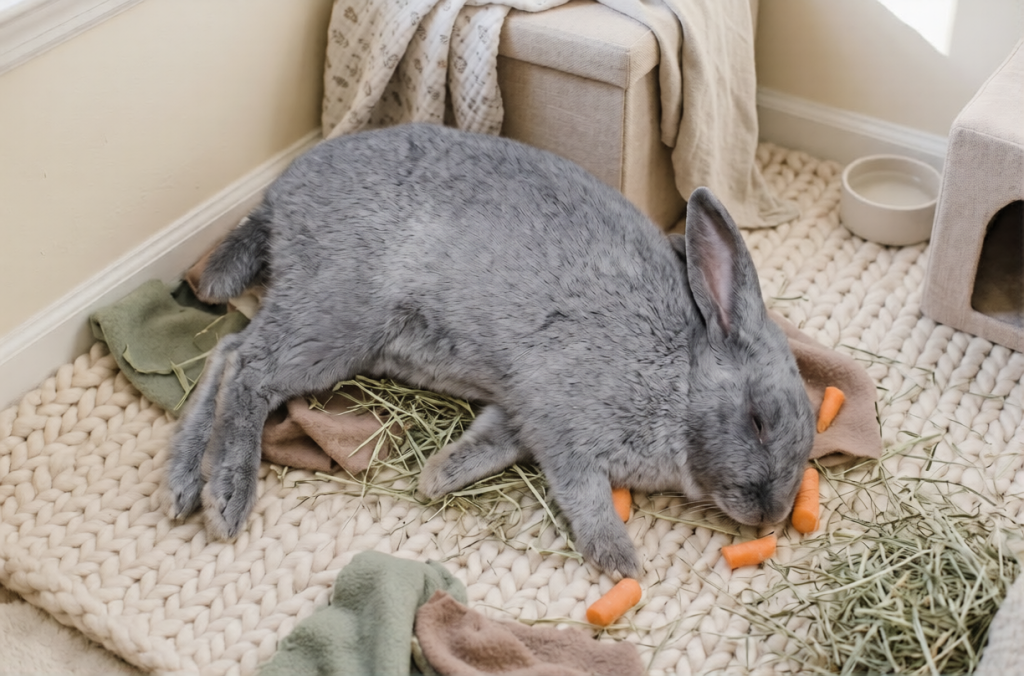
At this point, you have moved past the window of “monitoring” and into “active triage.” Every minute you spend on a forum or a Facebook group is a minute the rabbit’s heart rate is slowing toward a terminal stop.
The Final Indicators of a Systemic Collapse
Collapse is the ultimate failure of the rabbit’s “poker face.” Seek immediate exotic veterinary care if you see:
- Inability to Right Themselves: Stumbling, drifting into walls, or lying on their side with “paddling” legs.
- Cyanosis of the Gums: Lift the lip—if the gums are pale, gray, or blue-ish, the rabbit is suffocating at a cellular level.
- Full-Body Seizures: Uncontrolled twitching or convulsions mean the brain is under attack from toxins, heat, or lack of oxygen.
- Total Unresponsiveness: The “doll’s eye” effect—they don’t blink when touched and don’t react to sound.
Table 3: Circulatory and Vital Sign Triage
| Marker | Target Healthy State | Shock / Collapse State |
| Gums | Bubblegum Pink | Gray, White, or Blue |
| Core Temp | 101°F – 103°F | Below 99°F (Hypothermia) |
| Reflexes | Quick, twitchy, alert | Slow, heavy, or non-existent |
| Balance | Nimble and steady | Falling over; “swimming” on floor |
The “Golden Hour” of Lagomorph Medicine
In the world of rabbit emergencies, the “Golden Hour” isn’t sixty minutes—it’s often less. Because their metabolism is so aggressive, shock moves through a rabbit’s system like a wildfire. Once the body temperature starts to drop and the heart rate slows (bradycardia), the cascade toward death is almost impossible to stop.
A delay of two hours while you “wait for them to wake up” is often the difference between a successful IV treatment and a terminal diagnosis. If your gut tells you it’s an emergency, it was probably an emergency four hours ago.
4. Common Causes of Sudden Death in Rabbits
While the “why” is for the vet to determine, knowing the primary suspects helps you give a better clinical history upon arrival. If you are looking to prevent these underlying issues before they ever reach an emergency state, establishing a strong foundation with my ultimate rabbit health guide is your best long-term strategy.
GI Stasis and the Spiral of Digestive Toxemia
Gastrointestinal Stasis is the silent heavyweight champion of rabbit killers. It starts when the gut slows down due to stress or diet. As the cecal contents sit still, harmful bacteria (like Clostridium) begin to breed and release toxins directly into the bloodstream. This toxemia shuts down the organs. The rabbit looks “a bit quiet” at 6 PM and is deceased by midnight. This is a chemical shutdown, not just a “stomach ache.”
Heatstroke: The Silent Environmental Killer
Rabbits are effectively built for the Arctic, not the tropics. They cannot sweat. When the temperature hits 80°F (26°C), their heart starts racing to pump blood to their ears for cooling. If the environment doesn’t cool down, the heart simply gives out. The PDSA notes that heatstroke can lead to seizures and fatal organ damage very quickly.
RHDV2: The Contagious Ghost Virus
Rabbit Hemorrhagic Disease Virus (RHDV2) is the most terrifying cause of “sudden” death because it often leaves no symptoms until the rabbit is already gone. It causes massive internal bleeding. Sometimes the only sign is a tiny nosebleed at the moment of death. It is highly contagious and can live on your shoes for weeks. Vaccination, as recommended by the AVMA, is the only wall you have against it.
Flystrike and the Rapid Onset of Shock
This is as gruesome as it sounds. Flies lay eggs on a soiled rear; the larvae hatch and begin to consume tissue. The toxins released by the maggots are absorbed instantly, leading to toxic shock. The PDSA treats this as a code-red surgical emergency. A rabbit can go from “perfectly healthy” to “incurable” in a single workday if flystrike occurs.
Table 4: Rapid-Onset Emergencies and Survival Windows
| Condition | Typical Window | Primary “Red Flag” to Watch |
| Gastric Bloat | 1 – 4 Hours | Balloon-hard belly; gasping |
| Heatstroke | < 60 Minutes | Panting; drooling; hot ears |
| GI Stasis | 12 – 24 Hours | No droppings; refusal of hay |
| Flystrike | 6 – 12 Hours | Damp/smelly fur; visible larvae |
Acute Toxicity and the “No-Vomit” Crisis
Rabbits cannot vomit. If they ingest a toxic plant like a lily, foxglove, or even a lead paint chip, that poison is staying in their system for the long haul. Because their digestion is slow, the toxin has hours to do irreversible damage to the liver and kidneys before the rabbit shows a single symptom. By the time they collapse from kidney failure, the “poisoning” event might have happened yesterday morning.
5. What to Do If Your Rabbit Shows These Symptoms
The only variable you can control right now is velocity. Do not wait.
Identifying Your Exotic Lifeline
A standard vet for cats and dogs is often unequipped for the delicate intubation or specific drug protocols required for a rabbit in shock. You need an exotic specialist. Always have their emergency 24-hour number on your fridge. If your rabbit is crashing, they need a clinician who speaks “lagomorph” and has the specialized warming beds and oxygen tanks required to stabilize a 2-pound system in collapse.
Transport Protocol: Heat and Silence
During the drive, your job is “stress management.” If they are cold, wrap them in a warm (not hot) towel. If it’s heatstroke, use a cool, damp cloth on the ears. Keep the car silent—no radio, no loud talking. A rabbit in shock is highly sensitive to noise; an adrenaline spike from a loud truck outside the car can be enough to trigger a heart attack in a compromised rabbit. Place their carrier on the floor of the car where it’s most stable.
The Fallacy of the “Wait and See” Approach
The most dangerous sentence in rabbit ownership is “let’s see how they feel in an hour.” Rabbits don’t “self-correct” once they’ve reached the stage of visible lethargy or anorexia. Their body has already tried to fix the problem and failed. Early intervention, as emphasized by VCA Animal Hospitals, is the only statistically backed way to save a rabbit in crisis.
6. Can Rabbits Die Suddenly Without Warning?
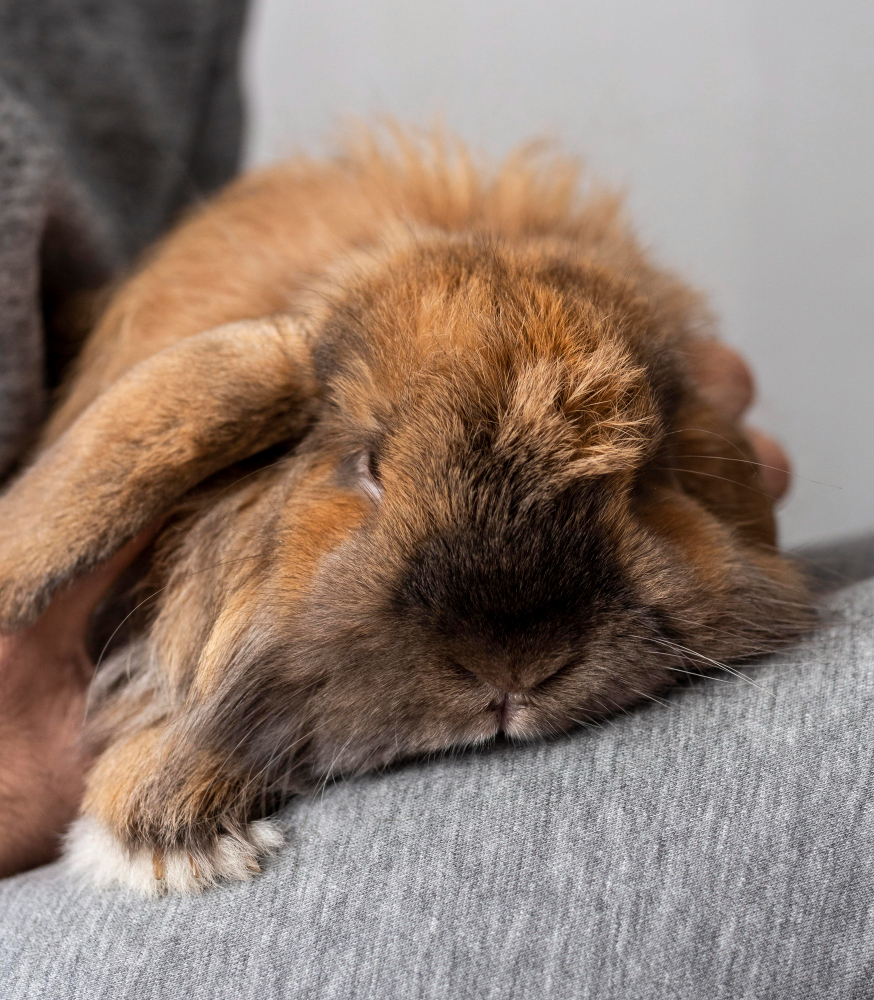
Technically, yes—but it’s much rarer than we think.
Decoding the “Illusion of Suddenness”
Most “sudden” deaths are actually the end of a hidden timeline. The warning signs were likely there—a slightly smaller fecal pellet, a weirdly long nap, or a missed treat—but they were so quiet they didn’t trigger our alarm bells. To us, it’s a collapse at 4 PM. To the rabbit, it’s the climax of a struggle that began at 4 AM. Becoming a better “rabbit researcher” means learning to see the absence of behavior as a loud signal.
The Built-In Risks of Genetics and Age
Certain breeds are born into a structural crisis. Lops, with their compressed skulls, are prone to deep, chronic bacterial ear infections that can go systemic or trigger vestibular failures. Giant breeds often have heart walls that thicken over time (cardiomyopathy), leading to “sudden” heart failure under minor stress. Senior rabbits, according to PetMD, often have kidney or heart issues that stay “compensated” until a small change—like a new brand of hay or a loud vacuum—tips them into acute failure.
7. Frequently Asked Questions
How do rabbits act right before they die?
They usually become extremely limp, seek total isolation, and may experience “stargazing” (tilting the head back) as they struggle for air.
Can a lack of water intake cause sudden death?
Yes. Severe dehydration dries out the intestinal contents rapidly, causing the rabbit to become acutely constipated and unable to poop, which paralyzes the gastrointestinal tract and induces fatal hypomotility shock within 24 hours.
Can a rabbit die purely from a scare?
Yes. Intense fear triggers a massive adrenaline dump that can cause heart failure or “fright-induced” GI stasis.
Why did my rabbit scream?
A rabbit’s scream is a sound of pure, terminal agony or absolute terror. It is often the very last thing they do before they pass.
How long can a rabbit go without eating?
Anything over 12 hours is a life-threatening emergency. Their gut must move constantly to prevent toxic buildup.
What does shock look like?
Cold ears, pale/white gums, shallow breathing, and a “thousand-yard stare” where they don’t blink.
Are cold ears always a death sentence?
No, but if they are cold and the rabbit is lethargic, it means the heart is failing to pump blood to the extremities.
Why is my rabbit lying on its side and panting?
This is a collapse. A relaxed rabbit flops and looks soft; a collapsing rabbit is tense, gasping for air, or experiencing a severe respiratory emergency.
Can a rabbit recover after a total collapse?
It is difficult, but with aggressive IV fluids, oxygen therapy, and internal warming at an exotic vet, some can be stabilized.
8. Conclusion: When to Treat Symptoms as an Emergency
The vital takeaway for every owner is this: visible symptoms in a rabbit aren’t the start of the movie; they are the credits rolling. If your rabbit is showing you they are sick, the situation is already critical. Whether it’s a cold ear, a missed sprig of cilantro, or a weirdly quiet afternoon, treat every glitch as a code-red emergency.
Maintaining strict, preventative baseline metrics—such as optimizing their daily menu around a protective high-fiber diet plan—is your best tool to intercept these conditions early. In the high-speed world of rabbit biology, the stoic bluff is their greatest defense in the wild, but in your living room, your ability to see through that bluff is the only thing that will save them.
Medical & Veterinary Disclaimer: Bunnyowners.com is an informational resource for rabbit owners and enthusiasts. We are not veterinarians. The content on this website is for educational purposes only and is not a substitute for professional veterinary advice, diagnosis, or treatment. Always consult a qualified veterinarian with any questions or concerns regarding your pet’s health, medical conditions, diet, or overall care. If you have concerns about your rabbit’s health, it’s always best to reach out to a veterinarian rather than relying solely on information found online.