Veterinary & Affiliate Disclaimer: Bunnyowners.com shares educational rabbit care resources, not professional veterinary advice. Always consult a qualified veterinarian regarding your rabbit’s medical, dietary, or behavioral needs. This post may also contain affiliate links; as an Amazon Associate and affiliate partner, we earn from qualifying purchases at zero extra cost to you.
Look at the litter box—that is usually where the panic begins for an owner. A rabbit that normally treats fecal production like a high-stakes, full-time career suddenly drops a sparse handful of tiny, bone-dry marbles, leaving you scrambling to figure out if you are dealing with a minor dietary hiccup or a major gastrointestinal crisis. To ground that initial panic in hard clinical data, we have to look at how this underlying digestive shift formally defines itself.
True constipation in rabbits involves small, dry, infrequent droppings or a physical difficulty passing fecal pellets. It is typically a localized symptom of an underlying gastrointestinal slowdown caused by dehydration, low-fiber diets, pain, or environmental stress. Because this condition can rapidly progress into life-threatening GI stasis, any rabbit showing a complete absence of stool or a sudden loss of appetite requires immediate veterinary evaluation.
Catching these early warning flags is your best biological defense against a total metabolic standstill. To help you navigate this before it hits a critical threshold, this breakdown applies core principles of rabbit health to unpack the real differences between a dry lower gut and full stasis, expose the primary root causes, and outline safe supportive care. Let’s kick off this investigation by dismantling the classic human misconceptions surrounding what true lagomorph constipation actually means for your pet’s internal anatomy.
Let’s get one thing straight right away: you cannot diagnose a rabbit using human plumbing logic. In human medicine, constipation means stool took its sweet time moving through the colon, losing moisture along the way. The physical result in a rabbit looks identical—dry, rock-hard pellets passed with obvious effort—but the internal pathway is a totally different story.
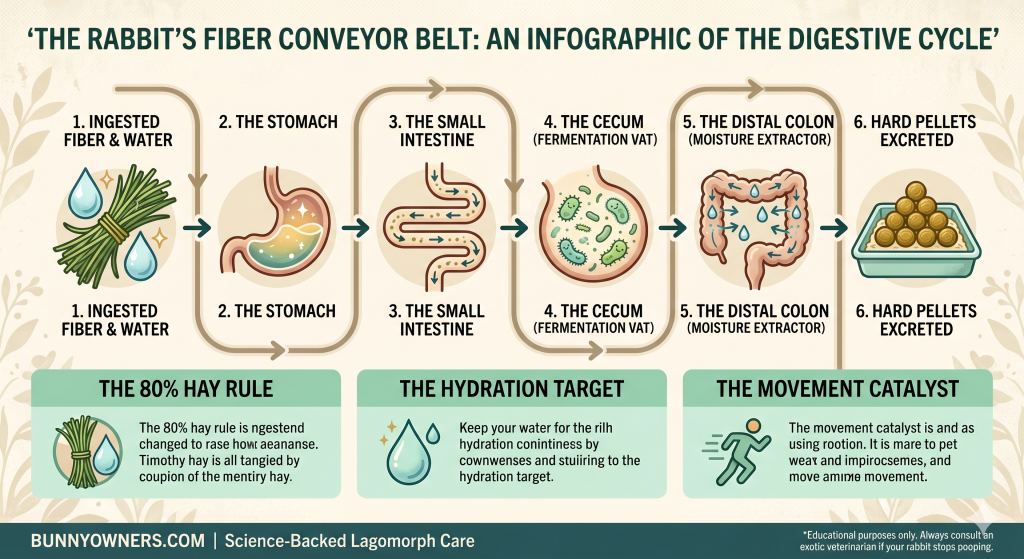
Rabbits almost never get simple, isolated constipation from just “holding it.” Instead, bad pellets are a localized, downstream warning shot signaling a broader gut slowdown. A rabbit’s digestive tract is an evolutionary conveyor belt that requires non-stop movement. They are hindgut fermenters. To break down plant walls, they need an uninterrupted balance of smooth muscle contractions, moisture, and specific bacterial colonies.
When something stalls this belt, the digesta sits. The colon then does its job too well, stripping every drop of moisture from the stagnant mass. The longer it sits, the more compacted it becomes. It turns into dense, internal bricks.
This is why true constipation is usually just the first phase of gastrointestinal hypomotility. The Merck Veterinary Manual notes that the lagomorph gut requires a constant volume of long-stem particle fiber just to keep the mechanical muscles firing. Without that physical push, the system slips toward a total halt.
Here is another catch: rabbits run a dual-production system. You have to know what you are looking at:
Fecal Pellets: The hard, round, high-fiber waste products scattered in the litter box daily.
Cecotropes: Soft, pungent, mucus-coated grape-like clusters produced in the cecum. The rabbit eats these directly from the anus to re-absorb vitamins.
When we talk about constipation, we are specifically looking at a failure to move the hard fecal pellets, though cecotrope disruption usually follows close behind.
2. What Does Healthy Rabbit Poop Look Like?
Monitoring a rabbit means doing a daily, unglamorous audit of their waste. It sounds strange, but healthy poop is the single best data point you have to verify their internal health.
Standard, high-quality pellets must meet a few criteria:
Shape: Perfectly round and spherical. No weird edges.
Size: Uniform to that specific rabbit, usually between the size of a chickpea and a hazelnut.
Texture: Firm but crumbly under pressure. Break one open—it should look like tightly packed, crushed sawdust, not a smooth paste.
Color: Medium-brown to a dark, earthy greenish-brown, depending on what forage they are eating.
A healthy adult rabbit produces an astonishing volume of waste—anywhere from 200 to 300 pellets every single day.
Observational Insight: Natural fluctuations happen, especially when the weather turns and heavy seasonal coat blowing begins. For example, when checking my resident lagomorphs, Mocha and Chino, during a major spring molt, I regularly spot “string-of-pearls” feces—pellets chained together by ingested fur. According to established principles of rabbit body language and health , it shows the gut is passing the hair for now, but it serves as a clear warning to ramp up grooming and hydration before those fuzzy chains clump into a solid blockage.
Comparing Normal Pellets vs. The Warning Signs
When things slow down, the physical output changes rapidly. Use this visual guide to spot the drift early:
Table 1: Fecal Pellet Visual Comparison
Metric
The Baseline (Healthy)
The Warning (Constipated/Dehydrated)
Physical Size
Plump, large, and uniform
Tiny, pinhead-sized, or weirdly jagged
Moisture Content
Slightly damp on the outside when fresh
Bone-dry, hard as rock, rattles when dropped
Internal Look
Visible, loose hay fragments
Dense, hyper-compressed, dark, and smooth
Production Rate
Steady dropping throughout the day
Long, empty hours followed by a small cluster
Tiny, dense pellets mean transit time has skyrocketed. The body is hoarding water and leaving the waste dry. It is a loud distress signal from the hindgut.
3. Signs of Constipation in Rabbits
Rabbits are prey animals. They hide pain with a stoic dedication that can easily fool a casual glance. You have to look for small, behavioral pivots to realize their gut is tightening up.
The Disappearing Act (Fewer Pellets)
The most quantifiable sign is an empty litter box. If a box that is usually overflowing holds only a sparse dozen pellets after twelve hours, you have a mechanical slowdown on your hands.
Tiny, Pebble-Like Droppings
As transit slows, the pellets shrink. They become dark, irregular, and nearly impossible to crush between your fingers. They look like actual stones rather than digested grass.
Posture and Straining
A constipated rabbit spends an unusual amount of time sitting in the litter box. They adopt a telling stance: hutching up high on their hind legs, pulling their abdomen tight, and pumping their tail up and down. They look like they are working a lever, often producing nothing or just a single, dry speck after minutes of effort.
Sudden Picky Eating
As waste backs up, the stomach feels artificially full. The rabbit will back away from their pellets first. Next, they will ignore their fresh greens, frequently developing a sudden behavioral habit where they are refusing hay but hunting for treats. When a rabbit turns down a favorite food, the clock is officially ticking.
Low Energy and Corner Sitting
Internal compaction hurts. A rabbit dealing with an intestinal stall will abandon their routine. They will reject playtime, show signs of depression, and spend hours lethargic, hunched, or completely motionless.
Showing the Visual Signs of Pain
Rabbits show abdominal distress through specific physical language:
Loud Tooth Grinding: Watch for a slow, harsh clicking sound that indicates severe physical pain. Unlike a soft, content “purr,” this grinding is loud enough to hear across a room and signals real abdominal distress.
Belly Pressing: The rabbit flattons their stomach hard against the floor, trying to find a cold surface to numb the internal pressure.
The Restless Shift: They lie down, get up, turn around, and sit back up immediately. No position offers relief.
Intestinal Mucus
Sometimes, the gut tries to lubricate a stalled mass by secreting a jelly-like mucus. If you see clear or white slime coating a tiny pellet, or sitting alone on the fleece, it means the intestinal wall is highly irritated and inflamed.
The Dead Stop (No Output)
Zero poop is a code-red emergency. The conveyor belt has stopped completely. The condition has officially crossed the line from a localized slowdown to an advanced blockage or full GI stasis.
4. Constipation vs. GI Stasis in Rabbits
Online forums frequently use these terms interchangeably, which is a dangerous mistake for triage. They require different levels of urgency. While constipation typically causes reduced or difficult stool production, a total systemic shutdown from gastrointestinal stasis can be rapidly fatal.
Constipation usually causes reduced or difficult stool production, while GI stasis involves severe slowing or stopping of the digestive system. Rabbits with GI stasis often stop eating, become lethargic, and may produce little or no stool at all.
Let’s break down the clinical differences:
Table 2: Diagnostic Differentiation
Feature
Constipation
GI Stasis
Primary Issue
Lower tract compaction / Dry colon mass
Total systemic shutdown from stomach to colon
Appetite Level
Gradually drops; might still nibble greens
Sudden, complete refusal to touch any food
Stool Presentation
Very small, dry, passed with visible effort
Total absence of pellets, or rare, misshapen specks
Behavior
Shifts between normal and uncomfortable
Severely dull, unresponsive, hunched tight
Pain Level
Mild to moderate abdominal ache
Severe, sharp gas pain; high risk of shock
Time Horizon
Develops slowly over a few days
Can turn fatal within 12 to 24 hours
5. What Causes Constipation in Rabbits?
Guts don’t slow down for no reason. Intestinal compaction is always driven by a specific catalyst.
The Pelleted Diet Trap
The entire lagomorph digestive blueprint runs on coarse, indigestible fiber. Long-stem grass hay provides the physical “scratch factor” that irritates the gut lining just enough to trigger regular muscular waves.
When a diet relies too heavily on commercial pellets, colorful seed mixes, or excessive carbohydrates (like fruit or commercial yogurt drops), the gut loses its mechanical pacing. Peristalsis drops, the food stalls, and the colon bakes it dry. It’s like trying to run a factory without raw materials.
The Invisible Danger: Dehydration
Dehydration is a quiet killer in small mammal care, a physiological fact extensively detailed across the Veterinary Information Network (VIN). A rabbit needs an immense fluid volume just to keep food moving through the stomach and into the cecum as a slurry. If water intake dips, the body hoards fluid by pulling it straight out of the colon, sacrificing stool texture to protect blood volume. This often manifests when a rabbit stops drinking water normally.
This can happen from simple mechanical issues—like a stuck ball-valve in a water bottle or a dirty water bowl. It can also stem from environmental heat or dental pain that makes swallowing water uncomfortable.
Silent Pain and Underlying Illness
When a rabbit hurts, their body dumps adrenaline and cortisol into the bloodstream. This active “fight or flight” response suppresses non-essential functions, meaning the gut slows down instantly. Common triggers include:
Dental Spurs: Sharp molar points that slice into the tongue or cheek, making chewing excruciating.
Arthritis: Chronic joint pain in older rabbits that limits their willingness to move around.
Systemic Infections: Hidden urinary tract issues or abscesses that sap internal energy.
A study published in the Journal of Exotic Pet Medicine points out that physical pain is the absolute fastest non-gastrointestinal trigger for secondary gut stasis in small herbivores.
Environmental Stress
Rabbits have an incredibly reactive nervous system. A prolonged threat response—like a new predatory pet in the house, loud construction, a sudden move, or the loss of a bonded mate—will shift blood flow away from the digestive tract, leaving your rabbit hiding or acting depressed.
The Sedentary Lifestyle
Movement out here stimulates movement in there. A rabbit confined to a small hutch without room to sprint, leap, and hop will develop a sluggish colon. Exercise naturally tones the abdominal muscles, which helps drive the digestive process. Couch-potato rabbits get couch-potato guts.
Hair Accumulation (The Molting Season)
Rabbits groom constantly, but they cannot vomit. Every single hair they lick off their coat has to go all the way through.
Here is the scientific distinction: hair alone is rarely the real problem. The House Rabbit Society explicitly states that a well-hydrated, high-fiber gut can effortlessly pass large amounts of fur. The danger strikes when you mix a heavy molt with low fiber and mild dehydration. The fur acts as a web, binding the dry fecal material into dense, solid mats that the colon simply cannot push forward.
Weight Creep (Obesity)
An overweight rabbit faces structural issues. Excess abdominal fat physically crowds the digestive organs, altering normal movement patterns. Furthermore, obese rabbits cannot bend around to clean themselves or eat their cecotropes directly, leading to localized impactions around the rear.
Medication Downside
Some drugs slow things down as a side effect. Opioids given for pain management are notorious decelerators of smooth muscle. General anesthesia can also leave the gut sluggish for days post-surgery, requiring proactive veterinary support.
Structural Pathologies
In rare instances, true lower gut failure can be caused by physical internal anomalies, including deep-seated abdominal tumors, scar tissue adhesions from past surgeries, or severe urinary tract problems that compress the colon.
6. Can Rabbits Get Impacted or Blocked?
Yes, they can, and you must understand the difference between a slow, dry gut and a true physical blockage.
Fecal impaction means a dense, clay-like mass of hair and food has formed a plug, usually in the cecum or large colon. The body can’t move it easily, but fluid can still get past. This requires systematic, medical rehydration to break down the mass over time.
True obstruction is a hyper-acute emergency, an absolute crisis outlined clearly by rescue networks like Rabbit Advocates. It happens when a tight, solid knot of hair or foreign plastic completely seals the narrow entrance of the small intestine. It acts like a cork in a bottle.
Table 3: Pathology Comparison
Constipation / Impaction
True Obstruction
Steady, gradual decline
Sudden, violent onset of symptoms
Gut is dry but fluid moves
Total physical wall in small intestine
Treated with medical fluids
Triggers rapid, fatal fluid backup
Safe for standard home care
Requires immediate emergency surgery
When a true blockage happens, the stomach fills with gas and fluid behind the plug within hours. The rabbit will blow up like a tight drum (acute bloat), turn icy cold, and collapse from shock.
Critical Safety Warning: If you see signs of acute bloat or suspect a complete physical blockage, do not force-feed recovery formulas like Critical Care. Shoving more fiber into a totally closed pipe will cause the stomach to rupture, which is fatal.
7. How Veterinarians Diagnose Constipation in Rabbits
An exotic animal specialist doesn’t guess; they look at data to figure out exactly where the conveyor belt broke down.
Abdominal Palpation
The vet will carefully feel the abdomen. A trained hand can easily tell the difference between a normal stomach, a doughy, packed cecum (impaction), or loops of bowel stretched tight by trapped gas bubbles.
Hydration Checks
By testing skin turgor (how fast the skin snaps back), checking for sticky or pale gums, and looking at how deep the eyes sit, the vet calculates the body’s fluid deficit.
Molar Inspection
Using a specialized lighted speculum, the vet will check the back teeth for hidden spurs or cheek ulcerations that could explain why the rabbit stopped eating hay.
Abdominal X-rays
Radiographs are the primary diagnostic tool for rabbit gut issues. An X-ray removes all ambiguity by showing:
Gas Halos: Large black pockets of trapped gas in the stomach or cecum, indicating painful fermentation.
Fecal Density: Exactly where the compacted mass is jammed in the lower tract.
Obstruction Patterns: A stomach filled with fluid and a distinct line where the gas stops, signaling a blockage.
A clinical guide from the Association of Exotic Mammal Veterinarians (AEMV) details how specific x-ray exposure settings are needed to differentiate simple gas buildup from advanced fluid blockages, showing that diagnostic imaging is a true art form in exotic medicine.
Blood Diagnostics
In complex cases, blood panels check kidney and liver function. Blood glucose is particularly useful; a massive spike in blood sugar often indicates the intense, acute pain of a physical blockage, whereas lower, steady numbers point to a behavioral slowdown.
8. How to Treat Constipation in Rabbits
Fixing a constipated gut requires two primary actions: pumping water back into the compacted mass and restarting smooth muscle motility. Never guess at dosages; always work under veterinary supervision.
Flooding the System with Coarse Fiber
If the rabbit is still willing to nibble voluntarily, remove all snacks and provide unlimited access to fresh, aromatic Timothy or orchard grass hay. Coarse particle fiber is the primary mechanical trigger needed to push past lower gut compaction.The long strands mechanically rub against the gut wall, sending neural signals to the muscles to start contracting again. Strip all pellets and treats from the cage during this time.
Ramping up Hydration
Water softens internal concrete. You can increase intake using a few practical tricks:
Ditch the Bottle: Provide water in a wide, heavy ceramic bowl. Rabbits drink much faster from an open surface than from a metal ball-valve, as noted in basic care parameters compiled by Veterinary Partner.
Juice Bribery: Add a few drops of 100% organic, unsweetened apple or cranberry juice to the bowl to tempt them to drink more.
Wet Forage: Serve safe greens (like romaine or cilantro) dripping wet. The surface water on the leaves goes straight to the stomach.
In serious cases, drinking isn’t enough. Your vet will give fluid therapy, usually through subcutaneous injections (fluids under the loose skin between the shoulder blades) to quickly hydrate the tissues and stop the colon from stealing water from the stool.
Forced Movement
If the rabbit is stable and not in acute shock, encourage active movement. Set up a secure free-roam area and gently motivate them to hop around. Physical exercise naturally stimulates intestinal peristalsis and helps safely disperse trapped gas in a bloated stomach.
Aggressive Pain Control
Because pain stalls the gut, you cannot fix constipation without managing the ache. Vets typically use non-steroidal anti-inflammatory drugs (NSAIDs) like Meloxicam, provided the rabbit is fully hydrated and their kidneys can handle it. If dental spurs or arthritis caused the issue, those must be treated concurrently.
Medical Motility Agents
Your veterinarian may prescribe specific medications to get things moving:
Prokinetics: Drugs like Cisapride or Metoclopramide that chemically stimulate the gut muscles. Note: These are dangerous and strictly forbidden if an actual physical obstruction is suspected.
Simethicone: Over-the-counter infant gas drops that break down large, painful gas bubbles into smaller, passable pockets.
Assisted Feeding
If an X-ray confirms there is no blockage, but the rabbit has stopped eating, you must syringe-feed a recovery formula like Oxbow Critical Care. This keeps fiber moving through the stomach, preventing hepatic lipidosis (fatty liver disease) from starvation.
9. What NOT to Do for a Constipated Rabbit
Well-meaning but inaccurate advice from internet forums can quickly turn a treatable slowdown into a fatal event. Avoid these dangerous home remedies:
Never Give Human Laxatives: Over-the-counter human products can cause catastrophic fluid shifts in small herbivores, leading to acute systemic shock, a risk documented by diagnostic resources like the ASPCA Animal Poison Control Center.
Never Use Mineral Oil: Syringing mineral oil or petroleum jelly to “slide a hairball out” is highly dangerous. Mineral oil has no taste, meaning rabbits can easily inhale it into their lungs without coughing, causing fatal lipid pneumonia. It is a lubricant, not a miracle cure for low fiber.
Stop Syringe-Feeding If Bloated: If the abdomen feels tight like a basketball, stop pushing food. Pushing fiber into a blocked stomach will cause it to burst.
Do Not Wait It Out: A 12-hour window without poop is a major issue. Hoping they will just snap out of it by tomorrow can let the condition progress past the point of no return.
Skip the Sugar: Do not try to hydrate them with sugary fruits or berries. Excessive sugar causes a rapid explosion of bad bacteria in the cecum (clostridial dysbiosis), which can kill a rabbit faster than the original constipation.
10. When Rabbit Constipation Is an Emergency
Triage means knowing exactly when a situation requires an immediate trip to an emergency hospital. While a slight reduction in pellet size can often be managed with early dietary adjustments, you must learn to recognize when a digestive slowdown has officially crossed into an emergency to protect against a sudden death crisis.
Head to an emergency clinic immediately if you spot these red flags:
Table 4: Triage Protocols
Emergency Sign
Description / Clinical Presentation
The 12-Hour Stop
Absolutely zero fecal production for over 12 hours.
Total Food Refusal
Turning down even high-value fresh greens or favorite herbs.
A Swollen Belly
An abdomen that feels hard, tight, or distended like a drum.
Limpness or Collapse
A rabbit resting flat on their side, unresponsive to your presence.
Icy Cold Ears (Hypothermia)
A rabbit’s normal temp is high (101°F – 103°F). When they go into shock, their core temperature plummets. If their ears and feet feel icy to the touch, they are crashing.
Loud, Continuous Grinding
Uncontrollable tooth grinding combined with a total refusal to move from a tight, hunched position.
11. How to Prevent Constipation in Rabbits
Following a proactive rabbit health guide makes prevention your smartest strategy, keeping your pet healthy and saving you from stressful midnight vet bills. By structuring a daily management routine around the core baseline pillars of fiber, fluids, and movement—and backing them up with defensive grooming, careful tracking, and clinical screenings—you ensure that fast-moving internal conveyor belt never experiences an unscheduled factory shutdown.
The 80% Hay Rule
At least 80% to 85% of your rabbit’s daily diet must be fresh grass hay, a foundational gold standard strongly advocated by the Rabbit Welfare Association & Fund (RWAF). Keep it piled high everywhere, especially in or right above their litter box, since rabbits naturally eat and poop at the same time.
Clean, Accessible Water
Provide water in heavy ceramic bowls and change it daily. Slimy bacterial films on the bottom of a bowl will discourage them from drinking. Throw ice cubes in their dish during hot summer days to keep it appealing.
Daily Free-Roam Exercise
Give your rabbit several hours of unrestricted running time outside of their cage every single day. Use tunnels, cardboard boxes, and safe steps to encourage jumping and sprinting. Physical activity keeps the internal muscles moving.
Weight Management
Maintain an ideal body condition score. Track their mass weekly to catch a sudden trend where your rabbit is losing weight or experiencing unhealthy weight gain.You should easily feel their ribs under a thin layer of coat, without a sharp edge. Cut back on commercial pellets if you notice a heavy roll of fat forming around their hindquarters.
Strategic Molt Grooming
When shedding season starts, brush them daily. Use a rubber grooming tool or slicker brush to pull out the loose undercoat before they can lick it off and turn their stomach into a wool processing plant.
Observational Insight: A consistent monitoring routine pays off here. For example, tracking the individual litter box habits of a bonded pair like Mocha and Chino lets you catch subtle changes early. If one rabbit suddenly drops a cluster of smaller, drier pellets during a heavy molt, you know to step up grooming sessions and toss fresh, wet cilantro into their dish before a real compaction can form.
Annual Exotic Checkups
Schedule regular exams with an experienced rabbit vet. Checking their molars for early-stage spurs or catching minor weight changes early prevents a painful gut stall down the road.
12. Frequently Asked Questions
Can rabbits die from constipation?
Yes. If left unmanaged, the dry mass compacting in the colon causes intense pain, inflammation, and a total shutdown of the digestive tract. The resulting shock and systemic dehydration can be fatal within 24 to 48 hours.
How long can a rabbit go without pooping?
Any window longer than 12 hours without fecal output is a significant warning sign. If a rabbit hits 24 hours with zero poop, it is a life-threatening medical emergency that requires immediate clinical care.
What foods help a constipated rabbit?
If they are still eating on their own, give them fresh, leafy greens dripping wet with water (like romaine, cilantro, or parsley) alongside unlimited coarse Timothy hay. Avoid carrots, fruit, or sweet treats, which can upset their cecal bacteria.
Can too many pellets cause constipation?
Yes. Commercial pellets are highly concentrated and lack the long-stem structure of loose hay. Overfeeding pellets fills them up quickly, making them skip their hay. This slows down gut motility and leads to dry compaction in the lower tract.
Should I syringe-feed a constipated rabbit?
Only syringe-feed a recovery diet like Critical Care if a vet has checked their abdomen or taken an X-ray to confirm there is not a complete physical obstruction or acute bloat. If a blockage is present, force-feeding can cause a fatal stomach rupture.
Can stress cause constipation in rabbits?
Yes. High stress fires up the sympathetic nervous system, releasing adrenaline that diverts blood flow away from the digestive tract to the limbs. This sudden drop in motility allows gut contents to stall and dry out.
Why are my rabbit’s poops tiny and dry?
Tiny, dry droppings mean transit time has slowed down significantly, allowing the colon to extract an excessive amount of moisture from the waste. The typical causes are mild dehydration, low hay intake, hidden pain, or the early stages of a gut slowdown.
13. Conclusion
At the end of the day, managing rabbit constipation requires accepting a harsh biological reality: a lagomorph’s digestive tract has zero tolerance for downtime. While a human can easily shrug off a sluggish morning, a rabbit passing dry, tiny pellets is firing a loud, physiological distress flare right before the entire system stalls into a life-threatening GI stasis emergency.
Steering clear of a clinical crisis means trading frantic online panic for cold, clinical observation. By aggressively backing unlimited grass hay, micro-managing hydration, and weaponizing your daily litter box audit, you can easily arrest an intestinal slowdown in its tracks. Do not treat that daily scoop as a mundane chore; think of it as reading a vital, real-time diagnostic report straight from your rabbit’s hindgut.
Medical & Veterinary Disclaimer: Bunnyowners.com is an informational resource for rabbit owners and enthusiasts. We are not veterinarians. The content on this website is for educational purposes only and is not a substitute for professional veterinary advice, diagnosis, or treatment. Always consult a qualified veterinarian with any questions or concerns regarding your pet’s health, medical conditions, diet, or overall care. If you have concerns about your rabbit’s health, it’s always best to reach out to a veterinarian rather than relying solely on information found online.
Brent Hartman is the lead researcher at Bunny Owners. After decades of living with rabbits—learning their quirks, complex diets, and quiet body language—he pairs hands-on experience with solid veterinary science.
Today, with his bonded pair Mocha and Chino, Brent creates clear, research-backed guides to help you give your rabbits the best possible care.
Finding the right rabbit litter seems simple enough until you run into endless options—paper pellets, compressed wood, fluffy bedding, cat litters, and bags promising miraculous odor control. The...
Finding a puddle of urine soaking into the carpet or discovering a constellation of hard droppings across the floor can lead any owner to wonder whether rabbits can truly be house-trained. The...
To provide the best experiences, we use technologies like cookies to store and/or access device information. Consenting to these technologies will allow us to process data such as browsing behavior or unique IDs on this site. Not consenting or withdrawing consent, may adversely affect certain features and functions.
Functional
Always active
The technical storage or access is strictly necessary for the legitimate purpose of enabling the use of a specific service explicitly requested by the subscriber or user, or for the sole purpose of carrying out the transmission of a communication over an electronic communications network.
Preferences
The technical storage or access is necessary for the legitimate purpose of storing preferences that are not requested by the subscriber or user.
Statistics
The technical storage or access that is used exclusively for statistical purposes.The technical storage or access that is used exclusively for anonymous statistical purposes. Without a subpoena, voluntary compliance on the part of your Internet Service Provider, or additional records from a third party, information stored or retrieved for this purpose alone cannot usually be used to identify you.
Marketing
The technical storage or access is required to create user profiles to send advertising, or to track the user on a website or across several websites for similar marketing purposes.