
Disclaimer: The information provided on bunnyowners.com is for educational purposes only and does not constitute veterinary medical advice; always consult your vet before changing your rabbit’s diet. Additionally, this post contains affiliate links. As an Amazon Associate, and other affiliate advertising programs, I earn from qualifying purchases at no extra cost to you
If you are deciding whether to adopt a single rabbit or wondering if your lone bunny at home is lonely, you have likely encountered conflicting advice online. Many pet forums and care guides assert that keeping a solo rabbit is automatically cruel, leaving well-meaning owners feeling overwhelmed with unearned guilt. However, before rushing out to adopt a second bunny, it is vital to look at the actual behavioral science and understand how domestic environments change a rabbit’s social needs.
Can rabbits live alone? Yes, rabbits can live alone and lead completely healthy, happy lives if their owner provides sufficient daily interaction and mental stimulation. While they are naturally social animals that often thrive in bonded pairs, a solo rabbit can absolutely flourish as a single pet under the right conditions. Ultimately, a rabbit’s quality of life depends more on proper environmental enrichment and dedicated human companionship than on simply having another bunny nearby.
Navigating this choice means focusing on your specific rabbit’s personality, age, and medical history instead of rigid online rules. In this guide, we will use practical rabbit behavior guides to break down their social structures, identify when a solo lifestyle is actually the safest option, and show you exactly how to read your bunny’s body language to ensure they are truly thriving.
1. The Reality of Rabbits Living Alone
When we talk about whether a rabbit can live by itself, we need to look past basic survival and focus on what it takes for them to genuinely thrive. A single rabbit isn’t going to suddenly fall apart or stage a dramatic hunger strike just because there isn’t another bunny in the house. Because of this, keeping a solo rabbit isn’t a form of cruelty, provided you are ready to step in and fill that social gap.
Tailoring Care to the Individual
At the end of the day, a rabbit’s happiness comes down to their environment, how much room they have to move, and the amount of real attention they get from you. Every bunny is a unique individual, shaped by their genes, how they were raised, and what they’ve been through. According to the companion animal guidelines from the American Veterinary Medical Association (AVMA), well-being relies heavily on tailored mental and physical engagement.
Paying close attention to your bunny’s body language is key here; while one rabbit might get lonely and distant without a sidekick, another might completely thrive as the absolute center of your world, loving the fact that they don’t have to share their space, their toys, or your attention with anyone else.
2. Why Rabbits Are Naturally Social Animals
To understand what rabbits instinctively want, it helps to look at where they came from—which involves a quick reality check regarding their wild ancestors. In nature, wild rabbits live in massive, tight-knit underground communities called warrens. These underground networks are home to multiple families that share a territory, and living this way gives them a few massive advantages for survival:
- Group Vigilance: The more eyes and ears on the lookout, the faster they can spot a predator and warn the rest of the family by thumping their hind legs.
- Social Grooming (Allogrooming): When rabbits groom each other around the head and ears, it isn’t just about staying clean. It’s a vital social tool that lowers their stress levels and keeps the peace in the group.
- Thermoregulation: During cold winter months, wild rabbits huddle close together deep underground to preserve their body heat.
Our domestic rabbits still carry these exact same instincts. In fact, comprehensive welfare research by the Universities Federation for Animal Welfare (UFAW) has continually shown that living with a companion is incredibly effective at keeping a pet rabbit’s chronic stress levels down. However, our homes completely change the math.
A house rabbit doesn’t have to worry about hawks swooping into the living room, nor do they need to huddle for warmth in a temperature-controlled house. As detailed in the lagomorph companion resources curated by the PDSA, while that social drive is always there, the absolute need for a second rabbit can vary wildly from one bunny to the next.
3. Can a Single Rabbit Be Happy?

They absolutely can. A single rabbit can live a remarkably joyful and full life, but it requires a dedicated owner who treats them as a true companion rather than a low-maintenance room ornament. To pull this off, you need a firm grasp on how your pet communicates. If you study rabbit behavior deeply, it becomes much easier to decode their silent habits and subtle shifts in mood.
Once that mutual understanding clicks, solo rabbits often form incredibly close, dog-like bonds with their humans. They will happily follow you from room to room like a fluffy shadow, anchor themselves to your daily routines, and actively hop up on the couch to demand their evening nose rubs.
The Richness of a Solo Routine
The secret to a happy single bunny is a predictable routine filled with plenty of things to keep their minds active. By establishing a structured daily rabbit care schedule, you’ll find that giving them a steady routine of morning playtime, dedicated grooming sessions, and fun ways to forage for their food ensures they stay mentally sharp and content.
Keep in mind that a happy rabbit doesn’t need to be entertained every second of the day; even when they live in pairs, bunnies spend a huge chunk of their time napping, stretching out, and just quietly judging their surroundings. A single bunny with a rich environment can reach that exact same state of total relaxation.
4. When Living Alone May Be the Better Choice
Even though conventional wisdom online always pushes for pairs, there are times when keeping a rabbit solo is actually the safest and healthiest choice you can make for them.
Table 1: Best Scenarios for Keeping a Solo Rabbit
| Rabbit Status or Condition | Primary Behavioral or Medical Reasoning | Long-Term Management Strategy |
|---|---|---|
| Senior or Frail Bunnies | Vulnerable to bullying, food-stealing, or accidental injury by younger companions. | Focus on gentle human interaction and specialized senior care. |
| Disabled or Chronically Ill | Require strict quarantine, clean medical zones, and non-competitive feeding areas. | House in a safe, quiet space with easily accessible resources. |
| Hyper-Territorial Individuals | Display extreme aggression; failed multiple professional bonding attempts. | Accept solo status to avoid emotional trauma and physical injury. |
| Resource Constraints | Forcing two rabbits into a small space causes severe stress and fighting. | Maximize the space and care budget exclusively for one single pet. |
We see this variation in personality constantly. For example, in my own observational work with my resident rabbits, Mocha and Chino, it’s clear just how distinct individual personalities can be. While some bunnies naturally crave a friend, others have an incredibly intense territorial streak that makes matching them up incredibly risky. Forcing a fiercely independent, territorial rabbit through multiple stressful bonding attempts can do more psychological harm than good, making a solo life a much safer option for everyone involved.
5. When Rabbits Usually Benefit From a Companion
On the flip side, there are definitely times when you should actively look into getting your rabbit a friend rather than keeping them solo. Young, high-energy adult rabbits with a big social drive usually get a massive quality-of-life upgrade when they are paired with a compatible buddy. The same goes for rabbits whose owners are out of the house for 8 to 10 hours a day for work; having a partner ensures they don’t slide into chronic boredom while the house is quiet and you’re out earning the pellet money.
Healing Through Loss and Grief
Companionship is also incredibly healing for a rabbit that has recently lost a mate. When a bonded partner passes away, the surviving bunny goes through a very real period of grief. As highlighted in the practical pet care and bereavement guidelines managed by Blue Cross, a surviving partner can experience acute depressive drops in energy and a total loss of appetite.
In these situations, introducing a new companion after they have had some time to mourn can prevent them from sliding into a deep depression and bring back their sense of security.
6. Can Humans Replace Another Rabbit?
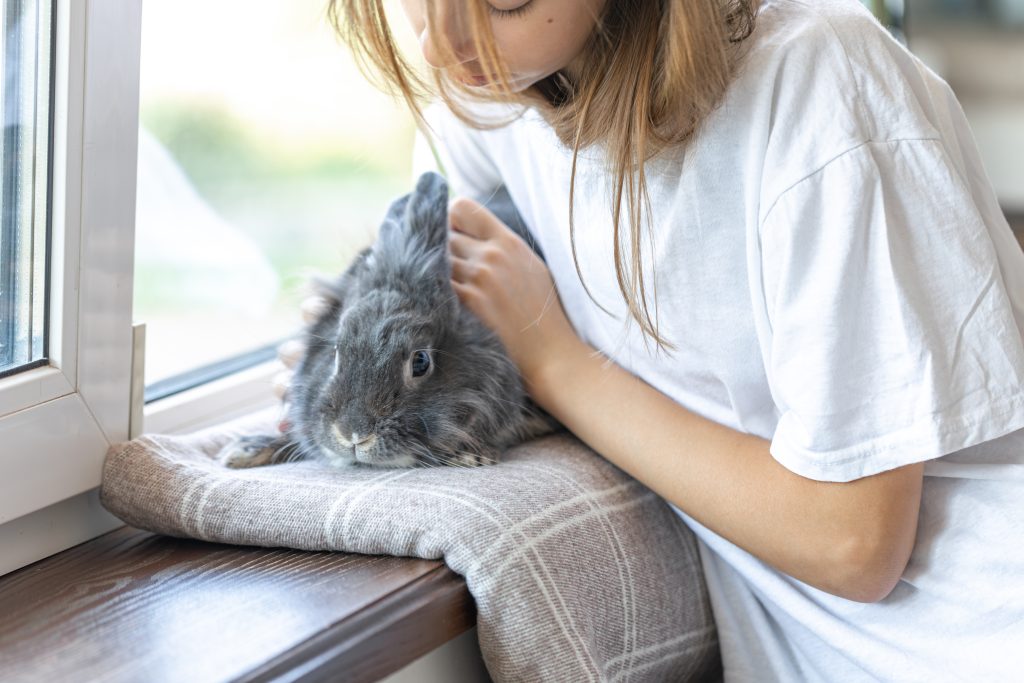
This is a reality check every single-rabbit owner needs to hear: we can give our rabbits a ton of love, great mental training, fun toys, and tons of floor time, but we can never completely mimic another rabbit.
Table 2: Human Care vs. Rabbit Companionship Capabilities
| What Humans Can Provide | What Only Another Rabbit Can Provide |
|---|---|
| Targeted head scratches, brushing, and petting | Continuous, multi-hour allogrooming sessions |
| Interactive toys and agility training | Nuanced, silent rabbit body language and ear signals |
| Safe, supervised free-roam exploration | Coordinated, side-by-side flopping and resting |
| 4 to 6 hours of dedicated daily interaction | Uninterrupted 24-hour physical presence |
Knowing this shouldn’t make you feel guilty. Instead, view it as a fun design challenge. If you have ever sat on the floor scratching your bunny’s ears and wondered whether they actually think you’re a rabbit, the reality is that your human attention serves a unique, powerful purpose.
According to the environmental setup guides compiled by the House Rabbit Society, if you know you can’t realistically sit on the floor and lick your rabbit’s ears for hours or sleep next to them in their pen overnight, you just need to make sure their environment compensates for it with plenty of space, tunnels, and interactive foraging puzzles.
7. Signs Your Rabbit Is Thriving Alone
Instead of constantly stressing over whether your bunny is secretly plotting an escape, you can look for real, concrete signs that tell you your single rabbit is content and well-adjusted. A thriving solo bunny will regularly show you these behaviors:
- Excellent Appetite: Eagerly running over for their daily greens, inhaling pellets, and munching contentedly on their hay throughout the day.
- Relaxed Body Language: Frequently dropping into a full side-flop or rolling out into a flat “superman” stretch—major signs that they feel entirely safe in their environment.
- Confident Exploration: Upright ears, twitching nose, and a general eagerness to investigate new toys, delivery boxes, or subtle changes to the room.
- Consistent Litter Habits: Using their litter box reliably without suddenly spraying or leaving territorial droppings all over your favorite rug to show stress.
- Proactive Curiosity: Happily running up to greet you when you walk in, showing a secure, loving bond with you rather than hiding away in a corner.
8. Signs Your Rabbit May Need More Social Interaction
When a single rabbit is feeling isolated and lonely, their behavior changes in very obvious ways. Spotting these signs early lets you shake up their routine or start thinking about finding them a companion:
Table 3: Emotional Distress Signals in Solo Rabbits
| Distress Indicator | Observable Behavior Breakdown | Primary Underlying Cause |
|---|---|---|
| Destructive Boredom | Frantic carpet digging, baseboard chewing, wall destruction | Excess physical energy with no mental outlet |
| Stereotypic Behavior | Repetitive cage bar-biting, over-grooming to bald spots | Chronic stress and self-soothing mechanics |
| Lethargy & Withdrawal | Hunching in corners, ignoring premium treats or toys | Depressive decline due to environmental under-stimulation |
| Hyper-Aggression | Lunging, boxing, or biting during routine handling | Fear-based territorial guarding or frustration |
Note: For a much deeper diagnostic breakdown of these emotional distress signals, please consult our comprehensive guide on Do Rabbits Get Lonely?
9. Should You Get a Second Rabbit?
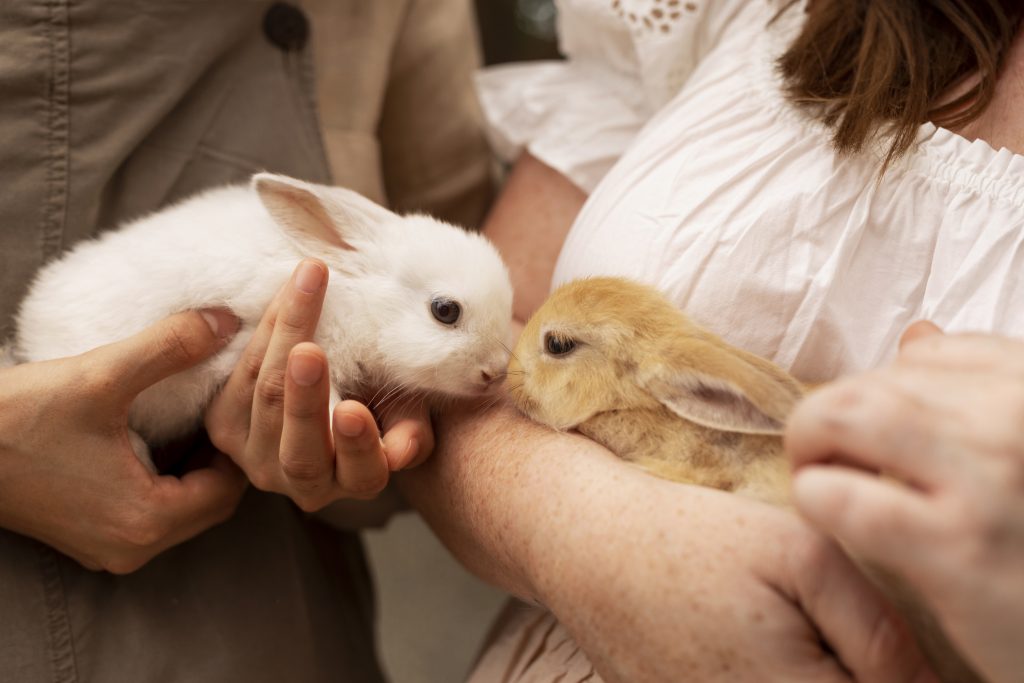
Bringing a second rabbit home should never be a split-second decision made out of guilt. It is a massive commitment that changes your daily routine, your finances, and your living space.
Table 4: Key Logistics Before Adopting a Second Rabbit
| Evaluation Category | Practical Requirements | Long-Term Financial & Time Impacts |
|---|---|---|
| Financial Overhead | Double vet fees, double food, extra gear | Substantial increase in medical emergency funds |
| Enclosure Setup | Multiple distinct cages or extra large pens | Reduced human living space during the integration phase |
| The Bonding Phase | Neutral meeting spaces, hours of direct supervision | Intense owner time commitment over weeks or months |
| Risk Potential | Permanent bond failure, violent fighting | Mandatory long-term separation into two solo setups |
You can’t just bring a new bunny home, pop them into your current rabbit’s space, and assume they’ll get along. As highlighted in the comprehensive cost and housing breakdown from the RSPCA’s Bonding Guide, the initial bonding phase requires completely separate living quarters, neutral ground for short introductions, and a massive amount of patience. If the bond doesn’t take, you have to be fully prepared to house two separate single rabbits for the rest of their lives.
10. Common Myths About Rabbits Living Alone
The conversation surrounding solo rabbit care is heavily clouded by well-meaning but deeply flawed misinformation. Because rabbits are classified as social animals, the online pet community frequently relies on sweeping generalizations that treat these highly individualistic creatures as a monolith. To make the best choice for your household, it is essential to separate emotional hearsay from veterinary reality and dismantle the most pervasive myths floating around pet forums.
Every rabbit must have a companion.
This one-size-fits-all rule completely ignores a rabbit’s individual history, trauma, and health. The reality is that while a pair is fantastic, a solo life is genuinely better for certain bunnies who prefer to remain the sole monarch of their castle.
Two rabbits will automatically become friends.
Rabbit bonding is highly complex and governed by strict social dynamics. Forcing two incompatible personalities together can result in violent, bloody fights that cause severe physical harm and permanent psychological stress.
A guinea pig makes a good companion.
This is an old, incredibly dangerous myth. As the RSPCA Co-existing Species Policy points out, rabbits and guinea pigs should never live together. They don’t speak the same body language, have completely different diets, and a rabbit can easily break a guinea pig’s back with a kick. If you want to safely expand your setup, check out my comprehensive guide on finding compatible companion animals for your rabbit to learn about safer socialization choices.
If my rabbit likes people, it doesn’t need another rabbit.
While a human-rabbit bond is amazing, it satisfies a different part of their brain. A rabbit can absolutely adore you while still harboring the instinctual desire to sit silently next to another animal that truly understands what it means to be a rabbit.
11. How to Help a Single Rabbit Thrive
If a single rabbit is the right choice for your home, you can easily build an excellent daily routine that keeps them healthy, active, and completely satisfied.
Table 5: Daily Care Protocol for Solo Rabbits
| Management Area | Targeted Action Item | Psychological/Physical Benefit |
|---|---|---|
| Daily Interaction | 2 to 3 hours of ground-level play and grooming | Lowers isolation stress; builds human trust |
| Advanced Enrichment | Foraging boxes, cardboard digging zones, toy rotation | Keeps cognitive engagement high; prevents boredom |
| Ample Exercise Space | Large exercise pens or proofed free-roam rooms | Allows expression of natural sprints and binkies |
| Consistent Routines | Rigid feeding, sleeping, and playtime schedules | Drastically drops cortisol levels via predictability |
| Proactive Health Care | Annual wellness checks with exotic vet specialists | Catches hidden dental pain or hidden arthritis early |
Daily Interaction
Make time for at least 2 to 3 hours of real interaction every day. Don’t just sit up on the couch looking down at them—get down on the floor at their eye level. Spend time offering head rubs, practicing simple clicker training, or just reading a book nearby while they check you out. Dropping down to their physical space completely changes the dynamic, turning you from a looming giant into an approachable, reassuring companion.
Advanced Enrichment
Ditch the basic plastic toys and focus on foraging. Give them a big cardboard box filled with shredded paper and hidden pellets to dig through, hang fresh herbs just out of reach so they have to stretch for them, and swap their toys out every week to keep things from getting stale.
Ample Exercise Space
A bunny confined to a small cage is going to get bored, frustrated, and destructive. To prevent behavioral issues, the exotic mammal specialists at the Rabbit Welfare Association & Fund (RWAF) note that your solo rabbit needs a safely proofed room or a massive exercise pen where they can run full sprints, binky, and twist around during their natural high-energy times at dawn and dusk.
Consistent Routines
Rabbits love predictability. Try to stick to a solid schedule for breakfast, greens, and floor time. Knowing exactly when things are going to happen lowers their stress levels and gives them a comforting sense of control over their day.
Proactive Health Care
Low-grade physical pain from dental issues or early arthritis often looks exactly like boredom or depression. Because rabbits are prey animals, they instinctively hide weakness by withdrawing and freezing. As heavily documented in the clinical pain recognition profiles by the Rabbit Welfare Association & Fund (RWAF), a bunny experiencing chronic discomfort will often show a sudden disinterest in their surroundings, a lack of movement, and a quiet malaise that owners easily mistake for loneliness.
Regular wellness checks with an exotic vet specialist are essential to ensure your solo pet is genuinely content, not just silently suffering.
12. Frequently Asked Questions
Can one rabbit be happy by itself?
Yes. If you provide them with plenty of daily interaction, a large area to run around in, and smart foraging toys to keep their minds busy, a single rabbit can live a thoroughly happy, content life.
Is it cruel to keep one rabbit?
No, it is not inherently cruel. It only becomes cruel if the rabbit is shut away in a small cage with little to no human contact, zero exercise, and absolutely nothing to keep them mentally stimulated.
How much attention does a single rabbit need?
A solo rabbit needs at least two to four hours of focused, face-to-face human interaction every single day to make up for not having a twenty-four-hour bunny roommate.
Should I get another rabbit for my bunny?
Only do this if you have the financial room for double the vet bills, the physical space for a separate setup during introductions, and the time required to manage a slow, careful bonding process.
Are male or female rabbits better at living alone?
Gender does not really matter when it comes to living alone. A rabbit’s success as a solo pet depends entirely on their individual personality, their background, and whether they have been spayed or neutered to keep their territorial hormones in check.
Can older rabbits live alone?
Yes, older rabbits often do fantastic on their own. Senior bunnies with arthritis or age-related changes frequently find the constant energy and dominance shifts of a younger companion far too stressful to manage.
What if my rabbit refuses to bond?
If your rabbit gets aggressively violent during structured introductions with multiple potential partners, they are telling you they prefer to be on their own. In these situations, keeping them as a single pet is the absolute kindest and safest path forward.
13. Conclusion
When you strip away the rigid rules found online, deciding if a rabbit can live alone comes down to watching the animal in front of you and putting in the work. While nature built them to be social, domestic rabbits are resilient and adaptable. By focusing on a spacious setup, plenty of mental stimulation, and consistent daily connection, you can give your single bunny an incredibly rich, healthy life. Pay close attention to their daily habits, watch for those positive signs of contentment, and let your rabbit show you exactly what they need.
Medical & Veterinary Disclaimer: bunnyowners.com is an informational resource for rabbit owners and enthusiasts. We are not veterinarians. The content on this website is not a substitute for professional veterinary care, diagnosis, or treatment. Always seek the advice of your veterinarian with any questions you may have regarding your pet’s medical condition, diet, or overall health.