

Disclaimer: The information provided on bunnyowners.com is for educational purposes only and does not constitute veterinary medical advice; always consult your vet before changing your rabbit’s diet. Additionally, this post contains affiliate links. As an Amazon Associate, and other affiliate advertising programs, I earn from qualifying purchases at no extra cost to you
Pop culture suggests rabbits and carrots are inseparable—a myth rooted in 1930s cinema rather than biology. In reality, rabbits are grazers, not root-diggers. For my rabbits Mocha and Chino, the nutritional truth is more complex than any cartoon. To maintain a healthy gut, we must address the primary question: Can rabbits eat carrots?
Yes, rabbits can eat carrots, but only in small quantities as an occasional treat. While the orange root is safe and non-toxic, it is exceptionally high in sugar and lacks the indigestible fiber found in hay. For a balanced diet, a rabbit should only consume approximately one tablespoon of carrot per two pounds of body weight, fed no more than once or twice a week.
Since a rabbit’s digestive tract is built for abrasive forage rather than rapid fermentation, this “bunny candy” requires strict management. In the following sections, we will explore the nutritional dichotomy between the orange root and its leafy greens, the high-stakes risk of GI stasis, and why modern research contradicts decades of pop-culture feeding habits.
Nutritional Profiles: Carrot Roots vs. Carrot Tops
To understand the carrot’s place in a rabbit’s life, we must dissect the plant as a whole. While humans treat the entire vegetable as a health food, a rabbit’s digestive system views the root and the greens as entirely different categories of fuel.
The Orange Root: Bunny Candy
The taproot of the carrot—the orange part we usually eat—is essentially a storage vessel for the plant. Its primary purpose is to store energy to help the plant survive through the winter or to flower the following year. In nutritional terms, this “stored energy” is comprised of concentrated carbohydrates, specifically sucrose, glucose, and fructose. While these sugars provide a quick energy spike, they offer almost zero of the long-strand indigestible fiber that a rabbit’s gut requires to maintain motility.
The root is essentially the “glucose” of the vegetable world for a bunny. It lacks the structural cellulose and lignin found in stems and leaves, which are necessary for the mechanical breakdown of food in the gut and the physical wearing down of teeth. When I observe Mocha and Chino during their daily salad time, their excitement for the root is palpable, but as a researcher, I know that enthusiasm is driven by a primitive “sugar-seeking” instinct that doesn’t align with their modern sedentary lifestyle.
The Carrot Tops: The Nutritional Gold
If you are looking for a part of the carrot that can be fed with relative frequency, look no further than the leafy greens. These frills are the “gold standard” for supplemental forage. Unlike the root, the greens are packed with:
- Indigestible Fiber: This provides the bulk needed for the “gut push” (peristalsis).
- Vitamin A & K: Essential for immune function and blood clotting.
- Alkaloids: Natural compounds that help with various metabolic processes.
Carrot Root vs. Carrot Tops Nutritional Comparison
| Feature | Carrot Root (per 100g) | Carrot Tops (Greens) |
| Sugar Content | High (~4.7g) | Trace/Low |
| Fiber Level | Moderate/Low (~2.8g) | Very High |
| Calcium | Low (33mg) | Very High (~1,000mg+) |
| Ideal Serving | 1-2 thin slices | Large handful |
| Feeding Frequency | 1-2 times per week | Daily (as part of a leafy mix) |
Impact of High Sugar on Rabbit Digestive Physiology
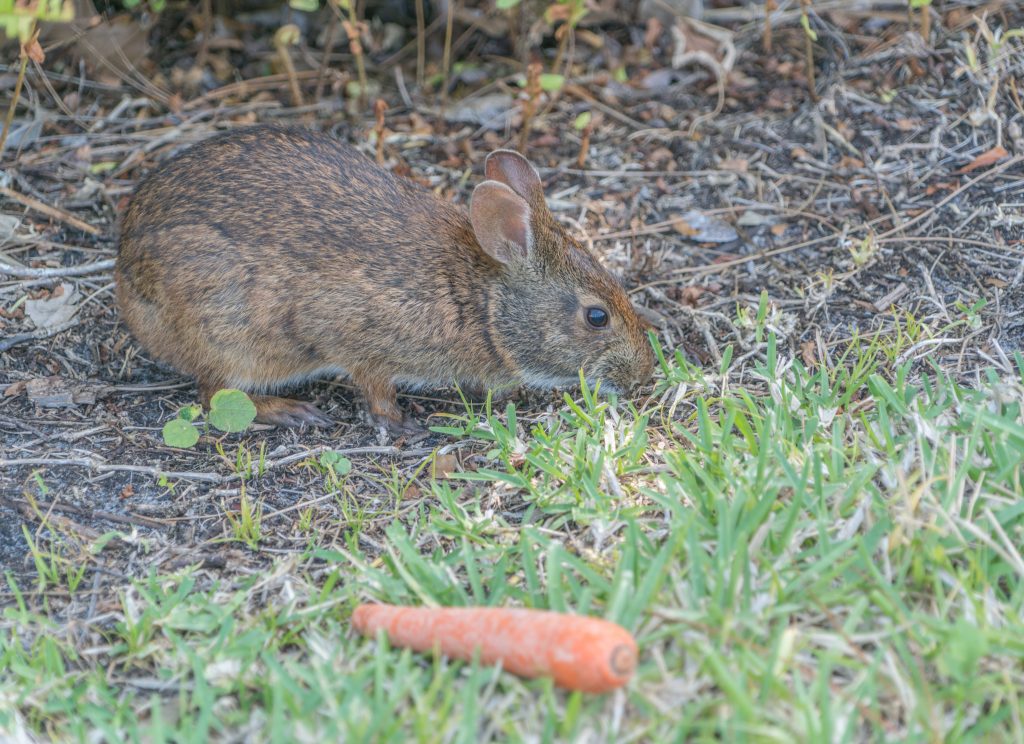
Rabbits are hindgut fermenters, a biological design that is as efficient as it is fragile. Their digestive tract is built to extract every possible nutrient from low-quality, high-fiber forage like grass and bark. When we introduce high-sugar foods like carrots into this system, we are essentially throwing a wrench into a high-precision machine.
The Cecal pH Shift and Dysbiosis
The heart of the rabbit’s digestive process is the cecum—a large pouch located at the junction of the small and large intestines. This pouch is a fermentation vat filled with a delicate balance of bacteria (primarily Bacteroides), yeasts, and protozoa. These microbes break down cellulose into volatile fatty acids (VFAs), such as acetate, propionate, and butyrate, which the rabbit then absorbs for energy.
When a rabbit ingests a high-sugar item like a carrot root, the sugar is often not fully absorbed in the small intestine. Instead, it moves into the cecum, where it causes a “bloom” of harmful bacteria, often Clostridium spiroforme. These bacteria ferment the sugar rapidly, producing lactic acid. This leads to a sudden drop in the cecum’s pH level. An acidic environment is toxic to the beneficial, fiber-digesting microbes, causing them to die off in massive numbers. This is a state known as cecal dysbiosis.
GI Stasis: The Silent Killer
As the beneficial bacteria die, the cecum loses its ability to move food effectively. This leads to Gastrointestinal Stasis, where the digestive tract slows down or stops entirely. Once stasis begins, the rabbit feels bloated and painful, which causes them to stop eating and drinking. This lack of intake further slows the gut, creating a downward spiral. My research into the “mucous blanket” of the colon shows that without constant fiber, the protective lining of the gut can break down, allowing toxins to enter the bloodstream.
Dental Decay and Continuous Tooth Growth
Rabbits have “elodont” teeth, meaning they grow continuously throughout their lives—sometimes as much as 1 centimeter per month. They require the abrasive action of silica-rich timothy hay to grind them down.
The Soft Food Trap
While a carrot feels “crunchy” to us, it is actually quite soft compared to the woody stems and dried grasses a rabbit’s teeth are built to handle. In my research, I’ve found that the “V-shape” of a rabbit’s chewing motion is specifically designed to handle long-strand fiber. When they eat carrots, they don’t perform the same lateral grinding motion.
Cavities and Abscesses
The high sugar content in carrots also contributes to tooth decay. Because their teeth have such deep roots, a cavity on the surface can quickly lead to a periapical abscess. This is a deep-seated infection in the jawbone that is notoriously difficult to treat and often requires invasive surgery or long-term antibiotic therapy. If your rabbit starts dropping food (the “quidding” behavior), it is often a sign that sugar has compromised their dental health.
Serving Sizes and Safe Introduction Protocols
If you want to feed your rabbit carrots safely, you must think of it as a seasoning, not a side dish. The rule of thumb for any fruit or high-sugar vegetable is that it should never exceed more than 5% of their total daily caloric intake.
The “Sliver” Rule
For a standard-sized rabbit, the maximum serving of carrot should be no more than one tablespoon per day, though most experts recommend limiting this to two or three times per week. Instead of a carrot-heavy diet, focus on a rotation of the best vegetables for rabbits like Romaine lettuce, cilantro, or dandelion greens.
Safe Treat Limits by Rabbit Size
| Rabbit Weight | Max Carrot Root Serving | Frequency |
| Dwarf (2-3 lbs) | 1/2 inch slice | Once per week |
| Average (4-6 lbs) | 1 inch slice (coin) | Twice per week |
| Giant (10+ lbs) | 2 inch slice | Twice per week |
The 24-Hour Introduction Rule
Anytime you introduce a new food, follow an isolation protocol. Feed a thumbnail-sized piece of carrot and then wait 24 hours. During this time, do not introduce any other new vegetables. Monitor the “output”—if the fecal pellets become small, dark, or misshapen, then carrots are not a suitable treat for your specific rabbit’s microbiome. I once saw a fellow researcher ignore this with their kits, leading to a sudden case of “slushy” cecal droppings—a mess that is hard to clean and harder on the rabbit’s system.
Identifying Clinical Signs of Digestive Distress

Because rabbits are prey animals, they are experts at hiding pain. By the time a rabbit “looks” sick, the condition is often advanced.
Recognizing Pain Signals
Watch for the “Statue” posture: if your rabbit is hunched up, pressing their belly against the floor, or shifting constantly as if they can’t get comfortable, they likely have painful gas. You may also hear loud, rhythmic tooth grinding known as bruxism. This is distinct from a happy “tooth purr” and sounds much more like rocks being rubbed together.
The “Poop” Gauge
Your rabbit’s litter box is a daily medical report.
- Healthy: Large, round, light brown, and dry.
- String of Pearls: Droppings connected by hair indicate the gut is struggling to move fiber.
- The “Poopy Butt” Syndrome: This is often the result of obesity from too many carrots. The rabbit cannot reach their rear end to consume their cecotropes, which then become matted in the fur.
Standard Feeding Mistakes and Safety Risks
Even the most well-meaning owners fall into “the carrot trap.”
The “Baby” Carrot Myth
Perhaps the most common mistake is the use of “baby” carrots. These are full-grown carrots that have been machine-cut, peeled and polished. This removes the outer skin (the periderm), which is where the highest concentration of fiber exists. Furthermore, they are often rinsed in a dilute chlorine bath to prevent “white blush” (drying out). This chemical residue can irritate the delicate lining of a rabbit’s mouth.
Secondary Fermentation Hazards
Carrots oxidize and ferment quickly at room temperature. If your rabbit doesn’t finish their slice within an hour, remove it. A rabbit eating an oxidizing or “sour” carrot the next morning is at a much higher risk for bacterial enteritis, an inflammation of the small intestine.
Vitamin A Metabolism and Beta-Carotene Storage
Carrots are the most famous source of beta-carotene, which the body converts into Vitamin A. While Vitamin A is critical for retinal health and immune function, rabbits are incredibly efficient at storing it.
The Risk of Hypervitaminosis A
Most high-quality commercial pellets are already fortified with the exact amount of Vitamin A a rabbit needs. When you stack pellets on top of a carrot-heavy diet, you risk Vitamin A toxicity. Symptoms include dry, flaky skin, poor reproductive success, and in extreme cases, internal organ damage.
Yellow Fat Accumulation
In veterinary pathology, there is a known phenomenon where rabbits fed high-carotene diets develop “yellow fat.” This is a literal staining of the adipose tissue. While not always a disease, it is a sign of a metabolic system that is being forced to process pigments at an unnatural rate.
Critical Health Gaps: Juvenile Risks and pH Imbalance
Introduction of sugar to a juvenile rabbit is a critical error often missed by general pet sites.
Life Stage Nuance
Juvenile rabbits (under 6 months) should strictly avoid carrots entirely. Their developing gut flora is highly volatile. During weaning, their gut pH is transitioning from a sterile environment to one that can handle complex forage. A sugar spike during this window can trigger a fatal case of enterotoxemia, where pathogens produce lethal toxins.
Porphyrinuria vs. Hematuria
Pigments in carrots (anthocyanins) can turn rabbit urine a reddish or bright orange color (porphyrinuria). This is generally harmless. However, owners often mistake it for blood (hematuria). If the color change is accompanied by straining, it is a medical issue; otherwise, it is likely just a “carrot-induced” color shift.
Psychology of the “Sweet Tooth” and Foraging
Rabbits are biologically hardwired to seek out high-calorie foods to survive the winter. This is why they seem “addicted” to carrots.
The Foraging Strike
If a rabbit knows sugar is an option, they may refuse their unlimited timothy hay in hopes of holding out for the sweet stuff. This is a dangerous psychological behavior that can lead to gut slowdown.
Behavioral Modification
To prevent addiction, never feed carrots in the same place or at the same time every day. Hide carrot tops inside hay balls to encourage healthy foraging rather than reward-seeking behavior.
Sugar Comparison: Carrots vs. Other Treats
To truly understand the “carrot impact,” we have to look at how it stacks up against other common treats.
Sugar Content of Popular Rabbit Treats
| Treat Item | Sugar Content (per 100g) | GI Impact Risk |
| Timothy Hay | Trace | None (Essential) |
| Carrot Tops | Low | Low |
| Carrot Root | ~4.7g | Moderate |
| Apple (No Seeds) | ~10.4g | High |
| Banana | ~12.2g | Extreme |
Pesticides and the Root Absorption Issue
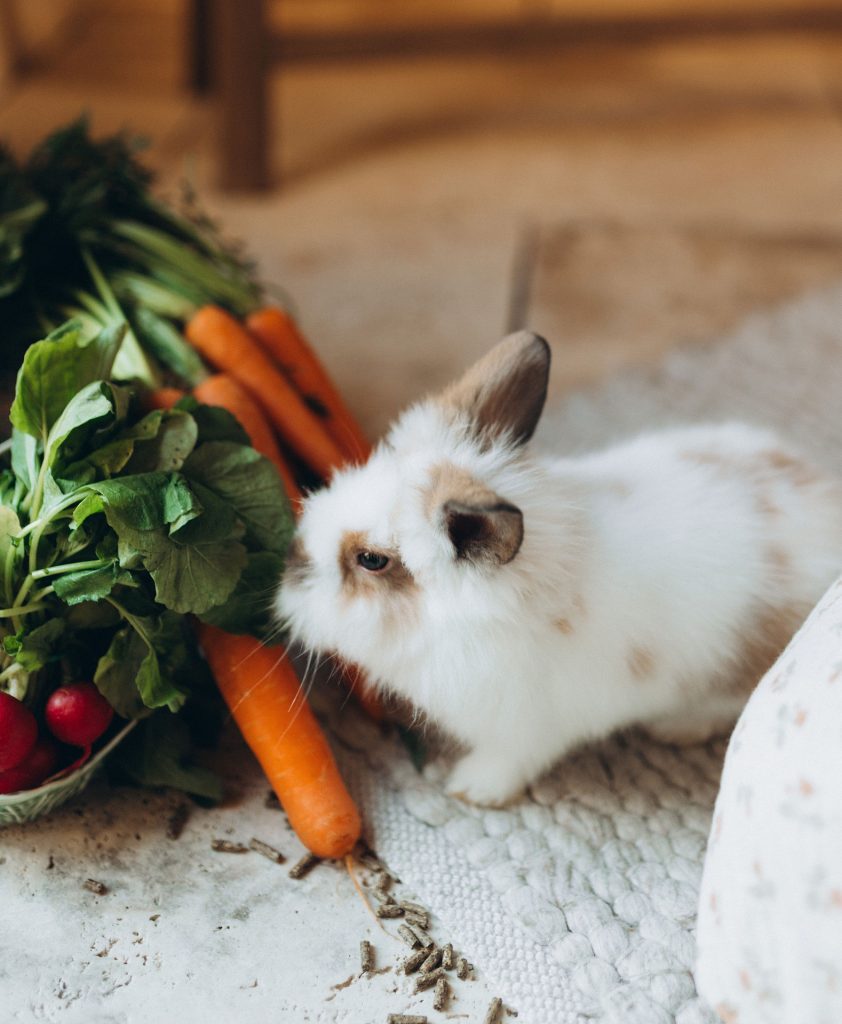
Because carrots grow in the ground, they are more susceptible to absorbing systemic pesticides and heavy metals from the soil.
The Porous Nature of Roots
The skin of a carrot is not a solid barrier; it is designed to absorb water and nutrients. If the soil contains nitrates or pesticide runoff, the carrot root concentrates these chemicals. Always prioritize organic carrots for rabbits. If organic is not available, the carrot must be scrubbed with a vegetable brush and peeled to remove the outermost layer.
The Calcium-to-Phosphorus Mineral Balance
Rabbits require a specific ratio of calcium and phosphorus to prevent kidney stones and bladder sludge.
Skewed Ratios in Root Veggies
Ideally, a rabbit’s diet should have a calcium-to-phosphorus ratio of 1.5:1 or 2:1. Carrots, however, are often closer to 1:1. While this seems low in calcium, the high phosphorus can actually cause the body to “leach” calcium out of the bones to balance the blood, leading to metabolic bone disease and weakened dental roots.
Frequently Asked Questions (FAQ)
Can rabbits eat carrot peels?
Yes, but they are still sugary. Ensure they are organic or scrubbed thoroughly to remove pesticides.
Why does my rabbit ignore hay for carrots?
Rabbits have a biological “sweet tooth.” If they know sugar is an option, they may refuse their hay. If this happens, stop all treats immediately.
Is purple carrot healthier than orange?
While they contain different antioxidants, the sugar-to-fiber ratio remains largely the same. Treat them with the same caution.
Will carrots change the color of my rabbit’s pee?
Yes. Pigments can turn rabbit urine a reddish or bright orange color. This is typically harmless, but if your rabbit is straining, consult a vet immediately.
Can I feed my rabbit carrot seeds?
No. Carrot seeds sold for planting are often treated with anti-fungal coatings that are toxic. Even untreated seeds are too high in fat and protein for a rabbit’s digestive tract.
Can rabbits eat wild carrots (Queen Anne’s Lace)?
Yes, the greens of Queen Anne’s Lace are generally safe, but you must be 100% certain of the identification. It looks nearly identical to Hemlock, which is instantly fatal to rabbits. When in doubt, stick to grocery store carrots.
Conclusion: Prioritizing Fiber Over Supplemental Sugars
While the image of a bunny munching on a carrot is iconic, the true path to a long, healthy life lies in the hay rack, not the vegetable drawer. Carrots should be treated as the “dessert” of the rabbit world—delightful in tiny increments but dangerous if allowed to replace their natural, fiber-rich diet. Keep the treats sparse, keep the hay unlimited, and you’ll ensure your bunny stays as active as a wild hare.
For more in-depth nutritional guides on keeping your long-eared companions healthy, browse my full library of rabbit diet and food research.
Medical & Veterinary Disclaimer: bunnyowners.com is an informational resource for rabbit owners and enthusiasts. We are not veterinarians. The content on this website is not a substitute for professional veterinary care, diagnosis, or treatment. Always seek the advice of your veterinarian with any questions you may have regarding your pet’s medical condition, diet, or overall health.