

Disclaimer: The information provided on PoodleReport.com is for educational purposes only and does not constitute veterinary medical advice; always consult your vet before changing your dog’s diet. Additionally, this post contains affiliate links. As an Amazon Associate, and other affiliate advertising programs, I earn from qualifying purchases at no extra cost to you
If you’ve ever been woken up at 3 AM by what sounds like a tiny construction crew in your living room, you aren’t alone. Many new owners assume their rabbits are nocturnal, but as a researcher who spends way too much time watching whiskers twitch, I can tell you the truth is a bit more nuanced. Rabbits aren’t actually night owls or early birds; they are crepuscular. This means they hit their peak performance during the “twilight” hours of dawn and dusk.
From an evolutionary standpoint, this was a genius survival strategy. By being most active when the sun is just coming up or going down, rabbits avoid the peak hunting times of both daytime predators (like hawks) and nighttime hunters (like owls). If you’re just starting your journey into the world of buns, checking out my archive of rabbit behavior guides is a great way to decode their unique language while you wait for the sun to rise.
The 24-Hour Energy Audit
To understand what your rabbit is doing while you’re catching Zs, we have to look at their metabolic peaks. Unlike humans, who generally prefer one long stretch of sleep, rabbits operate on a “polyphasic” schedule—meaning they take dozens of tiny power naps throughout a 24-hour period. According to the House Rabbit Society, this keeps them hyper-alert and ready to bolt at a moment’s notice.
| Time of Day | Rabbit Energy Level | Typical Activity |
| Dawn (5 AM – 8 AM) | High (Peak) | Binkies, foraging, social grooming |
| Mid-Day (11 AM – 4 PM) | Low | Deep flopping, napping, “loafing” |
| Dusk (6 PM – 9 PM) | High (Peak) | Zoomies, digging, eating hay |
| Night (11 PM – 4 AM) | Moderate | Maintenance, cecotrope grazing, exploring |
Sleep Stages: Dreaming with Eyes Wide Open
One of the weirdest things I’ve observed during my “lab hours” at home with my rabbits Mocha and Chino is that rabbits often sleep with their eyes open. They have a special third eyelid called a nictitating membrane that keeps the eye moist while they drowse. This is a primary safety protocol; it allows them Sense movement and light even while they are resting.
Rabbits do experience REM (Rapid Eye Movement) sleep, which is when the “real” restoration happens. Data from the Merck Veterinary Manual notes that while rabbits can sleep up to 8 hours a day, only about 10–12% of that is deep REM sleep. When you see their paws twitching or their nose stopping its constant wiggle, you’ve caught them in a rare moment of deep dreaming.
| Sleep Stage | % of Total Rest | Signs to Look For |
| Drowsing | 70% | Eyes open, ears slightly back, nose wiggling |
| Deep Sleep | 20% | Eyes closed, slow breathing, “The Flop” |
| REM Sleep | 10% | Whisker twitching, “running” paws |
The Midnight Menu: The Cecotrope Cycle

If you check your bunny’s hutch at 2 AM, you might see them doing something that looks like grooming but is actually a vital digestive “metabolic reset.” Rabbits produce cecotropes—special, nutrient-rich droppings—which they re-ingest directly to ensure they get every bit of Vitamin B and protein out of their food.
This process usually happens in the quietest hours of the night when the rabbit feels most secure. It might sound a bit “ew” to us, but for a rabbit, skipping the midnight cecotrope cycle is a clinical red flag that could lead to digestive issues like GI stasis.
The Social Contract: Why Bonded Pairs Sleep Better
When you have a bonded pair, the “night shift” changes dramatically. In my observations, I’ve seen that bonded rabbits actually divide labor. While one rabbit enters a deeper stage of sleep, the other often remains in a “drowsing” state to act as a lookout. This social safety net allows each rabbit to reach those essential REM cycles more frequently than a solo bunny might.
Research compiled by University of Miami Biology suggests that the presence of a companion significantly lowers a rabbit’s resting heart rate. This “social contract” is why Mocha and Chino are often found in a synchronized flop during the afternoon—they’ve negotiated their security so well that they can both afford to fully power down. For the owner, this means a happier, less “jumpy” pet during the high-energy twilight hours.
Bio-Hacking the Burrow: Modern Light and Temp Protocols
To get the most out of your rabbit’s sleep architecture, we have to look at their environment like a researcher would. Modern homes are filled with “blue light” from TVs and LED strips, which can play havoc with a rabbit’s circadian rhythm. Because they are so sensitive to light changes, even a small glowing router in their room can trick their brain into staying in “vigilance mode,” preventing deep rest.
Temperature is the second big variable. Rabbits regulate their body heat through their ears, and they sleep most soundly when the ambient temperature is between 60°F and 70°F. According to Sleepopolis, smaller mammals have higher metabolic rates, meaning they can overheat easily during active nighttime periods. If your home stays too warm at night, your bun might skip their 3 AM zoomies and become lethargic. Providing a dark, cool “burrow” space is the best way to bio-hack their health.
Common Mistakes: Waking the Resident Scholar
As a researcher-lite, I’ve seen owners make the mistake of startling their buns during their afternoon “low.” Because they often sleep with their eyes open, it’s easy to think they’re awake and try to pet them. According to the RSPCA, startling a rabbit out of deep sleep causes a spike in cortisol (stress). Always speak softly before you approach your “loafing” bun to let them transition back to alertness.
Another mistake is providing loud toys for nighttime use. If you give them a plastic jingle ball at 11 PM, don’t be surprised when you’re awake at 2 AM. Instead, opt for “silent” enrichment like cardboard castles or seagrass mats that satisfy their digging instincts without the acoustic trauma to your household.
When to Worry: Clinical Red Flags
While 3 AM zoomies are normal, some nighttime behaviors are cause for concern. If your rabbit is normally a “party animal” at dusk but suddenly becomes lethargic and refuses treats, you could be looking at a digestive emergency. Clinical data from VCA Animal Hospitals suggests that rabbits are masters at hiding pain, so any shift in their “night shift” routine should be taken seriously.
Loud, repetitive thumping at night—when there is no clear danger—can also indicate extreme stress or environmental discomfort. If you notice your rabbit is “pressing” their belly into the floor and looks uncomfortable, this is a sign of gas or pain that requires immediate attention, as their metabolism moves much faster than ours.
The Silent Enrichment Protocol: 2026’s Best Nighttime Toys
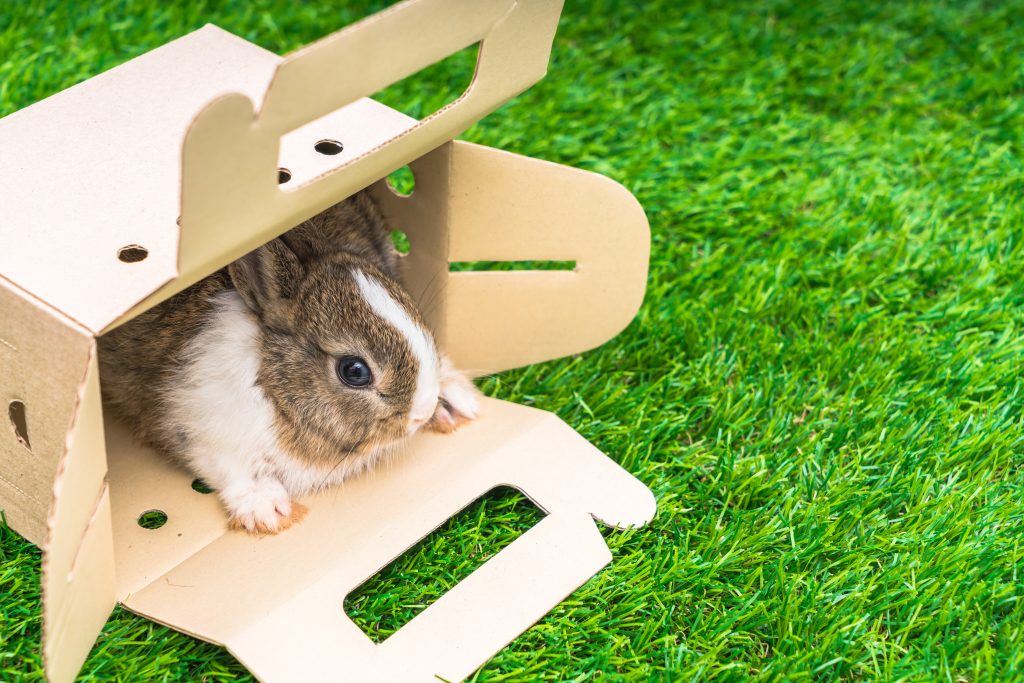
Since we’ve established that your rabbit will be active while you are trying to sleep, the goal isn’t to stop the behavior, but to manage the acoustics. As an individual who values my own REM cycles, I have developed a 2026 structured protocol for nighttime enrichment that prioritizes destructive satisfaction over noise. Research from Harper Adams University demonstrated that providing these behavioral outlets can reduce a rabbit’s cortisol levels—a key stress indicator—by nearly 50%.
The best nighttime toys satisfy a rabbit’s urge to chew, shred, and dig without using hard plastics or bells. Based on my observations with Mocha and Chino, cardboard is the gold standard. A multi-story cardboard castle allows them to “remodel” their burrow at 2 AM silently. For chewing fulfillment, untreated willow branches or seagrass mats are excellent options. Additionally, PetMD has confirmed that safe wooden chew toys are vital for dental health and mental stimulation, keeping them occupied during their moderate-energy nighttime maintenance phase.
Frequently Asked Questions (FAQ)
- Should I leave a night light on for my rabbit? Not necessarily. They see better than humans in low light, and total darkness helps regulate their internal clock.
- Why is my rabbit so loud at 4 AM? That is their biological “morning.” They are ready to forage and socialize!
- Do rabbits dream? Yes! Twitching whiskers and “running” paws during a flop are classic signs of REM sleep.
- Is it okay if my rabbit doesn’t sleep at night? They are sleeping—just in short bursts. As long as they are eating and active during dawn/dusk, they are fine.
- Can they see in total darkness? They have great low-light vision, but their whiskers (vibrissae) are what really help them navigate tight spaces in the dark.
- How do I know if my rabbit is getting enough sleep? A rabbit that “flops” over on its side is a rabbit that feels safe enough to enter deep sleep.
Conclusion: Respecting the Rhythm
At the end of the day (or the beginning of it, if you’re a bunny), understanding the crepuscular lifestyle is the key to a happy home. By providing a dark, secure “burrow,” managing their light exposure, and respecting their afternoon nap time, you’re supporting their natural metabolic reset.
Whether they are doing midnight binkies or taking a 2 PM snooze, your rabbit’s internal clock is a finely-tuned machine designed for survival. Respect the “night shift,” and you’ll have a much more harmonious relationship with your long-eared roommate! For a deeper dive into everything from ear positions to binkies, don’t miss my definitive 2026 guide to rabbit behavior.
Medical & Veterinary Disclaimer: PoodleReport.com is an informational resource for Poodle owners and enthusiasts. We are not veterinarians. The content on this website is not a substitute for professional veterinary care, diagnosis, or treatment. Always seek the advice of your veterinarian with any questions you may have regarding your pet’s medical condition, diet, or overall health.