
Disclaimer: The information provided on bunnyowners.com is for educational purposes only and does not constitute veterinary medical advice; always consult your vet before changing your dog’s diet. Additionally, this post contains affiliate links. As an Amazon Associate, and other affiliate advertising programs, I earn from qualifying purchases at no extra cost to you
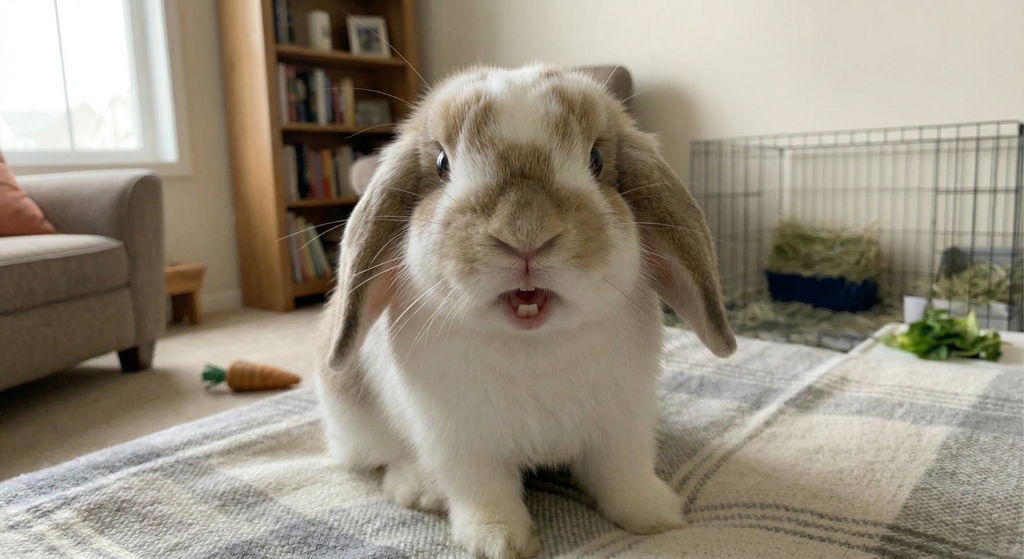
To understand why a creature that essentially looks like a sentient marshmallow would suddenly decide to draw blood, we have to look past the fluff. Most general pet advice lazily labels a nippy bunny as “just mean,” but biting is rarely fueled by malice. Instead, it is a complex intersection of biology, environmental stressors, and high-stakes survival instincts. This leads us to the essential question every startled owner eventually asks: Why do rabbits bite?
Rabbits bite as a way to communicate or defend themselves, usually following a survival instinct rather than a desire to be mean. Common triggers include the frontal blind spot causing a startle reflex, territorial protection of their space, or hormonal shifts in rabbits that haven’t been fixed. While some nips are just a cheeky request for more pets, sudden aggression can also be a quiet way of signaling physical pain or an underlying medical issue.
After years of observing how these behaviors manifest, I’ve come to view every tooth-to-skin encounter as a helpful data point in a much larger conversation. He isn’t auditioning for a villain role; he’s simply communicating in the only language he’s got. Below is a deep dive into the eight primary reasons he might be acting out, followed by a research-backed strategy to help everyone get back to the “peaceful roommate” phase.
Dig Deeper: Teeth are often the loudest part of a conversation, but they aren’t the whole story. To see how nipping fits into the broader spectrum of social cues and body language, dive into my Definitive Guide to Rabbit Behavior. It is a comprehensive look at how instinct drives every thump, nudge, and snap.
At a Glance: The 8 Primary Drivers of Rabbit Biting
Before we perform a deep dive into the rabbit psyche, here is the executive summary. Most generic pet blogs treat rabbit aggression as a single personality flaw, but my research into current behavioral data shows that biting is usually a tactical response to specific stimuli. Whether it is a “hardware” issue like vision or a “software” glitch like hormones, identifying the specific trigger is 90% of the battle.
If you are looking for a quick diagnosis, here is a high-level overview of the eight reasons your rabbit is using his teeth:
| The “Why” | Root Cause | Frequency |
| 1. The Frontal Blind Spot | Geometric startle reflex | Very Common |
| 2. Hormonal Shifts | Puberty/Territorial drives | High (in unfixed rabbits) |
| 3. Core Zone Territoriality | Defending his home/enclosure | Situational |
| 4. Redirected Aggression | Stress from an external source | Occasional |
| 5. Social Nipping | Communication and “herding” | Daily |
| 6. Physical Pain | Hidden illness or injury | Critical (Medical) |
| 7. Dominance Display | Establishing social hierarchy | Common in “Alpha” buns |
| 8. Scent Confusion | Smelling like food/predators | Occasional |
By bridging the gaps found in standard advice—specifically focusing on the Frontal Blind Spot and Redirected Aggression—we can move past the “mean bunny” myth and start treating the actual cause. According to behavioral studies highlighted by the Rabbit Welfare Association & Fund (RWAF), understanding these nuances is the first step in restoring a bond of trust.
1. Vision and the Frontal Blind Spot
The most common reason for a sudden bite isn’t aggression—it’s a jump scare. Rabbits are designed by evolution to be panoramic motion detectors. He has large, protruding eyes set high and back on his head, granting him nearly 360-degree vision. However, this focus on spotting predators from above creates a significant trade-off: a 10-degree central blind spot directly in front of his nose and under his chin.
Why He Snaps at Frontal Movement
When you reach directly toward a rabbit’s face, your hand essentially “teleports” into his field of vision from a void. Because he cannot perceive depth or detail in that specific central zone, his instinctual “fight or flight” response is triggered. A hand appearing out of nowhere is perceived as a predator strike rather than a gesture of affection. He snaps because he is startled, and his teeth are his primary defensive tool.
How to Approach Without Startling Him
To stop the “jump scare” bite, you must respect the geometry of his vision. Always approach from the side where his lateral vision is strongest. Before you make physical contact, speak softly or wiggle your fingers in his peripheral view. This allows him to use his hearing and lateral sight to identify you as a friend before your hand enters his blind zone. Establishing a consistent verbal cue before petting can reduce defensive snaps significantly by bridging the visual gap with auditory confirmation.
2. Hormones and Puberty
If your once-angelic bunny turned into a fuzzy chainsaw around the four-to-six-month mark, you are likely witnessing the onset of puberty. This isn’t a personality flaw; it is a massive surge of reproductive hormones that can override his previous social training.
The Adolescent Behavioral Shift
Unfixed rabbits are driven by hormonal cycles that prioritize the defense of nesting territory. During this phase, he becomes hyper-aware of his “turf.” He may begin circling your feet, grunting, or lunging at your hands. This is a biological imperative to defend a potential mating ground from perceived rivals. The PDSA notes that surgical intervention—spaying or neutering—is the most effective way to eliminate these aggressive cycles.
Behavioral Benefits of Neutering
Neutering is not just about population control; it’s about mental stability. Once the hormonal noise is quieted, his true, docile personality can finally emerge. It usually takes 4–6 weeks post-surgery for the hormones to fully dissipate. During this transition, he may still display some residual “nippiness” while his body recalibrates. Beyond behavior, this medical step significantly reduces the risk of reproductive cancers, which are tragically common in unaltered rabbits.
3. Territorial Behavior and the “Core Zone”
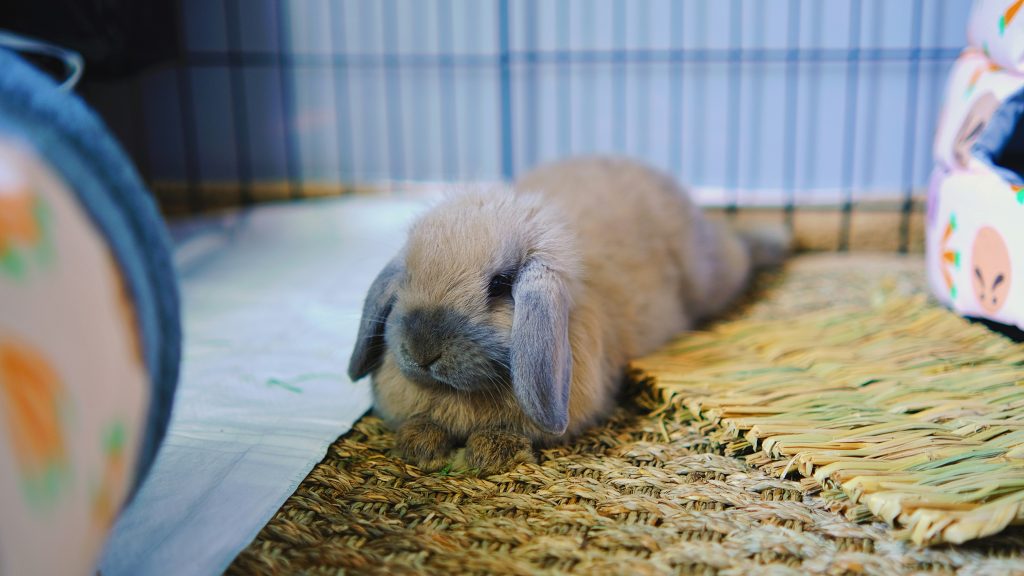
Rabbits are surprisingly domestic about their floor plans. He views his enclosure, litter box, and even specific rugs as an exclusive domain—his “Core Zone.” This behavior is deeply rooted in his wild ancestry, where a warren was a life-saving fortress that had to be defended at all costs.
Resource Guarding and Lunging
In my observational research with Mocha and Chino, I’ve found that “cage aggression” is rarely about the person and more about the perceived violation of space. Chino maintains a strict “no-touch” policy regarding his ceramic food bowl; if I try to reorganize his hay while he’s present, he will lunge with his front paws and follow up with a bite. This resource guarding is a documented survival trait highlighted by VCA Animal Hospitals. To him, your hand is an invading force stealing his hard-earned resources.
Respecting Physical Boundaries
The best way to manage a territorial rabbit is to avoid performing maintenance while he is inside his house. Lure him into a neutral play zone or onto an exercise rug with a treat before you touch his litter box or food bowls. This removes the “intruder” dynamic entirely. By respecting his Core Zone, you reduce his anxiety levels, which in turn reduces the perceived need for him to defend his territory with his teeth.
4. Redirected Aggression Triggers
Redirected aggression is one of the most misunderstood causes of biting. It occurs when he is agitated by a stimulus he cannot reach, causing him to lash out at the nearest available target—which is often your ankle or hand.
Lashing Out Due to External Stress
If he hears a loud vacuum cleaner in the next room, smells a neighbor’s cat on your clothing, or sees a bird of prey through a window, his body is instantly flooded with adrenaline. Because he cannot “attack” the vacuum or the bird, he experiences a physiological overflow. When you walk past or reach down to pet him during this state, he redirects that pent-up energy toward you. He isn’t actually angry with you; he is simply caught in a biological crossfire.
Identifying Environmental Stress
If he is suddenly nippy for no apparent reason, you must perform an environmental audit. Look for new pets in the home, high-pitched electronic noises, or changes in the household routine. The Rabbit Welfare Association & Fund (RWAF) explains that identifying these displaced stressors is key to resolving seemingly “random” aggression. Once the external stressor is removed, the biting usually subsides as his adrenaline levels return to baseline.
5. Social Nipping as Communication
In the complex social hierarchy of rabbits, teeth are a primary tool for maintaining order. However, it is vital to distinguish between a communicative nip and a defensive bite. They are entirely different signals with different emotional roots.
| Feature | The Nip (Communication) | The Bite (Aggression/Fear) |
| Intensity | A quick, shallow “pinch” | A hard clamp; skin often breaks |
| Body Language | Relaxed or demanding | Tense, ears pinned, tail up |
| Context | “Move over” or “Pet me now” | Fear, pain, or territoriality |
| Outcome | Minor irritation | Bleeding or bruising |
Nipping as a Social Nudge
A nip is often the sequel to an ignored “nose-bonk.” If he wants you to move so he can reach a piece of hay, he will first nudge you with his nose. If you don’t move, he uses his teeth to provide an urgent suggestion. It is the rabbit equivalent of a polite but firm “excuse me.” He isn’t trying to hurt you; he is trying to “herd” you into a different behavior.
Solving chronic biting usually requires a holistic look at a rabbit’s environment and social structure. Browse my full list of Rabbit Behavior Guides for more research-backed strategies on managing aggression and building a bond that doesn’t involve defensive lunging.
Demands for Attention
Sometimes he will nip your feet simply because he is bored and wants interaction. If he nips and then waits expectantly, he is using his teeth to start a conversation. Learning to distinguish this social nipping from a fear-based bite is the first step in successful behavior modification. You shouldn’t punish a nip, but you should redirect the energy toward a toy or a head scratch.
6. Physical Pain and Medical Issues
Because rabbits are prey animals, they are biologically programmed to hide weakness at all costs. In the wild, a rabbit that shows pain is the first one a predator targets. Consequently, he won’t cry out; instead, he becomes defensive and “bitey” to keep potential threats away while he feels vulnerable.
How Physical Pain Leads to Biting
Sudden, uncharacteristic aggression is often the only symptom of serious health issues. Dental spurs (where his teeth grow sharp points that cut his tongue), GI stasis, or the onset of arthritis can turn a sweet pet into a biter. According to the Merck Veterinary Manual, any unexplained shift in temperament warrants an immediate trip to an exotic-savvy vet. He is using his teeth to create a safety buffer while he suffers.
Identifying Signs of Physical Distress
Look for secondary signs that accompany the biting, such as a “hunched” posture (sitting like a ball with eyes tight), a lack of appetite, or loud, crunchy tooth grinding. Pain-related grinding sounds like two rocks being rubbed together and is usually rhythmic. If you see these signs, the biting is a medical cry for help, not a behavioral issue. It is a “silent scream” that only an observant owner can decode.
7. Dominance and Social Hierarchy
Rabbits live in rigid social hierarchies where someone is always the “Alpha.” If he is nipping your feet or hands, he might be asserting his dominance to ensure his status remains unchallenged.
Biting to Demand Grooming
In the wild, the dominant rabbit is groomed by the subordinates. The grooming dynamic is the ultimate tell of social rank. If he nips you and then immediately lowers his head to the floor, he is demanding his “tribute.” He is essentially saying, “I am the boss, and you have neglected your grooming duties. Pet me now.” If you don’t comply, he may nip again to “correct” your behavior.
Establishing a Social Balance
If you want to shift the dynamic without causing fear, you can use a technique called “gentle grounding.” By placing your hand over his head and gently but firmly pressing it toward the floor for a few seconds, you signal that you are the one in charge of the social schedule. This is a non-violent way to assert dominance that mimics natural rabbit interactions. It tells him that while he is loved, he does not dictate the grooming sessions.
8. Mistaken Identity Due to Strong Scents

Sometimes the bite is a simple case of mistaken identity. He relies heavily on his sense of smell to compensate for his frontal blind spot, and his nose is incredibly sensitive, containing over 100 million scent receptors.
Why Smelling Like Food Causes Bites
If you have been handling carrots, bananas, or even strongly scented floral soap, your hand smells like a five-star buffet. Because his eyesight is poor directly in front of his nose, he may “test” the delicious-smelling object that has appeared in his personal space. He isn’t biting you; he is attempting to eat what he thinks is a treat. This is also common if you’ve handled other pets whose scent might trigger a defensive “pre-emptive” strike.
Maintaining a Consistent Scent
The RSPCA suggests washing your hands with unscented soap before and after handling him. This ensures that your scent remains consistent and that you don’t accidentally smell like a snack—or a predator. If you’ve recently been in the kitchen preparing a salad, assume your fingers smell like the main course and wash them thoroughly before approaching him.
Common Training Mistakes That Lead to Biting
Even dedicated owners can inadvertently train their rabbits to continue biting through simple translation errors.
- The “Yank and Yell” Reflex: Jerking your hand away and shouting is a natural human reaction, but to a rabbit, it looks like a predator’s attack. This confirms his fear and makes him more likely to bite next time to “pre-empt” your perceived aggression.
- Bribing the Biter: Offering a treat to “calm him down” after a bite is a classic mistake. He is an intelligent animal; he will quickly learn that “Bite = Snack.” Instead, use social exclusion.
- Using Physical Punishment: Never use spray bottles, flick his nose, or hit him. He does not understand punishment; he only understands fear. Physical discipline will turn a “nippy” rabbit into an aggressively defensive one who views you as a threat.
When Biting is a Medical Cry for Help: Red Flags
In the wild, a rabbit that shows weakness is essentially inviting predators to dinner. Because of this, they have developed the ultimate poker face, stoically hiding pain until it becomes unbearable. When a rabbit can no longer mask their discomfort, they often create a “defensive buffer zone” using their teeth.
If your rabbit’s behavior shifts from occasional nipping to aggressive, unprovoked snapping, it is frequently a clinical symptom rather than a personality quirk. Based on my research, “medical biting” often lacks the typical warnings—like ear-pinning or grunting—because the rabbit is simply too exhausted by the pain to provide them.
Diagnostic Table: Linking Symptoms to Aggression
| Red Flag | Biting Presentation | Potential Medical Cause | Action Required |
| Loud Tooth Grinding | Snapping when you pet their head or ears. | Severe Physical Pain: Often internal or late-stage illness. | Emergency Vet Visit: Pain grinding is loud and rhythmic. |
| Refusing Greens/Hay | Lunging at treats without eating them; biting the hand that feeds. | GI Stasis: A life-threatening shutdown of the digestive system. | Immediate Intervention: Per the PDSA, this is a critical emergency. |
| Sudden Personality Flip | Biting specifically when touched in a previously “safe” spot. | Dental Spurs or Arthritis: Sharp tooth points or joint inflammation. | Schedule Wellness Exam: VCA Animal Hospitals notes dental pain is a top driver. |
| Swelling or Discharge | Snapping and “boxing” when you approach the jaw. | Abscess or Dental Disease: Localized infection that makes touch feel like an attack. | Professional Diagnosis: Requires imaging to find the root pressure. |
How to Stop a Rabbit From Biting: 5 Research-Backed Steps
Training a rabbit to keep his teeth to ourselves is less about “discipline” in the human sense and more about re-establishing social boundaries. Because rabbits are prey animals, traditional punitive measures (like scolding or physical force) are interpreted as predator attacks, which only increases defensive biting. Instead, we must use a strategy of clear communication and environmental modification.
Below are five steps I’ve tested through observational research to help transition your rabbit from a “nippy” roommate back to a peaceful companion.
Step 1: Utilize Vocal Feedback (The “Eep!” Method)
The most immediate way to communicate with a rabbit is to speak their language. In a warren setting, if a rabbit nips a peer or a littermate too hard during play or grooming, the victim emits a sharp, high-pitched squeak to signal distress.
- The Action: The very second his teeth make contact with your skin—even if it is just a small nip—let out a sharp, high-pitched “Eep!” or “Ouch!”
- The Science: This sound startles the rabbit out of his current mindset. It serves as an immediate “biometric” signal that he has overstepped a social boundary. According to the House Rabbit Society, this is the single most effective way to provide negative feedback without causing lasting fear.
- The Goal: You are teaching him that humans are fragile and that his “social pressure” is causing genuine pain.
Step 2: Implement Social Time-Outs
Rabbits are deeply social creatures; for them, the end of social interaction is the ultimate consequence. If the “Eep!” method is the warning, the time-out is the enforcement.
- The Action: Immediately after your vocal cue, stand up and walk away. Turn your back or leave the room for 2–5 minutes.
- The Science: This is not about putting the rabbit “in his hutch”—which can actually reinforce cage aggression—but rather about ending the “human party.” By removing yourself, you are teaching him that biting is the universal “off switch” for the attention and petting he enjoys.
- The Goal: Consistency is vital. The RSPCA emphasizes that if you pet the rabbit to “calm him down” after a bite, you are accidentally rewarding the aggression. The party must end, every single time.
Step 3: Transition to Neutral Ground Interactions
Territoriality is one of the leading causes of biting. If a rabbit feels he is defending his “Core Zone” (his hutch, favorite rug, or litter box), your hand will always be viewed as an intruder.
- The Action: Move your interaction sessions to a “neutral” space—a room or area where the rabbit does not normally hang out or hasn’t marked with his scent.
- The Science: On neutral ground, the rabbit’s “software” switches from Defense Mode to Exploration Mode. Without the urge to guard resources, he is much more open to positive bonding. VCA Animal Hospitals recommends using neutral territory specifically for rabbits that display “cage-guarding” tendencies.
- The Goal: Build a foundation of trust where the rabbit doesn’t feel the biological need to protect his home from you.
Step 4: Provide “Legal” High-Fiber Enrichment
Sometimes biting is simply a result of a physical need to gnaw. A rabbit’s teeth grow continuously throughout his life, and he has a biological imperative to wear them down.
- The Action: Ensure he has 24/7 access to “legal” chew items. This includes willow balls, apple wood sticks, and cardboard tunnels.
- The Science: If a rabbit is bored or lacks appropriate fiber to chew on, he will redirect that energy toward your furniture—or your ankles. The Rabbit Awareness Action Group notes that environmental enrichment significantly reduces frustration-based behavioral issues.
- The Goal: Give him a productive outlet for his natural instincts. If he has a willow ball to destroy, he is much less likely to “test-bite” your hand out of boredom.
Step 5: Master Positive Reinforcement and Timing
Once you have signaled what not to do, you must clearly reward what you want him to do. Rabbits respond exceptionally well to operant conditioning.
- The Action: Keep small, high-value rewards (like a single pellet or a tiny fragment of a dried herb) on hand. When the rabbit approaches you, sniffs your hand, or sits near you without using his teeth, offer the reward and a soft verbal cue like “Good boy.”
- The Science: The reward must be delivered within 2–3 seconds of the positive behavior for the rabbit to make the mental connection. The PDSA highlights that rewarding calm behavior creates a “positive feedback loop,” making the rabbit choose interaction over aggression.
- The Goal: Shift the dynamic from a fear-based relationship to one based on mutual benefit.
Researcher Note: If you have implemented these five steps consistently for 3–4 weeks and the biting persists, it is time to consult your vet for a more advanced medical assessment. Persistent aggression in a fixed rabbit can sometimes indicate “silent pain” from dental disease or arthritis that only a veterinarian can diagnose.
FAQ
Why does my rabbit bite my clothes but not my skin?
This is often “protective grooming.” He likely thinks your shirt is fur that needs “fixing” or he is trying to get your attention without hurting you. It’s a sign of a strong bond, even if it’s destructive to your wardrobe.
Should I scold my rabbit for biting?
Never. Rabbits do not understand punishment. Use a high-pitched “Eep!” to signal pain, then calmly walk away to end the social interaction. This is the only way to communicate “No” without causing fear.
How can I tell if he is about to lunge?
Watch for the “boxing” stance—standing on hind legs and swatting with paws—and listen for a low growl or grunt. These are the final warnings before a bite occurs. Tensed ears and a tail flick can also signal agitation.
Does a bite mean my rabbit hates me?
No. Biting is a stress reaction or a crude form of communication. Even bonded rabbits occasionally nip to express a boundary or demand priority during meal time.
Can a rabbit be trained not to bite?
Yes. Consistent boundary setting and rewarding calm interactions with small treats can reshape behavior over 2–3 weeks. Patience is the most important part of the process.
What is the best way to approach a rabbit that bites?
Get down on his level and offer your hand from the side. Avoid reaching from above, which mimics the movement of a bird of prey and triggers a defensive “fear-bite” reflex.
Conclusion
Understanding why he would draw blood requires looking at the world through his eyes. By respecting his frontal blind spot, acknowledging his territorial boundaries, and ensuring his medical health, you can bridge the communication gap. A rabbit who bites is rarely “mean”—he is usually just a rabbit who feels unheard.
Medical & Veterinary Disclaimer: bunnyowners.com is an informational resource for rabbit owners and enthusiasts. We are not veterinarians. The content on this website is not a substitute for professional veterinary care, diagnosis, or treatment. Always seek the advice of your veterinarian with any questions you may have regarding your pet’s medical condition, diet, or overall health.