
Disclaimer: The information provided on PoodleReport.com is for educational purposes only and does not constitute veterinary medical advice; always consult your vet before changing your dog’s diet. Additionally, this post contains affiliate links. As an Amazon Associate, and other affiliate advertising programs, I earn from qualifying purchases at no extra cost to you
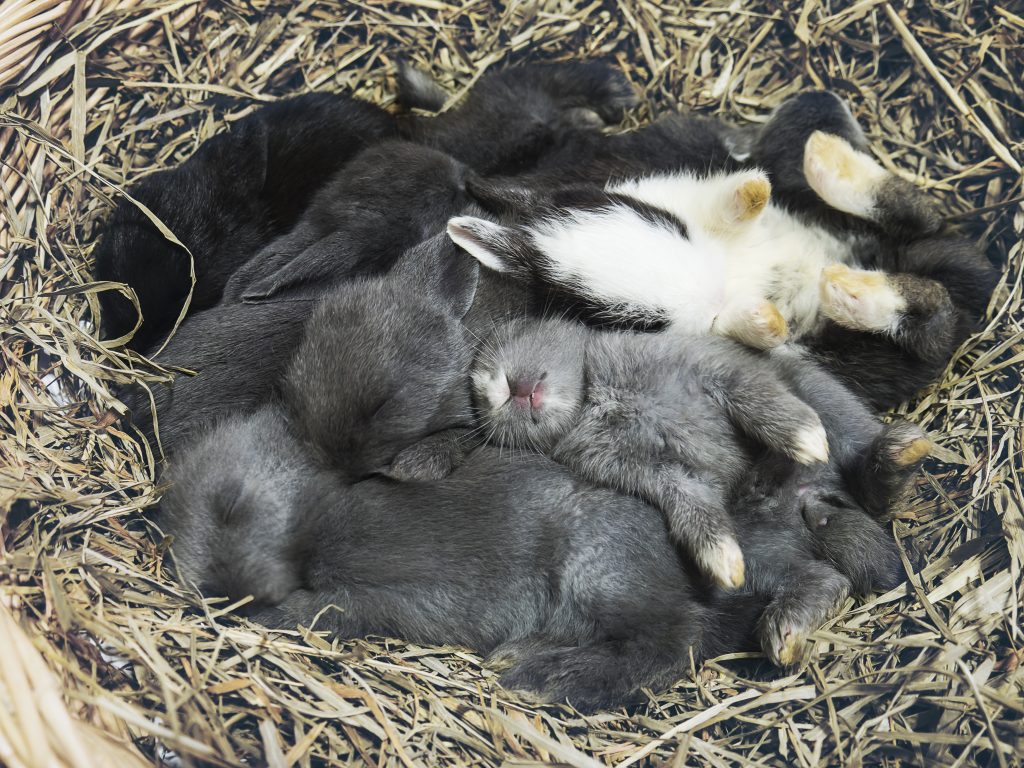
If you have just walked out to your nesting box and discovered a scene straight out of a true-crime documentary, take a deep breath. You are not alone, your husbandry hasn’t necessarily failed, and your rabbit is certainly not a monster. So, do rabbits eat their babies?
Yes, rabbits do sometimes eat their babies, but it is driven by survival biology, not malice. A mother rabbit will consume her young to delete the scent of a stillborn kit, or in response to extreme environmental panic, severe dehydration, or metabolic starvation. It is a ruthless evolutionary fail-safe.
My resident lagomorphs, Mocha and Chino, usually spend their days demanding treats and lounging in the sun. But beneath those fluffy, domestic exteriors beats the heart of a highly tuned, ancient prey animal. In this guide, we will unpack the precise biological, environmental, and metabolic triggers that cause a mother rabbit to consume her young, and outline exactly how you can prevent it.
Key Takeaways: Rapid Triage & Biology Basics
If you just found a compromised nest and need answers immediately, here is the quick breakdown to help you triage the situation:
- It’s Biology, Not Malice: Mother rabbits do not eat their young out of cruelty. It is a calculated survival response to environmental stress, extreme dehydration, or the need to delete the scent of a stillborn kit to protect the burrow.
- The 300% Rule: Lactation demands a massive metabolic toll. If her water bowl runs dry or she lacks high-protein alfalfa, her brain shifts from “nurturing mother” to “survival mode.”
- The “Buck Factor” is Real: If the male is nearby, his presence can trigger an intense hormonal conflict, causing the doe to view her current litter as an obstacle to her next pregnancy. Keep him completely out of sight and smell.
- Immediate Action: Take a breath. Move the enclosure to a dark, silent, and low-traffic room. Do not hover. Sanitize the nest with a sterilized tool, and check any survivors for round, pink bellies (a sign they are still nursing).
The 7 Biological Reasons for Kit Loss: A Deep Dive
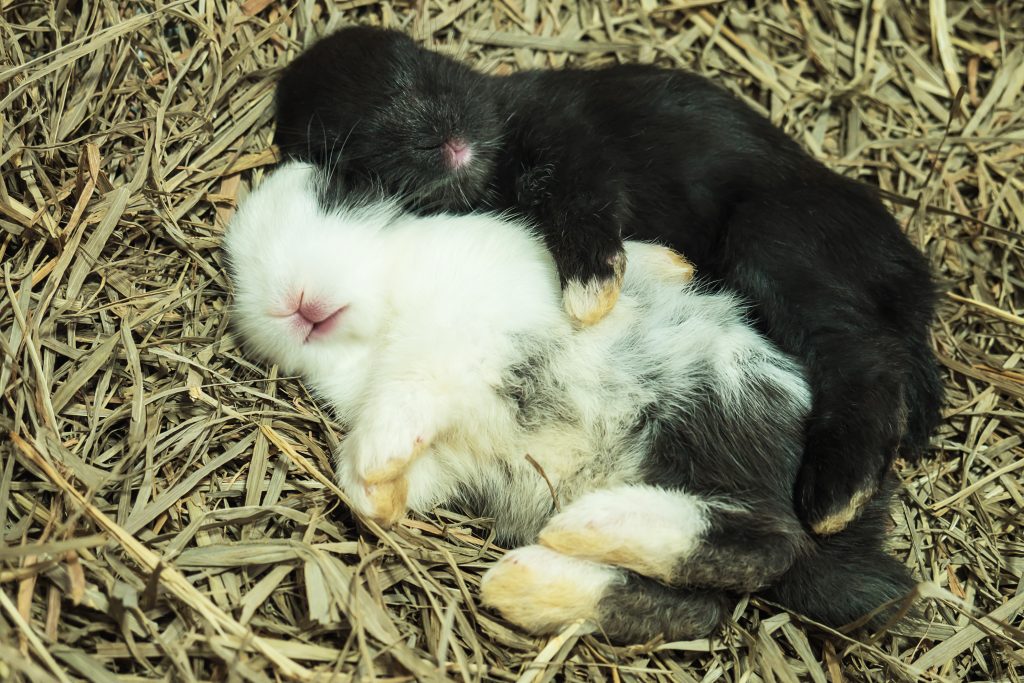
When the environment fails to meet strict biological benchmarks, wild programming takes over. Here is the scientifically grounded breakdown of the seven primary biological drivers.
For a deeper look at these intense instincts, see my The Definitive Guide to Rabbit Behavior.
1. Scent Deletion (The Stillborn Protocol)
The most common reason for kit loss is the removal of deceased offspring. In the wild, a dead kit begins to decay within hours, creating a highly potent olfactory trail that leads predators directly to the burrow. By consuming a stillborn kit or one that dies shortly after birth, the mother effectively “deletes” the evidence to protect the survivors.
Predator Scent Risks & Maternal Responses
| Scent Trigger | Predator Risk Level | Mother’s Biological Response |
| Stillborn Kit (Cold/Still) | High (Signals easy prey/decay) | Immediate consumption to delete scent. |
| Dried Blood / Placenta | High (Attracts scavengers) | Ingestion of all afterbirth and soiled materials. |
| Foreign Animal Scent | Severe (Active threat nearby) | High stress; may scatter or consume healthy kits. |
2. Environmental Stress and Nest Panic
Rabbits are the ultimate prey animals. Sudden loud noises, a barking dog at the window, or well-meaning humans hovering over the nesting box can trigger an acute panic response. If the mother feels the nest location is compromised, her survival instinct overrides her maternal one. She may consume the litter to “reabsorb” the metabolic resources, ensuring she survives to prepare for a future pregnancy in a safer spot.
3. Severe Dehydration (The Fluid Crisis)
Lactation is the most fluid-intensive physical process a rabbit will ever endure. Producing milk that is exponentially richer than a cow’s requires a continuous intake of water. According to VCA Animal Hospitals, a doe’s water requirement can easily triple during peak nursing. If she runs out of water, her brain views the kits as biological reservoirs of moisture, consuming them to extract the hydration needed to stay alive.
4. Metabolic Hunger and Malnutrition
A rabbit’s metabolic rate spikes by roughly 300% during lactation. As noted in the Journal of Animal Science, if she enters a severe caloric deficit, she hits a biological wall. The kits transition in her survival-driven brain from “offspring” to an immediate “protein source.” She must be fed for the workload she is carrying.
Dietary Transition for Kindling
| Stage | Primary Forage | Pellet Type | Dietary Focus |
| Maintenance | Timothy Hay | Timothy Pellets | Fiber, Weight Control |
| Late Pregnancy | Mix of Timothy & Alfalfa | Alfalfa Pellets | Calcium loading, increasing protein |
| Lactation | Alfalfa Hay | Alfalfa Pellets | Maximum caloric and protein density |
5. Maternal Inexperience (The “First-Timer” Fluke)
Teenage pregnancies in the lagomorph world often come with a steep learning curve. Does under six months of age frequently suffer from “doe panic.” Because their brains haven’t fully synced with their maternal instincts, they are easily overwhelmed. Frightened by the sudden movements or high-pitched squeaks of the babies, she might scatter the nest or react with defensive aggression.
6. The “Buck Factor” (Hormonal Conflict)
Rabbits are induced ovulators and can conceive a completely new litter within hours of giving birth. If the male (the buck) is kept in the same cage or nearby, his presence shifts her hormonal focus violently away from “nurturing the current litter” and toward “preparing for the next breeding cycle.” This intense hormonal conflict can cause her to view her helpless newborns as physical obstacles.
7. Territorial Overcrowding
If a hutch or burrow is too small, the doe acts as a strict biological auditor. She surveys her environment and may accurately sense that there is simply not enough square footage or available food to support an entire litter to weaning age. She may cull the litter to cut her losses and try again when she has secured a larger, more resource-rich territory.
The Pragmatic Truth Behind the Horror
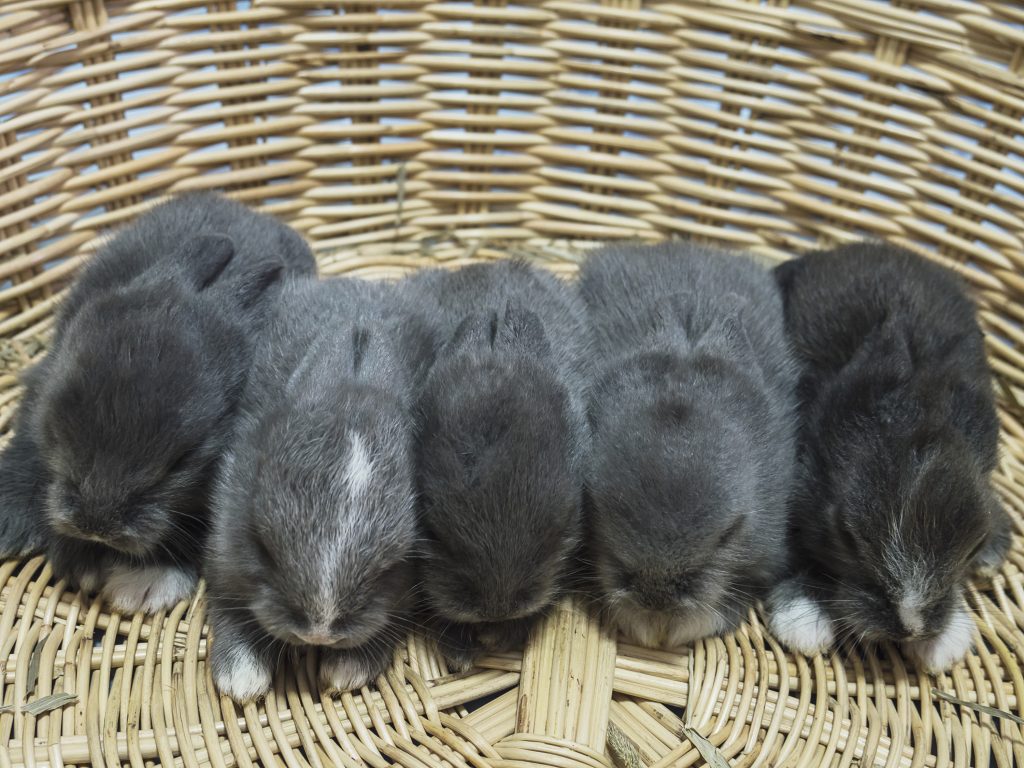
Finding a partially eaten litter is a visceral shock that leaves owners feeling guilty and confused. However, it is critical to understand that a doe is operating on a biological frequency designed entirely for survival. To a rabbit, an unstable or compromised nest is a massive liability.
It isn’t just a nursery; it is a beacon that invites predators to the entire burrow. The decision to eat a kit is rarely about a lack of motherly instinct; it is a matter of “survival math.” Understanding this shift from “nurture” to “recycle” is the first step in creating a secure home where these instincts are never triggered.
The Mechanics of Accidental Kit Loss
Before identifying the biological triggers, we must address “Mechanical Error.” Often, kit loss is entirely accidental during the sensory overload of kindling (giving birth). A doe’s primary instinct is to ingest the placenta to maintain nest hygiene—a behavior highlighted in the Merck Veterinary Manual as a critical survival trait.
In her haste to clean a newborn or sever the umbilical cord with razor-sharp incisors, she may accidentally nip too close. If the kit dies from this grooming error, her instinct to clean the nest takes over, leading her to consume it.
Emergency Triage: The “Rescue” Protocol
If you discover a partially eaten litter, you must balance intervention with the risk of causing further stress.
- Immediate Isolation: Move the cage to a dark, silent location.
- The “Fat Belly” Check: Gently check the survivors. If their bellies are round and pink, she is still nursing.
- Sanitize: Remove remains using a sterilized tool. Cover survivors with the mother’s pulled fur.
- Scent Masking: Rub your hands in the mother’s soiled hay before touching any kits to ensure you smell familiar.
Risk Assessment & Prevention: Securing the Maternity Ward
Before the kits even arrive, a successful owner must perform a ruthless biological audit of the environment. While we cannot rewrite a rabbit’s ancient DNA, we can meticulously outsmart it. As I frequently observe with my rabbits, Mocha and Chino, an ounce of environmental control is the difference between a thriving litter and a tragedy.
Assessing risk means stripping away our human perspective and looking at the setup strictly through the anxious eyes of a perpetual prey animal. By evaluating the mother’s history and the stability of her resources early, you can anticipate a crisis before it happens.
The Pre-Kindling Risk and Prevention Matrix
To eliminate duplicate efforts, we have combined the risk evaluation and the prevention strategy into one definitive checklist. Audit your setup against the “Danger Zone” column. If your doe falls into any of these high-risk categories, immediately apply the corresponding prevention strategy to ensure her “nurture” switch stays locked in the on position.
| Risk Factor | The “Danger Zone” (High Risk) | The Prevention Strategy |
| Hydration Failure | Single, lightweight plastic bowl or an untested drip bottle. | The Dual-Source Rule: Provide a heavy ceramic bowl and a backup drip bottle to prevent moisture-seeking culling. |
| Caloric Deficit | Feeding strictly timothy hay and standard adult maintenance pellets. | Alfalfa Loading: Transition to unlimited alfalfa hay and pellets one week prior to fuel the 300% metabolic spike. |
| The “Buck Factor” | The male is in the same cage, adjacent cage, or visible across the room. | Total Eviction: Move the male to a completely different room to remove triggers that cause a hormonal drive to re-breed. |
| Environmental Panic | Near a TV, loud children, barking dogs, or frequent household traffic. | The Isolation Protocol: Move the enclosure to a dark, silent room to convince the doe her nest is a well-kept secret. |
| Nesting Setup | Shallow box, or a box provided too early (which she may use as a litter pan). | Day 28 Introduction: Add the deep, sanitized nest box to the enclosure just days before birth to ensure a clean nursery. |
| Maternal Age | Under 6 months old (Prone to first-timer “doe panic” and scattering). | Zero-Interference: Strictly observe from afar. Avoid all handling to keep stress levels as close to zero as possible. |
FAQ Section
Q: Will she eat the babies if I touch them?
A: Largely a myth. The act of reaching in stresses her, not your scent. If you must inspect the nest, distract the mother with a high-value treat in a different area first.
Q: Can I foster the survivors to another doe?
A: Yes. According to the University of California Agriculture and Natural Resources, fostering kits to a mother with a similar-aged litter is highly effective if done within 48 hours.
Q: Why did she only eat the heads?
A: This is usually related to “over-cleaning.” The mother starts at the head to clean the airway and, in a state of high arousal or panic, simply fails to stop.
Conclusion: Trust the Biology
A doe consuming a kit isn’t broken; she is responding to ancient survival cues. By silencing the household, strictly managing the “Buck Factor,” and ensuring her water and alfalfa levels are peaked, you provide her the mental bandwidth to choose nurturing over survival.
For more insights into these fascinating lagomorph instincts, be sure to explore my full Rabbit Behavior Guides. Trust the science, keep the environment calm, and your next litter will likely thrive.
Medical & Veterinary Disclaimer: PoodleReport.com is an informational resource for Poodle owners and enthusiasts. We are not veterinarians. The content on this website is not a substitute for professional veterinary care, diagnosis, or treatment. Always seek the advice of your veterinarian with any questions you may have regarding your pet’s medical condition, diet, or overall health.