
Disclaimer: The information provided on bunnyowners.com is for educational purposes only and does not constitute veterinary medical advice; always consult your vet before changing your dog’s diet. Additionally, this post contains affiliate links. As an Amazon Associate, and other affiliate advertising programs, I earn from qualifying purchases at no extra cost to you
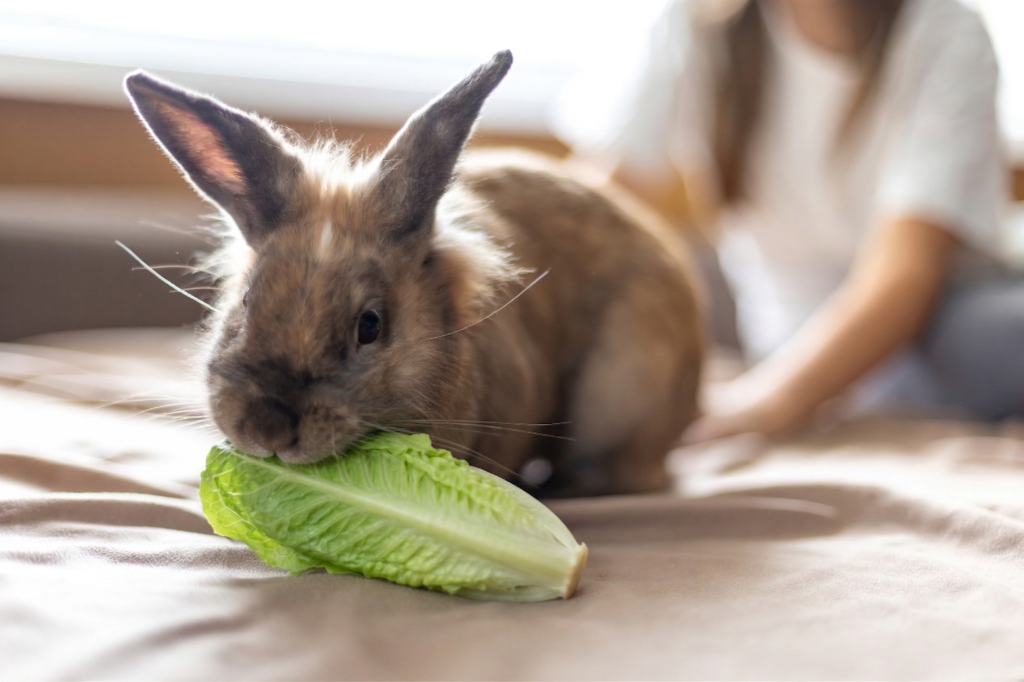
If you’ve ever stood in the produce aisle wondering if that head of romaine is a gourmet treat or a dietary disaster for your fluffy roommate, you aren’t alone. It’s the classic image we all have: a rabbit happily munching away on a leaf of lettuce. But as any seasoned owner knows, a rabbit’s digestive system is a bit like a vintage sports car—high-performance, but incredibly finicky about the fuel you put in the tank. While we’d love to think every green leaf is a “go,” the reality is a bit more complicated, leaving many of us to stop and ask: Can rabbits eat romaine lettuce?
Yes, rabbits can eat romaine lettuce. It is a safe, nutrient-dense leafy green that provides essential Vitamin A, Vitamin K, and fiber. Unlike iceberg lettuce, which contains the harmful compound lactucarium, romaine is a healthy staple for most adult rabbits. However, it should be served as part of a varied vegetable rotation to manage calcium levels and keep the gut moving.
In the following sections, we will deconstruct the plant’s nutritional architecture, expose the hidden sedative risks of specific chemical compounds, and navigate the frequent microbial recalls that define the modern romaine market. By analyzing everything from mineral ratios to post-harvest nutrient degradation, we are ensuring that your rabbit’s menu is grounded in evidence-based science rather than just aesthetic tropes.
The Big Question: Is Romaine Actually Safe for Rabbits?
In the popular imagination, a rabbit and a head of lettuce are as inseparable as a researcher and a double espresso. However, for those of us navigating the reality of bunny ownership, the choice of greenery is rarely that simple. Lettuce isn’t a monolithic food group; it is a botanical spectrum ranging from “nutritionally void” to “highly beneficial.”
The Lactucarium Distinction
Romaine lettuce has emerged as the darling of the community primarily because it lacks the high levels of lactucarium—a milky, bitter substance found in the stems of certain lettuce varieties, most notably iceberg. Lactucarium acts as a mild sedative and can disrupt the central nervous system of small mammals if consumed in large quantities. While romaine contains trace amounts, they are considered clinically insignificant for adult rabbits.
Analyzing Botanical Integrity
Unlike “loose-leaf” varieties that may wilt within hours, romaine possesses a sturdy vascular structure that holds its nutritional value longer. This stability makes it a reliable source of consistent vitamins. From a safety perspective, romaine is classified as a “low-risk” green, meaning it doesn’t contain the high levels of alkaloids or toxins found in garden weeds or certain ornamental plants.
Biological Advantages of the Romaine Nutrient Matrix
Romaine is essentially “structured water” packed with a punch of micronutrients. Unlike its paler cousins, the dark green leaves of romaine indicate a high concentration of chlorophyll and phytonutrients that support long-term metabolic health.
- The Role of Insoluble Fiber: Rabbits are hindgut fermenters, meaning their survival depends on the constant movement of their digestive tract. Romaine provides a specific type of insoluble fiber that stimulates the cecum—the internal fermentation chamber. According to the House Rabbit Society, this fiber is the “fuel” that prevents GI Stasis, a life-threatening condition where the gut stops moving entirely.
- Essential Vitamin Synthesis: It provides a synergistic duo of Vitamin A for retinal health and Vitamin K for blood coagulation.
- Hydration Station: At 94% water, it’s a great way to keep a rabbit hydrated without relying solely on the water bowl, which is especially beneficial for kidney function.
Vitamin and Mineral Benchmarking: Romaine vs. Common Greens
To truly understand where romaine sits in the hierarchy of the produce aisle, we must look at the data. This chart compares the core nutritional markers per 100g of the most common greens found in a typical forage bowl.
| Nutrient (per 100g) | Romaine Lettuce | Kale | Spinach | Iceberg Lettuce |
| Fiber (g) | 2.1 | 3.6 | 2.2 | 1.2 |
| Calcium (mg) | 33 | 150 | 99 | 18 |
| Vitamin A (IU) | 8,710 | 9,990 | 9,377 | 502 |
| Vitamin K (mcg) | 102 | 817 | 483 | 24 |
| Water (%) | 94% | 84% | 91% | 96% |
| Overall Verdict | Daily Staple | Occasional Add-on | Limited Rotation | Strictly Avoid |
Portion Patrol: How Much Romaine Should You Serve?
Quantifying the “perfect” salad requires a bit of math rather than guesswork. While hay must constitute 80–90% of a rabbit’s total dietary intake, fresh greens are the essential supplements that fill the micronutrient gaps. For a comprehensive breakdown of how these portions shift as your rabbit matures, my guides on rabbit diet and food serve as a vital resource for the dedicated owner.
The Standard Metric
According to VCA Animal Hospitals, the standard rule is one packed cup of mixed greens per two pounds of body weight. This is not a “minimum” but a target ceiling. If a rabbit is overweight or prone to soft stools, this amount may need to be adjusted downward.
Romaine as a Percentage of the Whole
In a well-researched diet, romaine should ideally occupy about one-third of the total vegetable portion. Relying 100% on romaine would limit the variety of vitamins the rabbit receives. Think of it as the “base” of the salad, providing the bulk and hydration while other herbs provide the concentrated nutrients.
Prep Like a Pro: Making Romaine Bio-Available (and Fun)
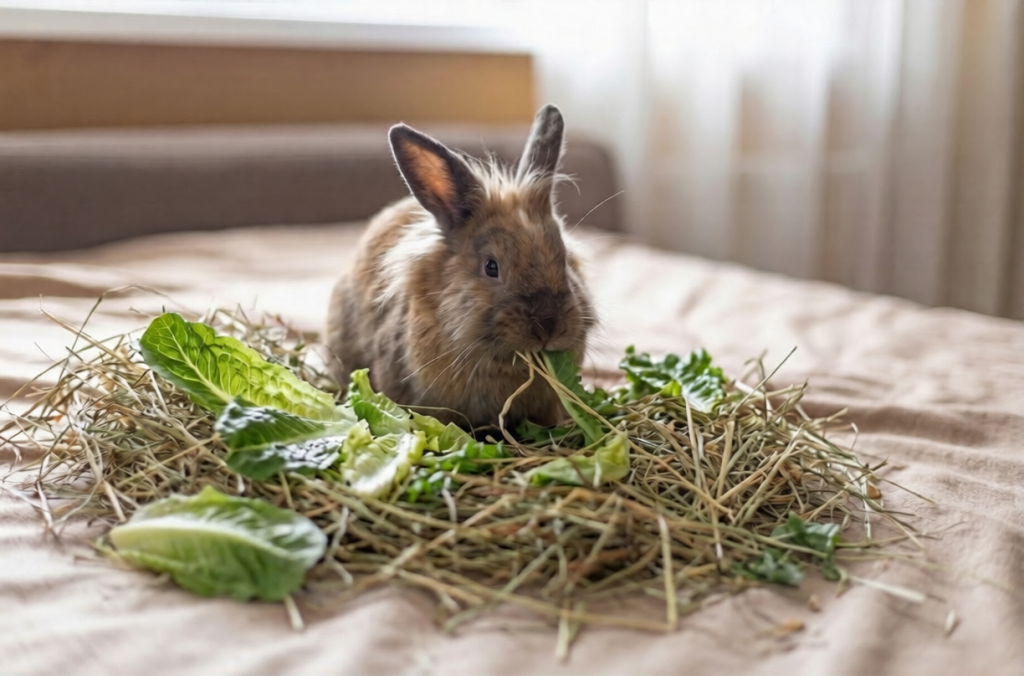
I’ve watched my own rabbits, Mocha and Chino turn a simple leaf into an Olympic event. To mimic natural foraging, I recommend shredding the leaves and mixing them directly into their hay. This forces them to “work” for the greens, providing great mental exercise and slowing down their eating speed, which can prevent choking in “greedy” eaters.
Decontamination Procedures
Safety-wise, a deep double-rinse in cold water is mandatory. Commercial lettuce is often treated with synthetic pesticides and fertilizers that can be devastating to a rabbit’s sensitive liver. Ensuring the leaves are properly dried after washing also prevents the excess surface moisture that can sometimes lead to gas or bloating in smaller rabbits. This “prep-first” approach is the gold standard for maintaining a healthy lagomorph gut.
The Red Flags: When to Keep Romaine Off the Menu
Bunnies have a unique metabolic quirk: they absorb nearly all the calcium they eat and excrete the excess through their kidneys. This is fundamentally different from humans, who only absorb what they need. This makes them prone to bladder sludge or urolithiasis (bladder stones).
Monitoring Urinary Indicators
While romaine is safer than kale or dandelion greens, it is still a moderate source of calcium. If you notice “chalky,” thick, or white-colored urine on the litter, it is a clinical indicator of excess calcium. In these cases, romaine intake should be reduced immediately in favor of lower-calcium options like cilantro.
Digestive Fluidity
If your rabbit begins producing “mushy” or unformed cecotropes (the soft droppings they usually re-ingest), the high water content of the romaine might be disrupting the delicate bacterial balance of the cecum. In the world of lagomorph research, “less is more” when the stool consistency begins to drift from the firm, dry “cocoa puff” standard.
Common “Oops” Moments: Avoiding the Romaine Trap
The most common mistake is treating lettuce as the main course. Romaine is a garnish, a supplement—never the primary meal. If a rabbit fills up on lettuce, they will eat less hay, which is the only food source that provides the necessary dental wear.
The “Lazy Chewing” Effect
Because lettuce is soft, it doesn’t require the side-to-side grinding motion that hay does. Over-feeding romaine can lead to “lazy chewing,” which stops a rabbit’s teeth from wearing down naturally, eventually leading to painful dental spurs.
The Heart vs. Leaf Debate
Another pitfall is feeding only the “romaine hearts.” While they are crunchy and appealing, the outer, darker leaves are the most nutrient-dense part of the plant. The heart is essentially “crunchy water” with a much lower concentration of antioxidants. Always prioritize the dark green tips over the pale center.
The Lettuce Showdown: How Romaine Beats the Competition
When we look at the produce aisle, romaine consistently wins on the data. It offers more fiber and fewer toxins than almost any other common lettuce variety. Maintaining a high-quality ingredient list is a pillar of responsible ownership.
| Lettuce Type | Nutrition Level | Risk Factor | Verdict |
| Romaine | High | Moderate Calcium | Daily Staple |
| Iceberg | Very Low | Sedative Toxicity | Strictly Avoid |
| Red/Green Leaf | Moderate | High Water Content | Good for Rotation |
| Butterhead | Moderate | Low Fiber | Occasional Treat |
Mix It Up: The Best Sidekicks for Your Rabbit’s Romaine
To keep the “green bowl” interesting and balanced, variety is your best friend. I’ve found that Mocha and Chino stay much more active and engaged when their romaine is tossed with cilantro, basil, or a few slices of bell pepper. If you’re looking to branch out beyond the lettuce aisle, my guide to the best vegetables for rabbits ranks a variety of options based on their safety and nutrient density.
Preventing Nutritional Monotony
Rabbits are highly intelligent and can become “picky” if fed the same thing every day. By using romaine as a base and rotating the “toppings,” you prevent the nutritional monotony that often leads to a rabbit refusing their greens. This diversity also ensures that they aren’t getting a cumulative “overdose” of any single mineral or phytochemical found in a specific plant.
Not for the Youngsters: When Can Baby Rabbits Start Eating Romaine?
In the early months, a rabbit’s gut is incredibly fragile and still establishing its complex microbiome. The RSPCA emphasizes that babies under 12 weeks should not have any fresh greens.
The Weaning Window
Between 12 weeks and 6 months, you can begin the “postage stamp” introduction. Start with a piece of romaine no larger than a stamp once every few days. If their stool remains firm, you can slowly increase the size. Their systems just can’t handle the complex sugars and water content of a full salad yet. Giving a baby rabbit a large bowl of romaine is a recipe for fatal enteritis (diarrhea).
The Invisible Risk: Staying Ahead of Romaine Recalls
While we often focus on the “inside” of the leaf, the “outside” presents a different kind of data point: bacteria. Romaine is statistically one of the most frequently recalled vegetables due to outbreaks of E. coli and Salmonella.
The Lagomorph Sensitivity
Because a rabbit’s gut flora is exceptionally delicate, a microbial load that might just give a human a bad afternoon could be catastrophic for a lagomorph. Monitoring FDA recall lists with the same scrutiny you use for your own food is a vital part of researcher-led ownership. When an outbreak is linked to a specific region, it is scientifically prudent to swap Romaine for a locally grown, greenhouse alternative until the CDC issues an “all clear.”
Snap, Crackle, Pop: Why Freshness Is a Nutritional Must
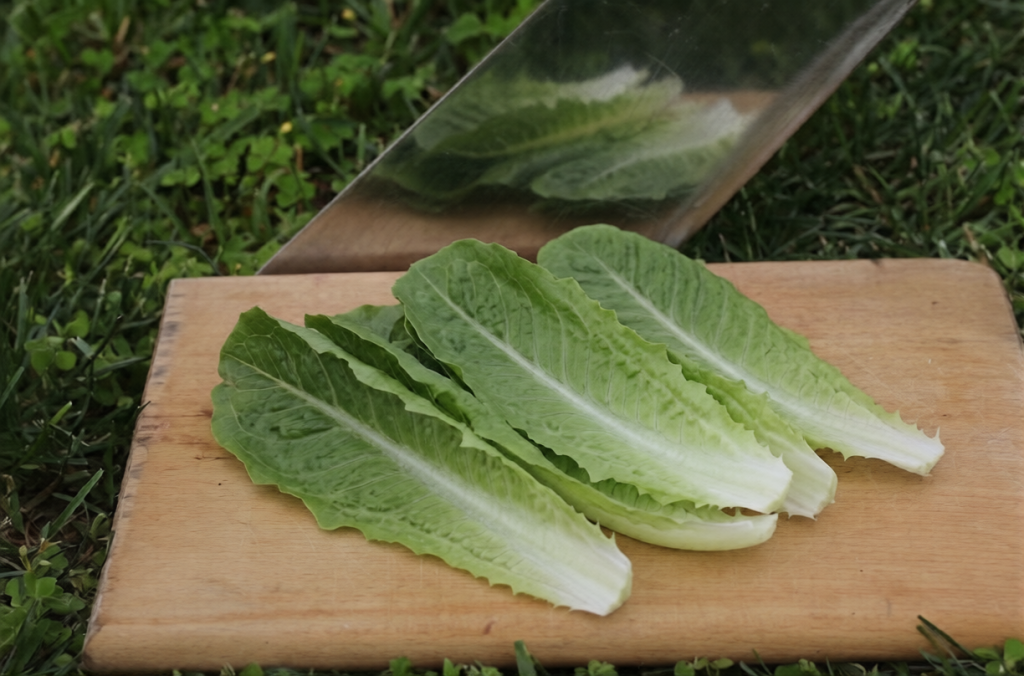
A leaf of romaine is a living biological structure that begins to lose its “superfood” status the moment it is harvested. Studies in the Journal of Food Science show that Vitamin C and folate levels can drop significantly within just 48 hours of refrigeration.
Storage Optimization
For our bunnies, “limp” lettuce is a nutritional failure. To maximize the biological value, store romaine in a damp paper towel within a perforated bag to maintain a high-humidity micro-climate. This slows down oxidation, ensuring the Vitamin K1 levels remain intact for bone health.
| Storage Methodology | Est. Shelf Life | Nutrient Stability | “Blink Test” (Visual State) |
| Ambient Countertop | < 24 Hours | Low (Rapid Oxidation) | Wilted & Limp |
| Standard Crisper Drawer | 3–5 Days | Moderate | Edge Softening |
| Humi-Wrap (Damp Towel) | 7–10 Days | High | Crisp & Turgid |
| Vacuum Sealed Bag | 10–14 Days | Very High | Optimal Integrity |
FAQ
Does romaine lettuce cause gas in rabbits?
Rarely. Unlike broccoli or cabbage, romaine is a “low-gas” green. However, introducing any new food too fast can cause some gastric gymnastics, so always transition over 7–10 days.
Why is my rabbit’s pee orange?
Don’t panic! This is often just plant pigments (porphyrins) and is usually harmless. However, if the pee looks chalky or thick, that’s a clinical warning sign of excess calcium.
Can they eat the white crunchy part?
Yes, it’s safe and provides a great crunch, but the leafy tips have a much higher concentration of vitamins and antioxidants.
Is organic romaine really necessary?
It’s highly recommended. Pesticides are tough on a bunny’s liver, and the PDSA notes that clean, organic greens are the gold standard for long-term health.
What if they only eat the leaves?
Your bunny is just being a smart forager. They know the leaves are the most nutrient-dense part and are simply prioritizing the “good stuff” over the water-heavy stalks.
Can I feed it every single day?
While safe, rotation is better. Variety prevents mineral buildup and keeps your rabbit excited about their forage bowl.
Conclusion: The Verdict
In the grand laboratory of the bunny kitchen, Romaine lettuce is an elite ingredient. It bridges the gap between hydration and fiber perfectly. By prioritizing the dark outer leaves, watching for microbial recalls, and keeping an eye on those calcium markers, you can make romaine a happy, healthy part of your rabbit’s life. It’s the kind of evidence-based snacking that keeps the binkies coming.
Medical & Veterinary Disclaimer: bunnyowners.com is an informational resource for rabbit owners and enthusiasts. We are not veterinarians. The content on this website is not a substitute for professional veterinary care, diagnosis, or treatment. Always seek the advice of your veterinarian with any questions you may have regarding your pet’s medical condition, diet, or overall health.