
Disclaimer: The information provided on bunnyowners.com is for educational purposes only and does not constitute veterinary medical advice; always consult your vet before changing your dog’s diet. Additionally, this post contains affiliate links. As an Amazon Associate, and other affiliate advertising programs, I earn from qualifying purchases at no extra cost to you
While pop culture might lead you to believe bunnies exist solely on a diet of carrots and the occasional garden heist, the reality of rabbit nutrition is a bit more fibrous. If you’ve found yourself holding a stalk of celery and wondering if your long-eared roommate can share the crunch, you aren’t alone. As it turns out, celery is more than just “crunchy water,” but it does come with a few logistical hurdles.
Is Celery Safe for Rabbits?
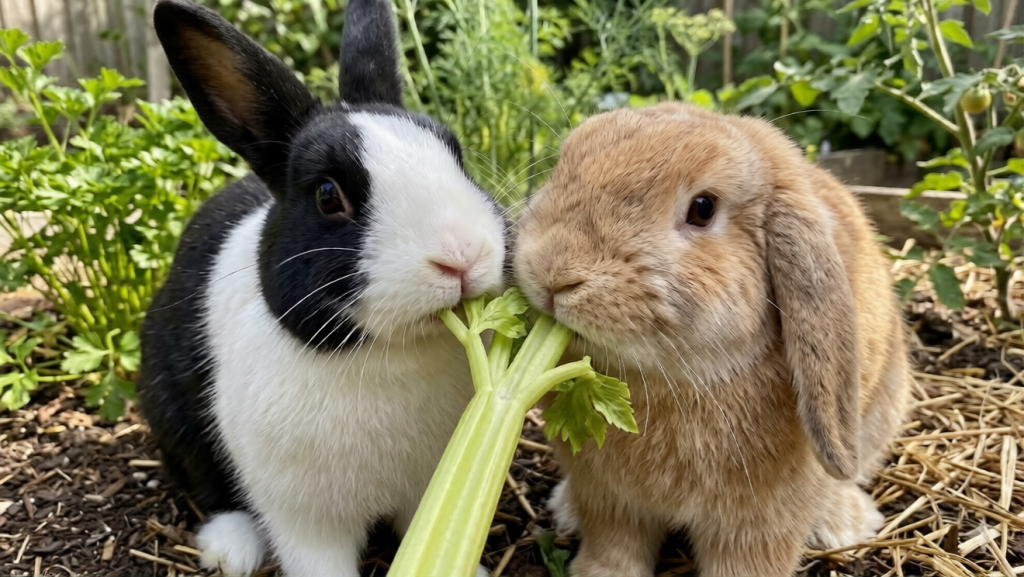
Yes, rabbits can safely eat celery, provided stalks are chopped into half-inch pieces to prevent mechanical blockages from fibrous strings. While it is an excellent low-sugar hydration source rich in Vitamin K and minerals, it must only supplement a primary diet of 80% long-strand grass hay. For maximum nutritional value, include the leaves and introduce the vegetable slowly to maintain delicate gut flora stability.
The 80/20 Rule of Rabbit Nutrition
A rabbit’s digestive tract is a finely tuned machine that requires a high-fiber intake to stay in motion. Their diet must remain at least 80% high-quality grass hay. While celery provides excellent hydration, it lacks the long-strand fiber found in hay that is necessary for grinding down their ever-growing teeth and maintaining optimal cecal fermentation.
The Proper Introduction Protocol
When introducing celery for the first time, never give a full stalk. Start with a piece no larger than a postage stamp and wait 24 hours. This “24-hour rule” is essential for monitoring how their gut bacteria react to the high water content. I recommend only increasing the amount if their droppings remain firm and round.
The Nutritional Breakdown: More Than Water
Celery provides a variety of vitamins and minerals that contribute to a rabbit’s overall well-being. The table below outlines the primary nutritional components found in raw celery:
| Nutrient | Role in Rabbit Health |
| Vitamin A | Supports vision, immune function, and skin health |
| Vitamin K | Crucial for bone density and proper blood clotting |
| Potassium | Essential for healthy muscle and nerve function |
| Folate | Assists in DNA synthesis and cell repair |
| Water | Maintains hydration and keeps the GI tract moving |
Hydration Metrics and Low Glycemic Impact
According to PetMD, celery is a powerhouse for hydration. Unlike carrots or fruit, which are high in natural sugars and can lead to obesity or gut dysmiosis, celery is extremely low-glycemic. This makes it a “guilt-free” snack for rabbits who struggle with their weight or those prone to dental issues exacerbated by sugar.
Essential Vitamins and Micronutrients
Celery packs a surprising punch of micronutrients that support long-term health:
- Vitamin A: Supports a healthy immune system and vision.
- Vitamin K: Crucial for bone density and blood clotting.
- Potassium: Helps maintain healthy muscle and nerve function.
The “Stringy” Situation: Myth vs. Reality
The most common concern regarding celery is its long, fibrous “strings” (the vascular bundles). While rabbits have sharp teeth designed to pulverize plant matter, they are also “vacuum eaters” that may swallow large pieces when they are excited.
Mechanical Obstruction Concerns
If a rabbit swallows a long celery string whole, there is a minor risk of it wrapping around the base of the tongue or creating a mechanical tangle in the narrow parts of the intestines. While rare, it is a preventable hazard that every owner should take seriously.
The 1-Inch Chop Standard
I’ve observed that even seasoned chewers like my rabbits, Mocha and Chino, can get a bit overzealous with a fresh stalk. To mitigate the risk of choking or GI stasis, always cut celery into small pieces—roughly 1/2 inch (1.2 cm) in length. This breaks the long strings into manageable bits that move easily through the digestive tract. Blue Cross also emphasizes that this prep work is the most effective way to avoid domestic feeding accidents.
Celery Leaves, Roots, and Seeds: What’s Safe?
Not all parts of the celery plant are created equal. Depending on which part you feed, the nutritional value and safety profile change significantly.
Why Leaves are Superior
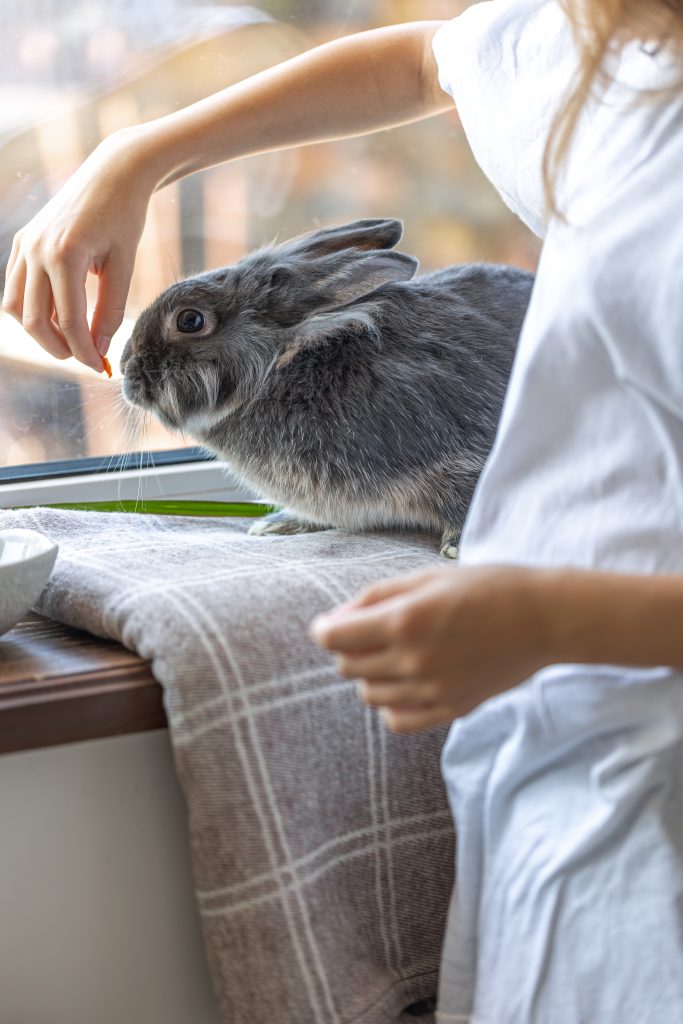
The leaves are the “golden ticket” of the celery plant. They are more nutritionally dense than the stalks, containing higher concentrations of Vitamin C and calcium. In my personal observations, most rabbits actually prefer the leaves over the crunchy stalk, so don’t throw those tops away!
The Celeriac Exception
Celeriac is a different variety grown for its bulbous root. While safe, it is much higher in starch and carbohydrates than the stalk. It should be treated like a root vegetable—offered only in tiny, infrequent amounts to avoid upsetting the delicate balance of the hindgut.
Avoiding the Seed Trap
Avoid celery seeds entirely. They contain concentrated volatile oils that can upset a rabbit’s stomach or cause excessive gas. Similarly, “Chinese Celery” (Nan Ling) has a much stronger flavor and higher sodium content, which may be too intense for some rabbits’ palates.
When to Worry: Spotting Digestive Distress
Because rabbits are prey animals, they are experts at hiding pain. You must be diligent in watching for subtle changes after they consume high-water vegetables like celery.
Identifying “Pudding Poops”
If you notice soft, mushy droppings that stick to your rabbit’s fur (often called “pudding poops”), it is a sign that the celery has disrupted their gut flora. This often happens when a rabbit consumes too much water-heavy produce at once, leading to an imbalance in the cecum.
Recognizing GI Stasis Early
If your rabbit stops eating or producing droppings for more than 6–12 hours, they may be entering a life-threatening state of GI stasis. Watch for a “hunched” posture, cold ears, or grinding teeth, which are clear signs of significant abdominal pain.
Common Mistakes When Feeding Celery
While well-intentioned, many owners make simple mistakes that can lead to long-term health issues for their pets.
The Pesticide Problem
Celery is frequently listed on the “Dirty Dozen” list for high pesticide residue. Because rabbits have a small body mass, trace chemicals can be much more toxic to them than to us. I recommend buying organic celery whenever possible. If you can’t, you must scrub the stalks thoroughly under cold water to remove surface contaminants.
The Temperature Factor
Never feed your rabbit wilted, slimy, or frozen celery. Spoiled vegetables can harbor harmful bacteria. Additionally, serving celery straight from the fridge can cause a “cold shock” to a sensitive rabbit’s stomach; let it sit at room temperature for a few minutes before serving.
The “Lazy Chef” Trap
Skipping the chopping process is the most common mistake. Owners assume that because rabbits chew constantly, they will handle the strings naturally. However, the risk of a string catching on a molar or causing a throat obstruction is high enough that the extra thirty seconds of chopping is always worth the effort.
The Oxalate Advantage: A Win for Bladder Health
Many rabbit owners live in fear of “bladder sludge” (hypercalciuria), often caused by feeding too many high-calcium or high-oxalate greens like spinach or parsley.
Comparing Oxalate Levels
One of the most underserved topics in rabbit nutrition is that celery is actually a low-oxalate vegetable. Oxalates can bind to calcium in the urinary tract, leading to painful stones. Because celery is low in these compounds, it provides a safe, crunchy alternative for rabbits that need a restricted-calcium diet.
Bladder Sludge Prevention
I have transitioned Mocha to a rotation that includes more celery and fewer high-calcium herbs. This has helped to maintain her urinary health as she has aged. You can learn more about how this fits into a wider nutritional plan in my 2026 guide on the best vegetables for rabbits.
Sodium and Nitrates: The “Saltine” of the Garden
A deep dive into nutritional data reveals that celery is naturally higher in sodium than many other rabbit-safe vegetables. While it isn’t “salty” by human standards, for a small animal, these levels are noteworthy.
Analyzing Sodium Content
For a five-pound rabbit, the sodium in a large stalk of celery is significant. While not immediately toxic, it is the reason why celery should remain a rotation vegetable rather than a sole food source.
The Nitrate Rotation Factor
Celery is also a source of naturally occurring nitrates. While generally harmless in small quantities, they can accumulate if fed in excess. For senior rabbits with compromised kidney function, the combination of sodium and the diuretic effect of celery means you should consult a vet before making it a frequent snack.
The “Hydration Hack” for Stubborn Drinkers
Rabbits are notorious for being picky about their water sources. If you have a rabbit that refuses to drink from a bottle or is recovering from a bout of illness, celery is a secret weapon.
The “Wet Celery” Recovery Method
A clever trick used by experienced owners is the “Wet Celery Method.” By soaking freshly chopped celery pieces in a bowl of cold water and serving them while still dripping, you can force-deliver hydration directly into the gut.
When to Use the Hack
The enticing crunch of the celery often overrides a sick rabbit’s reluctance to drink, making it a vital tool for preventing dehydration during recovery phases or during extreme summer heatwaves.
Celery vs. Common Rabbit Vegetables
To maintain a balanced diet, celery should be part of a rotation. You can find a complete breakdown of dietary staples in my Rabbit Diet and Food Guides.
Strategic Vegetable Selection
Choosing the right mix of greens ensures your rabbit gets a full spectrum of vitamins without overloading on any single mineral.
| Vegetable | Sugar Content | Calcium Level | Best Use Case |
| Celery | Low | Low | Hydration & weight management |
| Carrots | High | Low | Occasional high-value treat |
| Kale | Low | High | Nutrient boost (limited rotation) |
| Romaine Lettuce | Low | Moderate | Daily staple leafy green |
| Bell Pepper | Moderate | Low | Vitamin C boost |
Feeding Guidelines by Rabbit Weight
Portion control is key to a stable gut. According to the RSPCA, maintaining variety is essential, but these weight-based limits provide a safe starting point.
Scale-Based Serving Sizes
Feeding a Giant Papillon the same amount as a Netherland Dwarf is a recipe for disaster. Use the following guide to stay within safe boundaries.
| Rabbit Size | Average Weight | Max Celery Serving | Frequency |
| Dwarf / Small | 1–3 lbs | 1/4 stalk (chopped) | 2x per week |
| Standard / Medium | 4–8 lbs | 1/2 stalk (chopped) | 2–3x per week |
| Large / Giant | 9+ lbs | 1 full stalk (chopped) | 3x per week |
FAQ: Frequently Asked Questions
Can baby rabbits eat celery?
No. Rabbits under 12 weeks old have extremely delicate gut flora. Wait until they are at least 3-4 months old before introducing tiny amounts.
Does celery help wear down rabbit teeth?
Only slightly. While the crunch is satisfying, it doesn’t compare to the abrasive nature of hay. Do not rely on celery for dental health.
How often can I feed my rabbit celery?
Celery can be offered 2–3 times a week as part of a varied vegetable rotation. It should not be the only green they receive.
My rabbit won’t eat the stalks, only the leaves. Is that okay?
Perfectly fine! The leaves are actually more nutritionally dense. If they snub the stalks, don’t force it—some bunnies are just culinary snobs.
Is celery high in oxalates?
Quite the opposite! Celery is considered a low-oxalate vegetable, making it a safer choice for rabbits prone to kidney or bladder stones.
Can I freeze celery for my rabbit?
It’s not recommended. Freezing changes the cellular structure, making the celery mushy and potentially leading to upset stomachs if not thawed correctly.
Final Verdict: To Crunch or Not to Crunch?
In the grand hierarchy of rabbit snacks, celery sits comfortably in the “Safe and Refreshing” tier, provided you do the prep work. While it lacks the dental-grinding power of timothy hay, its high water content and low sugar profile make it a superior choice to fruit-based treats. By chopping the stalks to neutralize the “string” hazard and serving the nutrient-rich leaves, you’re offering a snack that supports hydration without the sugar crash.
Medical & Veterinary Disclaimer: bunnyowners.com is an informational resource for rabbit owners and enthusiasts. We are not veterinarians. The content on this website is not a substitute for professional veterinary care, diagnosis, or treatment. Always seek the advice of your veterinarian with any questions you may have regarding your pet’s medical condition, diet, or overall health.