
Disclaimer: The information provided on PoodleReport.com is for educational purposes only and does not constitute veterinary medical advice; always consult your vet before changing your dog’s diet. Additionally, this post contains affiliate links. As an Amazon Associate, and other affiliate advertising programs, I earn from qualifying purchases at no extra cost to you
Understanding a rabbit is less about “pet ownership” and more about linguistic immersion. Because rabbits are silent prey animals, their communication is almost entirely non-verbal, relying on a sophisticated array of ear angles, scent marking, and seismic signaling.
I operate under the guiding principle that “bad behavior” is simply a translation error between species. By observing the daily lives of my own bunnies, Mocha and Chino, I have worked very hard to map the emotional and psychological landscape of the domestic rabbit.
The Evolutionary Psychology of the “Prey Brain”
To understand why a rabbit acts the way it does, we must first analyze their biological lineage. Rabbits are not “small dogs”; they are lagomorphs whose entire existence has been shaped by being at the bottom of the food chain.
The Survival Filter
Every movement in your home is filtered through a “threat assessment” lens. When a rabbit suddenly freezes because a car door slammed outside, they are utilizing a millions-of-years-old instinct to become “invisible” by eliminating movement and scent dispersal.
- Tonic Immobility: This is a state of high-alert stillness. The rabbit is not “calm”; they are processing whether to engage in a flight response.
- The Startle Reflex: An explosive burst of speed designed to evade a predator’s initial strike. If your rabbit bolts suddenly, their brain has bypassed logic and gone straight to motor-survival.
360 Degree Vision & The Frontal Blind Spot
A rabbit’s eyes are positioned laterally, granting them a panoramic view. However, this creates a 10 to 15 degree blind spot directly in front of their nose.
- The Side Approach: Because they cannot see clearly directly in front of them, approaching a rabbit head-on can be terrifying. They may not realize it is you until you are in their space.
- Depth Perception: Rabbits use “parallaxing”—the act of bobbing their heads up and down or side to side—to judge how far away an object is, as their binocular vision is limited compared to predators.
Researcher’s Note: I have observed that Mocha is significantly more relaxed when I approach from a 45 degree angle. If I reach directly over her head, it mimics a hawk’s strike, causing her nose twitching to accelerate instantly to a blur.
The Ear & Nose “Satellite” System
A rabbit’s head is essentially a high-tech sensory array. Their ears and nose are their primary tools for data collection and emotional broadcasting.
Auditory Radar: Independent Ear Rotation
With 18 independent muscles in each ear, rabbits can rotate their “radars” nearly 270 degrees to pinpoint the origin of a sound without moving their body.
- The “Radar” Sweep: Moving one ear at a time to track sounds from different directions simultaneously.
- The “Helicopter” Ear: Common in lop-crosses. While one ear may flop, the “base” of the ear remains tensed toward the sound. If the base is pushed forward, the rabbit is alert; if the base is relaxed back, they are resting.
The Nose-Twitch Speed Gauge
A rabbit’s nose-twitching is an active sampling of pheromones and scents. It is also an indicator of their internal “RPM.”
- Slow (20-100 twitches/min): Standard metabolic activity; the rabbit is calm and feels safe.
- Rapid (120+ twitches/min): High curiosity, excitement (like seeing a treat), or impending stress.
- The Complete Stop: The “High-Alert Freeze.” The rabbit minimizes their scent profile to stay hidden from a perceived predator.
The “Happy” Spectrum: Joy and Contentment
The Physics of the Binky
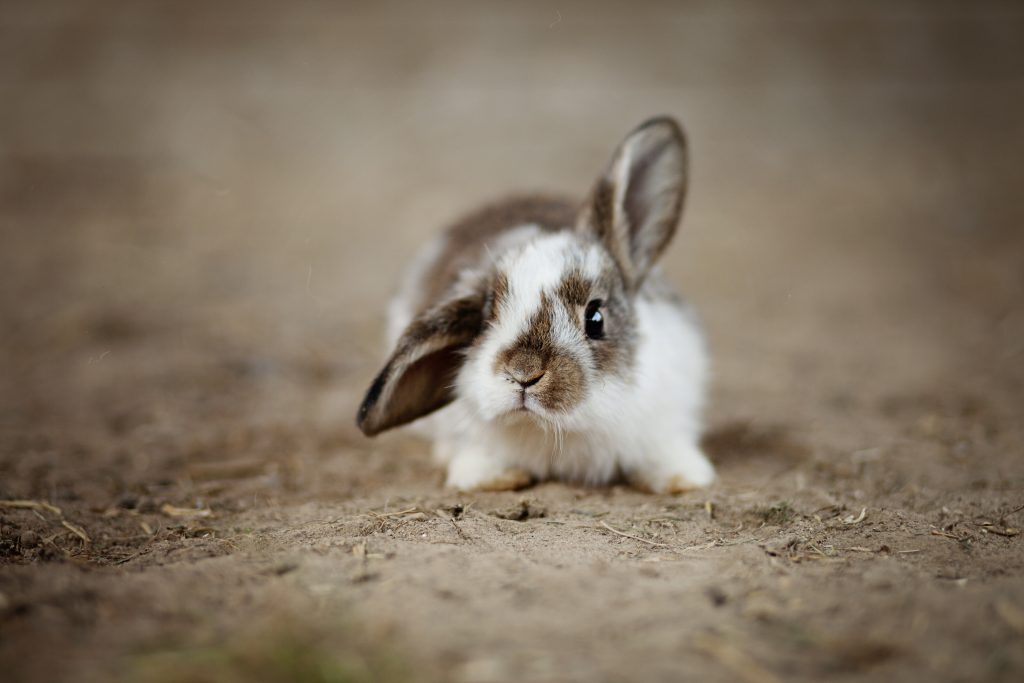
A binky is a combination of a vertical leap and a mid-air contortion.
- Twist and Flick: The rabbit twists their midsection and flicks their feet. This is an involuntary release of pent-up energy.
- Psychological Safety: A rabbit will only binky when they are 100% certain no predators are present. It is the ultimate “All Clear” signal.
The “Dead Bunny” Flop
A flop is a sudden, 90 degree roll onto the side or back, often with a heavy sigh.
- Absolute Vulnerability: By exposing their belly, the most vulnerable part of their body, they signal absolute trust in you and their environment.
- The Post-Prandial Flop: Often seen after a meal of high-quality hay, signaling metabolic satisfaction.
Researcher’s Note: Chino is a “power flopper.” He will groom for several minutes and then suddenly collapse onto his side so hard it makes a “thump.” This level of relaxation indicates he has completely “deactivated” his survival instincts.
The Visual Body Language Matrix
Use this chart to quickly interpret behavioral “clusters”—combinations of signals that reveal a rabbit’s true intent.
| Behavior Cluster | Ear Position | Nose Speed | Meaning | Action Needed |
| The Scout | Vertical/Forward | Rapid | Investigation | Allow exploration; do not startle. |
| The Loaf | Relaxed/Back | Slow | Contentment | Ideal time for quiet presence. |
| The Alarm | Pinned Flat | Stopped | Extreme Fear | Identify and remove the stressor. |
| The Demand | Forward/Tense | Constant | Social Request | Provide pets or a healthy treat. |
| The Pout | Facing Away | Slow | Disapproval | Respect their space; let them “cool off.” |
Movement and “Feet Speak”: Seismic Communication
Rabbits use their powerful hind legs for long-distance communication that bypasses the need for vocalization, which would give away their position.
The Seismic Thump
The thump is an evolutionary survival broadcast.
- The Warning Sign: Striking the ground sends vibrations through the earth to alert the “warren” to perceived danger.
- The Emotional Protest: Rabbits also thump to signal annoyance—for example, if you are late with their evening pellets or if you have moved their favorite box.
The Digging Impulse
Digging is a nesting and burrowing instinct that is biologically hardwired.
- Environmental Modification: Rabbits dig to create safe underground homes or to “clear a path.”
- Correction through Redirection: Since you cannot “train out” digging, you must provide a “dig box” filled with shredded paper to satisfy this urge without damaging carpets.
Vocalizations: The Quiet Dictionary
While predominantly silent, the sounds a rabbit makes are high-stakes communications that signify extreme emotional states.
The Positive Spectrum
- Honking/Oinking: A soft, rhythmic sound. In neutered rabbits like Mocha and Chino, it signals high-value excitement. Mocha honks specifically when she hears the rustle of the kale bag.
- Tooth Clicking (Purring): A soft vibration of the molars during petting. This triggers the release of endorphins in the rabbit.
The Negative Spectrum
- Grunting: A vocal “Back off.” It is an aggressive sound, often a precursor to a lunge or a “box” with the front paws.
- The Scream: A piercing, high-pitched shriek. According to the PDSA, this is a sign of extreme terror or terminal pain. It is an absolute medical emergency.
Social Hierarchy and Territory
Chinning and Pheromone Ownership
Rabbits have sub-mandibular scent glands.
- Territorial Mapping: By rubbing their chin on an object (or your phone), they are marking it as “theirs” in a chemical map only other rabbits can read.
- Security: A well-chinned room feels safe to a rabbit because it is saturated with their own familiar scent.
The Grooming Demand and “The Lick”
In rabbit society, the “Superior” is groomed by the “Subordinate.”
- The Grooming Demand: The dominant rabbit will put her head flat on the ground. This is a demand for a tribute.
- The Lick: By licking the other rabbit’s head or eyes, the subordinate acknowledges the other’s higher rank and pays his “social debt.” If the subordinate refuses, a nip or chase often follows.
Bonding Dynamics: Rabbit-to-Human Trust
Bonding with a rabbit is a marathon of patience. You must prove you are a safe social partner, not a predator.
Mirroring and Social Parity
If your rabbit begins to groom themselves while you are sitting nearby, they are “mirroring” your calm energy.
- The Safe Zone: They have decided that you are not a threat, allowing them to perform vulnerable maintenance tasks in your presence.
- Grooming the Face: Seeing a rabbit use their paws to wash their face while you are near is a massive trust milestone.
The Lick of Acceptance
When a rabbit licks your hand, they have officially accepted you into their “warren.” In their mind, you are a social peer or a superior who deserves grooming. This is the highest form of acceptance in the lagomorph world.
Behavioral Health Diagnostic: Pain vs. Health
Rabbits hide pain instinctually to avoid attracting predators. Use this chart to distinguish a “mood” from a medical crisis.
| Feature | Healthy State | Pain/GI Stasis Alert |
| Back Shape | Rounded “loaf” or relaxed stretch. | Angular “hunch” (belly pressed to floor). |
| Eyes | Bright, almond-shaped, and alert. | “Squinty,” narrowed, or dull appearance. |
| Whiskers | Relaxed, pointing sideways. | Tense, pointing forward or standing stiffly. |
| Appetite | Runs for treats and eats hay. | Refuses all food, including high-value treats. |
| Response | Interacts with partner or owner. | Lethargic; hides in a corner for hours. |
Life Stages: From Adolescence to Senior Evolution
A rabbit’s personality and behavioral baseline shift profoundly as they age.
Adolescent Chaos (3-8 Months)
Puberty triggers intense territoriality and a “rebellion” against previous training.
- Territorial Marking: Urine spraying and “scatter-pooping” outside the box are attempts to claim the entire house.
- Hormonal Aggression: Lunging and nipping as they test the social hierarchy.
- The Clinical Fix: Spaying and neutering is the only definitive way to stabilize hormonal behavior and prevent long-term health issues like uterine cancer.
Senior Evolution (7+ Years)
As rabbits transition into their senior years, energy begins to mellow into a “Golden Age.”
- Increased Affection: Seniors often become much more seeking of human attention and less concerned with territorial borders.
- Mobility Shifts: A senior who stops binkying isn’t necessarily unhappy; they may have arthritis. Providing low-entry litter boxes and non-slip rugs is essential for their comfort.
Breed-Specific Nuances: Genetics vs. Individual
While every rabbit is an individual, certain genetic lineages carry predictable behavioral traits.
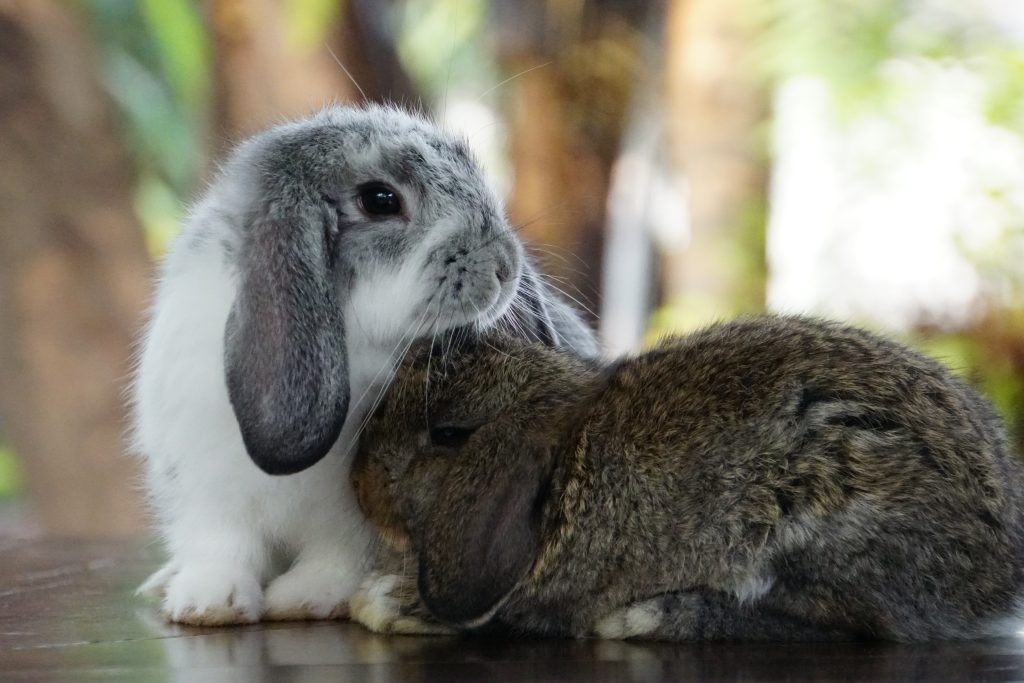
Lops (Holland, Mini, French)
- The Hearing Constraint: Because their ears shield the ear canals, Lops often have diminished hearing. This can make them seem “bolder” (because they don’t hear the vacuum) but “jumpier” when approached from behind.
- Maintenance Behavior: Lops may require more help with grooming around the ears, which can lead to specific “grooming demand” behaviors toward their owners.
Flemish Giants and “Gentle Giants”
Flemish Giants are often noted for their dog-like temperaments. Their large size gives them a natural confidence that smaller breeds lack, resulting in a laid-back, highly social personality that is less prone to the “startle reflex.”
Environmental Stressors and Correction Matrix
Actionable responses to “naughty” behaviors based on the underlying psychological trigger.
| “Naughty” Action | Psychological Trigger | Recommended Correction |
| Chewing Cables | “Spicy Hay” – The drive to clear a path. | Use plastic cord protectors; provide fresh willow sticks. |
| Digging Carpet | Burrowing instinct or boredom. | Provide a dedicated dig box with shredded paper/hay. |
| Throwing Bowls | Object manipulation and play. | Use ceramic weighted bowls; provide plastic stacking cups. |
| Nipping Ankles | Attention-seeking or hierarchy testing. | Emit a high-pitched “Eep!” and immediately walk away. |
“The Floor is Lava”: Flooring and Confidence
A major gap in common behavior guides is the impact of floor texture on the “Prey Brain.” Rabbits have fur-covered feet with no paw pads.
The Slip-Freeze Response
On hardwood, tile, or laminate, a rabbit’s brain signals that they cannot “escape” quickly because they have no traction.
- Rug Bound: This causes them to “freeze” or stay only on carpeted areas.
- Traction Paths: By providing rug runners to connect “safe zones,” you can transform a “shy” rabbit into an exploratory one.
The Rug Binky
You will notice that binkies almost exclusively happen on carpeted areas. This is because the rabbit feels they can land safely without slipping. Flooring is often the #1 factor in a rabbit’s overall confidence level.
Sleep Psychology & The Third Eyelid
Rabbits are masters of the “power nap,” which can make it seem like they never sleep.
The Nictitating Membrane
Rabbits have a transparent third eyelid. They can technically sleep with their eyes wide open while the membrane scans for movement.
- Light Sleep: If you see ears at “half-mast” and a very slow nose twitch, they are likely napping.
- The Trust Milestone: Seeing a rabbit sleep with their eyes fully closed is the ultimate sign of domestic trust. It means they have completely deactivated their predator-scanning system in your presence.
Inter-species Dynamics: The Rabbit and the “Predator”
Rabbits view other household pets through an evolutionary lens, regardless of the other animal’s temperament.
The Nose Greeting as Dominance
When a rabbit approaches a dog or cat nose-to-nose, they are usually asserting dominance. By putting their head low, they are demanding the other animal acknowledge them as the “Top Bunny.”
The Play-Bow Risk
A dog’s “play-bow” is often interpreted by a rabbit as a pounce or an impending strike. This can lead to a sudden “thump-and-run” response, which may trigger the dog’s predatory chase drive. Constant behavioral monitoring is required in multi-species homes.
Sensory Overload: Human “Predator” Signals
Humans often accidentally signal “predator” through our natural movements and interaction styles.
The Overhead Reach and “Looming”
Grabbing a rabbit from above mimics the strike of a hawk.
- Leveling the Field: To minimize this, always pet your rabbit while sitting on the floor.
- The Stare: Constant, unblinking eye contact is the behavior of a hunter. Blink frequently and look away occasionally to signal that you are a “safe” social partner.
Seasonal Behavioral Shifts
Rabbits are highly sensitive to the shifting of the seasons, which affects their energy and temperament.
Winter Zoomies
Lower temperatures often trigger high energy levels. Rabbits are biologically designed to handle cold much better than heat, often becoming much more “binky-prone” in the winter months.
The Molt Grump
During seasonal sheds (molting), the physical toll of regrowing a full coat of fur can make rabbits irritable. Mocha tends to be less tolerant of handling during her spring molt. I respect this as a “handling break” to maintain our long-term bond.
Enrichment Psychology: The Bored Genius
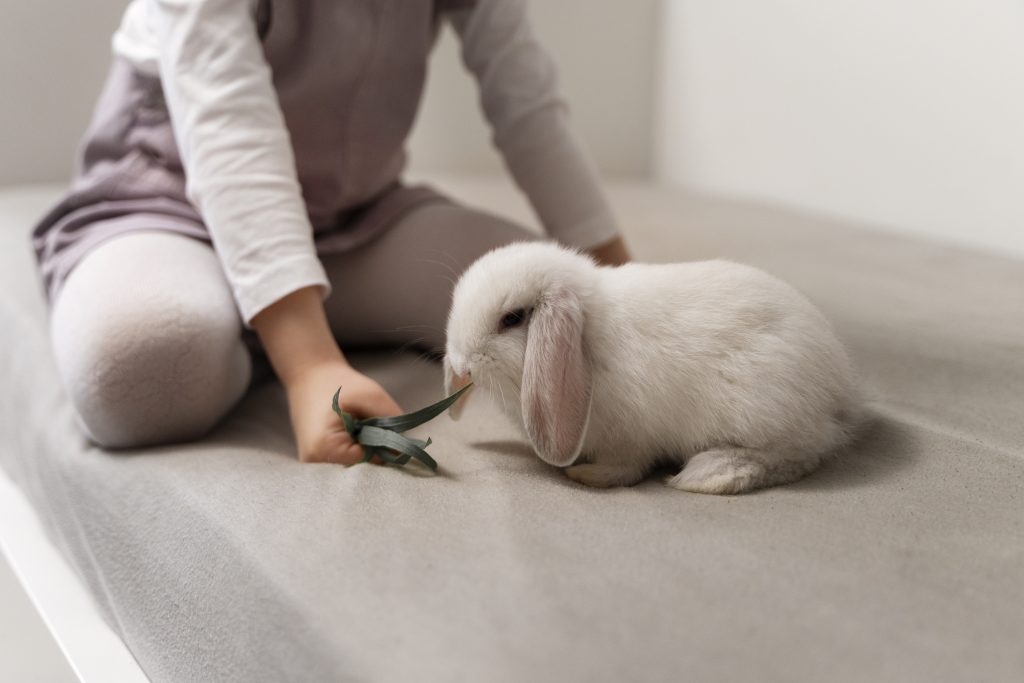
“Bad” behavior is almost always a sign of a high-intelligence animal lacking mental stimulation.
Object Manipulation
Rabbits love to move things. This is “play.”
- Stacking Cups: Providing plastic baby keys or stacking cups allows them to express the “throw and move” drive appropriately.
- Foraging Theory: In the wild, rabbits spend 70% of their day foraging. Scatter-feeding their pellets mimics this natural behavior, reducing boredom-based aggression.
FAQ: Common Rabbit Behavior Questions
- Why does my rabbit nudge my hand away? This is a polite but firm way of saying “I’ve had enough petting, thank you.” Respecting this boundary is key to maintaining trust.
- Is it normal for my rabbit to “shake” its ears? An occasional shake is a “reset” signal after a scare. Frequent ear shaking, however, can be a symptom of ear mites or infection and requires a vet check.
- Why is my rabbit throwing its food bowl? This is usually a sign of boredom or a demand for attention. Use a heavy ceramic bowl to stop the noise, but ensure you provide other toys.
- Why does my rabbit chin my phone? They are marking it with pheromones to claim it as part of their territory. In their mind, if they have chinned it, it is safe and belongs to them.
- Why does my rabbit follow me like a dog? This is a sign of a very strong bond. They view you as their “social partner” and want to be involved in whatever you are doing.
Conclusion: The Path to Becoming a “Bunny Whisperer”
Understanding rabbit behavior is a journey of observation and empathy. By shifting our perspective from “pet owner” to “social partner,” we unlock a level of companionship that is unique in the animal kingdom. Behavioral mastery is not about controlling your rabbit; it is about creating an environment where their natural instincts—to dig, to binky, and to groom—are celebrated rather than suppressed.
As you continue your journey with your rabbits, remember that every action—from a subtle nose twitch of Mocha to a sudden flop of Chino—is a communication. The more you listen with your eyes, the more your rabbit will speak to you.
Medical & Veterinary Disclaimer: PoodleReport.com is an informational resource for Poodle owners and enthusiasts. We are not veterinarians. The content on this website is not a substitute for professional veterinary care, diagnosis, or treatment. Always seek the advice of your veterinarian with any questions you may have regarding your pet’s medical condition, diet, or overall health.