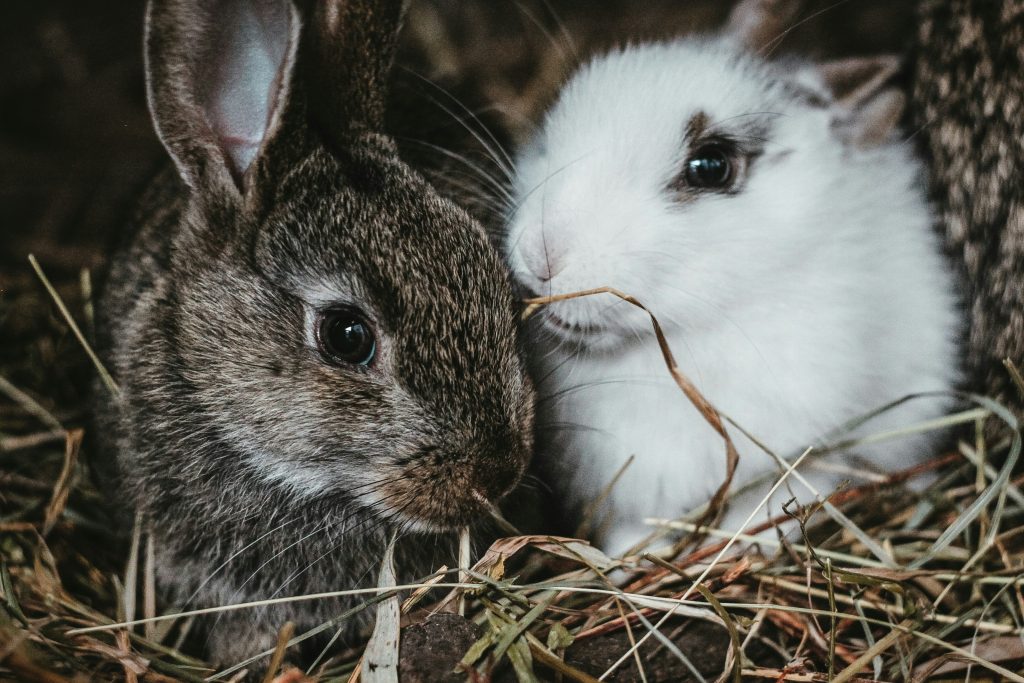
Rabbits are extremely cute and cuddly and make wonderful pets. However, the sex of your bunny can greatly influence the temperament and behaviors he or she may exhibit towards you and other rabbits you own. As a result of the intricate connection between your rabbit’s sex and behavior, knowing the differences between male and female rabbits is essential when deciding which sex would be the best fit for you and your family.
Male rabbits typically have a more mellow temperament while female rabbits tend to be dominant and bossy. When spayed or neutered, aggression in both sexes will likely be greatly diminished, resulting in male rabbits showing less hostility towards other males and female rabbits with less aggression towards their owners.
Keeping male and female rabbits together can be done successfully, but you should keep their natural behaviors in mind. Read on to learn more about the difference between male and female rabbits and which sex makes a better household pet.
The Differences Between Male and Female Rabbits
The main difference between male and female rabbits is their behavior. Both male and female rabbits have the same basic requirements as pets, but they may act very differently depending on their temperaments.
Here are a few of the key differences between male and female rabbits:
Trait/Characteristic
Female Rabbits
Male Rabbits
Aggression
More aggressive with people
More aggressive with other male rabbits
Temperament
Dominant and bossy
Timid, more passive
Digging
Prone to digging
Not prone to digging
Cohabitation
Females can safely be kept with other females or males
Males will fight if kept with other males
Behavior at Sexual Maturity
Can be aggressive if left sexually intact
Can be aggressive if left sexually intact
If spayed or neutered, the temperament between a male and a female rabbit becomes a little more even—both sexes will likely calm down significantly if they are desexed.
Females are more prone to digging behaviors (which they would be responsible for in the wild) and being more territorial when nesting. Males are more prone to aggression and territoriality with other males, especially if they were not raised together.
Are Male or Female Rabbits More Aggressive?
Are males or female rabbits more aggressive? This is a bit of a tough question.
Female rabbits are generally more aggressive, bossier, and pushier than male rabbits. However, male rabbits are more likely to fight among themselves and are more likely to initiate a fight that leads to injuries or even the death of another rabbit.
Female rabbits tend to get aggressive around their nest, especially if they have babies, but male rabbits are more likely to show aggression over territory. A dominant or aggressive rabbit of either sex will show aggression towards their human handler when a human invades their personal space (such as cleaning the hutch).
These are some of the signs of aggression in rabbits:
Nipping
Biting
Thumping the ground with their back feet
Screaming
Fighting between rabbits
Chasing between rabbits
A rabbit that has been desexed is less likely to act aggressively, whether male or female, but individual rabbits may still be more dominant and aggressive than others.
It is up to owners to seek out rabbits with a good temperament to ensure that they can safely get along with both humans and other animals in the household.
Aggression in rabbits can also arise from frustration due to environmental factors such as:
overcrowding
lack of enrichment
boredom
social irritation.
Can Male and Female Rabbits Be Housed Together?
Male and female rabbit pairs can be housed together, but there are a few things that owners should take into consideration before setting up this kind of arrangement, such as:
Intact male and female rabbits will breed. If your rabbits are not spayed and neutered, you will soon find yourself with more rabbits than you know what to do with—the phrase “breed like rabbits” came to be for a reason. A rabbit can have up to 11 or 12 litters a year of 4 to 8 kits. That’s a lot of rabbits (and a good incentive to desex your buns).
Spayed and neutered male and female pairs get along well. Without the raging hormones associated with sexual maturity, male and female rabbits tend to get along well with housemates. A mixed-sex pair is less likely to fight than a pair of two males, but a male-female mixed pair is still more likely to fight than a same-sex female pair.
Both male and female rabbits who are sexually intact will become more aggressive with sexual maturity. While neither male nor female rabbits are more aggressive than an adolescent predator animal like a cat or dog, these animals can still become territorial and aggressive when they go into heat and become sexually frustrated. This is one of several reasons why desexing rabbits who are not part of a breeding program is recommended.
Males and females bond more readily than same-sex pairs, particularly if they aren’t siblings. However, leaving them sexually intact can lead to them showing aggression towards each other or the male trying to overbreed the female, especially if males’ ratio to females is one to one.
It’s fine to house a male and a female rabbit together as long as they both have plenty of room, and it’s a good idea to desex the rabbits to prevent sexually-based squabbles if the rabbits are pets and they aren’t being bred for meat, fur, or profit.
Is It Better to Have a Male Rabbit or Female Rabbit?
Given the personality differences between a male rabbit and a female rabbit, which makes the better pet? It depends on what kind of personality you want in your rabbit! All rabbits are relatively timid, passive creatures with a low tolerance for human contact and being handled compared to other companion animals such as cats and dogs.
💡 Owner Tip: Before making your final decision, it is vital to understand how different varieties might influence these personality traits. Browse our Researcher’s Guide to Rabbit Breeds to see how genetics and sex work together to shape your future pet.
These are some of the advantages and disadvantages of female rabbits:
Advantages of Female Rabbits
Disadvantages of Female Rabbits
1. Are less likely to be afraid of human contact 2. Can be used for breeding 3. Tend to be larger 4. Easier to keep in same-sex groups
1. Tend to be bossy and dominant 2. Will have unwanted pregnancies if left with intact male rabbits 3. May become aggressive at sexual maturity if left sexually intact 4. More likely to dig 5. More territorial spraying is more expensive than neutering
And these are some of the advantages and disadvantages of male rabbits:
Advantages of Male Rabbits
Disadvantages of Male Rabbits
1. Tend to be smaller 2. Can be used for breeding 3. Tend to be easy-going and laid-back in temperament 4. No accidental pregnancies 5. Less likely to dig than females
1. Difficult to keep in same-sex groups 2. Can become aggressive at sexual maturity if left intact 3. Will impregnate an intact female if housed with them, leading to unwanted pregnancies 4. Can be dangerously aggressive towards other males 5. More likely to fight than females
When it comes down to it, choosing between a male rabbit and a female rabbit is a personal decision, and it depends on what kind of temperament you’re looking for in a pet rabbit. A bossier or more dominant female might do better in a busy household with other animals such as cats and dogs, while a mellow male might be a better choice for a child’s pet.
Can Multiple Female Rabbits Be Housed Together?
Multiple female rabbits can be housed together, but they may fight if the individual rabbits don’t get along or if the rabbits are left sexually intact and are allowed to go into heat. When a female rabbit goes into heat, this can make them more aggressive or territorial, which can lead to fighting problems between rabbits in the same hutch.
Female rabbits who are siblings and spayed female rabbits are more likely to get along than sexually intact female rabbits.
To prevent territoriality from evolving into a conflict between female rabbits, ensure that female rabbits are kept in a large enough hutch to stay out of each other’s way. When rabbits are crammed into an enclosure without room to move around or get some time to themselves, they are more likely to become irritated at their hutchmate and have a fight with them.
Can Multiple Male Rabbits Be Housed Together?
Male rabbits can be housed together. However, male rabbits kept in groups are the most likely group of rabbits to become aggressive and territorial with each other. Unlike squabbles between female rabbits, fights between male rabbits in closed quarters can lead to serious injury or even death.
In the wild, male rabbits rarely fight to the death, as the losing rabbit in a fight would have the open space to escape the fight. But in captivity, domesticated rabbits don’t have the room to get away from each other if they become territorial or aren’t getting along. This can escalate fights to a dangerous level if left unchecked.
Like female rabbits, male rabbits kept in a group are more likely to get along if they are siblings who were raised together from birth and if they’re neutered. Neutering can solve a lot of the hormonal aggression that arises in male rabbits with sexual maturity.
Male rabbits also benefit from having plenty of space and enrichment, which can prevent frustration and boredom in close quarters that can lead to squabbling between rabbits. Allowing rabbits out of the hutch periodically to free-range in the house or a confined yard can also give them a little break from each other’s company and keep tensions low.
Is it Better to Keep Male and Female Rabbits in the Same Cage?
It’s probably better to keep male and female rabbits in the same cage. Rabbits are social animals and can get very lonely when kept without a companion. Additionally, Male and female bunnies can get along very well together, especially when desexed. However, there are some pitfalls with this arrangement.
The major pitfalls of keeping male and female rabbits in the same cage include the following:
More rabbits require more space. If you don’t increase the amount of hutch space you have for multiple rabbits and don’t give them adequate time to run around and explore outside of the hutch, you will be much more likely to see negative behaviors like fighting and territoriality.
More rabbits change the social dynamic. When you have more than one rabbit, you have to worry about how they will interact with each other, especially if they are being housed in the same hutch. You can’t house two rabbits in the same hutch if they can’t get along, or fights are sure to break out.
Multiple rabbits can lead to pregnancy. If you have male and female rabbits together and don’t get them spayed or neutered, you’ll end up with baby rabbits before too long. Remember that female rabbits can breed up to a dozen times a year, and they are sexually mature at six to seven months. So, don’t put off spaying until it’s too late.
Keeping these things in mind, rabbits are social creatures and have the instinct to live in groups together called warrens.
If rabbits don’t get enough social interaction, they could become bored and lonely. This can lead to stress and destructive behaviors like fur-pulling or chewing.
For rabbit owners who have to be away at work or school all day, it is often a better idea to get a second rabbit to keep the first rabbit company.
That way, they have plenty of social interaction throughout the day, even if their owners aren’t home for long periods.
Will a Male Rabbit Kill a Female Rabbit?
A male rabbit is unlikely to kill a female rabbit, though a mixed-sex couple may fight if left in close quarters. Spaying or neutering rabbits greatly reduces aggressive and territorial urges and can help prevent fighting between male and female rabbits who are housed together.
Even though it is unlikely that a male rabbit will kill a female rabbit (they are much more likely to fight and kill another male), a male rabbit will likely try to overbreed a female rabbit if there are no other females available. Breeders often keep male and female rabbits in a one to two ratio so that neither female gets too much sexual attention.
If you have mixed-sex rabbit pairs that are intact and are being housed together, you may need to watch them for signs of fighting. If male and female rabbits fight between breeding periods, they may need separate hutches.
How to Tell the Difference Between a Male and a Female Rabbit
Sexing rabbits can be notoriously difficult when they’re young, and almost no rabbits can be confidently sexed before the age of six weeks. At six weeks, male and female rabbits begin showing some differences in their genital presentation, making it easier to tell them apart.
Here are some ways that you can tell male and female rabbits apart on an anatomical basis:
A female rabbit will have a visible vaginal orifice, which is a slit that is similar in appearance to other mammalian vulvas. The lips of the rabbit’s vulva may appear pointed.
A male rabbit will have a prepuce or visible penis extruding from their genital area. This often has a more rounded appearance than the female rabbit vagina.
A female rabbit’s genitals are much closer to their anal orifice than a male’s, so a wide gap between the anus and genitals will usually indicate a male.
If you are trying to sex a litter of rabbits, it can be a good idea to take a look at several of the kits to see if you can tell the difference in their genitals by sight. Once you get a look at a few, it can be easier to distinguish between the two.
If you need more help sexing baby rabbits to determine whether they’re male or female, you can check out this YouTube video:
How to Help Male and Female Rabbits Get Along
A large part of making sure that rabbits get along and don’t show aggression or territoriality is ensuring they have everything they need. Fighting for resources—either food or territory—can add unwanted tensions to a hutch, so make sure there is more than enough treats, hay, and space for everyone.
Here are a few ways you can make it easier for your rabbits to get along:
Give rabbits plenty of enrichment objects: Providing rabbits with chewing toys, hides, and other enrichment objects can help keep rabbits occupied and prevent petty squabbles from escalating into real conflicts.
Give rabbits plenty of social interaction outside of the cage. Let rabbits out of the hutch frequently so they can stretch their legs and get a little peace and quiet away from the other rabbits in the hutch. However, do not leave rabbits unattended in a confined yard—they can dig quickly, and you may find yourself with a group of escapees.
Spaying or neutering is ideal. The number one way you can prevent aggression between rabbits of any sex—and prevent aggression towards people too—is to spay and neuter your rabbits. This not only helps them get along better but desexing your rabbits also removes the risk of ending up with an unwanted pregnancy in your hutch.
Be sure to introduce new rabbits gradually. The best way to introduce rabbits is to place them in housing next to each other with a partition, where they can see, hear, and smell each other, but they can’t interact directly. Allowing rabbits to get used to each other gradually can prevent the chance of a fight once they are introduced face to face.
As long as you take some precautions, avoid housing males together, and make sure that all the rabbits you own have plenty of space and things to do, the chances of seeing aggression between your bunnies are relatively low.
Frequently Asked Questions (FAQ)
Q: Is a male or female rabbit better for children? A: Generally, neutered male rabbits (bucks) are considered better for families with children. While every rabbit is an individual, males typically possess a more laid-back, passive, and easy-going temperament. Female rabbits tend to be more dominant and bossy, which can sometimes be intimidating for younger children who are still learning how to handle pets gently.
Q: Can I keep two male rabbits in the same hutch? A: Keeping two males together is the most challenging social arrangement. Males are highly territorial, and according to the House Rabbit Society, they are the most likely to engage in aggressive fighting that can lead to serious injury or death. If you plan to house males together, they should be neutered siblings who have been raised together from birth to minimize conflict.
Q: Why does my female rabbit dig and scratch more than my male? A: Digging is a deeply ingrained biological drive that is significantly stronger in female rabbits. In the wild, females are responsible for excavating and maintaining the complex burrow systems, or warrens. Even as domesticated pets, females retain this instinct for nesting and territorial maintenance, which often results in more frequent digging behaviors compared to their male counterparts.
Q: Does spaying or neutering really change a rabbit’s personality? A: Yes, “desexing” is the most effective way to level out a rabbit’s temperament. Spaying or neutering significantly reduces hormonal aggression, territorial spraying, and nesting behaviors in both sexes. Most owners find that once the “raging hormones” are removed, their rabbits become much calmer, more affectionate, and easier to litter train.
Q: Can a male and female rabbit live together safely? A: A neutered male and a spayed female typically make the most successful and bonded pair. They tend to get along much better than same-sex pairs because there is less competition for social dominance. However, it is vital to ensure both are fixed before housing them together to prevent unwanted pregnancies and to reduce the risk of the male overbreeding the female
Male and Female Rabbits Can Both Make Great Pets
Ultimately, the choice between a buck and a doe is secondary to the individual rabbit’s history and the commitment to their care. While biological drivers create subtle differences in how they interact with their environment, both sexes are capable of forming deep, lasting bonds with their human companions.
If you are struggling to choose, a spayed and neutered bonded pair is often the ideal solution, as it allows you to experience the full spectrum of lagomorph personality while providing your pets with essential social stability. By focusing on Biological Stewardship rather than just gender, you ensure a healthy, enriched life for your rabbit, regardless of whether they are a male or a female.
Rabbits are known for their adorable feet, ears, and soft, fluffy fur. Rabbits have adorable eyes, most of which are light brown, dark brown, or amber. However, there are a few rare eye colors that...
Written by Brent Hartman in FACTS
Do rabbits lay eggs? This question might sound a little crazy to some people, but this confusion makes a lot of sense to many, thanks to the...
To provide the best experiences, we use technologies like cookies to store and/or access device information. Consenting to these technologies will allow us to process data such as browsing behavior or unique IDs on this site. Not consenting or withdrawing consent, may adversely affect certain features and functions.
Functional
Always active
The technical storage or access is strictly necessary for the legitimate purpose of enabling the use of a specific service explicitly requested by the subscriber or user, or for the sole purpose of carrying out the transmission of a communication over an electronic communications network.
Preferences
The technical storage or access is necessary for the legitimate purpose of storing preferences that are not requested by the subscriber or user.
Statistics
The technical storage or access that is used exclusively for statistical purposes.The technical storage or access that is used exclusively for anonymous statistical purposes. Without a subpoena, voluntary compliance on the part of your Internet Service Provider, or additional records from a third party, information stored or retrieved for this purpose alone cannot usually be used to identify you.
Marketing
The technical storage or access is required to create user profiles to send advertising, or to track the user on a website or across several websites for similar marketing purposes.