
Disclaimer: The information provided on PoodleReport.com is for educational purposes only and does not constitute veterinary medical advice; always consult your vet before changing your dog’s diet. Additionally, this post contains affiliate links. As an Amazon Associate, and other affiliate advertising programs, I earn from qualifying purchases at no extra cost to you
Rabbits are undeniably endearing, and it is a natural human instinct to want to chat with our pets to convey affection, offer reassurance, and build a meaningful connection. However, because they are deeply instinctual prey animals who interpret the world primarily through subtle environmental cues rather than spoken language, it raises an interesting question. Do rabbits actually like being talked to, or do our vocal expressions simply get lost in translation?
Yes, rabbits genuinely enjoy being talked to. As highly social prey animals, they rely heavily on auditory cues to assess safety and build a community. Speaking to your rabbit in a calm, consistent tone helps them recognize your specific voice, reduces their environmental stress, and accelerates the bonding process by directly associating you with protection.
Though they won’t reply with human words, your rabbit is actively listening. They respond through subtle shifts in body language, ear pivoting, and soft vocalizations like grunting or tooth purring. If you are bringing a bunny into your home, understanding how to properly use your voice is one of the most effective ways to forge a lasting friendship. Let’s explore the mechanics of how to talk to your rabbit and discover how they “talk” right back to you.
Do Rabbits Respond to Your Voice?
At first glance, rabbits might seem like they don’t do much aside from eating and looking cute. But if you pay close attention, you will learn there is a lot more going on inside that fluffy head.
Yes, rabbits actively respond to human voices. Observational evidence shows they learn to distinguish their caretaker’s specific vocal patterns and can even recognize simple commands. Though subtler than a dog, rabbits respond deliberately using targeted body language, soft vocalizations, and hind-leg thumping to acknowledge your voice.
In the wild, rabbits are prey animals and must remain constantly on alert to flee predators. Because of this, wild rabbits live in family groups and are highly social, watching out for one another and alerting the warren to perceived dangers. Domestic pet rabbits retain these exact instincts and have a strong underlying need to build a community.
Once you bring a rabbit home, you become its family. With patience and persistence, your bunny will learn to recognize your voice, your scent, and your appearance.
Explore my observational Rabbit Behavior Guides to better understand your bunny’s unique body language, vocalizations, and social instincts. Learn how to accurately interpret their daily actions and build a stronger, stress-free bond through informed, careful interaction
How to Talk to Your Rabbit
Because rabbits have highly sensitive hearing, they can quickly sense aggression or tension. It is crucial to always speak to your rabbit in a soft, calm tone. A loud or raucous voice will easily frighten them.
Begin talking to your rabbit in a caring way from the moment you bring them home. Through repetition, they will discover that the sounds you make have special meanings. Here are a few practical tips:
- Use Their Name: Say your rabbit’s name frequently so they learn what they are called. Eventually, you will be able to call them from across the room.
- Narrate Feeding Time: Say things like, “Are you hungry? Here’s your food,” or “Would you like a carrot?” Using specific words for treats teaches your bunny what different items are called.
- Announce Transitions: Tell them when it’s time for bed as you secure their enclosure for the night, or use the word “play” when bringing out their toys.
Talk to them as though you are speaking with a toddler who is just learning a language. Your bunny won’t speak human words back, but they are actively learning that your sounds carry meaning.
The Science of Bunny Hearing: Why Pitch Matters
While using a soft voice is a great starting point, understanding the biology behind your rabbit’s ears is key to effective communication. Rabbits possess an extraordinary hearing range, capable of detecting high-frequency sounds up to 33,000 Hz. For comparison, humans top out at around 20,000 Hz.
Because their ears are so finely tuned, the pitch of your voice matters immensely. Many owners naturally default to a high-pitched, squeaky “baby voice” when talking to their pets. However, to a rabbit, these high-frequency tones can closely mimic the sounds of a distressed animal or a nearby predator.
I’ve noticed with my own rabbit, Mocha, that dropping my voice to a low, even, and calm register yields a much more relaxed response than a high-pitched greeting. For more on how their unique anatomy processes sound, the MSD Veterinary Manual provides an excellent overview of rabbit sensory perception.
Does Ear Shape Change How Your Rabbit Hears You?
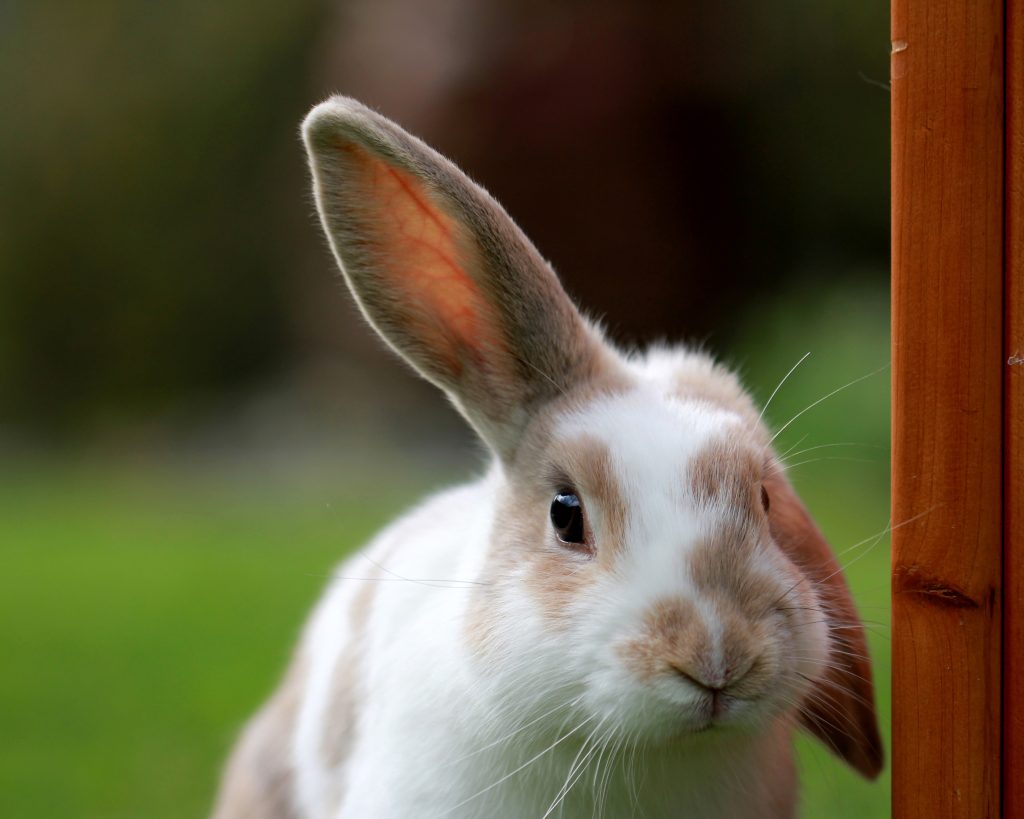
When we talk about communicating with rabbits, it is rarely a one-size-fits-all scenario, especially when you factor in breed differences. A rabbit’s ear shape directly impacts how they receive your voice.
Rabbits with upright ears act like satellite dishes, pivoting to capture sound waves with pinpoint accuracy. On the other hand, lop-eared breeds (like Holland or Mini Lops) have cartilage that folds over, which can slightly narrow and muffle their ear canals.
Veterinary researchers at the Royal Veterinary College note that lop-eared rabbits often experience altered hearing compared to their erect-eared cousins.
If you have a lop, you may need to speak slightly louder and clearer, and ensure you are in their line of sight before you start talking, so you don’t accidentally startle them from behind.
Talking to your rabbit is only half the communication puzzle; your body language has to match the tone of your voice. Because rabbits are ground-dwelling prey animals, a human towering over them casting a large shadow completely overrides any soothing words being spoken.
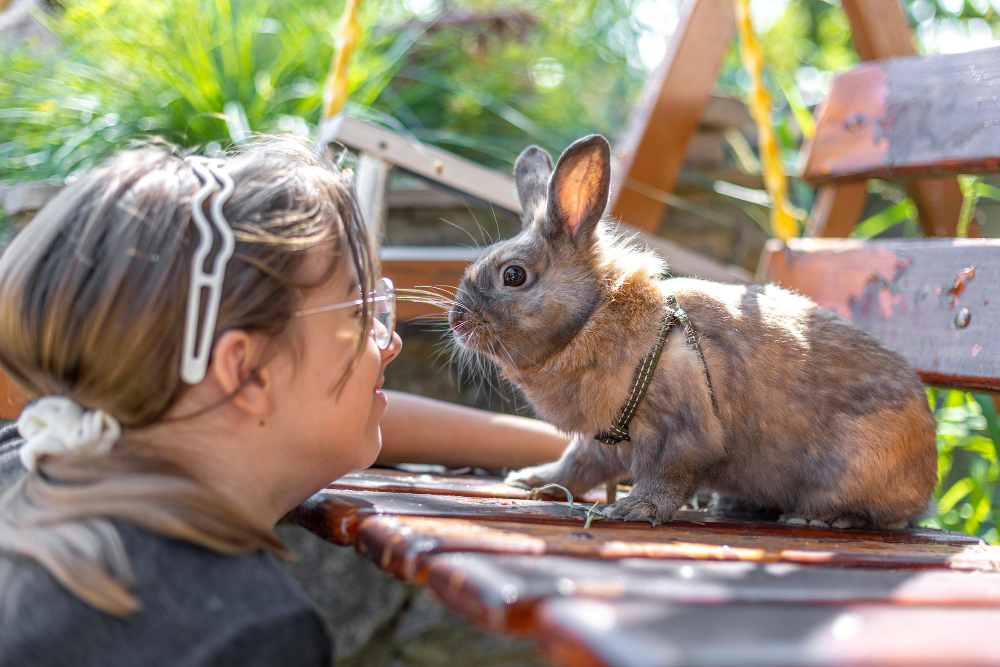
If you are standing up and talking down to your bunny, their instincts are telling them a predator is hovering. To truly connect, you have to bring yourself down to their level. Getting down on the floor—sitting cross-legged or even laying flat on the rug—makes you appear as a non-threatening companion rather than a giant.
Whenever I want to have a genuinely relaxed interaction with Chino, I make sure I am on the floor first. Combining a low, calm voice with a grounded posture is the ultimate way to signal safety, as recommended by animal welfare experts at the House Rabbit Society.
What Words Do Rabbits Actually Understand?
While rabbits do not comprehend human language in the way we do, they are incredibly adept at classical conditioning. This means they learn to associate specific sounds and words with predictable outcomes. Consistency is the key to building their vocabulary.
If you use the same word, in the same tone, followed by the same action every single time, your rabbit will quickly learn its meaning. Most domestic rabbits easily learn to recognize:
- Their Name: Often responding by perking their ears or hopping over.
- Food Cues: Words like “treat,” “dinner,” or “pellets” usually trigger visible excitement.
- Action Words: Commands like “bedtime,” “up,” or “out” help establish daily routines.
- Boundaries: A firm, low-pitched “no” can interrupt unwanted chewing or digging behaviors.
According to applied animal behaviorists at Veterinary Partner, rabbits thrive on this kind of predictable routine, which reduces their overall stress and makes them feel secure in their environment.
Why Do Rabbits Like Being Talked To?
Rabbits enjoy being talked to because of their innate social nature and their intense need to feel safe. As rabbits begin to trust the sound of your voice, they associate you with protection and comfort.
Rabbits thrive when they have friends and family. By talking to them, you are confirming their place in your life. It works on a psychological level for both of you, cementing a bond built on trust and routine.
How Your Rabbit Speaks to You
Communication is a two-way street. If you want your rabbit to understand you, you need to be observant and understand their language, too. According to the House Rabbit Society’s behavioral guides, rabbits “speak” primarily through body language, though they do use a few vocalizations.
Here are common ways your rabbit communicates with you:
- Ears Straight Up: They are interested in something, listening closely to decide if a sound is a threat or a friend.
- Thumping: A sharp thump of the hind foot on the floor is an alert. They do this to warn you of sensed danger or to express that something is scaring them.
- Lying Flat: If your bunny runs up to you and lies flat at your feet, they are likely demanding to be petted or groomed.
- Jumping and Twisting (Binkying): This is the ultimate sign of a happy rabbit. When they jump and twist in the air, they are literally jumping for joy.
- Back Turning: If a rabbit turns their back to you and covers their eyes with their ears, you are in trouble! They are upset about something you did. Rabbits can hold grudges, so you may need to offer a treat to apologize.
- Touching Noses: This is a gentle greeting or an apology. They will do this with other rabbits, pets, and their humans.
- Charging: A sudden lunge forward means, “Get out! You are in my territory.” It is a defensive maneuver to protect their space.
- Vocalizations: A grunt means you are irritating them, a whimper indicates fear, and a soft grinding of their teeth (purring) shows they are incredibly content.
The Vocal Response Matrix
To help you gauge how your vocal tone and body language are impacting your rabbit in real time, refer to this quick breakdown of common human actions and the corresponding bunny reactions.
| Human Tone & Action | Rabbit’s Interpretation | Likely Physical Response |
| Low, steady voice + sitting on floor | Safe, non-threatening companion | Relaxed posture, approaching you, soft tooth grinding (purring). |
| High-pitched “baby voice” | Potential distress signal or predator | Alert posture, ears swiveling rapidly, wide eyes. |
| Loud, sudden shouting or booming voice | Imminent danger | Thumping hind legs, running to hide, aggressive charging. |
| Soft whispering + gentle pets | Affection and grooming behavior | Lowering head, lying flat, “chattering” teeth in contentment. |
When NOT to Talk to Your Rabbit
Knowing how to talk to your rabbit is crucial, but knowing when to remain quiet is just as important for building deep trust. Because they are hyper-vigilant prey animals, interrupting them during vulnerable moments can cause unnecessary spikes in their stress levels.
There are two distinct times you should give your rabbit quiet space:
- The “Flop”: When a rabbit throws itself onto its side to sleep (often called a “flop”), it means they feel 100% safe in their environment. Startling them out of this deep rest with a loud greeting can break that trust. When Mocha and Chino do a full flop in the living room, I make sure to keep my voice down and let them rest.
- Deep Grooming: Rabbits are meticulous groomers. If they are in the middle of a long cleaning session, especially washing their faces and ears, let them finish before initiating a conversation.
Understanding these boundaries proves to your rabbit that you respect their space, which is a cornerstone of behavioral health recognized by the RSPCA’s rabbit welfare guidelines.
Frequently Asked Questions (FAQ)
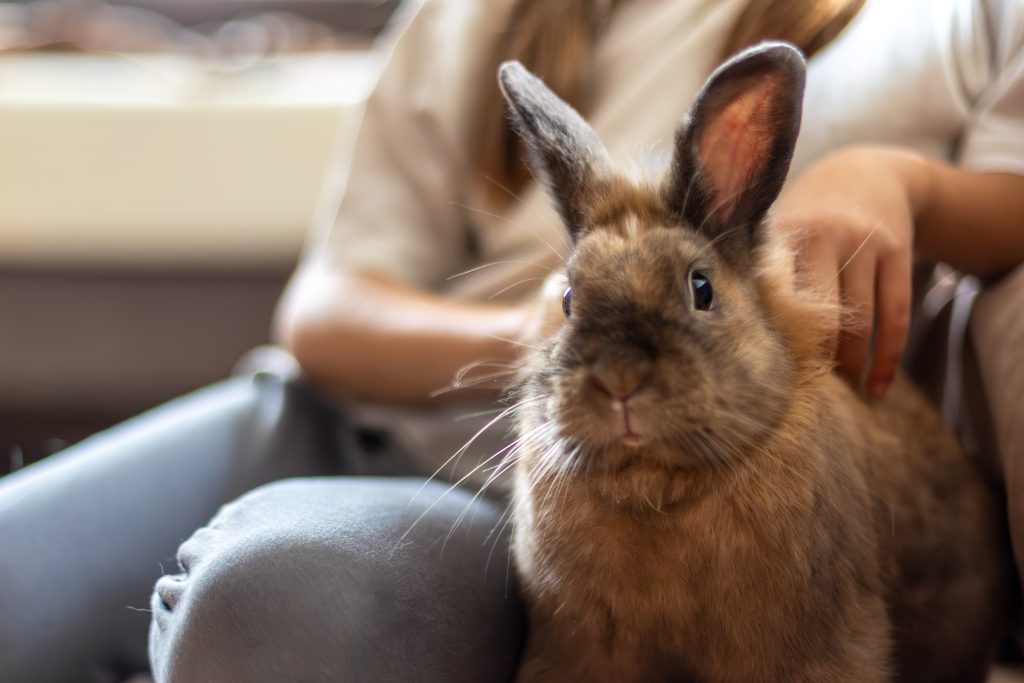
Do rabbits actually know their names? Yes. Through repetition and positive reinforcement (like offering a treat or a gentle pet), rabbits can learn to associate their specific name with themselves and will often turn or hop toward you when called.
Should I use a “baby voice” when talking to my rabbit? You don’t necessarily need to use a high-pitched baby voice, but maintaining a gentle, calm, and soothing tone is highly recommended. Harsh or deep, booming voices can trigger their prey instincts and cause them to hide.
Why does my rabbit ignore me when I talk? If a rabbit feels safe but doesn’t want to interact, they may simply tune you out. However, if they have their back turned to you, they might be actively “ignoring” you to show displeasure because they feel slighted or annoyed.
Conclusion
Don’t ever feel awkward chatting away with your rabbit. Bunnies crave vocal interaction to feel safe and form a lasting bond with you. By working with your bunny daily, using a calm voice, and learning to read their subtle body language, you’ll be surprised at how deeply the two of you can connect.
Medical & Veterinary Disclaimer: PoodleReport.com is an informational resource for Poodle owners and enthusiasts. We are not veterinarians. The content on this website is not a substitute for professional veterinary care, diagnosis, or treatment. Always seek the advice of your veterinarian with any questions you may have regarding your pet’s medical condition, diet, or overall health.