
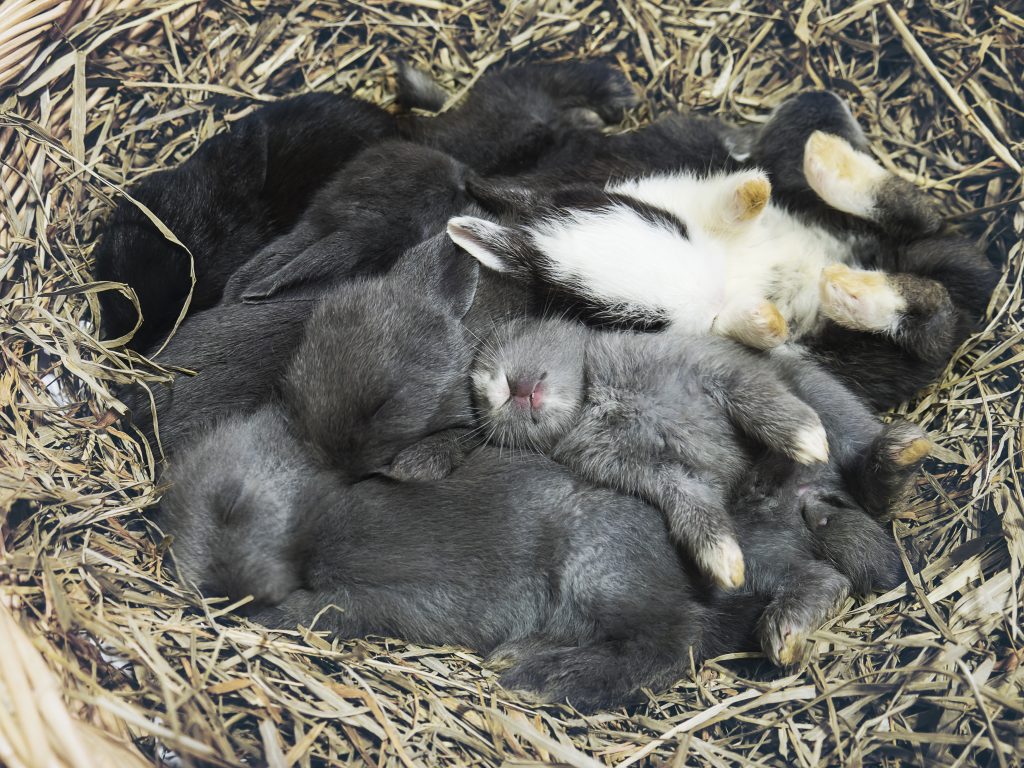
Over my years of sharing my home with dozens of rabbits, and observing the complex behaviors of my current bonded pair, Mocha and Chino, I’ve spent a lot of time researching how these animals process loss. When a tragic event happens in the nest, it is completely natural for an owner to project their own emotions and wonder if their pet is grieving.
Rabbits do not usually get sad when their babies die. As a prey species facing high mortality rates, rabbits are biologically wired to prioritize species survival over mourning. Rather than grieving lost offspring, a mother rabbit’s instincts drive her to stay healthy and immediately prepare for the next reproductive cycle.
To our human eyes—which are wired for long-term nurturing—this rapid detachment can feel incredibly cold. But by looking closely at the science rather than outdated myths, we can see that a doe’s reaction isn’t a lack of emotion. It is a highly effective survival strategy. In this article, we will explore the biological facts behind this pragmatic behavior, as well as the specific situations where a rabbit actually will experience true grief.
A rabbit’s behavior can be puzzling, especially during stressful times. To build a deeper, more intuitive connection with your pet by truly understanding their natural instincts, browse through my Rabbit Behavior Guides to start decoding their unique body language and behaviors.
The Evolutionary Reality of High-Mortality Parenting
To understand why a rabbit doesn’t show signs of sadness over a lost litter, we have to look at the numbers behind their survival. In the wild, rabbits are the ultimate prey species. Because they sit near the bottom of the food chain, their entire reproductive strategy is based on volume rather than the long-term survival of individual offspring.
Let’s look at the baseline reproductive data for a typical rabbit:
| Reproductive Metric | Statistical Average |
| Annual Litter Frequency | 3 to 4 litters per year |
| Kits per Litter | 1 to 9 babies |
| Maximum Annual Offspring | Up to 60 kits |
| First-Year Survival Rate | Only 15% |
The standout statistic here is the survival rate. Up to 85% of rabbits will not survive to see their first birthday.
If a mother rabbit—or doe—experienced profound sadness or depression every time she lost a kit, she would spend her entire life in a state of debilitating grief. From a biological perspective, grief causes severe physical stress. For a prey animal like a rabbit, heavy stress is highly dangerous and can quickly lead to life-threatening health issues.
Instead, evolution has equipped rabbits with a highly practical coping mechanism. They are wired to process the loss of a litter instantly, avoiding the physiological toll of grief. This allows them to refocus all their energy on staying alert, staying healthy, and preparing for the next generation. It isn’t a lack of emotion; it’s simply a vital adaptation that keeps the species alive.
Hormonal Overdrive: The Biological Replacement Drive
To fully understand why a mother rabbit moves on so quickly, we have to look closely at her endocrine system. Rabbits possess a unique reproductive setup that heavily dictates their behavior after losing a litter.
Unlike many mammals that experience a set estrus (heat) cycle with designated periods of fertility and resting, female rabbits are induced ovulators. This means that they do not release eggs on a strict biological schedule; rather, the physical act of mating is what triggers ovulation. Because of this distinct mechanism, a doe is physically capable of conceiving a new litter almost immediately after giving birth—often within 24 hours.
When a litter is lost, her body does not enter a prolonged hormonal recovery or mourning phase. Instead, her system shifts rapidly into a “replacement drive.” Hormonally, she is hardwired to start over right away.
This intense biological push to reproduce overrides any lingering emotional attachment to the lost kits. While this rapid, onward-looking transition may appear detached or cold to an outside observer, it is simply the rabbit’s biology doing exactly what it was designed to do: ensure the continuation of the species without a single moment of delay.
The “5-Minute Parent”: Understanding the Lack of Bonding
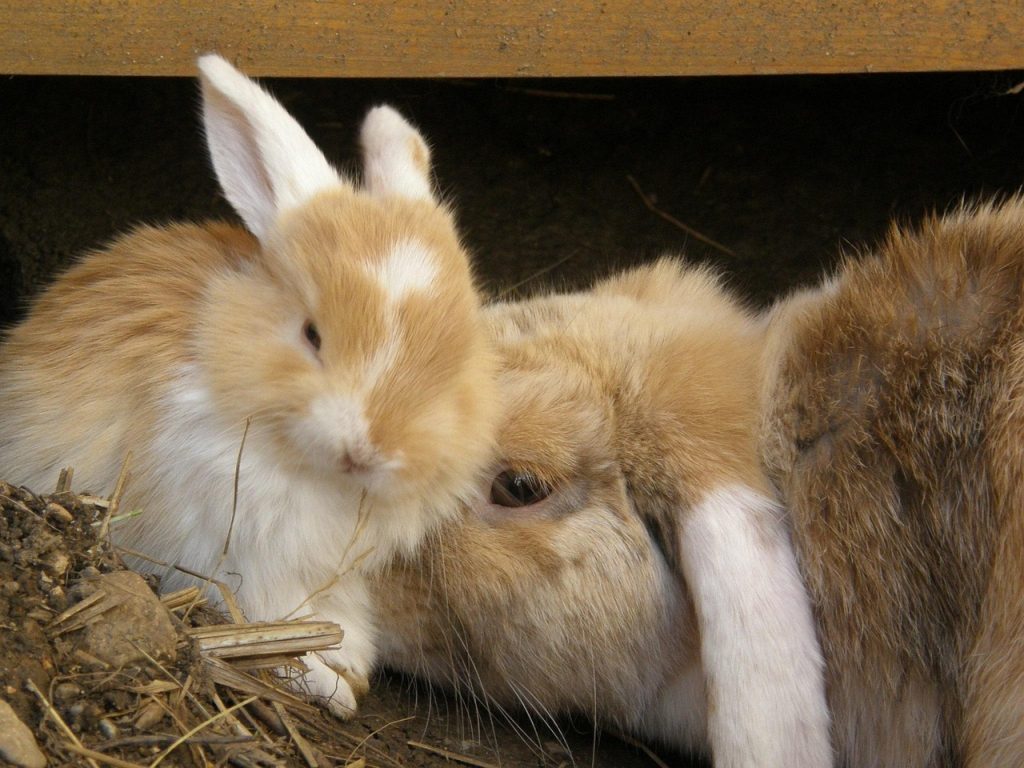
Another key piece of the biological puzzle lies in how mother rabbits actually interact with their young. In the animal kingdom, the depth of maternal grief is often tied to the amount of time and physical contact a mother shares with her offspring. Rabbits, however, practice a very distant style of parenting.
Because they are prey animals, a mother rabbit intuitively knows that her own scent can attract predators to her vulnerable, hidden nest. To protect her kits, she intentionally stays away from them for the vast majority of the day.
In fact, a doe will typically visit her nest only once or twice a day—usually at dawn and dusk—to nurse. This nursing session is incredibly brief, often lasting an average of just five minutes. Because rabbit milk is extraordinarily rich in calories and nutrients, the kits are able to get everything they need in one rapid feeding.
This means the mother spends a maximum of ten minutes a day physically interacting with her litter. Because of this limited contact, a deep, individualized emotional bond simply doesn’t have the time to form. Furthermore, kits are completely weaned and independent by just three or four weeks of age.
This fleeting, highly functional relationship is another reason why a rabbit doesn’t experience profound sadness when a baby is lost. Her emotional attachment is built purely for speed and survival, not long-term affection.
Cannibalism as Conservation: When Instinct Takes Over
One of the most shocking behaviors for an owner to witness is a mother rabbit consuming her own young. If there is one biological reality that clearly illustrates why rabbits do not process grief like humans, it is this survival-driven cannibalism.
While it is deeply unsettling to observe, female rabbits occasionally eat their kits for highly practical, evolutionary reasons. Rather than acting out of malice or sadness, a doe is driven by three primary survival instincts:
- Nest Hygiene and Predator Evasion: If a kit is born unhealthy, stillborn, or dies shortly after birth, the mother will often consume it. Leaving a deceased kit in the nest would quickly spread bacteria and emit a scent that attracts predators, jeopardizing the surviving babies. By consuming the unviable kit, she effectively erases the evidence of the nest.
- Nutritional Replenishment: Producing the incredibly rich milk required to feed a litter of up to nine kits takes a massive toll on a doe’s body. If a mother is lacking nutrients, or if a kit is already failing to thrive, her instincts drive her to reclaim those vital calories and proteins. This ensures she stays healthy enough to care for the survivors or prepare for her next pregnancy.
- Severe Stress Response: If a doe feels profoundly threatened or terrified by her environment—such as the presence of a predator or sudden, overwhelming noise—she may panic and consume her litter. This extreme response prioritizes the survival of the adult breeding female over the highly vulnerable offspring.
To a human, this behavior seems entirely incompatible with mourning. But from an ecological standpoint, it is a brilliant conservation of energy and a necessary defense mechanism that ensures the continuation of the species.
Grief vs. Emergency: How to Spot GI Stasis

While we’ve established that mother rabbits do not experience human-like grief over lost kits, owners often report seeing their rabbit acting “depressed,” lethargic, or withdrawn after a litter dies. In almost all cases, this is not mourning—it is a physiological reaction to extreme stress, and it can quickly become a life-threatening emergency.
When a rabbit is subjected to sudden trauma, fear, or environmental changes, their highly sensitive digestive system can completely shut down. This condition is known as Gastrointestinal (GI) Stasis. To an untrained eye, a rabbit suffering from GI Stasis looks remarkably like a grieving pet. They will sit quietly in a corner, refuse to interact, and lose interest in their surroundings.
However, GI Stasis is fatal if left untreated. If your doe exhibits the following symptoms after losing a litter, she is not just sad; she requires immediate medical attention:
- Refusal to eat or drink: Especially turning down hay or high-value treats.
- Lack of fecal pellets: A sudden stop in bathroom habits or producing very small, malformed poops.
- Hunched posture: Sitting tightly curled with a tense, pressed stomach, which indicates severe abdominal pain.
- Loud tooth grinding: Not to be confused with the gentle “purring” of a content rabbit, loud grinding is a universal sign of extreme discomfort in the species.
The Phantom Pregnancy Factor It is also worth noting that a doe might exhibit erratic, moody, or withdrawn behavior due to a phantom (false) pregnancy. Because rabbits are hormonally driven, a highly stressful event or hormonal surge can trick their bodies into believing they are still pregnant or need to prepare for a new litter immediately. She may aggressively build a new nest, pull her own fur, or act fiercely territorial. Once again, this is a powerful hormonal drive, not a grieving process.
Practical Guide: How to Safely Remove a Deceased Kit
While understanding the evolutionary biology behind a rabbit’s behavior is fascinating, owners still need to know how to handle the practical reality of a lost kit. If you discover a deceased baby in the nest, it is crucial to remove it promptly. Leaving it can compromise the hygiene of the entire litter, attract insects, or trigger the mother’s instinct to consume the remains.
Because rabbits are highly sensitive to environmental stress and foreign scents, you must approach the nest carefully. A sudden intrusion can cause a doe to panic, potentially leading her to reject or harm the surviving kits.
Here are the safest, research-backed steps for managing the nest:
- Distract the Mother First: Never reach into the nesting box while the doe is present or watching closely. Lure her into a separate area, carrier, or playpen with a high-value treat, such as fresh herbs or a small piece of fruit.
- Mask Your Scent: Mother rabbits identify their young primarily by smell. Before touching the nest, rub your hands in the doe’s clean hay or her soiled litter, or simply wear a pair of unscented medical gloves. This prevents you from leaving a predatory human scent on the surviving babies or the nesting material.
- Work Quickly and Quietly: Gently part the fur covering the nest and remove the deceased kit. Do not aggressively rearrange the nest, completely dismantle it, or linger longer than absolutely necessary.
- Do a Rapid Assessment: While you have the nest open, do a quick visual check of the remaining kits. Healthy, well-cared-for kits should feel warm to the touch and have round, full bellies, which indicates the mother has been nursing them.
- Re-cover the Nest: Carefully replace the pulled fur over the remaining kits to keep them warm and hidden. Allow the mother to return to her normal routine without making a fuss over her.
The Bonded Partner Exception: When Rabbits Truly Mourn
While the biological evidence clearly shows that a mother rabbit does not mourn the loss of her kits, this does not mean rabbits are incapable of grief. In fact, they are highly emotional, deeply social creatures. To see a rabbit truly mourn, you have to look at their relationship with their peers rather than their offspring.
In the wild and in domestic settings, rabbits are incredibly social animals that rely on a complex warren structure for safety and companionship. When two adult rabbits are properly introduced, they often form a “bonded pair.” This bond is exceptionally intense and is usually a lifelong commitment. They groom each other, sleep pressed together, and rely on one another for a sense of security.
When a rabbit loses its bonded mate, the reaction is entirely different from losing a litter. A surviving partner will frequently experience profound, undeniable grief.
Unlike the rapid “replacement drive” triggered by the loss of kits, a grieving partner will often exhibit severe behavioral changes:
- Searching and Pacing: The surviving rabbit may frantically search the enclosure for their missing partner.
- Depression and Lethargy: They often become withdrawn, refusing to play or interact with their owners.
- Loss of Appetite: This is the most dangerous symptom. A grieving rabbit will frequently stop eating, which, as discussed earlier, can quickly trigger fatal GI Stasis.
Because this bond is so vital to their psychological well-being, animal researchers and experienced owners recommend allowing the surviving rabbit to spend a few hours with the body of their deceased partner. This allows them to physically understand that their mate has passed away, rather than leaving them in a state of continuous, stressful searching. It is a heartbreaking process to witness, but it clearly proves that while rabbits may not mourn the next generation, they deeply mourn their chosen companions.
Frequently Asked Questions
- Do mother rabbits eat their dead babies? Yes, it is common for a mother rabbit to consume a deceased or stillborn kit. While it seems shocking to humans, this is a practical survival instinct. Consuming the unviable kit keeps the nest clean, removes odors that would attract predators, and replenishes the mother’s nutritional reserves so she can continue nursing the surviving litter.
- How long does a mother rabbit mourn a lost baby? A mother rabbit does not mourn the loss of her babies in the way humans do. Because they are a prey species with a high mortality rate, a doe’s biology forces her to move on almost instantly. Her hormonal system prioritizes survival and preparing for the next reproductive cycle over grieving.
- Will a mother rabbit abandon her babies if I touch them? It is a myth that a mother rabbit will automatically abandon her kits if she smells a human on them. However, rabbits are highly sensitive to stress. If you disrupt the nest aggressively or leave a strong, unfamiliar scent, she may panic. It is always best to rub your hands in her clean hay or litter before gently checking the nest.
- How can you tell if a rabbit is sad? While mother rabbits don’t mourn lost kits, adult rabbits do grieve the loss of a bonded mate. A grieving rabbit will often become withdrawn, refuse to eat, and pace their enclosure searching for their partner. A sudden loss of appetite is a medical emergency in rabbits and can quickly lead to fatal GI Stasis.
Summary: Respecting the Rabbit’s Resilience
When a mother rabbit loses a litter, it is entirely natural for an owner to project their own feelings of grief onto their pet. To human eyes, a doe moving on immediately—or even consuming a lost kit—can feel jarring and cold. However, when we strip away the emotion and look closely at the biology, we find a remarkable system of survival.
Rabbits are prey animals that face staggering mortality rates in the wild. If they paused to mourn every loss, the species would simply cease to exist. Through a combination of induced ovulation, rapid hormonal replacement drives, and a naturally distant parenting style, evolution has protected the mother rabbit from the debilitating physiological stress of grief. Her biology demands that she prioritize her own health and immediately prepare for the next generation.
Understanding this behavior doesn’t mean we care for our rabbits any less; rather, it allows us to respect them for the resilient, highly adapted survivors they truly are. By knowing the difference between normal reproductive behavior and life-threatening emergencies like GI Stasis, we can provide better, more scientifically sound care for the rabbits in our homes.
References & Further Reading:
- To learn more about the severe impact of stress and how to identify digestive emergencies, review the House Rabbit Society’s Guide to GI Stasis.
- For a deeper dive into the biology of induced ovulation and rabbit reproduction, the Merck Veterinary Manual provides excellent clinical insights.