
Disclaimer: The information provided on PoodleReport.com is for educational purposes only and does not constitute veterinary medical advice; always consult your vet before changing your dog’s diet. Additionally, this post contains affiliate links. As an Amazon Associate, and other affiliate advertising programs, I earn from qualifying purchases at no extra cost to you
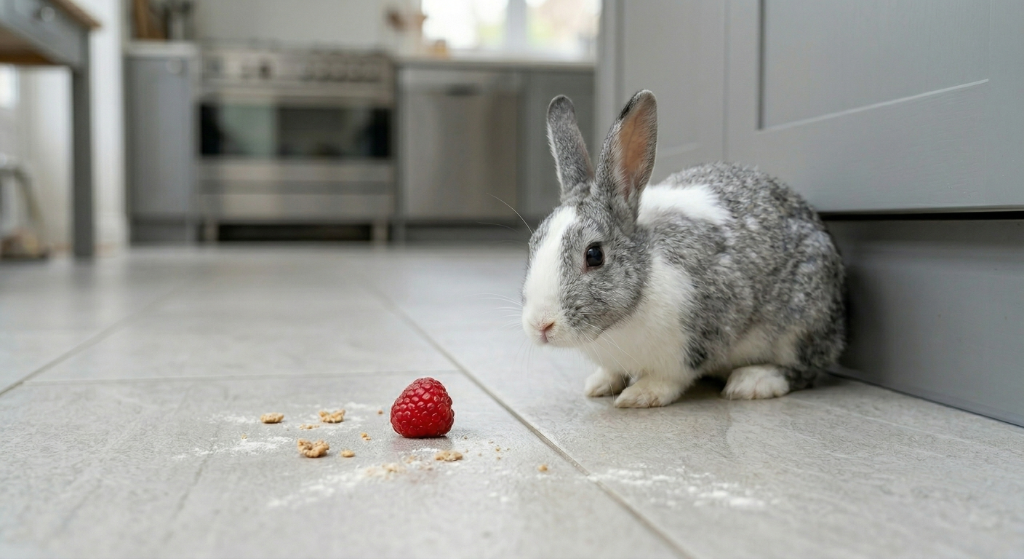
It happens every single time I wash a pint of fresh berries—within seconds, my rabbits, Mocha and Chino, are suddenly right at my feet, deploying their absolute best begging tactics. The temptation to toss them a sweet, red berry is undeniably strong, but navigating any pet’s diet requires more than just giving in to cute faces. Before you hand over your farmers market haul, it is critical to look past the begging and understand exactly how their delicate digestive tract handles sudden sugar spikes.
Yes, adult rabbits can safely eat fresh raspberries, but due to their high sugar content, they must be fed strictly as an occasional treat rather than a daily dietary staple. To prevent dangerous gastrointestinal issues, limit portions to no more than one level teaspoon of washed berries per two pounds of your rabbit’s body weight, given only once or twice a week. A healthy rabbit’s digestive tract requires constant coarse fiber to function properly, so these sweet rewards must never take the place of their essential, unlimited grass hay.
A rabbit’s complex, hindgut-fermenting digestive system is engineered to break down tough, fibrous grasses, not to process complex sugars. In the rabbit world, a raspberry is the equivalent of a candy bar. To keep their gut moving perfectly, 80% to 90% of their daily intake must be high-quality grass hay, a biological absolute backed by the exotic experts at the House Rabbit Society.
Portioning: The Strict Teaspoon Rule
Why Size Matters for Herbivores
The phrase “feed in moderation” is often too vague to be helpful. A serving size for a giant Flemish is going to overwhelm a tiny Netherland Dwarf. When balancing the weekly diet for my own rabbits, Mocha and Chino, I treat raspberries like high-value currency. In contrast, when I hand out treats to my Standard Poodle, Angus, he can easily handle a small handful of berries without skipping a beat. Rabbits, however, require strict math.
The Math Behind the Treats
The general veterinary consensus is to feed no more than one level teaspoon of fruit per two pounds of your rabbit’s body weight, and only once or twice a week.
Raspberry Portion Guide by Rabbit Weight
| Rabbit Weight | Breed Example | Maximum Weekly Portion |
| 2 to 3 lbs | Netherland Dwarf | 1 to 1.5 teaspoons |
| 4 to 6 lbs | Holland Lop | 2 to 3 teaspoons |
| 8 to 10 lbs | New Zealand | 4 to 5 teaspoons |
| 12+ lbs | Flemish Giant | 6 teaspoons (1 tablespoon) |
Feeding more than this can quickly lead to dangerous weight gain and dental decay, guidelines closely echoed by the Rabbit Welfare Association & Fund (RWAF).
The Nutritional Breakdown: What’s in a Berry?
The Good: Antioxidants and Hydration
When fed correctly, these tart little berries offer a few nutritional perks. Raspberries have a high water content, which provides a nice burst of hydration on a warm day. They also contain antioxidants and vitamins. However, it is worth noting that unlike humans, healthy rabbits synthesize their own Vitamin C in their livers. Providing extra through fruit isn’t biologically necessary, but the trace minerals still offer a tiny nutritional boost.
The Bad: Sugar Content
The primary downside is the concentrated fructose. While it is natural sugar, a rabbit’s cecum (the fermentation chamber of their gut) is simply not built to handle it in large volumes. Excess sugar feeds the wrong kind of bacteria in their digestive tract, which is why portion control is the absolute golden rule of feeding any fruit.
The Real Superfood: Raspberry Leaves and Twigs
Foraging for Better Health
While digging through botanical foraging studies, I discovered the biggest missed opportunity in rabbit diets: the rest of the raspberry plant. While the fruit is a sugary treat, raspberry leaves and twigs are absolute superfoods.
Natural Tooth Maintenance
Bramble leaves are highly astringent, fantastic for wearing down constantly growing teeth, and packed with exactly the kind of coarse fiber a rabbit needs to prevent gut slowdowns.
Raspberry Fruit vs. Raspberry Leaves
| Plant Part | Primary Nutrient | Rabbit Health Benefit | Feeding Frequency |
| The Berry | Antioxidants / Sugar | Quick energy, mental enrichment. | Occasional (1-2x a week) |
| The Leaves | Coarse Fiber | Aids digestion, natural tooth filing. | Daily (if washed/safe) |
| The Twigs | Bark / Lignin | Intense chewing satisfaction. | Daily / Freely |
If you grow your own pesticide-free raspberries, offering the leaves is a far healthier daily option than handing over the berry itself. You can find excellent lists of safe, forageable plants for your bunny from the veterinary professionals at PDSA.
The Danger Zone: Baby Rabbits and Fruit
Developing Gut Flora
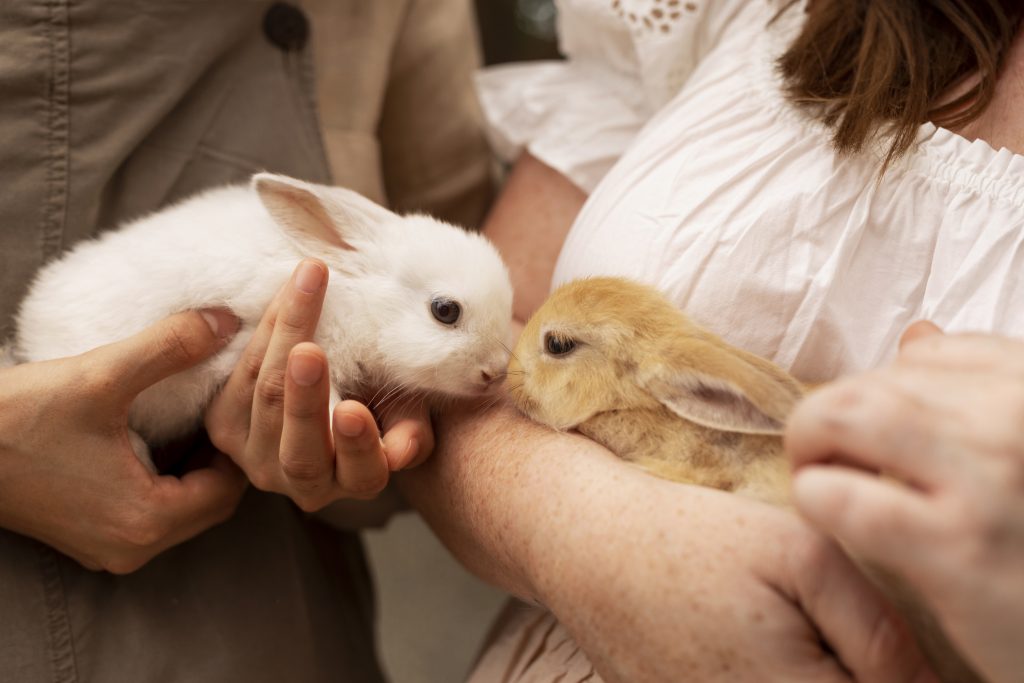
One critical mistake many new owners make is assuming that what is safe for an adult rabbit is safe for a baby. You should absolutely never feed raspberries—or any fruit—to a baby rabbit under 12 weeks of age. Their delicate gut flora is still actively developing and establishing the necessary bacteria to break down food.
When to Introduce Sweets
Introducing a spike of fruit sugar during this window can trigger severe, fatal diarrhea. Even after 12 weeks, fruit should be introduced incredibly slowly, an age-specific protocol heavily recommended by the RSPCA. If you are looking to map out exactly what produce to introduce and when, checking my 2026 safe and unsafe guide for what fruits rabbits can eat will give you a perfect timeline.
The Berry Spectrum: Other Safe Options
Expanding the Fruit Bowl
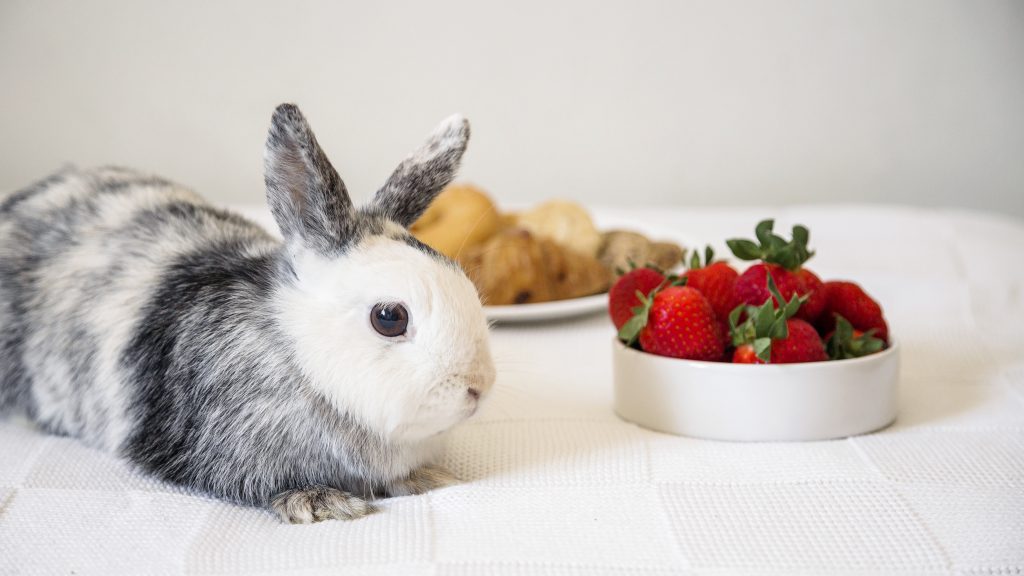
If you want to offer a rotating variety of high-value treats, there are plenty of other safe options in the berry family. Blueberries, blackberries, and strawberries offer similar profiles and are generally well-tolerated by rabbit digestive systems, provided they follow the exact same teaspoon-per-two-pounds rule.
The Grape and Pit Warning
While raspberries are safe, it is crucial to remember that not all fruits are created equal. Grapes and raisins are notoriously high in sugar and pose a potential toxicity risk. Cherries are also a hazard due to their pits, which contain trace amounts of cyanide and pose a severe intestinal blockage risk. Always thoroughly audit any new food before tossing it into the hutch.
When to Worry: GI and Dental Distress
Spotting Hay Refusal
Because a rabbit’s stomach is remarkably delicate, a sudden influx of sugar can throw their cecum completely out of balance. When I am monitoring my own rabbits, Mocha and Chino, a sudden lack of interest in their daily Timothy hay is my absolute biggest red flag. In rabbits, an upset stomach is a life-threatening emergency.
The Dangers of GI Stasis
When owners overfeed soft, sugary fruits, rabbits will often start holding out for dessert and refusing their coarse, tooth-filing hay. This leads to dental decay and Gastrointestinal (GI) Stasis.
Recognizing GI and Dental Issues in Rabbits
| Symptom | Meaning | Required Action |
| Small/Misshapen Poop | Digestion is slowing down. | Reduce treats, increase hay intake. |
| Wet Chin / Drooling | Molar spurs or dental decay. | Immediate exotic vet dental exam. |
| Loud Stomach Gurgling | Gas buildup from excess sugar. | Monitor closely, gentle tummy massage. |
| Refusing Food/Hiding | Severe pain / GI Stasis. | Immediate emergency exotic vet visit. |
This dietary shift requires immediate exotic veterinary attention to check for painful molar spurs, a condition extensively documented by the House Rabbit Society, or to treat stasis, as outlined by VCA Animal Hospitals.
Common Mistakes: Fruit Salads and Pesticides
The Sugar Multiplier Effect
The single easiest trap well-meaning owners fall into is the “fruit salad” mistake. It is incredibly common to see a bowl prepared with a teaspoon of raspberries, a slice of banana, and a chunk of apple. In reality, compounding different fruits multiplies the sugar load exponentially. The strict “one teaspoon per two pounds of body weight” rule applies to the total amount of fruit offered for the day.
Washing Away Toxins
Store-bought raspberries are highly susceptible to agricultural pesticides. Always thoroughly rinse fresh berries under cold water. Furthermore, never feed your rabbit raspberry jam, jelly, or sweetened dried raspberries.
Safe vs. Toxic Raspberry Forms
| Raspberry Form | Safety Status | Why? |
| Fresh & Washed | Safe | Natural, untreated, hydrating. |
| Thawed Frozen Berries | Safe | Fine if unsweetened; serve at room temp. |
| Dried Raspberries | Use Caution | Sugar is highly concentrated; feed less. |
| Raspberry Jam / Syrups | Toxic / Dangerous | Massive refined sugar load, fatal to gut flora. |
For a deeper understanding of how to balance their delicate daily intake, the veterinary researchers at Oxbow Animal Health offer an excellent breakdown of safe treating strategies. Additionally, exploring my comprehensive rabbit diet and food guides is the best place to perfect their daily menu.
Preparation and Storage: Keeping Berries Fresh
Spotting Peak Freshness
If you are buying raspberries specifically to share with your rabbit, quality matters. Always look for plump, brightly colored berries without any signs of bruising. Rabbits are incredibly sensitive to molds and mycotoxins, so inspect every berry carefully before offering it. If a berry looks even slightly fuzzy, throw it away.
The Ideal Freezing Process
Since your rabbit will only be eating a tiny amount at a time, freezing the rest is the most practical storage method. Wash and thoroughly pat the berries dry first. Place them on a flat baking sheet in the freezer for about an hour. Once frozen solid, transfer them into a freezer-safe bag. Crucially, always allow a frozen berry to thaw to room temperature before feeding it to your rabbit to prevent painful stomach spasms.
Rabbit and Raspberry FAQ
Can rabbits eat raspberry seeds?
Yes. Unlike apple seeds, which contain trace amounts of cyanide and must be strictly avoided, the tiny seeds inside a raspberry are completely safe and will pass through a rabbit’s digestive tract without any issue.
Are frozen raspberries safe for my rabbit?
Yes, but they should be fully thawed to room temperature first. Rabbits generally prefer room-temperature foods, and offering them a frozen, rock-solid berry can be tough on their teeth and shocking to their digestive system.
Can they eat black raspberries?
Absolutely. Black raspberries and red raspberries share an almost identical nutritional profile. Both are safe, non-toxic, and bound by the exact same strict “teaspoon rule” regarding portion sizes.
What happens if my rabbit accidentally eats a whole carton?
If your rabbit breaks into a grocery bag and eats a massive amount of berries, immediately remove the remaining fruit and offer unlimited amounts of fresh Timothy or Orchard hay. Monitor them closely for the next 12 to 24 hours for signs of diarrhea or lethargy, and contact your exotic vet immediately if their droppings change or they stop eating entirely.
The Final Verdict: Keep It Sweet, Keep It Rare
The consensus from veterinary research is clear: raspberries are a perfectly safe, highly anticipated treat for a healthy adult rabbit, provided you stick strictly to the teaspoon rule. While it is always tempting to spoil a begging bunny with extra fruit, protecting their incredibly delicate gut flora by prioritizing high-fiber hay and leafy greens is the ultimate way to show them love.
If you happen to have a raspberry bush in the yard, skip the sugary fruit altogether and offer them the nutrient-dense leaves and twigs instead—they will be just as thrilled, and their digestive tract will thank you. Ultimately, saving the fresh berries for a special, occasional reward ensures your rabbit stays happy, healthy, and out of the exotic vet’s office.
Medical & Veterinary Disclaimer: PoodleReport.com is an informational resource for Poodle owners and enthusiasts. We are not veterinarians. The content on this website is not a substitute for professional veterinary care, diagnosis, or treatment. Always seek the advice of your veterinarian with any questions you may have regarding your pet’s medical condition, diet, or overall health.