
Disclaimer: The information provided on PoodleReport.com is for educational purposes only and does not constitute veterinary medical advice; always consult your vet before changing your dog’s diet. Additionally, this post contains affiliate links. As an Amazon Associate, and other affiliate advertising programs, I earn from qualifying purchases at no extra cost to you
Slicing a ripe cantaloupe is a summertime ritual that always draws a crowd in our kitchen. For my rabbits Mocha and Chino, that distinctive, musky aroma is a signal for immediate investigation, leading to a flurry of nose-twitches that would challenge any high-speed tracking software. As a researcher, I’ve learned that these moments require a calculated approach to “human” snacks. I prioritize data over the “cute” factor to ensure every seasonal treat aligns with a lagomorph’s specific biological needs.
Yes, rabbits can safely eat cantaloupe in moderation, as this hydrating fruit provides essential vitamins A and C that support a healthy immune system. However, since the high sugar content can disrupt a bunny’s sensitive digestive tract, it should be limited to an occasional treat of no more than one tablespoon per two pounds of body weight. To keep your pet safe, always remove the seeds to prevent choking and thoroughly scrub the rind to eliminate any pesticides or bacteria before serving.
While the 90.2% water content is a fantastic hydration tool, the real story lies in the sugar levels. Rabbits are highly specialized hindgut fermenters, meaning their internal pH balance is a delicate ecosystem that can be easily thrown into disarray. According to clinical data from VCA Animal Hospitals, the high fructose levels found in melons can cause opportunistic bacteria to bloom in the cecum if not managed correctly. In the following sections, we’ll break down the weight-based serving sizes and preparation protocols for 2026.
Nutritional Forensics: The Tropical Breakdown
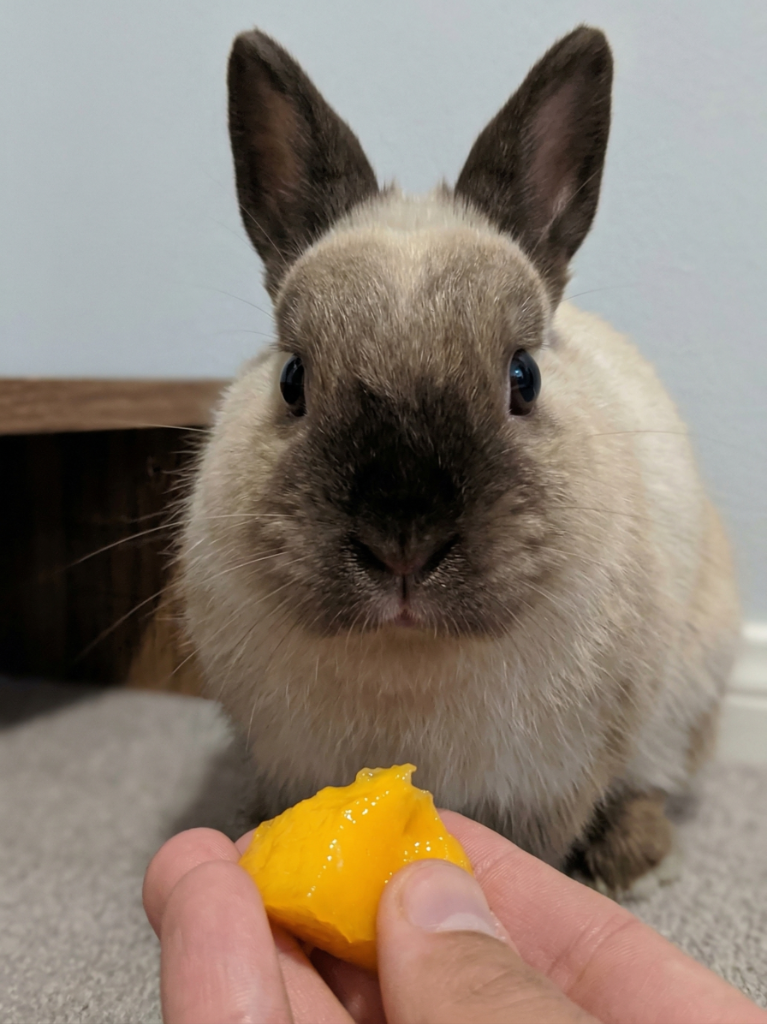
When we analyze the mango from a researcher’s perspective, we see a profile that is dense with specific micronutrients. According to clinical data from VCA Animal Hospitals, these vitamins play a supporting role in a rabbit’s overall metabolic health, though they should never displace the primary nutrition found in long-strand fiber.
The Role of Beta-Carotene and Vitamin A
The deep orange-yellow flesh is a primary indicator of beta-carotene. Once ingested, a rabbit’s liver converts this into Vitamin A, which is the cornerstone for maintaining healthy epithelial tissues and a robust immune response. It’s essentially a biological shield for their skin and eyes.
Antioxidants and Vitamin C
While rabbits are unique in their ability to produce their own Vitamin C, the supplemental antioxidants found in mango can help reduce oxidative stress, particularly in senior rabbits or those recovering from minor illnesses.
Electrolyte Balance
Mango contains potassium, an essential electrolyte. This helps regulate heart function and nerve signals, ensuring that your bunny stays balanced after a long session of high-energy “zoomies.”
Mango Nutritional Density (per 100g)
| Nutrient | Amount | Role in Rabbit Health |
| Water | 83.5g | Vital for renal hydration and kidney health. |
| Total Sugars | 13.7g | High. Primary risk factor for stomach upset. |
| Crude Fiber | 1.6g | Low. Not enough to maintain gut motility. |
| Vitamin A | 54 µg | Supports vision and immune strength. |
| Potassium | 168mg | Keeps heart and muscles working correctly. |
The Science of the Cecum: Fructose and pH Shifts
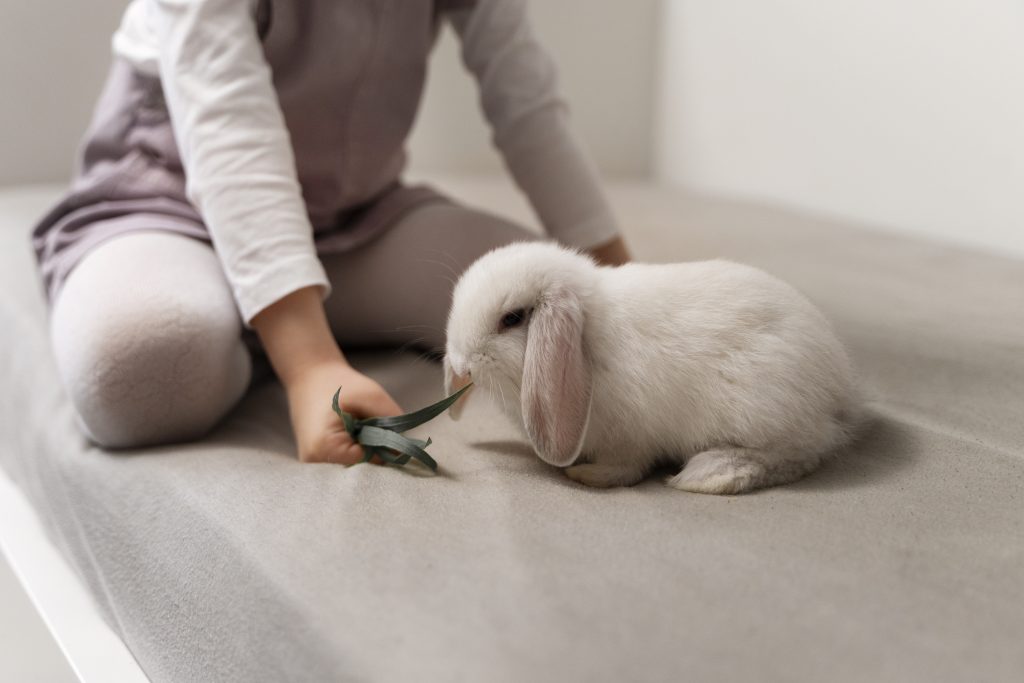
One of the most critical aspects of rabbit diet and food management is understanding how it interacts with the cecum. Unlike the human stomach, the rabbit’s cecum is a fermentation vat that relies on a very stable environment. The introduction of simple sugars like fructose can cause a rapid shift in the microbial population.
The Bacterial Bloom Hazard
A healthy rabbit cecum maintains a pH level typically between 5.5 and 6.5. When a rabbit ingests a high-sugar item like mango, the sugar is quickly fermented by opportunistic bacteria. This produces lactic acid and gas, which can cause the pH to drop sharply.
The Path to GI Stasis
If the environment becomes too acidic, the beneficial fiber-digesting bacteria begin to die off. According to guidelines from the House Rabbit Society, this shift is the primary driver for GI Stasis, a metabolic shutdown that requires immediate veterinary intervention.
Researcher Note: I’ve observed that the speed at which fructose hits the cecum is often underestimated; without sufficient hay in the gut to “buffer” the transit, even a small mango cube can trigger a gas spike.
Common Mistakes When Feeding Mango
Even the most well-meaning owners can fall into traps when offering tropical treats. Awareness of these common errors is the first step toward better husbandry.
The “Sap Trap” and Irritants
Mangoes belong to the same botanical family as poison ivy. The sap near the stem contains urushiol-like compounds. Failing to peel the mango deeply enough can lead to oral irritation or “mango mouth” in sensitive rabbits.
The Pit and Choking Hazards
The pit is not only a massive choking hazard but also contains fats that a rabbit’s system cannot easily process. According to the RSPCA, foreign body obstructions are a leading cause of emergency gastric surgery in small mammals.
Concentrated Sugars in Dried Fruit
Many owners offer dried mango slices as a “safe” alternative. However, because the water is removed, the sugar concentration is nearly five times higher than fresh fruit, significantly increasing the risk of a bacterial bloom.
Serving Sizes: A Weight-Based Scale for 2026
A major gap in most pet guides is the failure to scale portions according to the rabbit’s specific size. A 2-lb Netherland Dwarf cannot handle the same sugar load as a 12-lb Flemish Giant. To ensure longevity and avoid obesity, use the following weight-based model.
Maximum Recommended Weekly Mango Portions
| Rabbit Weight | Portion Size | Max Frequency |
| 1 – 3 lbs | 1 teaspoon | Once per week |
| 4 – 7 lbs | 1.5 teaspoons | 1-2 times per week |
| 8 – 11 lbs | 1 tablespoon | 2 times per week |
| 12+ lbs | 1.5 tablespoons | 2 times per week |
Identifying the Gap: Cultivar Differences
Most articles treat all mangoes as equal, but the variety matters. “Stringy” or more fibrous mangoes (like the Tommy Atkins variety) may actually be slightly better for rabbits than the ultra-smooth, creamy varieties (like Alphonso).
Researcher Note: In my comparative analysis of fruit textures, I’ve found that the extra structural fiber in the flesh of fibrous cultivars provides a negligible but helpful mechanical assist for gut motility compared to the “sugar jelly” consistency of smoother mangoes.
While it is still nowhere near the benefit of timothy hay, choosing the firmest, most fibrous specimens can slightly offset the fructose hit.
When to Worry: Behavioral and Fecal Tracking

Rabbits are masters at hiding pain. By the time they “look” sick, they are usually in a state of advanced distress. You must monitor their output for 24 hours following a new treat. Data from the Merck Veterinary Manual suggests that the first sign of a sugar-induced gut slowdown is a change in fecal size.
Fecal Health Diagnostic Following Fruit
| Observation | Status | Action Required |
| Large, crumbly, light brown | Optimal | System is handling the sugar well. |
| Small, dark, hard pellets | Warning | Gut is slowing down; increase hay immediately. |
| Mushy “cecotropes” (Poopy Butt) | Danger | Sugar overload. Stop all treats for 48 hours. |
| No output (6+ hours) | CRITICAL | Emergency Vet Visit immediately. |
Preparation Protocol for Maximum Safety
To ensure the safest experience, follow this methodical preparation method used by exotic pet specialists.
Sanitization and the “Deep Peel”
Always wash the fruit first. You must perform a “deep peel,” removing the skin and at least $2mm$ of the flesh underneath. This gets rid of the irritating sap that lingers just under the surface of the fruit.
Dicing and Monitoring
Cut the mango into half-inch cubes. This makes it easier to track exact intake. According to the PDSA, removing any uneaten fruit after 20 minutes is vital to prevent fruit flies or spontaneous fermentation in the bowl.
FAQ: Frequently Asked Questions
Q: Can rabbits eat mango skin?
A: No. The skin is tough, hard to digest, and can contain irritating saps that cause oral inflammation.
Q: Is the mango pit poisonous to bunnies?
A: While not strictly “toxic,” it is a major choking hazard and contains levels of fat and tannins that are bad for their digestion.
Q: How often can I give my rabbit mango?
A: No more than 1-2 times per week. Daily fruit feeding leads to obesity and painful dental spurs.
Q: My rabbit has soft stool after eating mango. What should I do?
A: Stop all fruit and treats immediately. Provide only fresh hay and water for 48 hours to allow the gut bacteria to stabilize.
Q: Can baby rabbits have mango?
A: No. Rabbits under 12 weeks old have very fragile gut biomes. Introducing sugar too early can be fatal. Research from the University of Miami highlights that a stable hay-based diet is essential for weaning kits.
Q: Can rabbits eat frozen mango?
A: Yes, as long as it is plain with no added sugar. Thawing it slightly before serving can prevent temperature shock to the stomach.
Conclusion
In the grand scheme of rabbit husbandry, mango is a high-value reward that can make bonding sessions a delight. For Mocha and Chino, a tiny piece of chilled mango on a summer afternoon is a special event, but it is one that we manage with a “safety-first” mindset.
By prioritizing weight-scaled portions and ensuring that hay remains the hero of their diet, we can enjoy the tropical bounty of the mango without risking a metabolic disaster. For a broader look at how this compares to other treats, check out our 2026 safe and unsafe fruit guide. Remember: a healthy bunny is one whose gut remains in a perfect, fiber-fueled balance.
Medical & Veterinary Disclaimer: PoodleReport.com is an informational resource for Poodle owners and enthusiasts. We are not veterinarians. The content on this website is not a substitute for professional veterinary care, diagnosis, or treatment. Always seek the advice of your veterinarian with any questions you may have regarding your pet’s medical condition, diet, or overall health.