
Disclaimer: The information provided on PoodleReport.com is for educational purposes only and does not constitute veterinary medical advice; always consult your vet before changing your dog’s diet. Additionally, this post contains affiliate links. As an Amazon Associate, and other affiliate advertising programs, I earn from qualifying purchases at no extra cost to you
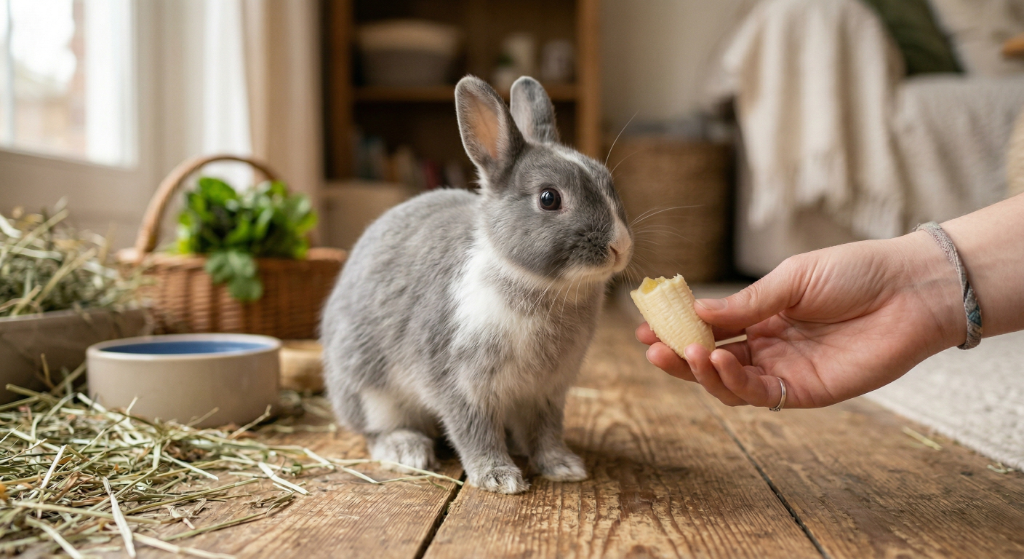
Unwrapping a banana within a fifty-foot radius of a rabbit is the fastest way to trigger the “banana trance”—that twitchy-nosed, wide-eyed obsession for what is essentially the high-fructose corn syrup of the garden. While it’s tempting to cave to those frantic, fuzzy demands, feeding bananas to a bunny is a high-stakes balancing act between a joyful reward and a total metabolic meltdown.
In my daily sessions with my rabbits, Mocha and Chino, I’ve observed exactly how quickly this “yellow gold” can disrupt a healthy forage routine, leading us to the essential question: is it actually safe for rabbits to eat bananas?
Yes, rabbits can eat bananas, but they should be categorized as the high-fructose “candy” of the lagomorph world. While technically non-toxic, their dense sugar and starch levels make them a high-risk treat if overfed. The gold standard for a healthy adult rabbit is no more than one teaspoon per two pounds of body weight, served a maximum of twice per week.
Rabbit biology is non-negotiable. As “hindgut fermenters,” their systems aren’t built for tropical sugar spikes; their ancestors thrived on lean, high-fiber forage, not concentrated sweetness. To keep your wellness plan safe, calibrate your treat rotation using my Rabbit Food and Nutrition Guides.
Nutritional Profile: Banana vs. Timothy Hay
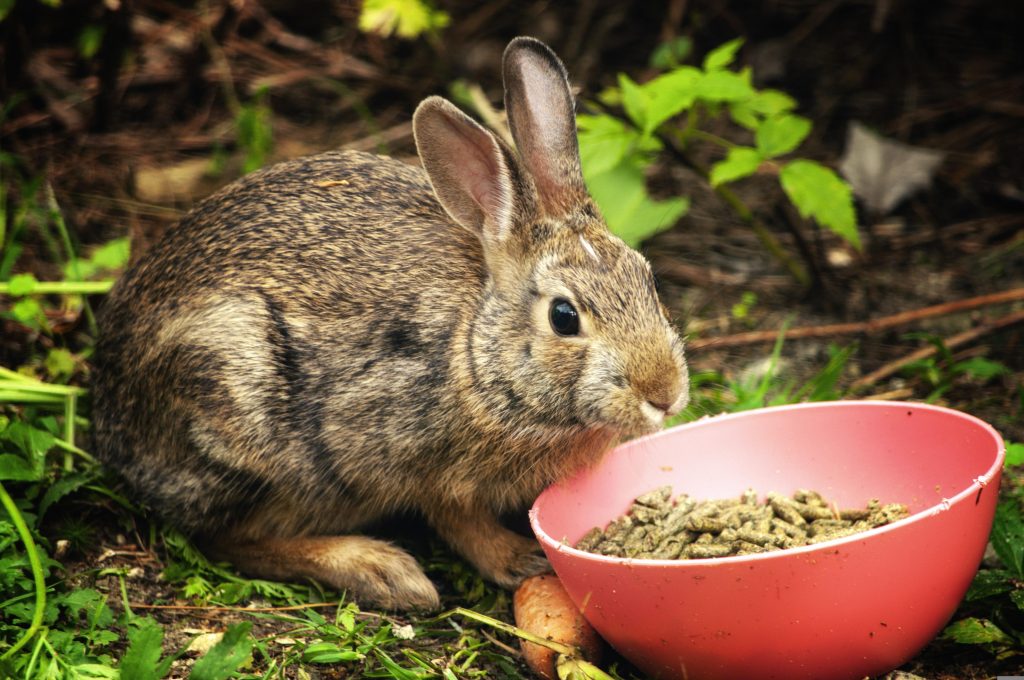
To understand why a banana is considered a “luxury item,” we must look at the fiber-to-sugar ratio. Rabbits are biological machines designed by nature to ferment low-energy grasses. When we introduce a starch-heavy fruit like a banana, we risk disrupting the delicate pH balance of the cecum, where vital fermentation occurs.
Comparative Nutritional Analysis (Per 100g)
| Nutrient | Banana (Raw) | Timothy Hay (Standard) | Impact on Rabbit Health |
| Fiber | ~2.6g | ~32g | High fiber is vital for gut motility. |
| Sugar | ~12.2g | ~3g | Excessive sugar fuels “bad” bacteria. |
| Starch | ~5.4g | ~0.5g | Starch can slow down the digestive tract. |
| Water Content | ~75% | ~10% | High moisture can cause soft stools. |
While bananas offer Potassium and Vitamin B6, these are secondary to the rabbit’s primary need for indigestible fiber. In a 2026 nutritional context, a banana is essentially “empty calories” that can lead to obesity and hepatic lipidosis if the liver becomes overwhelmed by processing excess glucose.
The Ripeness Scale: Why “Old” Bananas are Gut-Busters
A significant gap in traditional pet advice is the failure to distinguish between a green-tipped banana and a spotted one. In my observations of Mocha and Chino, I’ve noticed their excitement levels—and subsequent digestive speed—change based on the fruit’s maturity. As a banana ripens, its resistant starch converts into free sugars like fructose and glucose.
While Mocha and Chino might beg harder for the brown, mushy spots, those are the most likely to trigger rapid, dangerous fermentation. For a rabbit, the “safer” (relative term) option is actually the firmer, slightly under-ripe banana, which contains more resistant starch that is fermented more slowly in the hindgut.
The Starch-to-Sugar Ripening Spectrum
| Ripeness Stage | Primary Carbohydrate | GI Stasis Risk Level | Feeding Recommendation |
| Green/Firm | Resistant Starch | Moderate | “Safer” option; slower fermentation. |
| Solid Yellow | Balanced Starch/Sugar | High | Standard treat portion applies. |
| Spotted/Brown | Free Sugars | Critical | Avoid; causes rapid gas production. |
Portion Control: The Weight-Based Ratio
A “slice” of banana is a dangerously relative term. What constitutes a light snack for a 15lb Flemish Giant is a total sugar overdose for a 2lb Netherland Dwarf. According to dietary guidelines from the House Rabbit Society, maintaining weight-based portioning is the most effective way to prevent obesity and dental decay.
Safe Weekly Serving Sizes (2026 Standards)
| Rabbit Weight | Max Portion (Per Serving) | Weekly Frequency |
| 2 lbs (Dwarf) | 1/2 Teaspoon | Max 1x Week |
| 5 lbs (Standard) | 1 Teaspoon | Max 2x Week |
| 10 lbs+ (Giant) | 1 Tablespoon | Max 2x Week |
Smaller breeds often have more sensitive digestive tracts. For these “pocket-sized” bunnies, even a standard portion can lead to soft cecotropes (the droppings rabbits usually re-ingest). If you notice “smushy” poop after a banana snack, it’s a clear sign to reduce the portion even further.
The “Banana Junkie” Feedback Loop: Behavioral Risks
One of the least discussed topics in rabbit care is behavioral addiction. Sugar triggers a massive dopamine response in a rabbit’s brain. I have seen this firsthand when my rabbits start “lobbying” for treats by refusing their Timothy Hay in hopes of holding out for the “good stuff.”
Once a rabbit becomes a “Banana Junkie,” they may enter a hunger strike. Preventing this requires a negotiation-based approach: treats are only offered after a significant volume of hay has been consumed. If your rabbit starts a strike for bananas, remove fruit from the rotation entirely for at least 14 days to reset their palate and gut flora.
The Danger Zone: GI Stasis and Cecal Dysbiosis
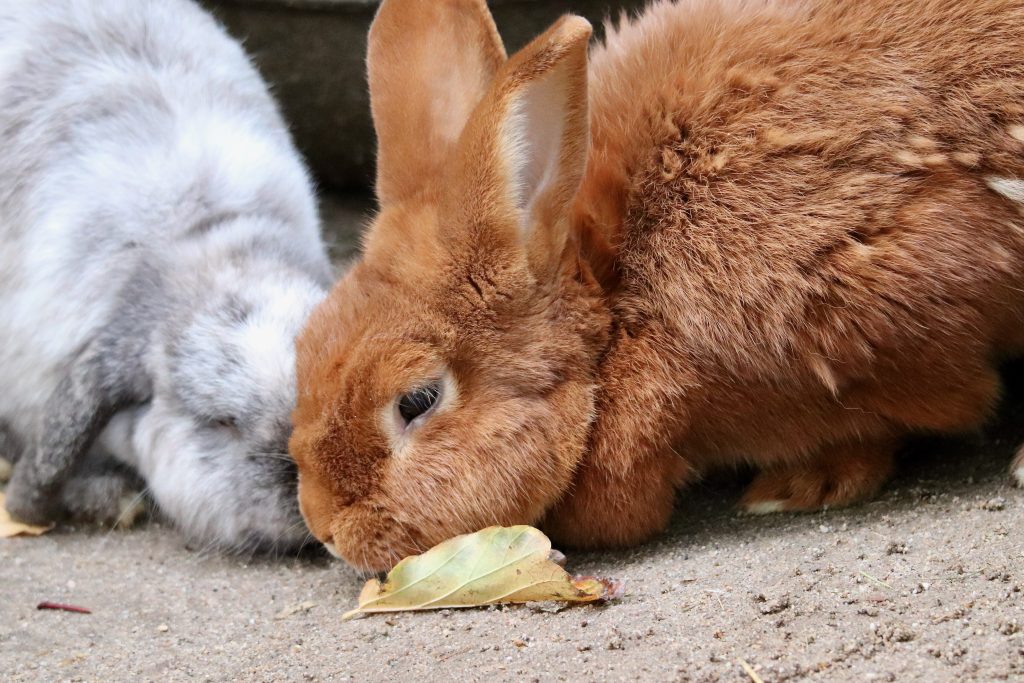
Unlike humans, rabbits cannot burp or pass gas effectively. When the high sugar from a banana hits the cecum, it can cause an explosion of “bad” bacteria like Clostridium, leading to painful gas. Clinical data from PetMD suggests this bacterial shift is a primary precursor to Gastrointestinal (GI) Stasis—a condition where the digestive system shuts down.
If your rabbit’s stomach sounds like a bubbling brook or they adopt a “hunched” posture and refuse to move, these are clinical red flags for fermentation distress. According to the National Institutes of Health, GI Stasis can become fatal within 24–48 hours if not treated with motility drugs and aggressive hydration.
Banana Peels, Leaves, and Pesticide Porosity
Can they eat the peel? Yes, and it actually contains significantly more fiber and less sugar than the fruit. However, the Environmental Working Group (EWG) frequently notes that conventional bananas are heavily treated with fungicides like thiabendazole.
Because a rabbit’s liver is much smaller than a human’s, these residues are far more toxic. If you aren’t feeding organic, do not offer the peel. Conversely, dried banana leaves are an excellent high-fiber chew toy, provided they are organic and free from chemical fertilizers. They provide the “scent” of banana without the metabolic sugar spike.
Treat Alternatives: Satisfying the Sweet Tooth Safely
If your rabbit is already showing signs of sugar-seeking behavior, it is time to pivot to lower-impact rewards. You can find a full breakdown of these in my 2026 Safe & Unsafe Fruit Guide.
The “Safe Sweetness” Hierarchy
| Treat Item | Sugar Content | Fiber Content | Verdict |
| Banana | Very High | Low | Rare Treat Only |
| Fresh Raspberry | Low | High | Excellent Alternative |
| Fresh Mint/Basil | Trace | Medium | Best Daily Reward |
| Dried Fruit | Extreme | Very Low | Avoid Entirely |
Age Restrictions: The 12-Week Rule
Baby rabbits (kits) have a highly volatile gut pH. Introducing a high-sugar item like a banana before the age of 12 weeks can be fatal. Research emphasizes that a kit’s diet should be strictly alfalfa hay and pellets to establish stable gut flora.
Wait until your bunny is at least 3-4 months old before introducing fruit. Early introduction can lead to enterotoxemia, a rapid and often fatal intestinal bloom described in the Merck Veterinary Manual.
Symptoms of Banana Overfeeding
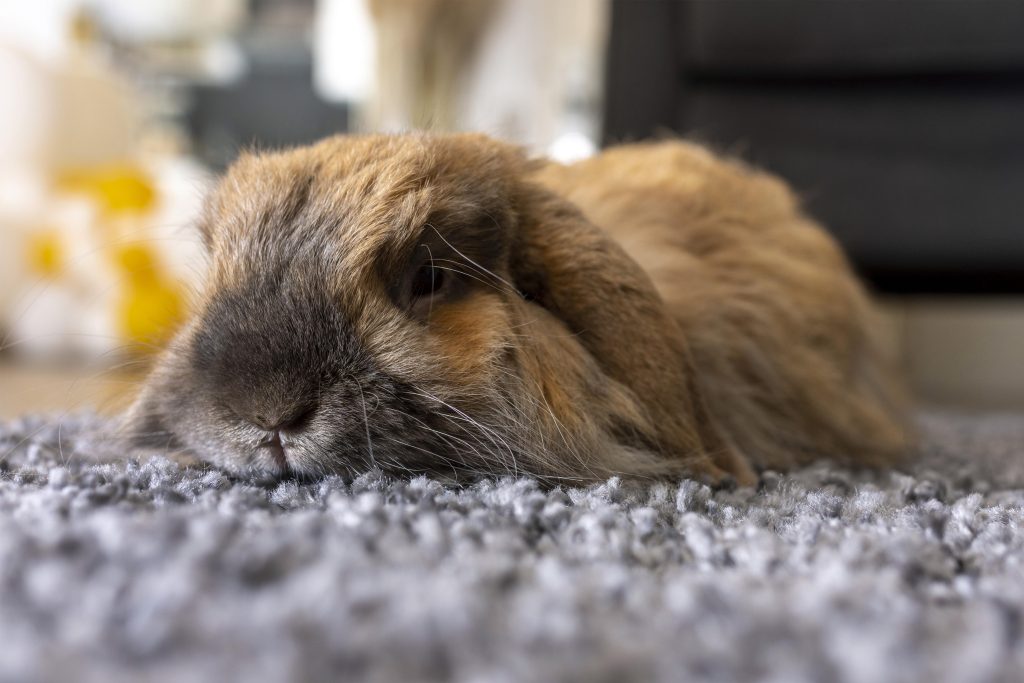
How do you know if you’ve crossed the line? Aside from the obvious weight gain, look for “Poopy Butt” (chronic soft stools) or a decrease in hay consumption. If your rabbit is producing fewer, smaller, or drier droppings than usual, the sugar in their diet may be slowing down their peristalsis.
Monitoring the “Poop Quality” is the best way to audit your rabbit’s internal health. If you see “string-of-pearls” poop (poop held together by fur), it indicates the gut is struggling to move waste along, and high-sugar treats will only exacerbate the blockage.
How to Safely Introduce Bananas
If you have never fed your rabbit fruit, start with a piece no larger than the size of your pinky nail. Wait 24 hours to observe their stool. If the stool remains firm and round, you can gradually increase to the weight-based portioning mentioned above. This protocol ensures that the gut flora has time to adjust to the new influx of simple carbohydrates.
Frequently Asked Questions (FAQ)
- Can rabbits eat banana chips? No. Commercially dried chips often contain added oils and concentrated sugars that are too dense for a rabbit’s gut and lead to liver issues.
- Why does my rabbit shake when eating a banana? This is often a “sugar rush” or extreme excitement. While it looks cute, it is a sign that the treat is hitting their system like a drug and should be strictly limited to prevent a metabolic crash.
- My rabbit ate a whole banana, what do I do? Monitor their output for the next 24 hours. Ensure they have plenty of water and encourage movement. If they stop pooping or eating hay, it is a medical emergency. According to the RSPCA, time is of the essence in gas-related emergencies.
- Are banana leaves safe? Yes, dried banana leaves are a great high-fiber chew toy, provided they are organic and free from chemical fertilizers.
- Can bananas cure a rabbit that isn’t eating? No. While the smell can entice a sick rabbit, the sugar can worsen a gas-related blockage. The PDSA recommends seeking professional veterinary advice before using sugar to “jumpstart” a stagnant gut.
Conclusion: Balancing the “Banana Trance” in 2026
While the “banana trance” is undeniably one of the most endearing behaviors a rabbit can exhibit, our responsibility as owners is to manage the biological fallout of those high-sugar cravings. Bananas are not a dietary requirement; they are a high-value tool for bonding or medication delivery that must be handled with clinical precision. In my ongoing 2026 observations with Mocha and Chino, I have found that the most successful nutritional plans prioritize the steady, boring fiber of Timothy hay over the fleeting “sugar rush” of tropical fruit.
By sticking to weight-based portions and monitoring for any signs of cecal dysbiosis, you can enjoy these “yellow gold” moments without risking a GI Stasis emergency. If you are looking to diversify your bunny’s snack rotation while keeping their gut pH stable.
Medical & Veterinary Disclaimer: PoodleReport.com is an informational resource for Poodle owners and enthusiasts. We are not veterinarians. The content on this website is not a substitute for professional veterinary care, diagnosis, or treatment. Always seek the advice of your veterinarian with any questions you may have regarding your pet’s medical condition, diet, or overall health.