

Disclaimer: The information provided on PoodleReport.com is for educational purposes only and does not constitute veterinary medical advice; always consult your vet before changing your dog’s diet. Additionally, this post contains affiliate links. As an Amazon Associate, and other affiliate advertising programs, I earn from qualifying purchases at no extra cost to you
Rabbits are some of the best household pets you can have, especially if you’re looking for a starter pet for your children. However, if you’ve got other pets in the home, then it can be tricky trying to decide if the rabbit will get along with any current pets that you might have. There are a ton of different pets you can have that get along with rabbits, no matter if your bunny is free-range or caged.
As prey animals, rabbits view the world through a lens of “fight or flight.” Successfully introducing a companion requires understanding the biological drives of both species. This researcher-informed guide breaks down the specifics of 15 different animal companions to ensure your multi-pet home remains a sanctuary, not a source of stress.
Rabbits are excellent starter pets, but their happiness relies on a supportive social environment. As my rabbits Mocha and Chino have taught me, you must understand how a rabbit perceives potential companions. I strongly suggest reviewing my Rabbit Behavior Guides to ensure your introductions are more successful and stress free.
Compatibility Matrix: 15 Animals Ranked by Risk
To rank as a top-tier resource for bunny owners, we must first look at the biological and environmental risks associated with different species. This matrix provides a quick-glance safety rating for common household pets.
| # | Companion Animal | Risk Level | Primary Concern |
| 1 | Another Rabbit | Low | Hormonal Aggression |
| 2 | Guinea Pigs | Low-Medium | Pathogen Transmission |
| 3 | Cats | Medium | Predatory Instinct Drift |
| 4 | Dogs | Medium-High | High-Excitement Injury |
| 5 | Mini Pigs | Medium | Weight & Crushing Risks |
| 6 | Turtles/Tortoises | Medium | Salmonella Contamination |
| 7 | Ducks | Medium | Environment & Hygiene |
| 8 | Chickens | Medium-High | Aggressive Pecking |
| 9 | Chinchillas | Medium | Bite Strength & Conflict |
| 10 | Hedgehogs | Medium | Quill Injury & Stress |
| 11 | Small Birds | Low-Medium | Auditory Frequency Stress |
| 12 | Large Birds | Medium-High | Physical Trauma/Bites |
| 13 | Bearded Dragons | Medium | Cross-Contamination |
| 14 | Rats | Medium-High | Predatory Opportunism |
| 15 | Hamsters/Gerbils | Medium-High | Territorial Nips |
1. Rabbits: The Biological Gold Standard
Unsurprisingly, rabbits are actually one of the best pets you can keep with other rabbits! They are colonial animals by nature and rely on a partner for grooming, warmth, and social security.
- The Power of Mirroring: i’ve observed that rabbit bonding relies heavily on “mirroring” behavior. When one rabbit eats, the other eats; when one grooms, the other feels safe enough to rest. This shared “language” provides emotional security that no other species can replicate.
- The “Bunny Dating” Process: Introducing two rabbits should never be done by simply putting them in a cage together. According to the House Rabbit Society’s Bonding FAQ, you should use neutral territory where neither rabbit feels the need to defend their “home” turf.
Primary Concern: Hormonal Aggression. Even the friendliest rabbits can become violent if they are not spayed or neutered. Hormones drive territorial “spring” behaviors, which can lead to severe fighting, fur pulling, and deep bites if the bonding process isn’t handled in a neutral, non-territorial space.
2. Cats: Managing the Domestic Predator
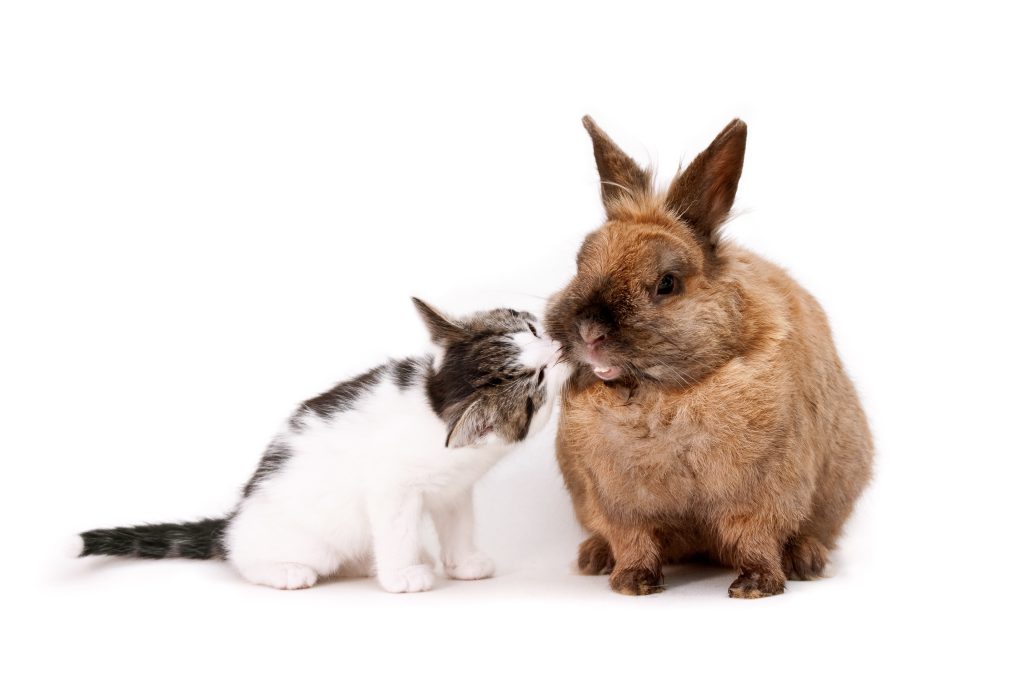
Domesticated cats can be wonderful companions for rabbits, often forming close bonds. However, the introduction must be handled with a focus on size and age.
- Predatory Instincts: Even a friendly cat may be triggered by a rabbit “binkying” or running quickly. This sudden movement can switch a cat into hunting mode.
- Safety First: Always wait until the rabbit is full-grown. A tiny baby rabbit is much more likely to be viewed as prey than an adult rabbit. It is vital to follow PDSA’s guidelines on introducing rabbits to other pets to ensure a controlled environment.
Primary Concern: Predatory Instinct Drift. The most significant risk is a cat’s “prey drive” being triggered by the rabbit’s sudden, jerky movements. Even if the cat is playing, a single scratch can introduce bacteria into the rabbit’s bloodstream, leading to life-threatening infections.
3. Dogs: Social Animals with High Drives
Dogs are social animals that get along well with many different kinds of animals. However, because dogs are naturally predators, it’s vital to monitor their excitement levels.
- The Scent Method: Before they ever meet face-to-face, let the dog sniff a blanket the rabbit has used. This familiarizes the dog with the rabbit’s scent as part of the family “pack.”
- Breed History: High-prey-drive breeds, such as Terriers or Sighthounds mentioned by the AKC, require significantly more supervision and training than lower-drive breeds like Labradors.
Primary Concern: High-Excitement Injury. A dog’s sheer size and “happy” energy are the biggest threats. A dog trying to play-bow or paw at a rabbit can accidentally break the rabbit’s delicate spine or ribs. Additionally, a dog’s loud barking can cause a rabbit to go into a state of shock or “tonic immobility.”
4. Guinea Pigs: The “Same Size” Roommate
Guinea pigs and rabbits make great friends, and it’s a fun way to bring both pets a sense of happiness. They often communicate through soft squeaks and nudges.
- The Bordetella Factor: Rabbits can be asymptomatic carriers of Bordetella. While harmless to the rabbit, the Rabbit Welfare Association & Fund (RWAF) notes that this bacteria is frequently fatal to guinea pigs.
- Physical Differences: In my research with my bunnies, I have found that rabbits are significantly more powerful. A rabbit’s back legs are built for kicking; an accidental kick during play can result in a broken back or internal injury for a guinea pig.
Primary Concern: Pathogen Transmission. Beyond physical injury, the transmission of Bordetella bronchiseptica is the primary health concern. Because rabbits can carry this respiratory pathogen without showing symptoms, they can inadvertently cause a fatal pneumonia outbreak in their guinea pig companion.
5. Mini Pigs: Non-Predatory Giants
Small pigs are becoming popular house pets, and rabbits can make great companions for these little pigs because neither animal is a natural predator. They can often be found napping together in a shared sunspot.
- Weight Risks: Even a “mini” pig can weigh 60 to 100 pounds. Owners must ensure the rabbit has plenty of space to hop away if the pig decides to roll over.
- Social Intelligence: Both species are highly intelligent and can learn to respect each other’s boundaries through consistent, supervised interaction.
Primary Concern: Weight & Crushing Risks. The vast weight difference is the core danger. Pigs are heavy-set and somewhat clumsy; if a pig steps on a rabbit’s foot or accidentally rolls onto a sleeping bunny, the result is almost always a catastrophic orthopedic injury.
6. Turtles & Tortoises: The “Moving Rock” Dynamic
Turtles and rabbits are a great combination because turtles move so slowly they rarely trigger a rabbit’s “flight” response. Rabbits often treat them with mild curiosity or indifference.
- The Salmonella Risk: Turtles carry Salmonella in their waste. Because rabbits are notorious for “tasting” their environment, they are at high risk of infection.
- Separate Habitats: Keep the turtle’s enclosure secure and high enough that the rabbit cannot jump in. Shared floor time should only happen on non-porous surfaces.
Primary Concern: Salmonella Contamination. Rabbits are naturally curious and often engage in coprophagy (eating droppings) to maintain their gut flora. If they consume turtle waste contaminated with Salmonella, it can lead to severe gastrointestinal distress or systemic infection, which is often fatal for rabbits.
7. Ducks: Waterfowl & Lagomorphs
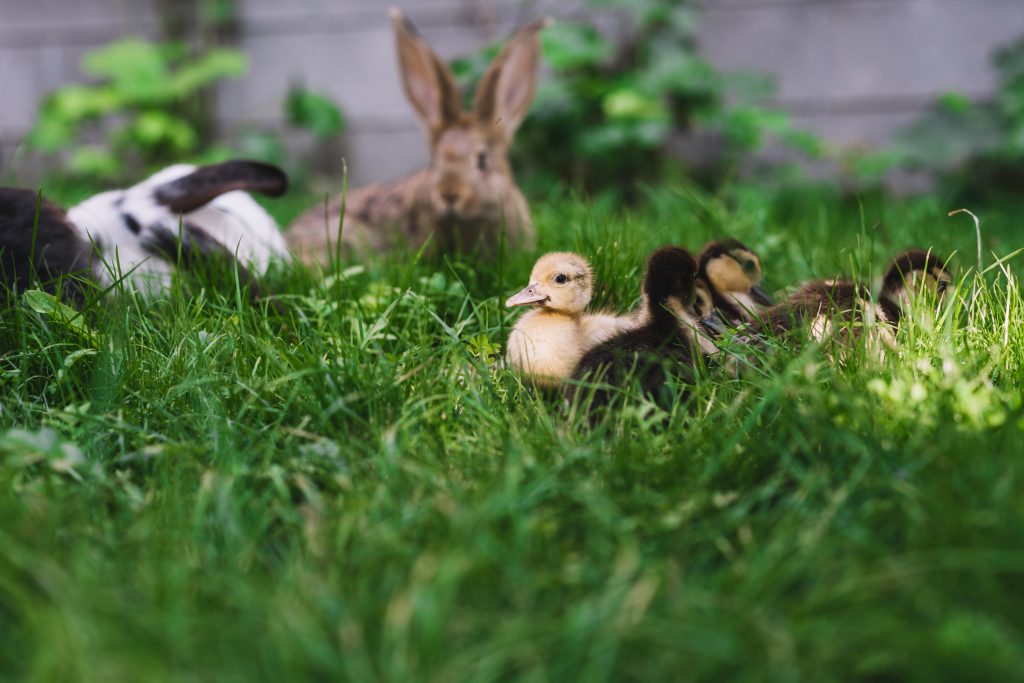
Ducks can coexist with rabbits in homesteading environments, but their hygiene requirements are vastly different.
- Moisture Issues: Ducks thrive in wet environments, while rabbits require dry bedding to prevent respiratory issues and “sore hocks.”
- Territoriality: Ducks can be protective of their water bowls. A defensive peck to the rabbit’s sensitive nose can occur if the rabbit tries to drink from the duck’s water.
Primary Concern: Environment & Hygiene. Ducks are “wet” pets that create mud. A damp environment is the enemy of a rabbit’s health, leading to fungal infections of the feet (pododermatitis) and a buildup of ammonia that can damage a rabbit’s sensitive lungs.
8. Chickens: The Pecking Order
Chickens and rabbits are often housed together in large barns, but this requires a large amount of open space to work safely.
- Aggression: Chickens have a strict “pecking order” and may target a rabbit’s sensitive eyes or ears to establish dominance.
- Parasite Transmission: Chickens can carry internal parasites, such as Coccidiosis, which can be harmful to a rabbit’s digestive tract.
Primary Concern: Aggressive Pecking. Chickens explore the world with their beaks. A single inquisitive peck at a rabbit’s eye or thin ear leather can cause permanent damage or severe bleeding. In a confined space, a chicken may view the rabbit as an intruder in the hierarchy.
9. Chinchillas: High-Energy Socials
Chinchillas and rabbits are a common pairing due to their similar size and herbivorous diets. Both animals are social, but they have different ways of playing.
- Social Hierarchy: Scuffles may occur over preferred sleeping spots or the best pieces of hay.
- Biting Risk: Both animals have sharp teeth and can deliver a deep bite if they feel cornered. Never leave them together in a confined cage.
Primary Concern: Bite Strength & Conflict. Chinchillas have incredibly strong incisors. If a territorial dispute occurs over a piece of fruit or a hiding spot, a chinchilla can deliver a deep, puncturing bite that can easily reach a rabbit’s bone or vital organs.
10. Hedgehogs: Respectful but Pointy
Hedgehogs are generally non-aggressive and make interesting companions. Because they aren’t predators, they don’t stress the rabbit.
- The Quill Factor: A rabbit’s primary way of exploring is through their nose. A curious bunny sniffing a hedgehog may receive a painful poke.
- Nocturnal Activity: They often “time-share” a room without much direct physical interaction.
Primary Concern: Quill Injury & Stress. While not aggressive, a hedgehog’s defense mechanism—the “quill ball”—is a physical hazard. A rabbit that tries to groom or nudge a hedgehog may be poked in the nose, leading to abscesses or fear-based stress.
11. Small Birds: Finches & Doves
Small birds like Diamond Doves are the safest avian option for rabbits. They are not predators and generally ignore the rabbit’s presence.
- Acoustic Stress: Rabbits have incredibly sensitive hearing. If the bird is a constant high-pitched singer, it can lead to chronic stress for the rabbit.
Primary Concern: Auditory Frequency Stress. Rabbits hear high-pitched frequencies that humans cannot. Constant, high-frequency chirping can keep a rabbit in a state of high alert, eventually leading to a weakened immune system due to chronic stress.
12. Large Birds: Parrots & Macaws
Larger birds like African Grays are technically predators and possess powerful beaks. A single bite can be catastrophic for a rabbit’s delicate skeletal structure.
- Behavioral Clashes: Parrots are often territorial over their owners and may swoop down to “defend” their human from the rabbit.
Primary Concern: Physical Trauma/Bites. A large parrot’s beak is designed to crush nuts and wood. If it feels threatened or jealous, it can bite a rabbit’s ear or paw with enough force to amputate the appendage or crush the skull.
13. Bearded Dragons: Low-Energy Reptiles
Some owners keep Bearded Dragons and rabbits in the same supervised room. They are slow-moving and generally non-aggressive toward larger animals.
- Bacterial Risk: Like turtles, lizards carry Salmonella.
- Environment Risks: Bearded dragons require high-heat lamps. Owners must ensure power cords are protected from chewing.
Primary Concern: Cross-Contamination. Reptiles are frequent carriers of pathogens that can disrupt a rabbit’s sensitive gut flora. Additionally, basking lights can reach temperatures high enough to cause severe thermal burns on a rabbit’s skin.
14. Rats: Controversial Companions
Rats are highly intelligent, but they possess a predatory instinct that many people underestimate.
- Aggression: Rats have been known to bite sleeping bunnies. They should never share an enclosure or be left unsupervised.
Primary Concern: Predatory Opportunism. Rats are omnivores and highly opportunistic. If a rabbit is sick or sleeping deeply, a rat may attempt to “test” the rabbit with nips, which can escalate into serious wounds or infections.
15. Hamsters & Gerbils: Small Rodent Risks
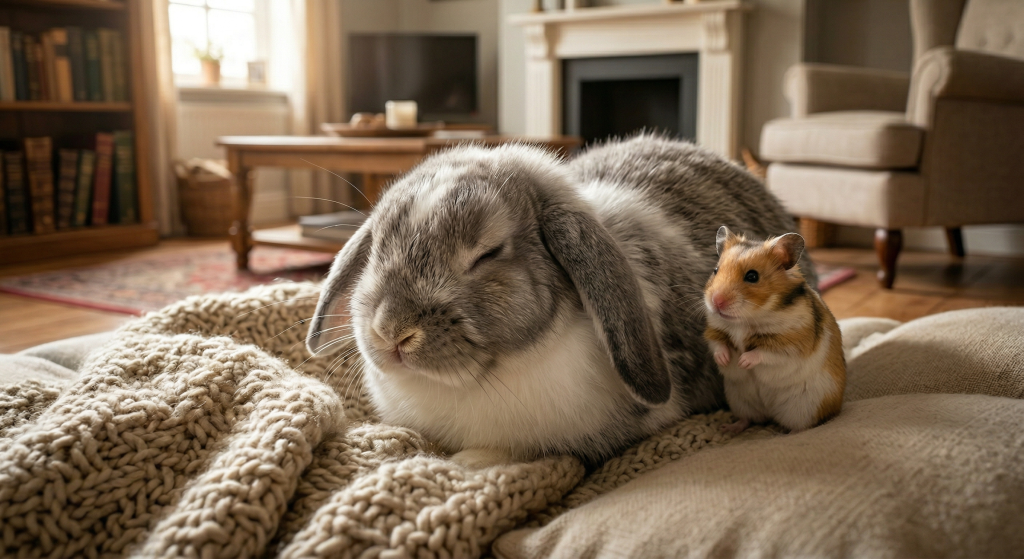
These small rodents are extremely territorial and nocturnal. Their frantic night movements can be a source of constant irritation for a rabbit.
- Nipping: A hamster can deliver a painful nip to a rabbit’s nose through cage bars.
Primary Concern: Territorial Nips. Hamsters are fiercely solitary. They do not view a rabbit as a friend; they view it as a large invader. A defensive bite to a rabbit’s sensitive nose or lip can happen through bars, leading to swelling and pain.
Detailed Housing & Playtime Management
Mixing species requires distinct boundaries. Use the following management chart to plan your home layout so that the animals stay safe.
| Animal Type | Share a Cage? | Shared Playtime? | Key Requirement |
| Rabbit | Yes (if bonded) | Yes | 12+ sq ft space |
| Guinea Pig | No | Yes (Supervised) | Separate food bowls |
| Cat | No | Yes (Supervised) | Bunny “bolt hole” |
| Dog | No | Yes (Supervised) | Leash-control initially |
| Mini Pig | No | Yes (Supervised) | Level floor space |
| Turtle | No | Limited | Disinfect floors daily |
| Ducks | No | Limited | Dry resting area |
| Chickens | No | Limited | Peck-proof hides |
| Chinchilla | No | Yes (Supervised) | High-climbing spots |
| Hedgehog | No | Yes (Supervised) | Low-light environment |
| Small Birds | No | Yes (Supervised) | Quiet noise levels |
| Large Birds | No | No | Total physical separation |
| Bearded Dragon | No | Limited | Separate climate zones |
| Rats | No | No | Total physical separation |
| Hamsters | No | No | Total physical separation |
The Impact of Hormones: Why Neutering is Non-Negotiable
Before considering any companion—even another rabbit—the rabbit must be spayed or neutered.
- Behavioral Stability: Unfixed rabbits are driven by hormones that lead to territorial spraying and mounting. These behaviors make it impossible for another animal to feel safe.
- Health Benefits: Spaying females prevents uterine cancer (affecting up to 80% of unspayed rabbits by age 4). A healthy, calm rabbit is a much better companion for the stress of social bonding.
Decoding Body Language: Signs of a Successful Bond

Learning to read your rabbit’s subtle cues is the only way to ensure an introduction is going well.
- Positive Signs: “Mirroring” (doing the same thing at the same time), flopping (rolling onto their side), and grooming are the ultimate signs of trust.
- Warning Signs: Thumping, pinning ears back flat against the head, or “boxing” with front paws indicates that the rabbit feels threatened and the interaction should be ended immediately.
Introduction Protocol: The 3-Stage Method
Successful bonding rarely happens on the first try. Follow this proven protocol to reduce stress.
- Scent Exchange: Swap bedding or toys between the animals for a week so they recognize each other’s pheromones.
- Visual Barrier: Use a baby gate or double-grid x-pen so they can see each other safely. This allows them to “meet” without the risk of a physical fight.
- Neutral Territory: The first face-to-face meeting should happen in a room neither animal “owns” (like a bathroom) to prevent territorial lunging.
FAQ: Frequently Asked Questions
Q: Can rabbits live with ferrets or snakes?
A: No. Ferrets and snakes are natural predators. Ferrets were bred specifically to hunt rabbits in their burrows, and snakes view rabbits as a primary food source.
Q: Why is my rabbit thumping at my other pet?
A: Thumping is an alarm call. It means your rabbit feels threatened or scared. You should separate the animals immediately.
Q: Should I get a companion for my rabbit if I work all day?
A: Yes. Rabbits are social creatures. A companion helps prevent boredom and destructive behaviors like chewing carpet or baseboards.
Conclusion
Selecting a companion for your rabbit requires balancing social benefits against biological risks. While the ideal scenario is always a bonded pair of rabbits—like our own Mocha and Chino—other animals can coexist peacefully if the owner is diligent about supervision and health risks. By prioritizing “neutral territory” and maintaining separate housing, you can create a safe, happy multi-pet household.
Medical & Veterinary Disclaimer: PoodleReport.com is an informational resource for Poodle owners and enthusiasts. We are not veterinarians. The content on this website is not a substitute for professional veterinary care, diagnosis, or treatment. Always seek the advice of your veterinarian with any questions you may have regarding your pet’s medical condition, diet, or overall health.